The events that unfolded at a Los Angeles Unified School District campus over a two-year period reveal a pattern that cannot be explained by coincidence, miscommunication, or isolated conflict. What emerges instead is a documented chronology of whistleblower retaliation, procedural abuse, and the systematic manufacturing of disciplinary records following protected activity related to education code compliance, labor law violations, and special education reporting.
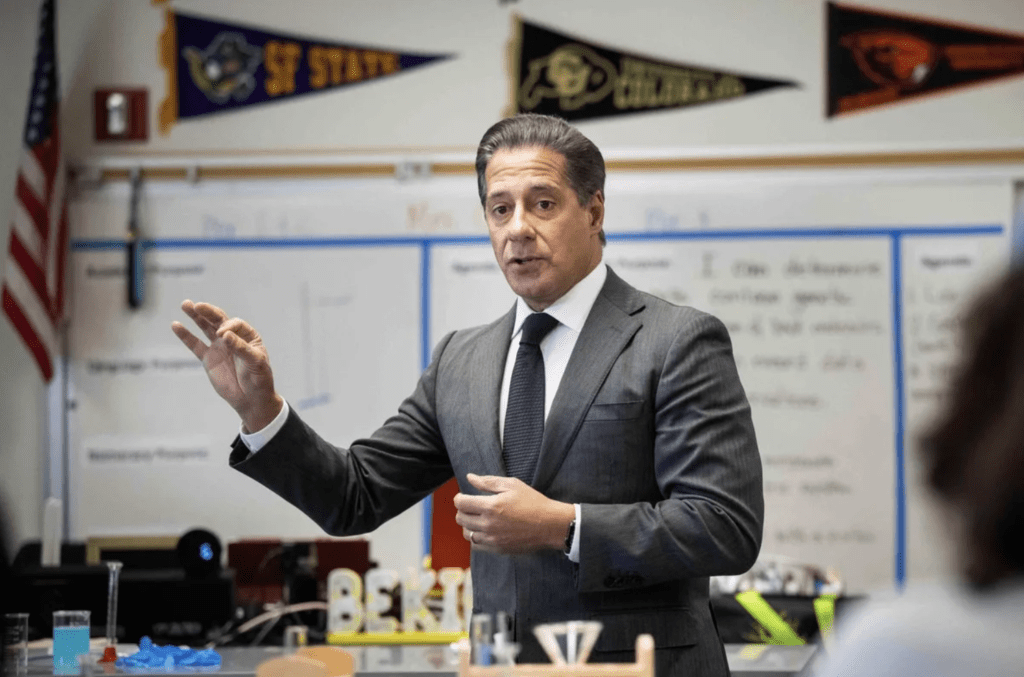
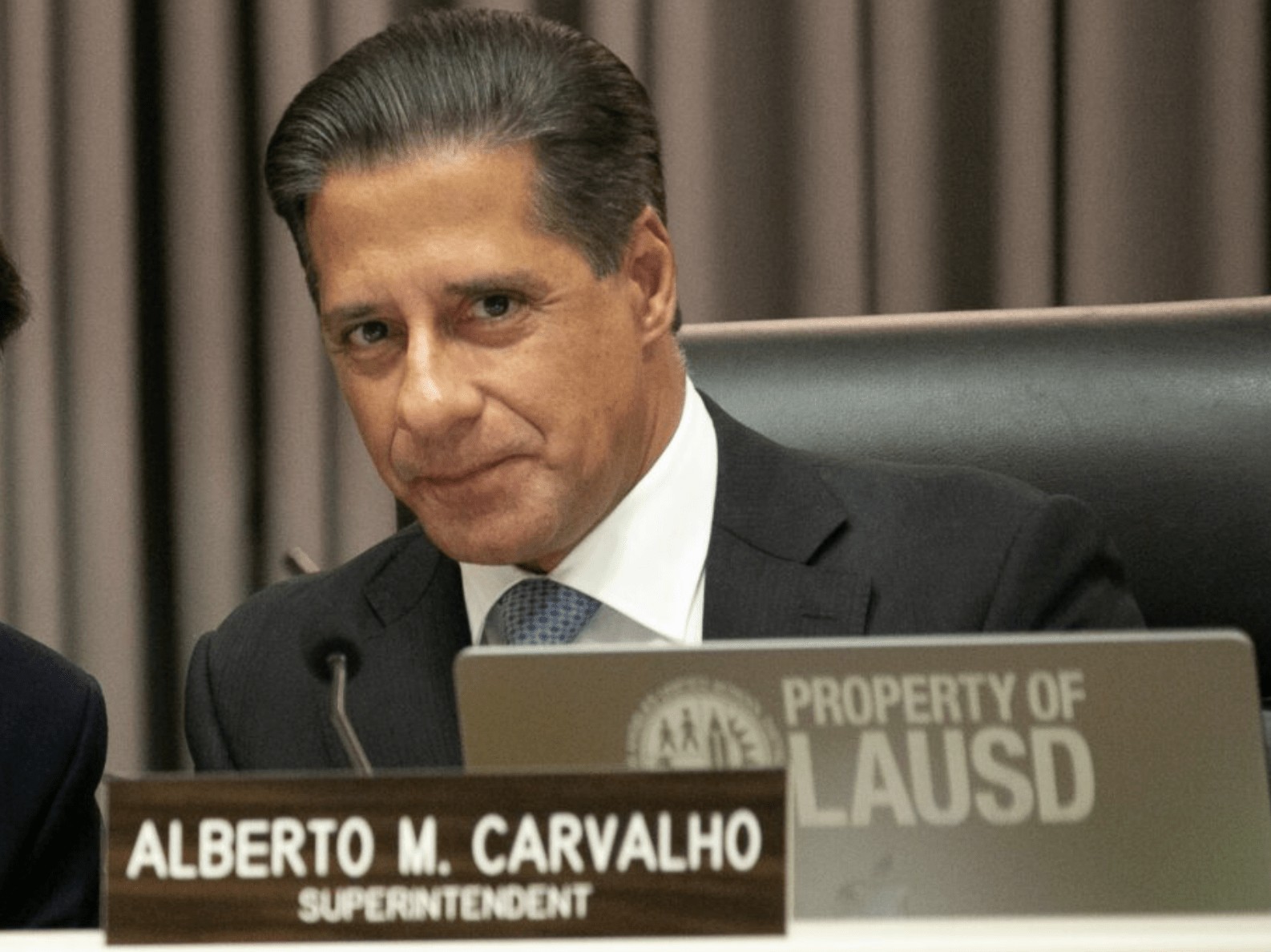
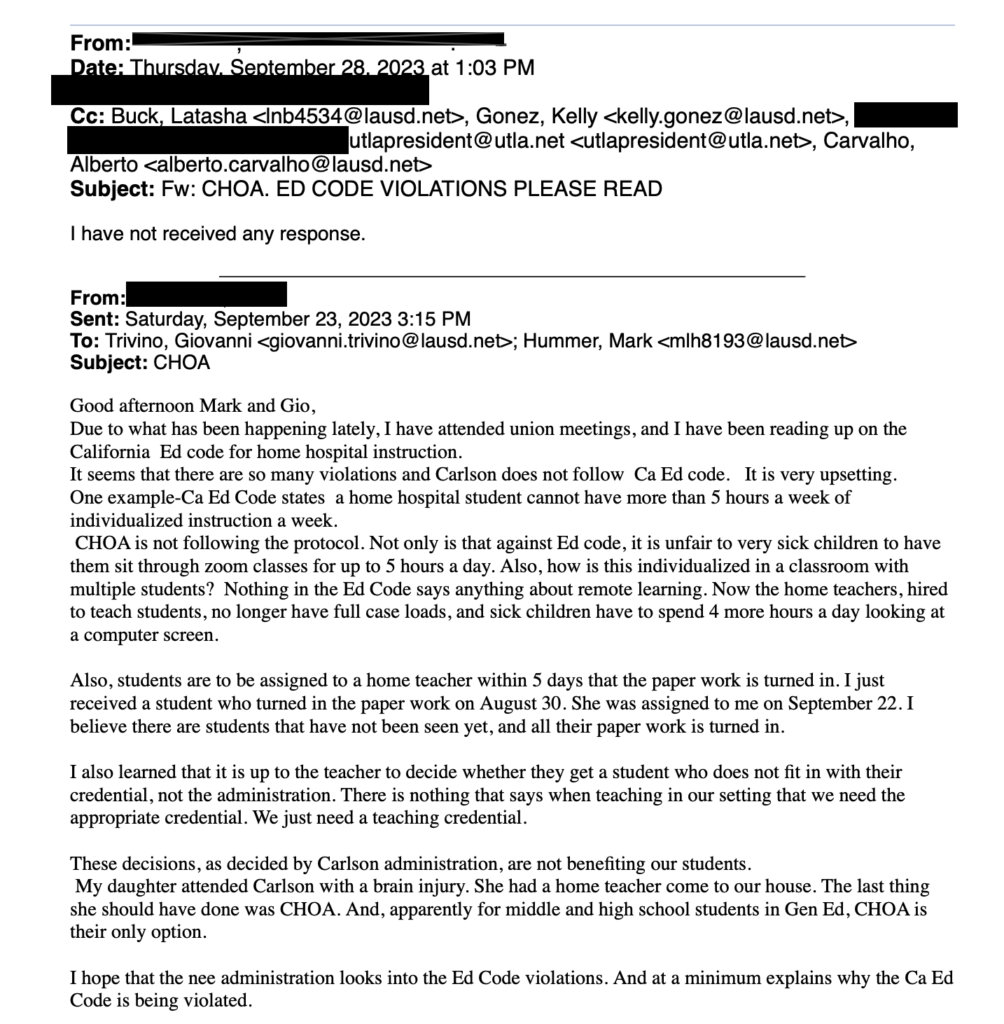
The source, who remains anonymous due to ongoing fear of retaliation, first began raising questions in mid-September 2023, when the campus principal was removed without explanation. No notice was given to staff, no rationale was provided, and no transition plan was communicated. Concerned by the sudden leadership change and the lack of transparency, the source joined the School Site Council shortly thereafter, specifically to ensure the school was operating in compliance with California Education Code. Within days, formal written concerns were submitted to senior district leadership, including members of the school board and Superintendent Alberto Carvalho.
On February 24, 2024, an incident occurred during a staff meeting that would become a critical inflection point. A male staff member read material from a “cyber abuse” lesson aloud in a manner that was widely perceived as predatory and sexually charged. While he read the words as written, his delivery was described as deeply unsettling, evoking the tone and cadence of an adult attempting to seduce a child. The lights were off. There was no warning beforehand. No students were present, but the impact on those in the room was immediate and disturbing. For the source, who is a survivor of predatory abuse, the experience was retraumatizing. The source did not demand discipline. They asked only for an apology. No apology was ever given.
In the spring of 2024, the retaliation escalated into privacy and labor violations. When the source applied for medical leave under the Family and Medical Leave Act, confidential medical documentation was photocopied without permission by office staff, and the source was falsely told the paperwork had not been accepted. This breach was reported to the Office of the Inspector General. During a subsequent meeting with an OIG investigator, the source was warned explicitly that if they returned to campus, retaliation against their character would intensify. That warning was not speculative. It proved predictive.
Administrative instability followed. A principal left the campus. Shortly thereafter, a first-time administrator, Jacqueline Robnett, was installed as principal. By July 1, 2024, the program at the center of the original education code complaint was formally shut down. Staff were finally paid in accordance with their contracts. No contractual terms had changed. Only enforcement had.
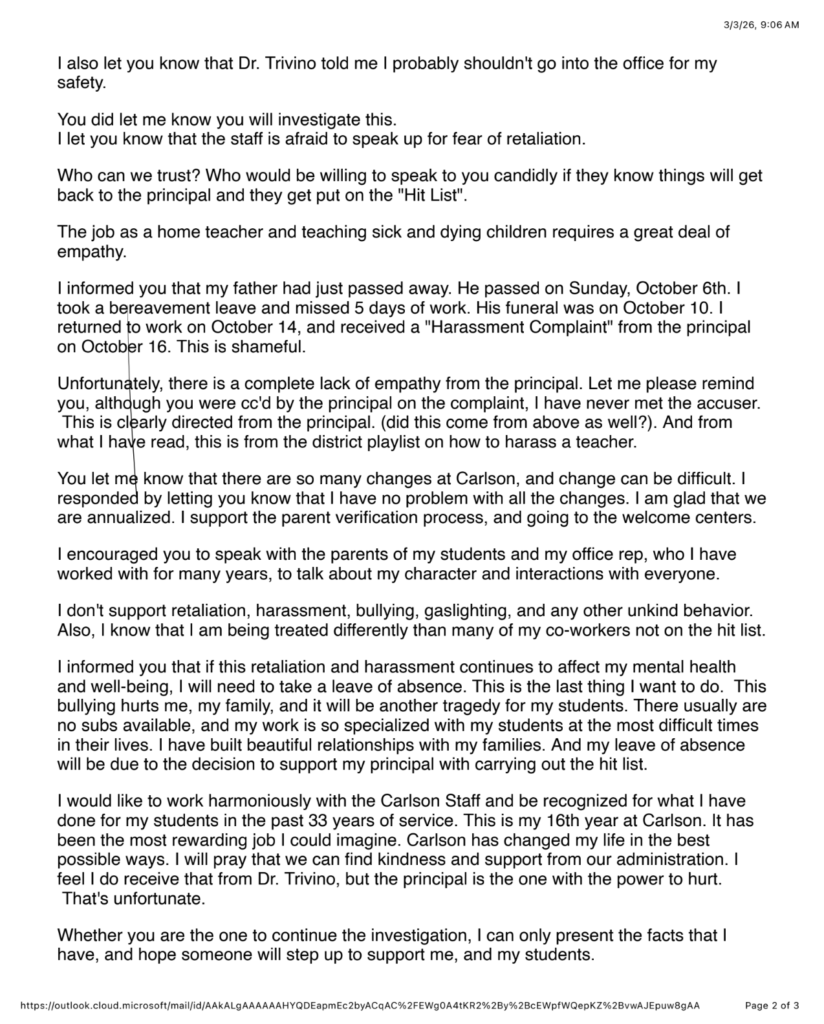
When the new school year began, the source returned to work. On October 16, 2024, the very day the source returned from bereavement leave following the death of their father, the first workplace violence complaint was filed by the principal. The timing was not incidental. Two days earlier, the source had buried a parent. On October 16, instead of support or acknowledgment, they received a disciplinary complaint.

Days earlier, the source sent a memorializing email to Regional Director Leonel Angulo documenting concerns raised during their conversation. In that email, the source described being advised not to enter the office for safety reasons, disclosed that staff were afraid to speak due to fear of retaliation, and raised concerns about the existence of an internal “hit list.” The source made clear they had never met the accuser named in the complaint and that the complaint appeared to be directed from above. The email also documented red marks on timecards, public reprimands, being blocked from office access, and coordinated harassment by the principal and office staff. The email served one purpose: to preserve the record.
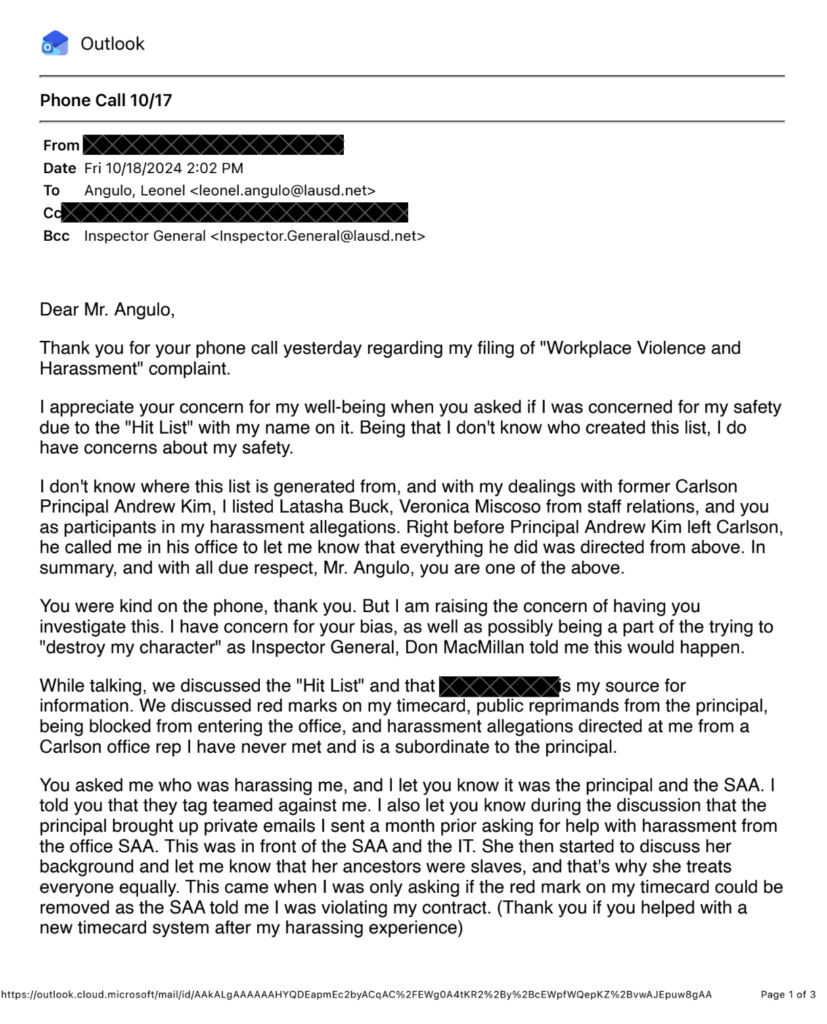

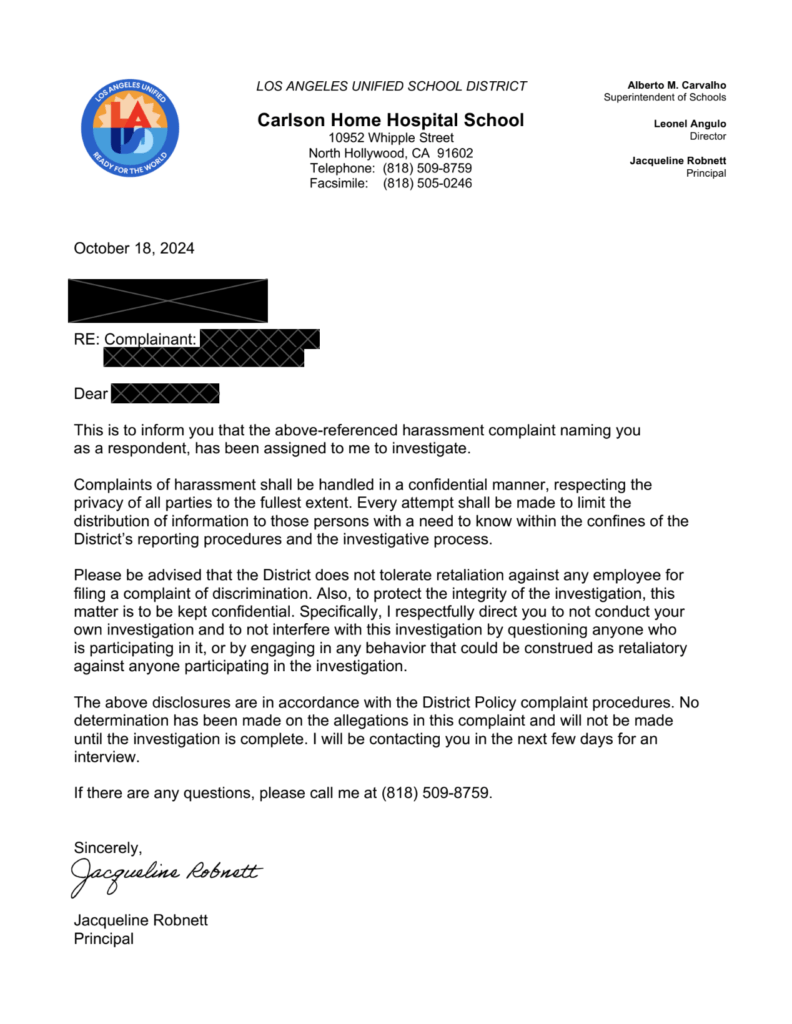
The following day, October 18, two additional workplace violence complaints were filed. The source had warned the director that the cumulative stress was becoming unmanageable and that if further complaints were filed, they would be forced to take leave. Those warnings went unheeded. The complaints arrived anyway. In the months that followed, the stress and anxiety caused by this pattern forced the source to take additional days off work in order to cope.

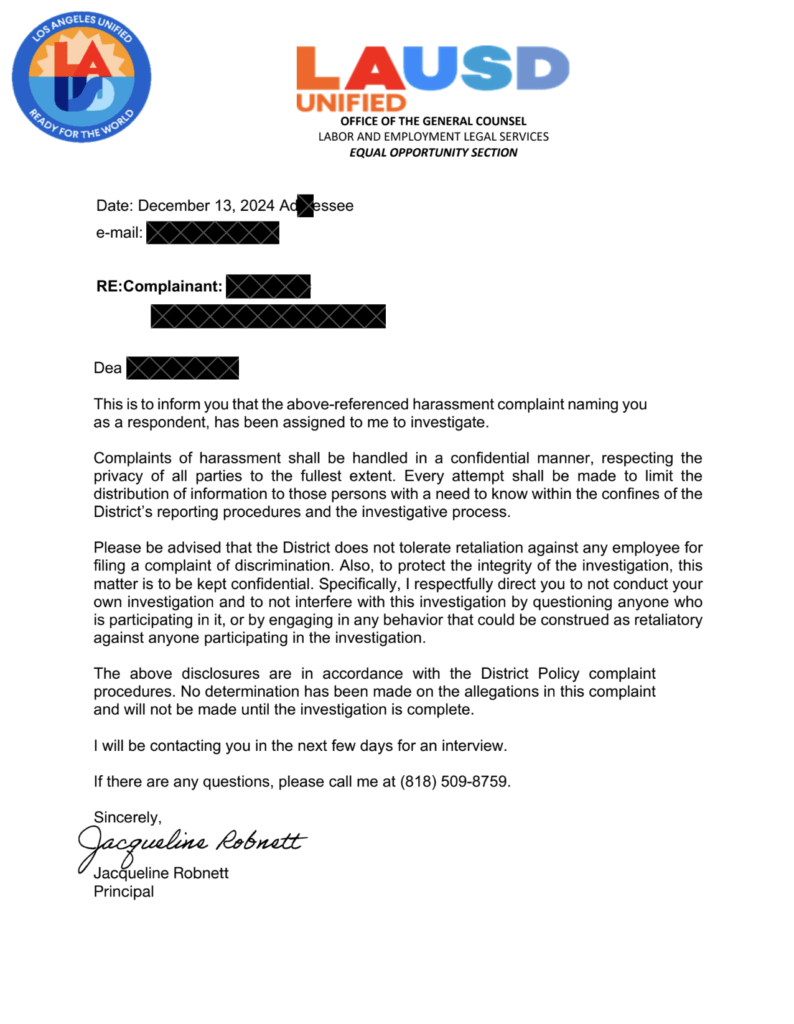
Shortly after the source began raising questions regarding the School Site Council (SSC) and the handling of the School Plan for Student Achievement (SPSA), the pattern of retaliation escalated again. On the final day before winter break, at approximately 4:30 p.m., the source received their fourth Workplace Violence (WPV) complaint. The complaint carried the heading of the Office of the General Counsel, elevating the matter beyond routine campus administration and signaling that district legal authorities had now entered the process. The timing, delivered at the close of the workday on the eve of winter recess, further reinforced the source’s concern that disciplinary mechanisms were being deployed strategically in response to questions about governance compliance rather than legitimate safety concerns.
At the time, the source suspected the existence of an internal hit list but did not receive confirmation until the school year ended in June 2025. At that point, a vice principal disclosed that the source had been placed on an administrative hit list and that meetings had been held to coordinate removal. That vice principal was later removed for refusing to participate in retaliation. Additional corroboration came from within the administration, including confirmation that staff had been directed to file complaints and that disciplinary paperwork was being generated without investigation.
In September 2025, the retaliation expanded beyond the campus. On September 22, 2025, Latasha Buck, director of the Options program under which the school operates, attempted to access the source’s OneDrive through the district system while the source was actively making special education complaints. Although the school falls under the Options program, the attempted access raised a serious question: why would a program director seek entry into an employee’s private work files during active protected reporting?

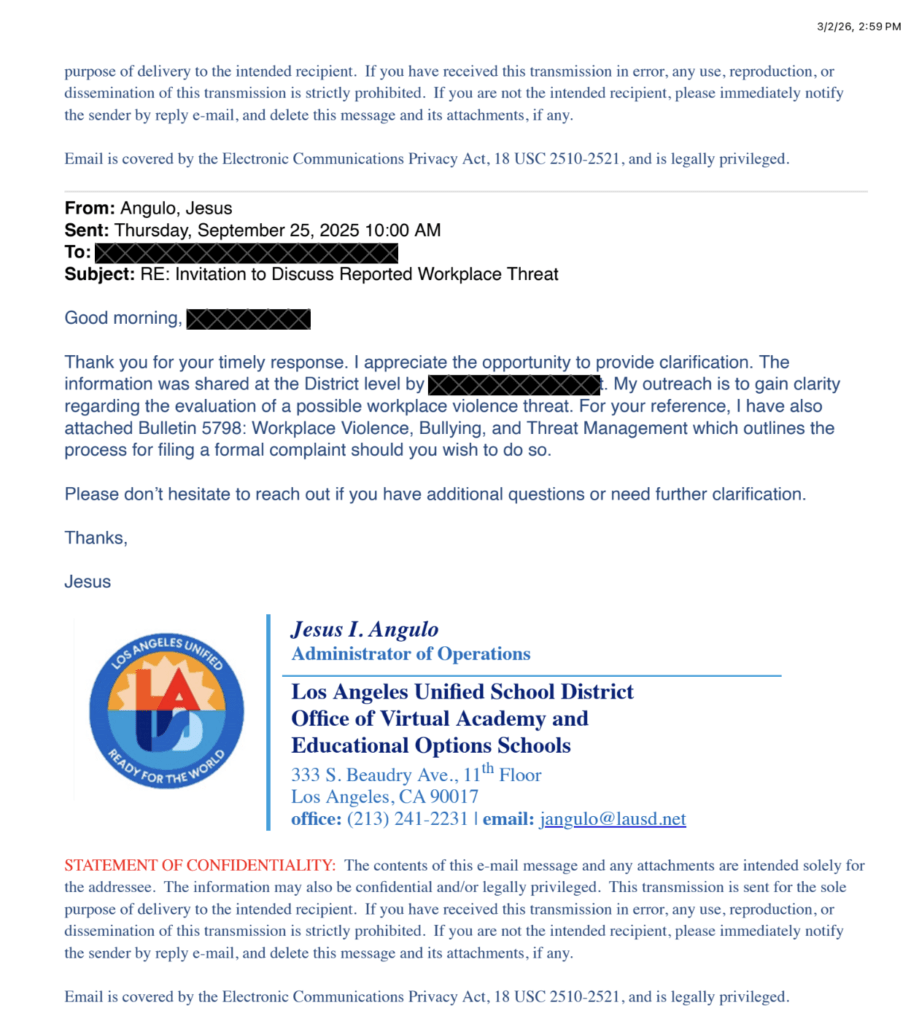
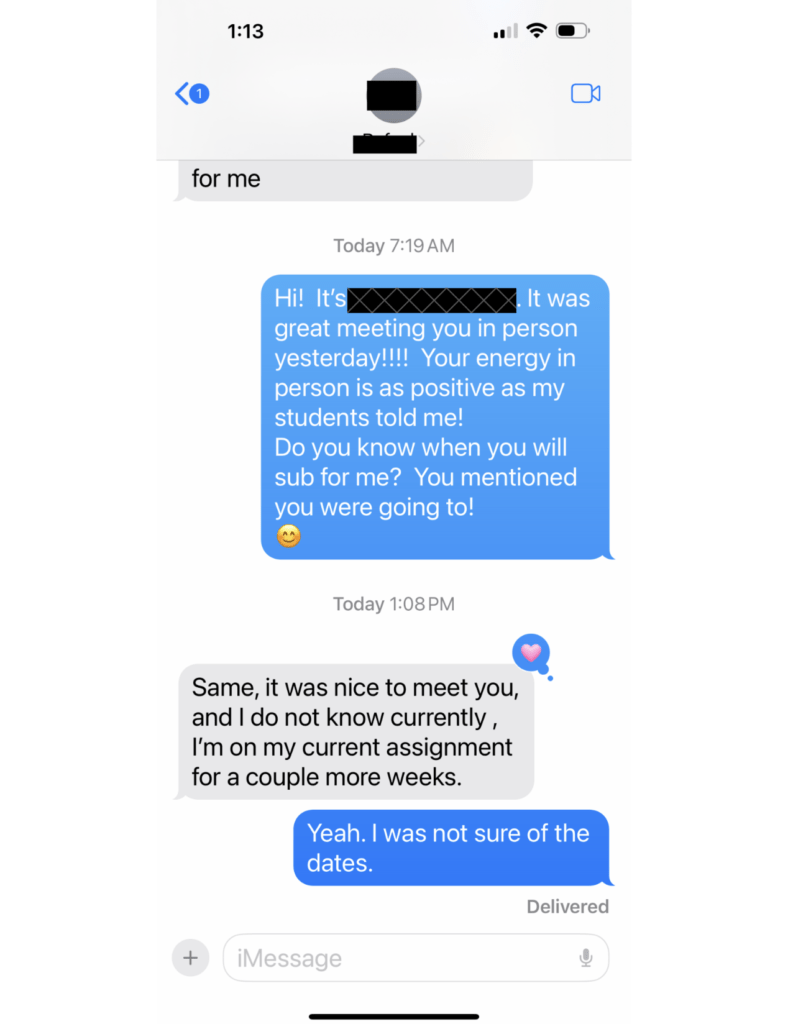
That same week, Director Jesus Angulo requested a meeting to discuss “fear at the workplace,” despite the fact that the source had not filed a complaint asserting fear. During that same period, a long-term substitute teacher informed the source that he would soon be taking over their position, even though the source had not requested leave or indicated any intention to step away. By the end of September, the source believes the decision to remove them had already been made.

In October 2025, five additional workplace violence complaints were filed, bringing the total to nine. One of the complaints came from a newly installed assistant principal who, according to the source, had been hand-picked by Latasha Buck. It was only after receiving these five additional complaints that the source formally drafted and submitted a comprehensive retaliation complaint, documenting the full scope of the conduct and its escalation.
Human resources later removed Director Leonel Angulo from investigating the matter after the source raised concerns about bias and retaliation. Despite this, no interview was ever conducted. No investigative meeting occurred. The source has never been informed of the allegations against them.
The public interest implications are severe. The source’s role requires entering the homes of medically fragile and vulnerable children. The district maintains nine workplace violence complaints on record, yet has never investigated them. Either the district is knowingly sending a violent employee into private homes, or it knows the complaints are retaliatory and false. There is no third option.
This case is no longer about one educator. It is about whether whistleblower protections inside Los Angeles Unified School District exist in practice, or whether retaliation can be laundered through paperwork until the truth is buried beneath unexamined allegations. The documents exist. The corroboration exists. What remains unanswered is who will be held accountable.