As federal prosecutors detail how a former Cerritos College student leader allegedly crossed the line from rhetoric into operational terror planning, another American campus is grappling with a different but equally sobering reality.
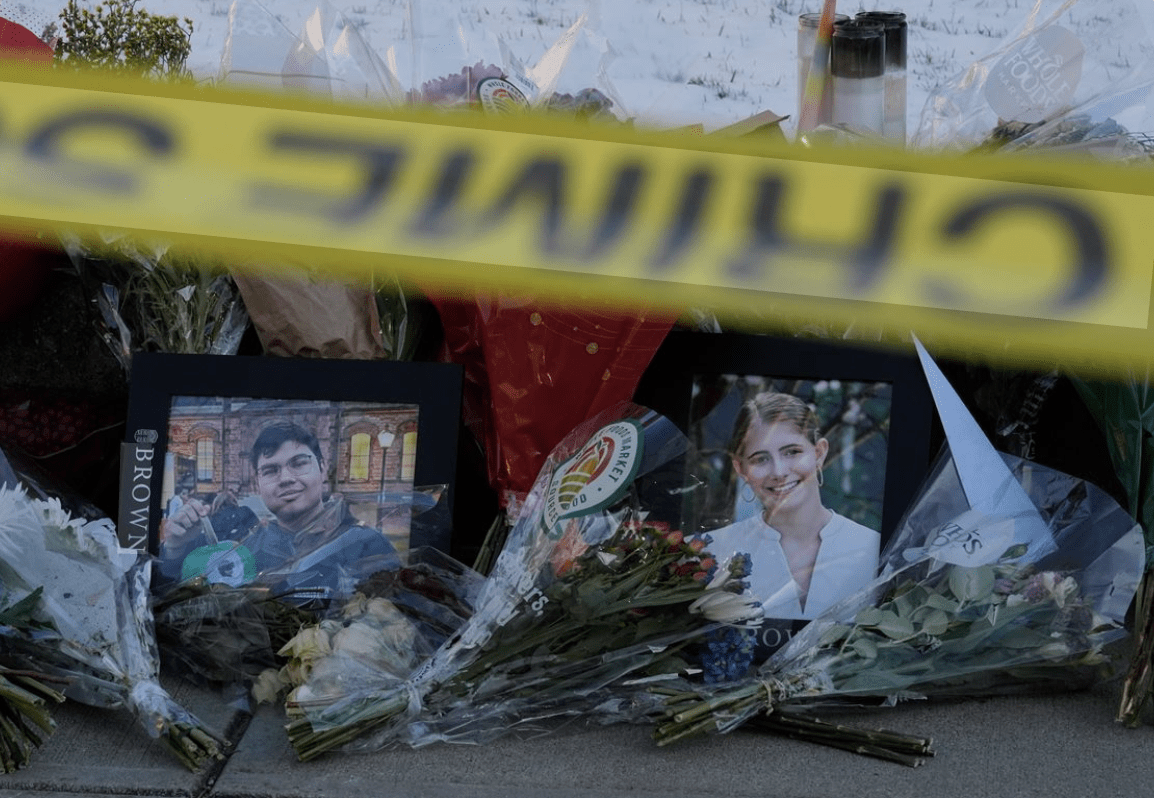
On December 13, 2025, a masked gunman opened fire inside an academic building at Brown University, killing two students and wounding nine others during final exam preparations. The attacker fled the scene and, as of publishing, remains at large. Law enforcement officials have released surveillance footage and confirmed that no suspect or motive has been publicly identified.

Authorities have been unequivocal on one point: there is no confirmed ideological motive tied to the Brown shooting. Investigators have warned against speculation and the circulation of unverified claims online, noting that misinformation can actively interfere with the investigation and put innocent people at risk.
And yet, the vacuum left by unanswered violence has predictably filled with narrative warfare.
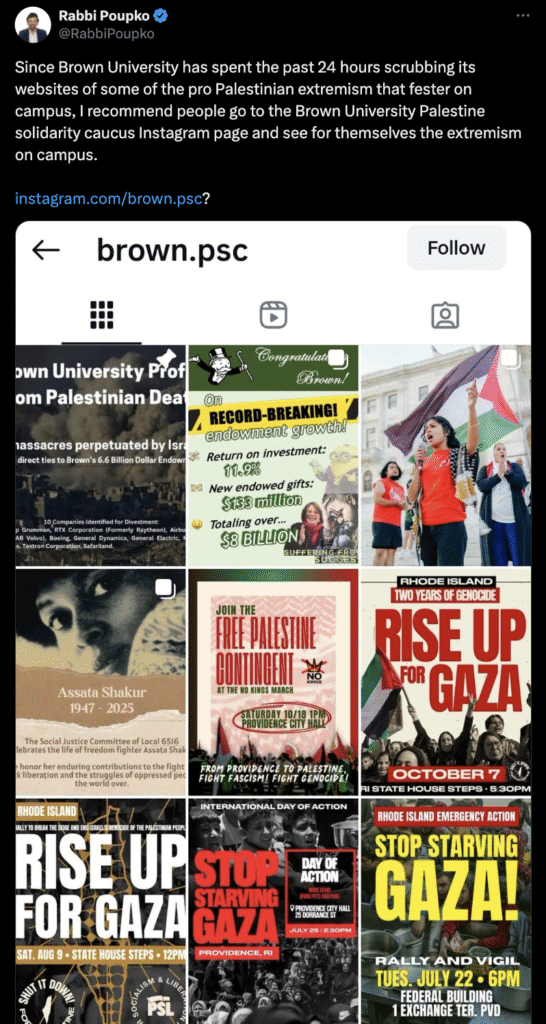
In the hours following the attack, critics accused Brown University of quietly scrubbing references to pro-Palestinian activism from its websites, an allegation amplified by Rabbi Poupko, who urged the public to examine student-affiliated social media pages instead. His claim does not allege responsibility for the shooting, nor has law enforcement drawn any connection between the attack and campus activism. What it does raise, however, is a parallel concern now surfacing on the opposite coast: institutional reflexes toward damage control rather than transparency.
The comparison is not about motive.
It is about mechanics.
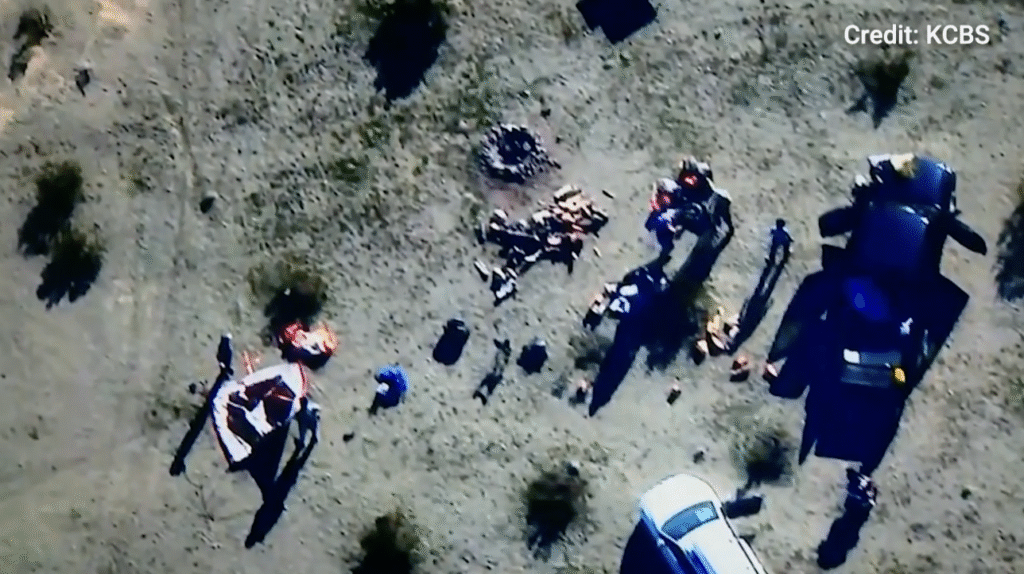
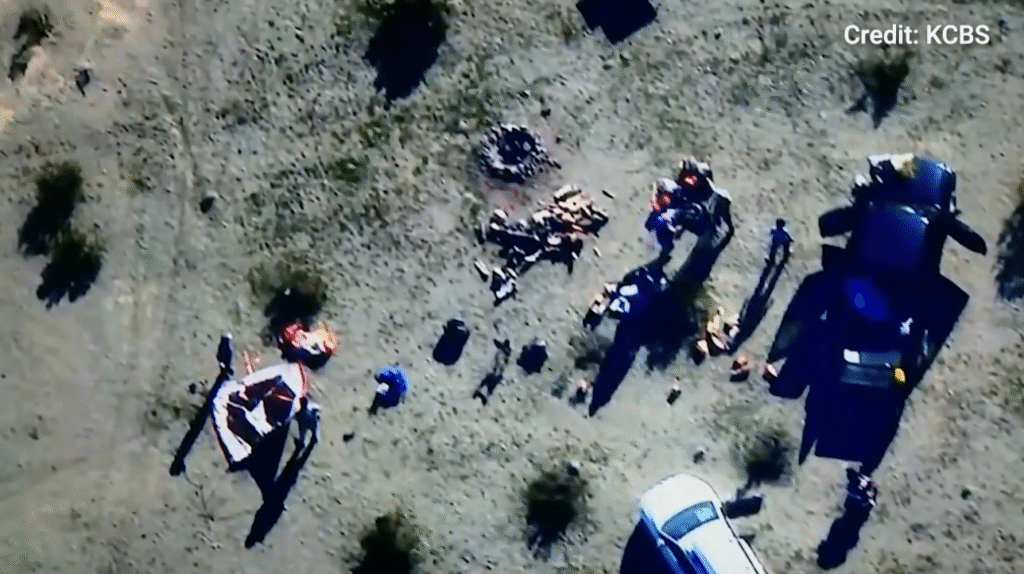
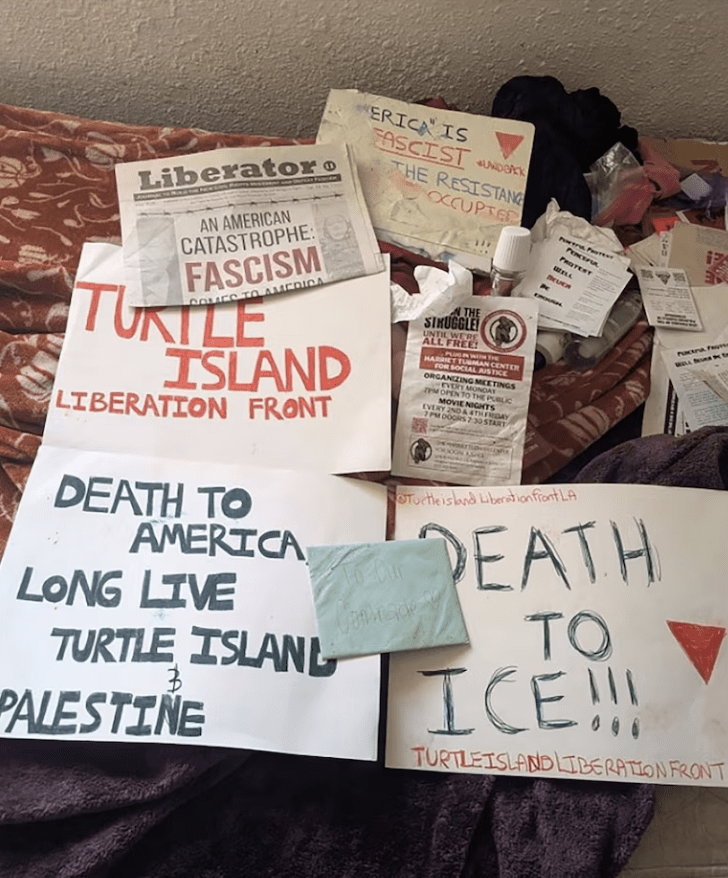
At Cerritos College, federal affidavits lay out concrete allegations of radicalization crossing into logistics. Prosecutors describe bomb-making stations marked with “Free Palestine” stickers, targeting symbols associated with Hamas propaganda, and a former student government president allegedly participating in an explosives dry-run in the Mojave Desert as part of a planned New Year’s Eve attack in Los Angeles.
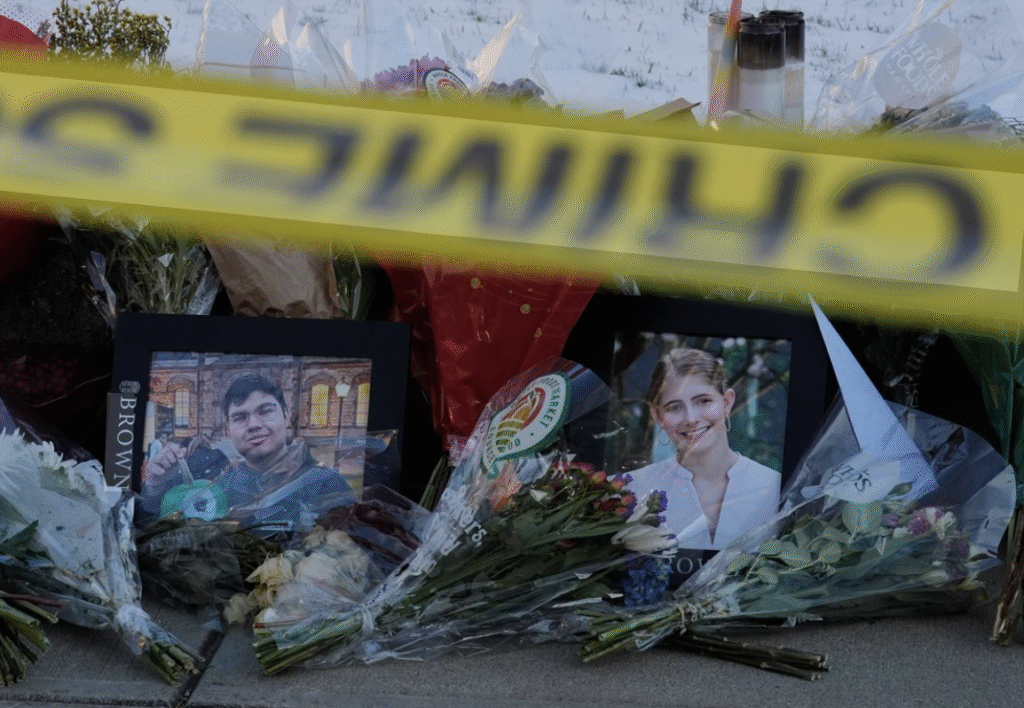
At Brown, investigators are still searching for a shooter and urging the public not to invent explanations where facts do not yet exist.
Two very different cases.
Two very different evidentiary records.
But one shared failure point.
Inside ASCC: “Radical Was the Baseline”
While Cerritos College administrators insist there was “no known threat” connected to campus activity, accounts from inside the Associated Students of Cerritos College tell a far more troubling story.
A current Cerritos College student who served alongside the former ASCC president contacted The Current Report to describe what they experienced as a deeply radicalized student government environment during that tenure. The source, who requested anonymity due to fear of retaliation, said the radicalization was not subtle, isolated, or fringe, it was the dominant culture.
According to the source, the former student leader was already aggressively radical in his views long before his removal from office, particularly around Indigenous identity, land narratives, and environmental activism framed in absolutist terms. More alarming, the student said, was that the college did not attempt to moderate or challenge the direction ASCC was taking. In their experience, it was allowed – and at times encouraged.
The insider described an atmosphere where dissent was punished.
When the source and only one other senator voted against initiatives they believed crossed from advocacy into radical ideology, they say they were targeted and isolated by the rest of the ASCC group. The pressure was social, political, and sustained.
“It wasn’t just him,” the source explained. “There were many students in that group who were raging radicals.”
The student ultimately resigned from ASCC, citing the environment as untenable and hostile to anyone who did not conform ideologically.
The account does not allege criminal conduct on campus, nor does it claim administrators had foreknowledge of future violence. What it does establish is a pattern of normalization, a student government culture where radical rhetoric was routine, opposition was suppressed, and institutional oversight was effectively absent.
That context matters.
Because when federal prosecutors later allege that a former ASCC president moved from ideological fixation into logistical planning for violence, the question is no longer how this happened overnight. The question is how long warning signs were visible – and ignored – inside official governance spaces that were supposed to protect students, not radicalize them.
Brown University: A Different Crime, the Same Blind Spot
As the Cerritos case moves through federal court, Brown University remains in crisis mode.
The shooting is an open investigation. Officials have repeatedly stressed that there is no confirmed ideological link and have cautioned against speculation. Yet public trust has been strained by unanswered questions, including a press exchange in which a reporter pressed the Providence mayor on whether CCTV cameras were fully operational at the time of the attack. The mayor declined to answer directly.
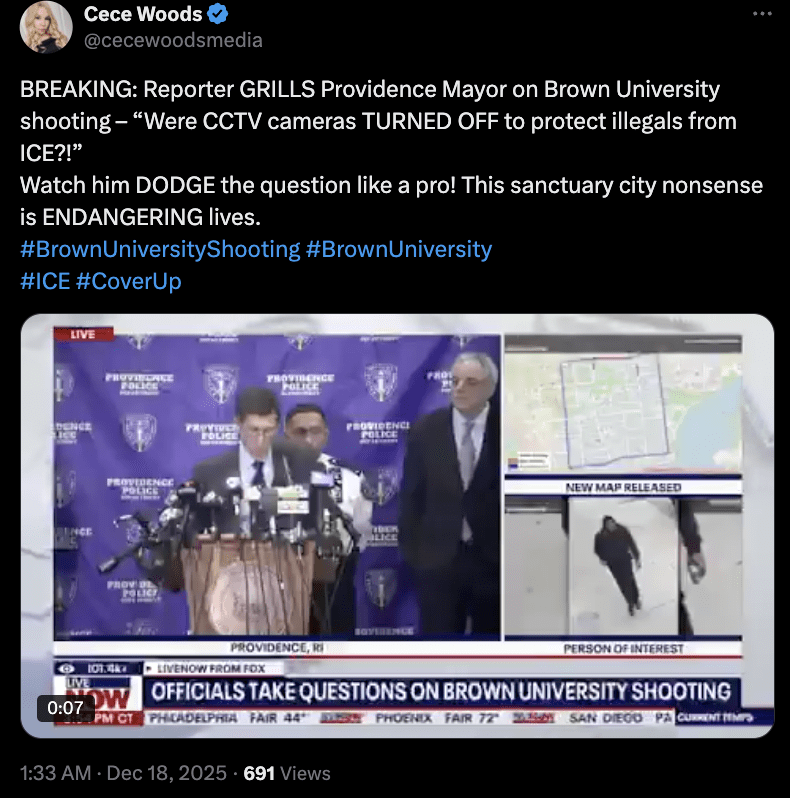
There is no evidence cameras were disabled for political or immigration-related reasons. But in moments like these, evasion fuels suspicion, not reassurance, especially when institutions are already under scrutiny for transparency failures.
Again, the issue is not motive.
It is institutional behavior under pressure.
Different Outcomes. Same Blind Spot.
The Brown University shooting remains unresolved.
The Cerritos College case is now a federal prosecution.
Conflating them would be irresponsible.
But refusing to examine what they reveal about campus blind spots would be equally dangerous.
Universities are willing to host activism, sanction demonstrations, and issue sweeping statements about inclusion and safety. They are far less willing to conduct hard internal audits when ideology hardens into extremism—or when student governance spaces become incubators rather than safeguards.
Radicalization does not announce itself with sirens.
It evolves quietly, through language, symbolism, social pressure, and normalization – long before police tape or court filings appear. Ignoring that progression does not make campuses safer. It simply ensures the reckoning comes later, louder, and at a far higher cost.
Different outcomes.
Same blind spot.
And until universities stop confusing silence with safety, the public will keep learning about these failures the same way, through arrest records, police tape, evasive press conferences, and shattered trust.