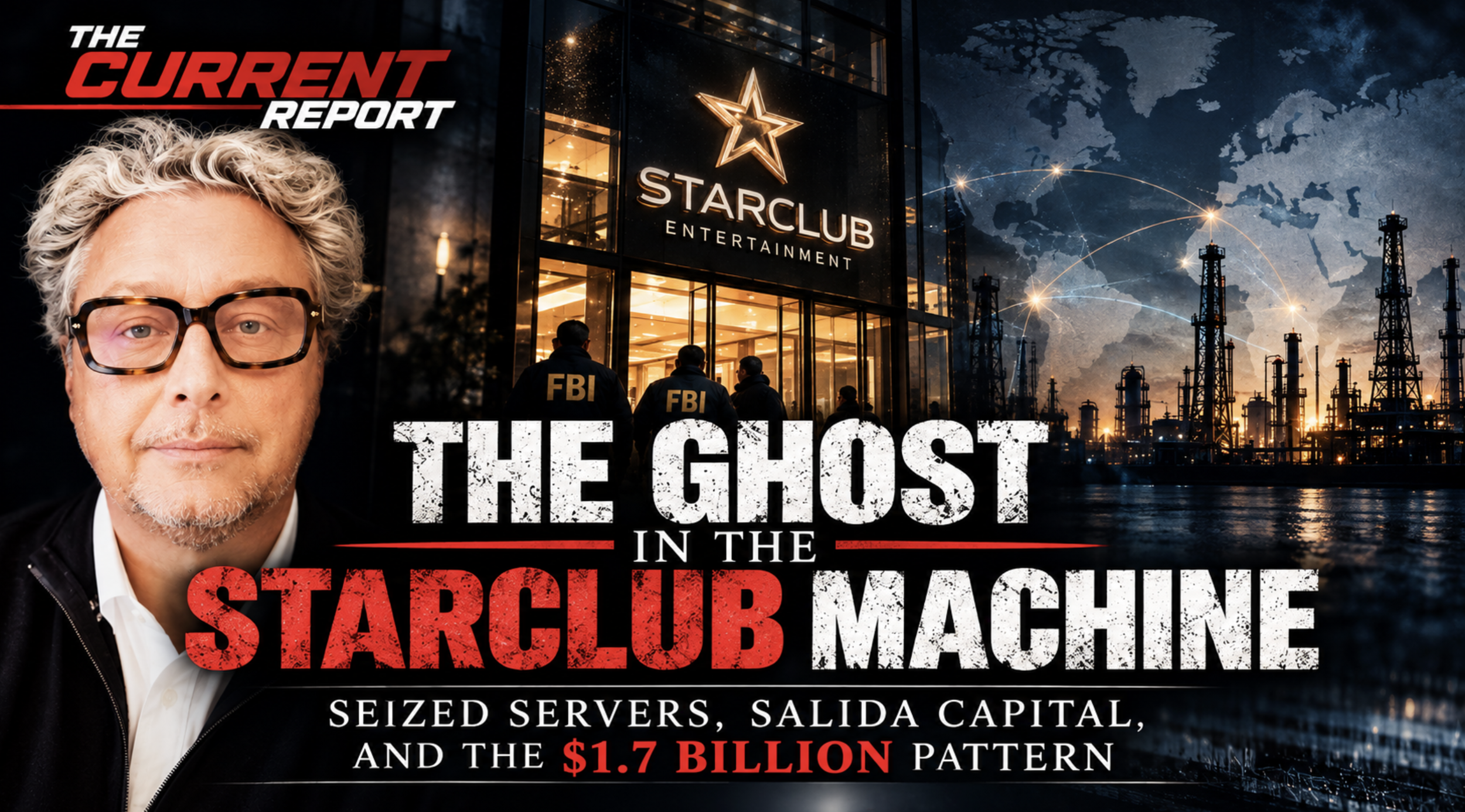
Seven days after investigative journalist William B. Scott published an investigation into recurring $400 million and $1.7 billion financial claims involving Russian and American energy interests, federal agents raided StarClub, arrested its founder and seized servers containing approximately 50 emails tracking the same financial pattern.
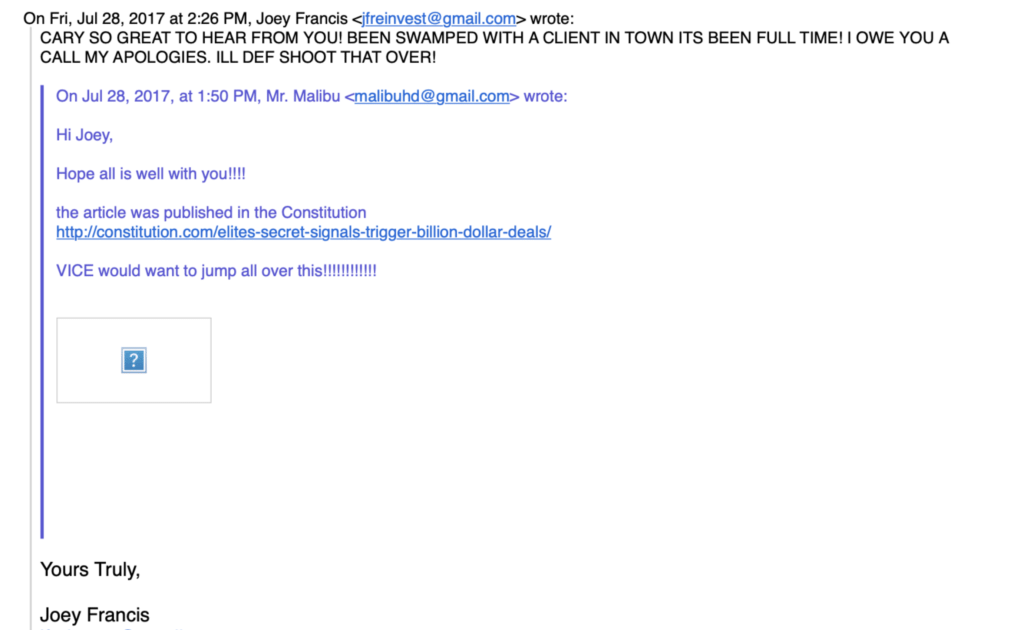
When federal agents raided StarClub on August 2, 2017, they did more than arrest founder and CEO Bernhard Fritsch. They seized the company’s servers and, with them, an extraordinary archive of contemporaneous correspondence documenting a financial pattern that has never been publicly accounted for in the government’s prosecution.
That distinction is important because the government didn’t have to go looking for these records years later. It took possession of them.
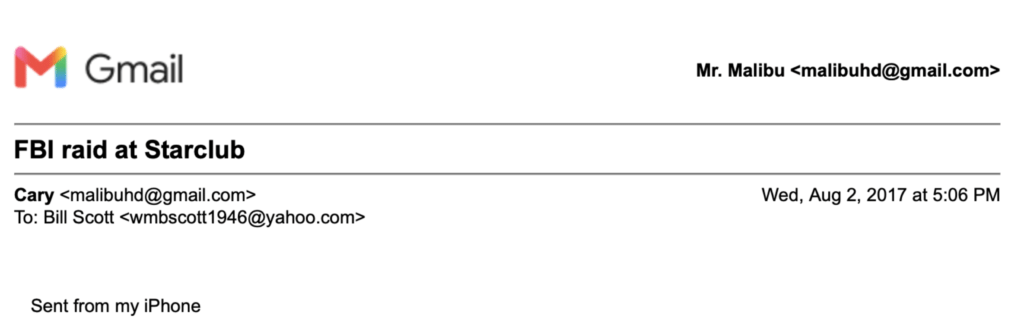
For months before the raid, StarClub Communications Manager Cary ONeal had been tracking business reports containing two financial benchmarks that continued appearing across seemingly unrelated transactions: $400 million and $1.7 billion. As those figures surfaced across corporate transactions, energy agreements, government expenditures, financing packages and infrastructure projects, ONeal sent approximately 50 emails to Fritsch preserving the reports as they appeared in the financial press.
The companies and institutions appearing in those reports included major American corporations and some of Russia’s largest energy organizations, including Rosatom, Gazprom, Rosneft and Lukoil.
Those approximately 50 emails were sitting on StarClub’s servers when federal agents seized them. They are now in the possession of the FBI and Department of Justice in Washington, D.C.
And that is where this story starts getting interesting.
SEVEN DAYS
On July 26, 2017, veteran investigative journalist William B. Scott published an exposé on The Constitution.com describing a broader financial pattern involving Russian and American energy interests operating around those same recurring monetary benchmarks: $1.7 billion and $400 million.
Seven days later, the FBI raided StarClub.
Federal agents arrested Fritsch and seized the company’s servers, taking possession not only of StarClub’s complete internal communications archive but also of the approximately 50 emails ONeal had accumulated tracking the same recurring figures Scott had just publicly examined.
The Constitution.com subsequently disappeared from the internet.
Now, let’s be clear about what that chronology does and does not establish. Seven days between Scott’s publication and the FBI raid does not prove Scott’s article caused federal agents to move against StarClub. There is nothing in the chronology alone that establishes why the FBI executed the raid on August 2.
But that isn’t really the most important question.
The important question is what happened after federal agents walked out with the servers.
Because once the government had those servers, it had ONeal’s approximately 50 emails. It had StarClub’s internal communications. It had the company’s business records. And it had access to the very evidence necessary to determine whether the recurring financial pattern ONeal had been documenting was significant or simply coincidence.
What investigators discovered—or failed to investigate—has never been publicly explained.
Nearly a decade later, it still hasn’t.
THE SALIDA–ROSATOM CONNECTION
The government’s eventual wire-fraud prosecution against Fritsch centered on more than $20 million transferred into StarClub by its principal investor, Daniel Guy, Chief Investment Officer of Salida Capital.
According to the Justice Department’s public account, Fritsch made false representations concerning StarClub’s revenues, technology, investors and prospective commercial relationships, causing one principal victim to invest more than $20 million.
But there is another part of this financial trail that deserves considerably more attention.
An official 2011 corporate disclosure from Rosatom State Atomic Energy Corporation identified Salida Capital Corp. as a wholly owned subsidiary.
Rosatom is Russia’s state-controlled nuclear-energy organization.
Read that again in the context of what federal investigators already possessed.
The principal investment stream at the center of the StarClub prosecution came through Daniel Guy, Chief Investment Officer of Salida Capital. A Rosatom corporate disclosure identified Salida Capital Corp. as a wholly owned subsidiary. Meanwhile, before the FBI raid, ONeal had been compiling reports involving recurring financial figures appearing across transactions connected to major American corporations and Russian energy entities—including Rosatom.
That doesn’t prove Rosatom supplied the money Guy ultimately transferred into StarClub. It doesn’t establish that Guy’s investments were part of the broader financial pattern ONeal believed he had identified. And it certainly doesn’t mean every company or transaction appearing in those reports was connected.
But it does establish a documented institutional relationship that raises an obvious question: Where did the money actually come from?
If you’re prosecuting a case centered on more than $20 million flowing through an investment firm into a company, wouldn’t tracing the original source and beneficial ownership of that money be one of the first things investigators would want to know?
Maybe they did.
But if federal investigators traced the funds beyond Guy and Salida Capital, the government’s public account of this case doesn’t tell us where that trail led.
And when the firm associated with the government’s principal investor appears in the corporate disclosure of Russia’s state-controlled nuclear-energy organization, that isn’t exactly a meaningless detail.
THE $4.1 MILLION QUESTION
The money becomes even more interesting when you put it next to what StarClub’s internal communications show Cary ONeal was actually doing for the company.
On June 9, 2014, ONeal pitched NBCUniversal Vice Chairman Ron Meyer on behalf of StarClub.
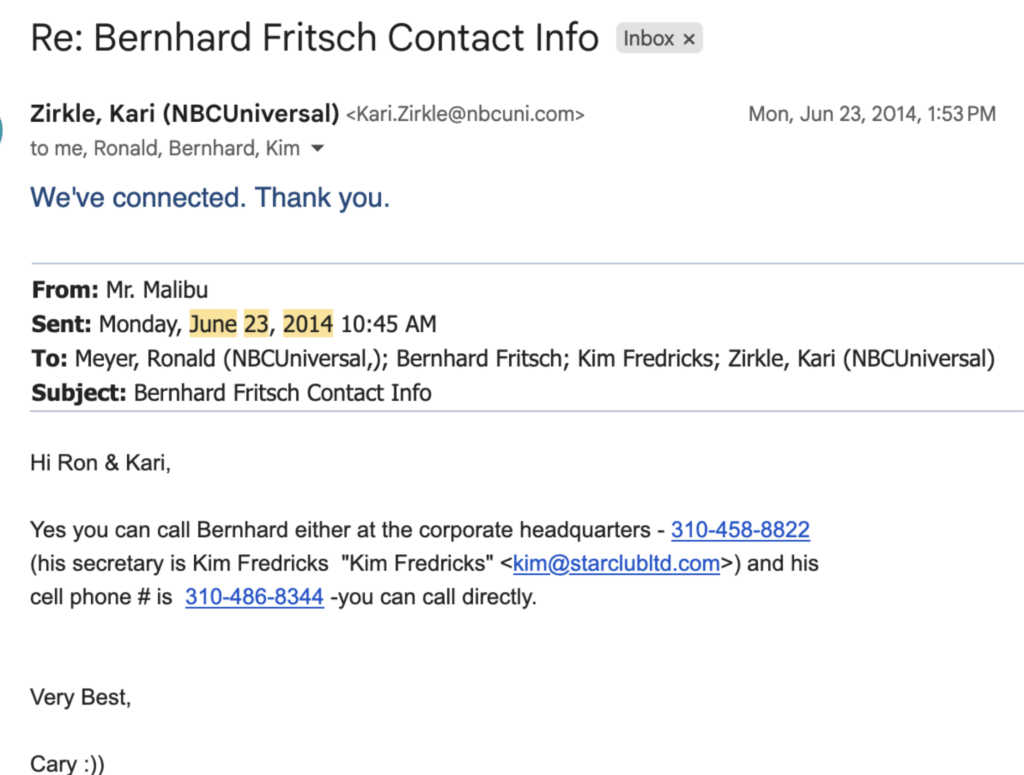
On June 23, NBCUniversal confirmed the connection:
“We’ve connected. Thank you.”
Seven days later, on June 30, a reported $4.1 million associated with Daniel “Danny” Guy entered StarClub.
The following day, July 1, Fritsch met directly with Meyer through ONeal’s introduction. On July 2, ONeal coordinated with Meyer’s executive assistant, Kari Zirkle, to hand-deliver Fritsch’s presentation directly to Meyer.
Again, chronology is not causation. The fact that $4.1 million entered StarClub seven days after NBCUniversal confirmed the connection does not establish that one event caused the other.
But considering what the government ultimately prosecuted Fritsch for, how is that chronology not relevant?
Federal prosecutors built their case around representations allegedly made to investors concerning StarClub’s revenues, technology, investors and prospective commercial relationships. Here was an actual prospective commercial relationship being facilitated by ONeal immediately before a substantial Guy-associated transfer entered the company.
Did investigators examine the communications between Fritsch and Guy during the June 23–30 period?
Did Fritsch tell Guy about the NBCUniversal connection?
Was the Meyer meeting discussed before the $4.1 million transfer?
Was the connection used to support any representation made to Guy?
The public prosecution record doesn’t answer those questions.
And $4.1 million wasn’t the only money Guy was putting into StarClub.
According to the public record, five Guy-associated transfers entered the company: $2.5 million on January 16, 2014; $4.1 million on June 30, 2014; $2.7 million on December 10, 2014; $7 million on January 30, 2015; and $6 million on November 24, 2015.
Together, those transfers totaled approximately $22.3 million.
Now put that investment timeline next to the company’s internal communications, because that is where another major problem emerges with the government’s narrative.
THE “RECEPTIONIST AND DRIVER” PROBLEM
Federal authorities later characterized ONeal as essentially a “receptionist and driver.”
There’s just one problem with that description: StarClub’s own contemporaneous records document something very different.
NBCUniversal wasn’t an isolated example.
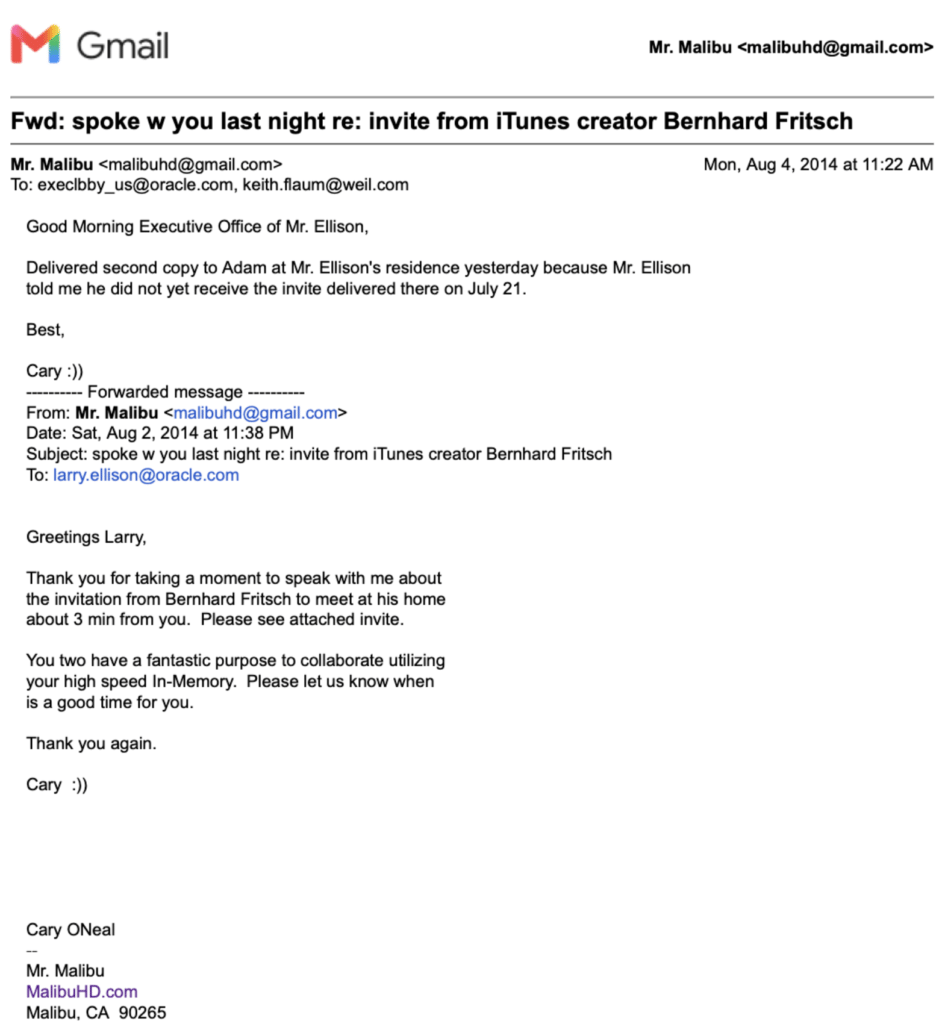
Following ONeal’s August 2014 outreach involving Oracle founder Larry Ellison, Fritsch responded directly to ONeal:
“Awesome hard work you did there!!! Impressed!”
Then there was Neymar Jr.
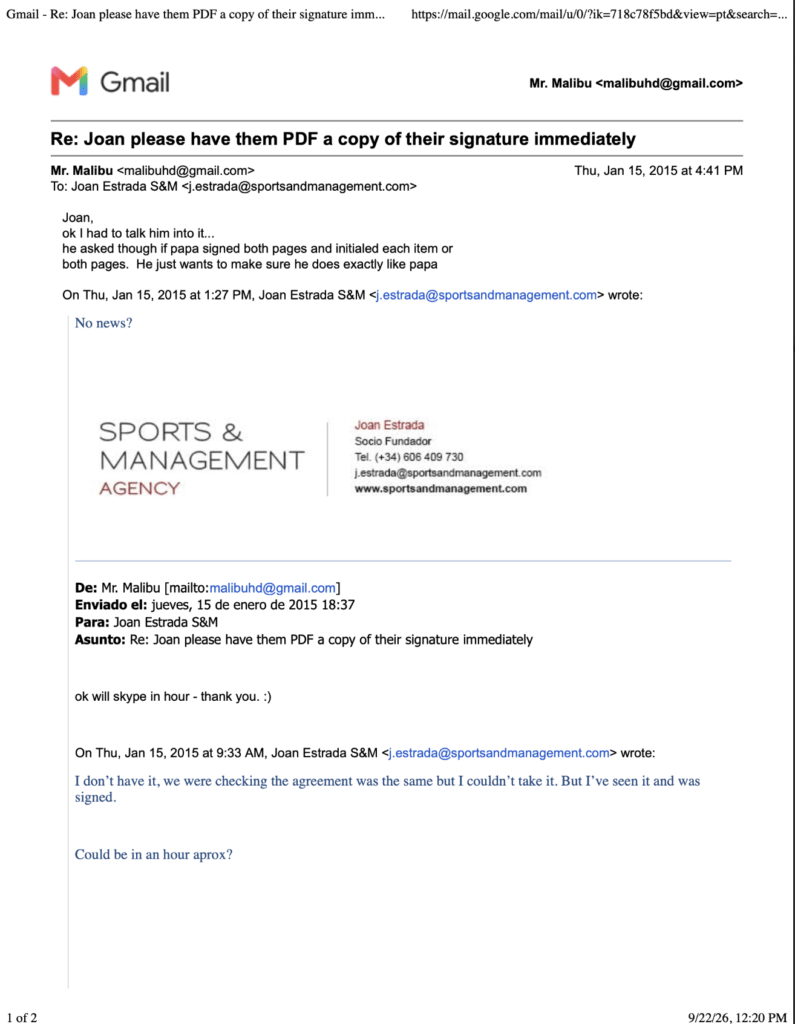
On January 15, 2015, ONeal coordinated the international execution and delivery of an agreement with Neymar Jr.’s organization. Nineteen days later, TMZ reported on the “StarClub Challenge,” in which Neymar attempted to break the NFL’s 64-yard field-goal record in a branded production that generated national attention.
So let’s reconcile that with “receptionist and driver.”
A Communications Manager who successfully gets StarClub’s CEO in front of the Vice Chairman of NBCUniversal isn’t simply answering phones. Someone coordinating the international execution of an agreement involving Neymar Jr.’s organization isn’t just driving the boss around. And Fritsch himself was praising ONeal’s “awesome hard work” following outreach involving Larry Ellison.
Those aren’t ONeal’s descriptions of what he supposedly did years after the company collapsed. They are contemporaneous records created while he was doing the work.
That matters.
It matters even more because millions of dollars were entering StarClub during the same period in which ONeal was establishing or pursuing the very media, technology and celebrity relationships central to StarClub’s business proposition.
Yet when the government constructed its fraud case, ONeal’s documented role somehow became that of a “receptionist and driver.”
Why?
And why does the government’s public narrative never reconcile that characterization with the communications sitting on the servers federal agents themselves seized?
THE TIMELINE TELLS ITS OWN STORY
When the records are placed chronologically, the disconnect becomes much harder to ignore.
On June 9, 2014, ONeal pitched NBCUniversal Vice Chairman Ron Meyer on behalf of StarClub. On June 23, NBCUniversal confirmed the connection: “We’ve connected. Thank you.” Seven days later, on June 30, a reported $4.1 million Guy-associated transfer entered StarClub.
On July 1, Fritsch met directly with Meyer through ONeal’s facilitation. On July 2, ONeal coordinated with Meyer’s executive assistant to deliver Fritsch’s follow-up presentation directly to Meyer.
On August 2, 2014, Fritsch praised ONeal’s outreach involving Larry Ellison, writing, “Awesome hard work you did there!!! Impressed!”
In December 2014, another reported $2.7 million Guy-associated investment entered StarClub.
On January 15, 2015, ONeal coordinated the international agreement with Neymar Sr.’s organization. The following month, TMZ covered Neymar Jr.’s post-Super Bowl “StarClub Challenge.”
Meanwhile, ONeal would ultimately accumulate approximately 50 emails documenting the recurring $400 million and $1.7 billion financial pattern.
Then came 2017.
On July 26, 2017, William B. Scott published his investigation describing recurring financial patterns involving major Russian and American energy interests.
Seven days later, on August 2, 2017, the FBI raided StarClub, arrested Fritsch and seized the servers.
But what happened after the raid is just as important as what happened before it.
THE GOVERNMENT WAS PUT ON NOTICE — MORE THAN ONCE
On April 10, 2018, detailed correspondence was sent to the legal and investigative team alleging broader Rosatom–Salida capital structures and questioning whether Fritsch’s arrest had effectively narrowed the inquiry.
That was not the end of it.
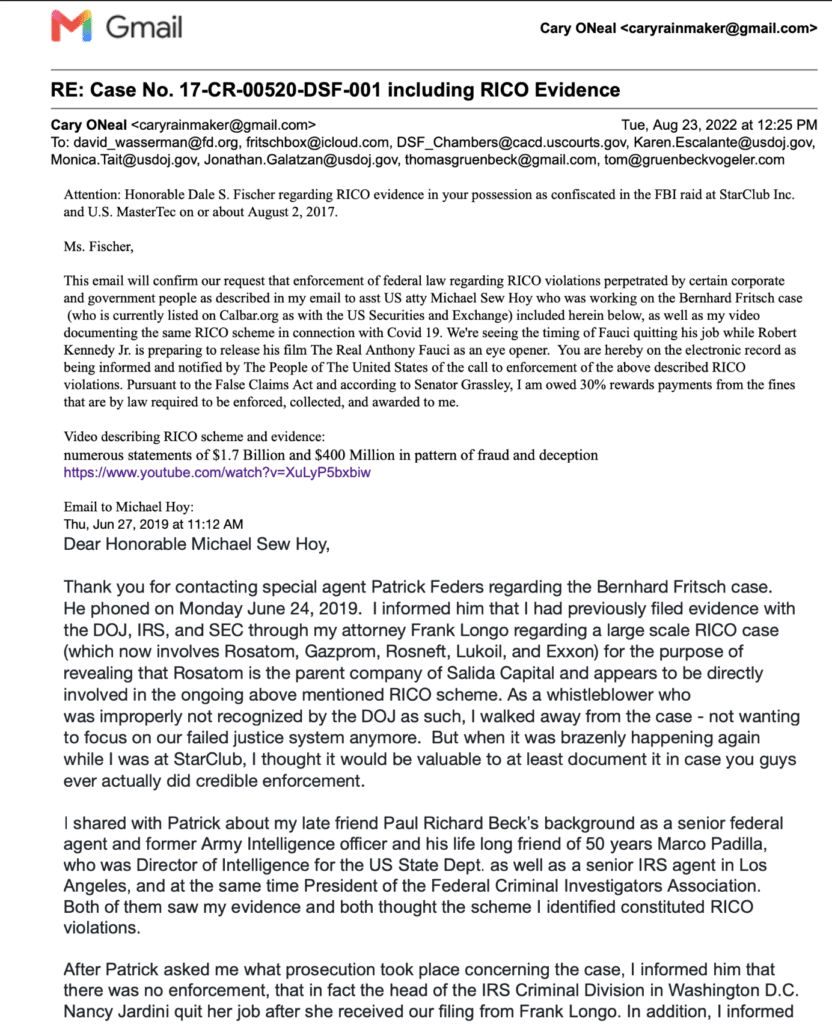
On June 24, 2019, a formal proffer presentation concerning the Rosatom–Salida disclosures was delivered to Assistant U.S. Attorney Michael Sew Hoy and Special Agent Patrick Feders.
And then, years later, federal authorities were given the information again.
In May 2026, a consolidated StarClub/RICO memorandum and TAB 5 agreement—documenting a $77.08 million structure involving US-Master Tec—were delivered by certified mail to the Department of Justice in Washington, D.C.
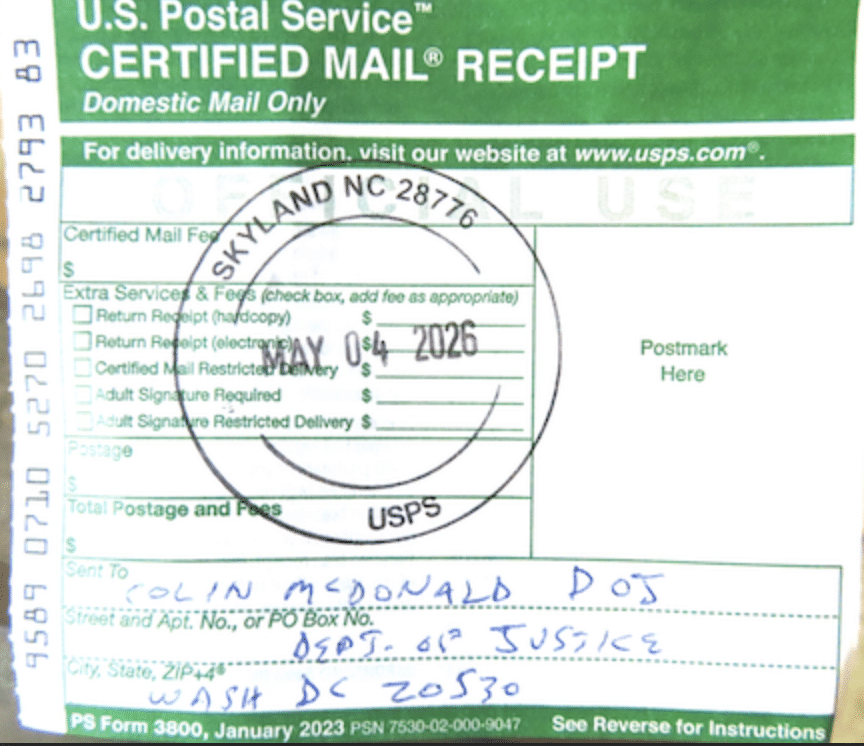
That chronology is important because federal authorities cannot simply say the information was buried somewhere on a server seized in 2017 among thousands of unrelated company records. The broader Rosatom–Salida issues were affirmatively raised after the raid. They were formally presented to federal authorities in 2019. And the material was delivered again to the Justice Department in 2026.
The government was put on notice repeatedly.
Whether federal authorities investigated those allegations is another question. The public record doesn’t tell us.
But claiming nobody knew about them is a much harder argument to make.
WHAT THE GOVERNMENT’S PUBLIC NARRATIVE LEAVES OUT
The Justice Department publicly presented the StarClub case as a relatively straightforward fraud prosecution: Fritsch allegedly made false statements concerning StarClub’s revenues, technology, investors and prospective commercial relationships, causing one principal victim to invest more than $20 million.
That’s the story the public got.
But it isn’t the entire documentary record.
That public account does not address Salida Capital’s appearance in Rosatom’s corporate disclosure. It doesn’t publicly identify the original source or beneficial ownership of the funds transferred into StarClub. It doesn’t explain what investigators did with ONeal’s approximately 50 contemporaneous emails tracking the recurring $400 million and $1.7 billion figures.
It doesn’t address William B. Scott’s exposé appearing seven days before the raid.
It doesn’t reconcile the timing of Guy’s investments with ONeal’s documented work establishing major executive and celebrity connections for StarClub.
And it certainly doesn’t explain how a Communications Manager whose contemporaneous records show him facilitating access to NBCUniversal Vice Chairman Ron Meyer, conducting outreach involving Larry Ellison and coordinating an international agreement involving Neymar Jr.’s organization somehow became a “receptionist and driver.”
The absence of those issues from the public narrative does not prove investigators ignored them. Federal investigators could have examined some or all of this information without publicly disclosing what they found.
But that’s precisely the point.
They’ve never publicly explained it.
THE $400 MILLION AND $1.7 BILLION PATTERN
At the macro level, the records identify a striking recurrence of transactions and corporate disclosures involving approximately $400 million or $1.7 billion, including matters that resulted in documented fraud penalties or other enforcement actions.
That recurrence, by itself, does not establish that every company, transaction or institution appearing in those records participated in a common scheme. It would be irresponsible to make that leap based simply on recurring dollar amounts.
But investigative reporting isn’t about ignoring patterns because they don’t immediately prove the final conclusion. It’s about following them until the documents tell you whether you’re looking at coincidence or connection.
And here, there was a lot to follow.
There were approximately 50 contemporaneous emails documenting the recurring figures. There was Scott’s investigation published seven days before the FBI raid. There was a principal investment stream flowing through Daniel Guy and Salida Capital. There was a Rosatom corporate disclosure identifying Salida Capital Corp. as a wholly owned subsidiary. And there were subsequent submissions explicitly directing federal authorities toward the broader Rosatom–Salida issues.
The concentration, repetition and surrounding enforcement history warrant investigation into whether at least some of these transactions were connected rather than coincidental.
But here’s the part that makes the StarClub case different from someone discovering an old financial trail years after the fact.
The government already had the trail.
THE EVIDENCE WAS ALREADY INSIDE THE MACHINE
Federal agents seized StarClub’s servers in August 2017. Those servers contained ONeal’s approximately 50 emails documenting the alleged pattern along with the company’s complete internal communications archive.
The government also had the investment transfers that became the centerpiece of its criminal prosecution.
It had the records documenting ONeal’s actual role inside StarClub.
It was subsequently presented with the Rosatom–Salida information in 2018.
A formal proffer was delivered in 2019.
And in May 2026, the Department of Justice received a consolidated StarClub/RICO memorandum and TAB 5 agreement documenting a $77.08 million structure involving US-Master Tec.
So the issue is no longer whether someone should hand this information to the government.
Someone already did.
Repeatedly.
The question is what happened to it.
Did investigators examine the Salida–Rosatom relationship? Did they trace the beneficial ownership of the Guy-associated funds beyond Guy and Salida? Did they analyze ONeal’s approximately 50 emails to determine whether the recurring $400 million and $1.7 billion figures represented an actual financial pattern? What conclusions did they reach about the information presented in the 2019 proffer? And what has the Department of Justice done with the additional materials delivered in May 2026?
The public record doesn’t answer those questions.
AND THEN FRITSCH ESCAPED
There is one final part of this case that makes the entire chronology even more extraordinary.
The FBI raided StarClub on August 2, 2017.
The prosecution that followed took nearly eight years to reach trial.
Fritsch was ultimately convicted of wire fraud.
And after all of that—after the raid, the seizure of the servers, years of investigation and litigation, and finally a criminal conviction—Fritsch was still free on bond awaiting sentencing when he escaped to Germany.
Think about that timeline.
Federal authorities seized the evidence in 2017. They controlled the servers containing the company’s internal records. They prosecuted a case centered on more than $20 million in investments. They took nearly eight years to bring that prosecution to trial.
And then the convicted defendant left the country before he could be sentenced.
Meanwhile, the larger financial record has never been publicly resolved.
The government has never publicly explained whether investigators traced the Guy-associated money beyond Salida Capital. It has never publicly accounted for what it did with ONeal’s approximately 50 emails. It has never reconciled its “receptionist and driver” characterization with StarClub’s contemporaneous communications documenting ONeal’s actual work. And it has never publicly explained what became of the broader Rosatom–Salida information presented to federal authorities repeatedly after the raid.
That is what makes this story bigger than Bernhard Fritsch’s wire-fraud conviction.
The unanswered story is sitting in the evidence the government already possessed.
Federal authorities seized the records that could potentially answer these questions. They controlled the servers. They prosecuted the investment transfers. They were repeatedly provided additional information directing them toward the broader financial trail.
Nearly nine years after the raid, the public still doesn’t know where that trail led.
And after taking nearly eight years to prosecute Fritsch, the federal government didn’t even manage to keep the convicted defendant in the country long enough to sentence him.
The government may eventually have an explanation for all of it.
It’s time we heard it.