

Ventura County Family Court does not need to falsify evidence to destroy a parent’s relationship with their children. It does not need to make explicit findings of unfitness, danger, or neglect. It has something far more effective at its disposal: procedure. In case after case, including that of professional MMA fighter Amir Rahnavardi, custody outcomes are not decided through evidence tested on the merits, but through timing, execution, and delay. The system does not decide. It allows reality to calcify before anyone is forced to justify it.
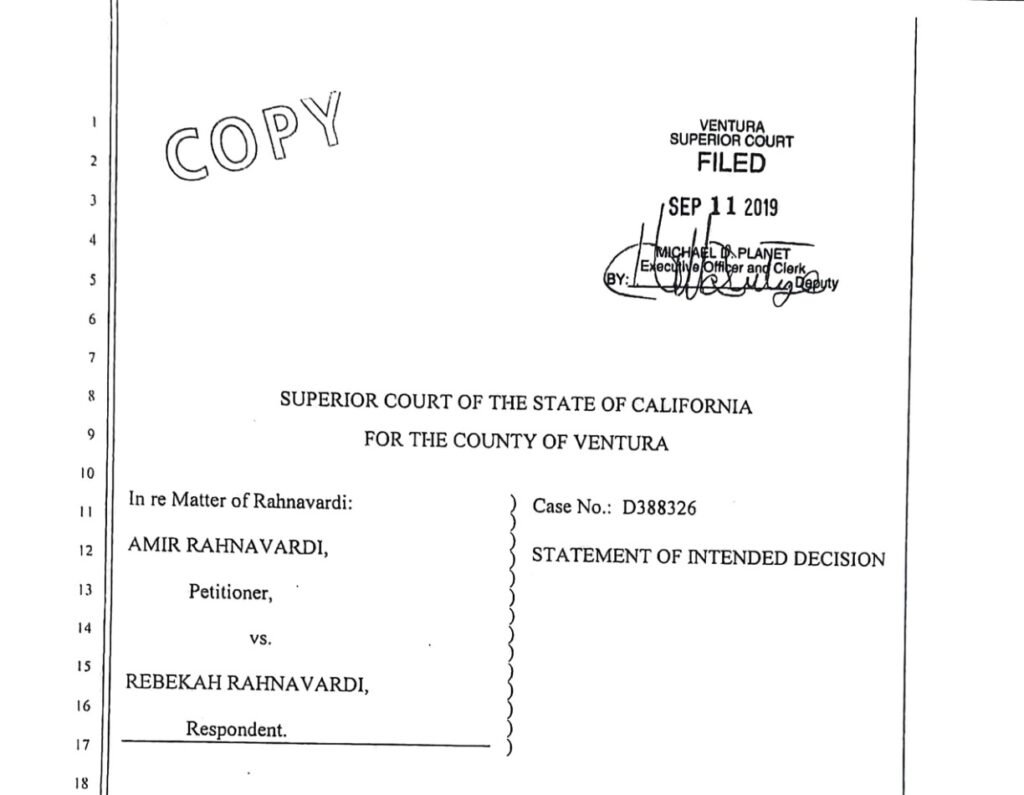
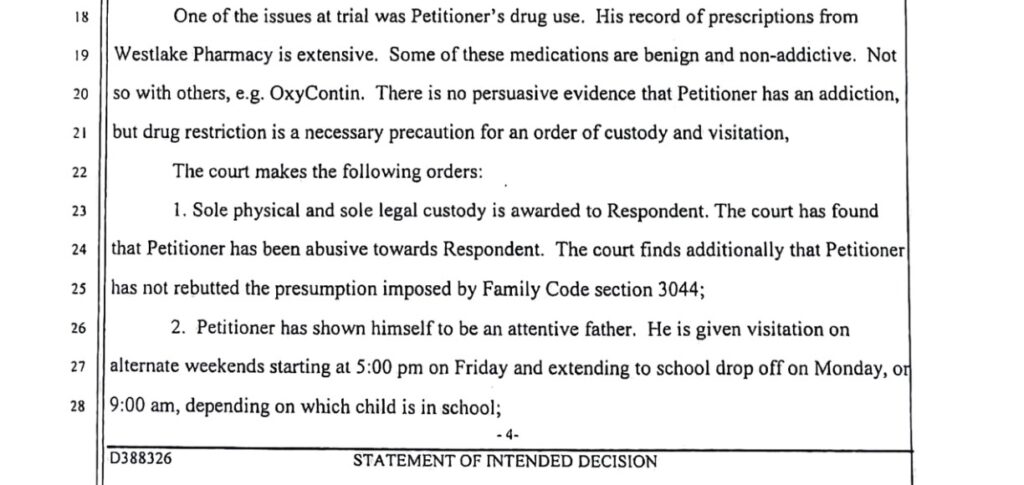
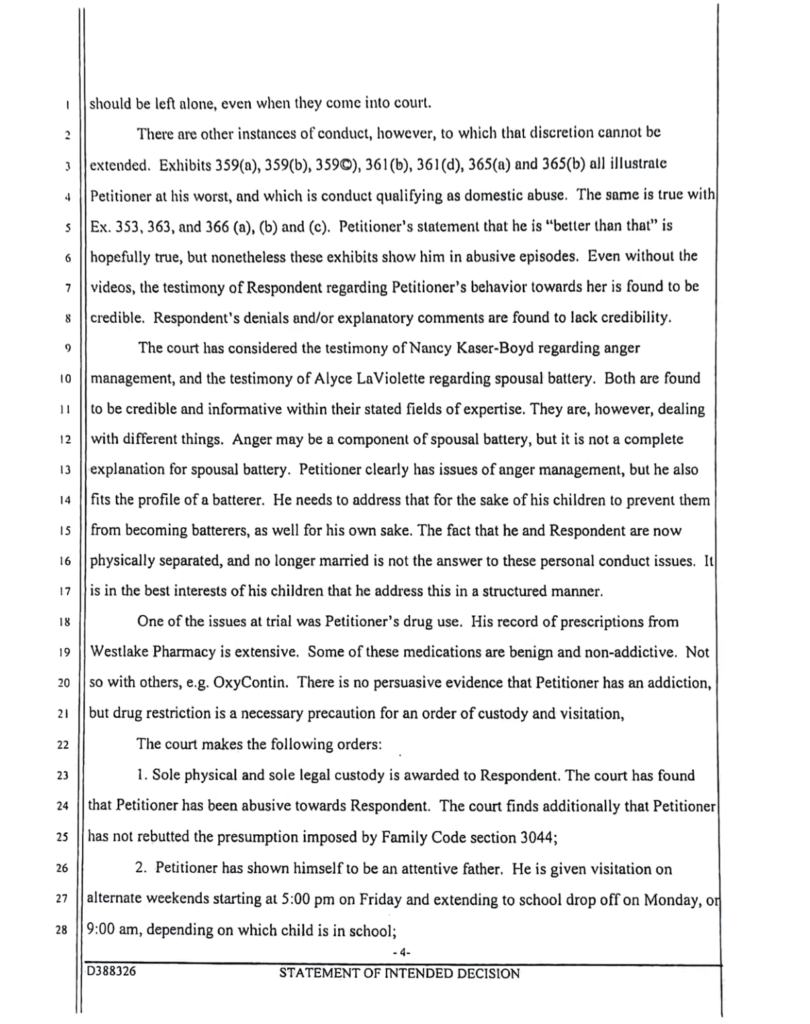
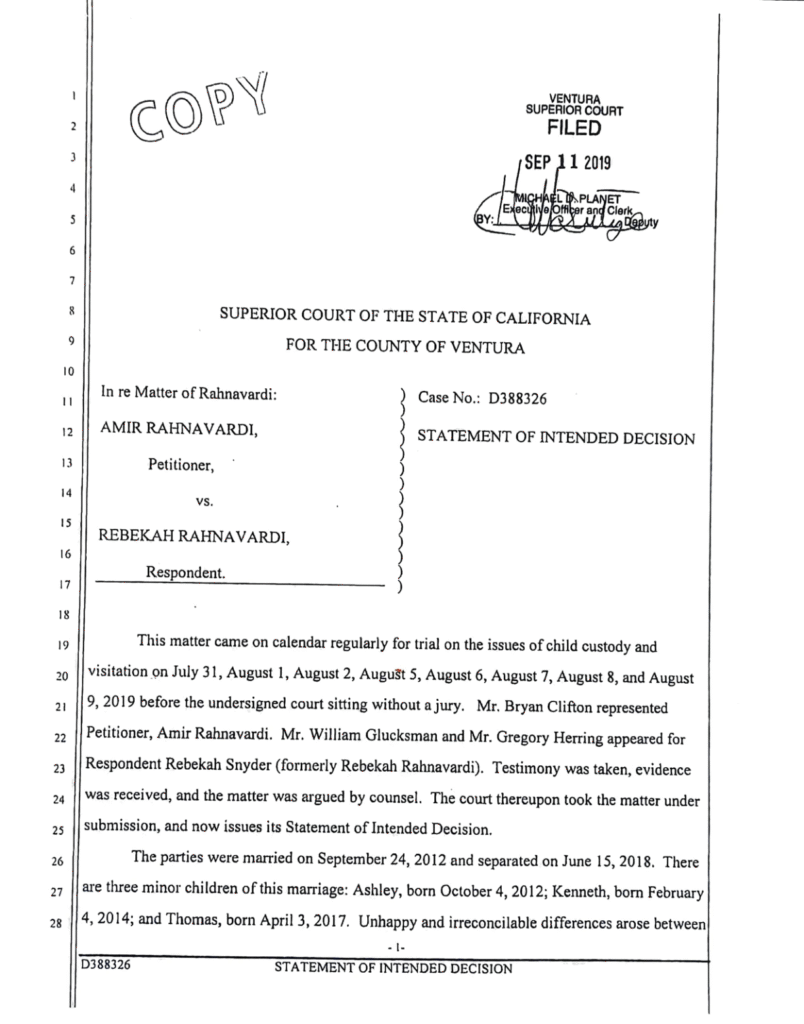
Rahnavardi’s case began in September 2019 with custody orders issued by Judge Henry Walsh following allegations tied to a domestic incident. Those allegations were contested. They were never fully adjudicated in a comprehensive evidentiary hearing. Yet those early orders became untouchable. Everything that followed treated them not as provisional findings, but as settled truth. The court never returned to the starting line. It simply kept moving forward as if the foundation had already been proven sound.
From there, access narrowed gradually, then predictably. What the written orders permitted and what actually occurred began to diverge. Missed visits went uncorrected. Reduced access became normalized. Enforcement was inconsistent and often dependent on the unilateral actions of one party. The court did not intervene to restore balance. Instead, it absorbed the imbalance into the case itself. Over time, deprivation became the “status quo.”
Between late 2019 and September 2020, a substantial body of contemporaneous evidence accumulated. Video recordings, journals, communications—material documenting the family dynamic as it was unfolding in real time. Some recordings contained statements referencing violence and coercion. This was not marginal material. It was central. And yet it was never subjected to the one thing that gives evidence meaning: adversarial testing. There was no full evidentiary hearing. No credibility determinations. No findings resolving what was true and what was not. The evidence was neither admitted nor excluded. It simply existed in a procedural fog, influencing outcomes without ever being decided.
By 2021, the court’s procedural bias hardened into something unmistakable. When the children were relocated out of state, Rahnavardi sought emergency relief through an ex parte filing. The matter was heard on a day when the assigned judge, Judge Michael Lief, was not available. A substitute judge denied emergency relief. The denial did not resolve whether relocation was appropriate. It did not conduct a best-interest analysis. It did not weigh evidence. It merely allowed the move to proceed.
Once the children were gone, the court treated relocation as a fait accompli. Time did what the court refused to do. What should have required justification instead became the baseline. Subsequent proceedings no longer asked whether the move should have happened, only how to manage the consequences of a reality already imposed. This is how family court manufactures permanence without findings. Delay becomes doctrine.
This was not a one-off. It became a recurring sequence. Emergency filings were denied on narrow procedural grounds. Review was deferred. Hearings were delayed. Meanwhile, the consequences of those denials deepened. Each day without access strengthened the argument that access should remain limited. Each delay fortified the very conditions that justified further restriction. The system rewarded obstruction and punished persistence.
At one point, the court openly acknowledged the public scrutiny surrounding the case. An ex parte request was filed seeking to restrict investigative reporting related to the proceedings. That request was denied. The court knew eyes were on it. Reporting continued. Transparency, at least in theory, was permitted. Yet nothing about the underlying process changed. Visibility did not trigger accountability. It merely coexisted with dysfunction.
The pattern reached a new level of absurdity and cruelty in late December, when an ex parte drug-test order was executed on Christmas Eve. The test was compelled at a facility near LAX, bypassing closer options. The test was observed. Compliance was immediate. The result was negative. None of it mattered. Visitation was still disrupted. Access was not restored. The order did not articulate imminent risk findings sufficient to justify the disruption that followed. The concern the order purported to address was resolved, yet the punishment remained. This was not about safety. It was about leverage.
Then, in January 2025, the same maneuver repeated. As a January 12 hearing approached, visitation was altered again. Access was withheld pending judicial review. By the time the court was prepared to look at the issue, the ground had already shifted. The court was no longer evaluating whether access should be reduced. It was responding to a reduction already imposed. Once again, execution came first. Justification never arrived.
Viewed individually, each step can be defended as procedural. Emergency denials happen. Hearings get delayed. Judges are unavailable. Orders are temporary. But when the same sequence repeats across years and across unrelated cases, the explanation collapses. As documented in multiple investigations into Ventura County Family Court, this is not a series of accidents. It is a system operating exactly as designed.
When emergency mechanisms repeatedly create irreversible custody outcomes before evidence is tested, the process ceases to be neutral. Procedure becomes outcome. Timing replaces truth. Absence replaces adjudication. And by the time the court is prepared to “consider” the merits, the system insists it is too late to undo what was done.
Families live with the consequences of that choice. Children grow up. Bonds erode. And the court points to the passage of time as proof that nothing can be changed—never acknowledging that it was time, not truth, that decided the case.
That is the scandal now unfolding in plain sight. Not just what Ventura County Family Court decides, but how it avoids deciding at all.

DISCLAIMER: Investigative reporting in high-profile litigation cases published by The Current Report is non-commercial, fact-based journalism; any project fees compensate research and reporting labor only, sources participate solely in accuracy verification, and final publication is approved exclusively by The Current Report after fact-checking is confirmed.