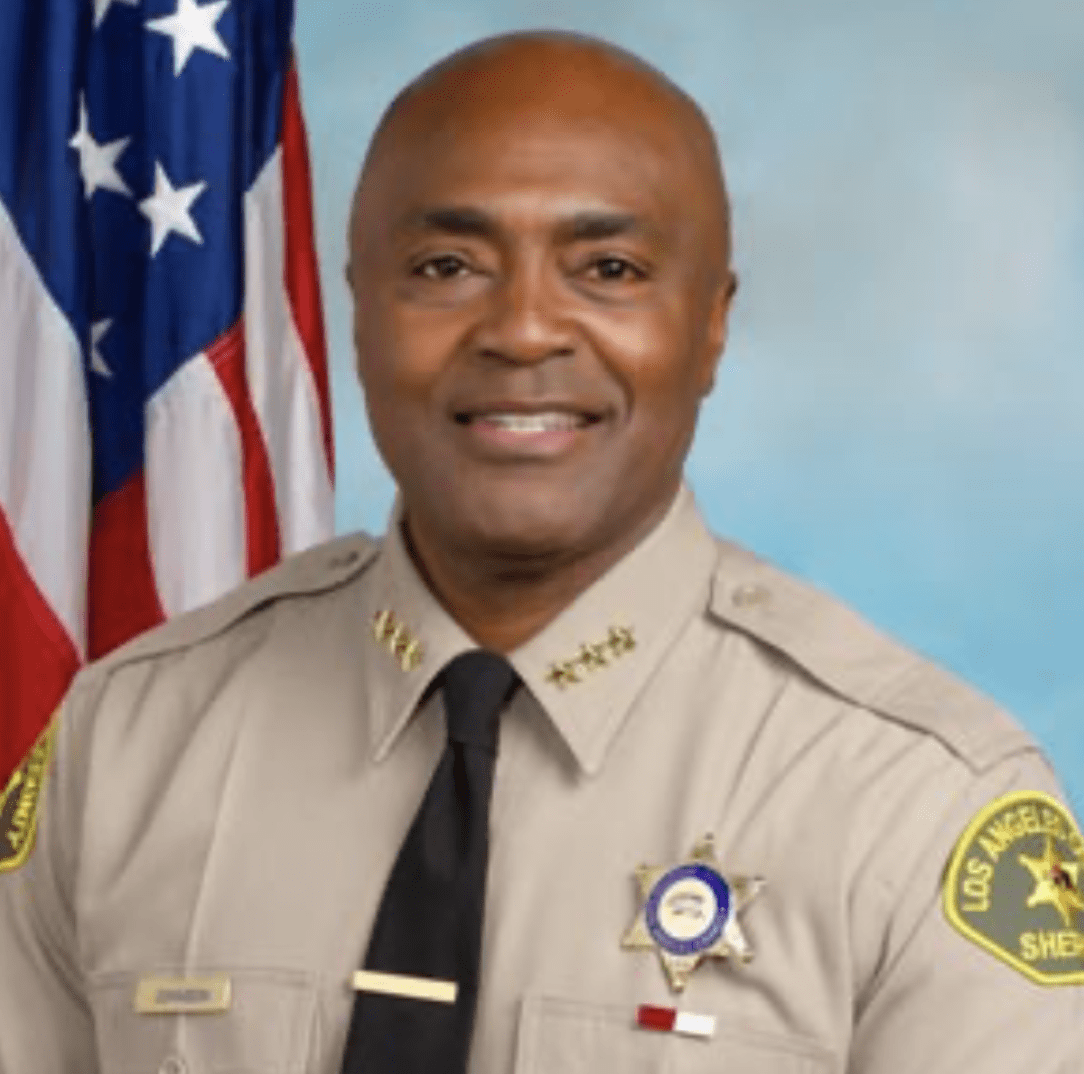
In a revealing courtroom appearance during the federal trial of Benjamin Torres v. County of Los Angeles on March 4, 2026, Assistant Sheriff Myron Johnson, a 38-year veteran of the Los Angeles County Sheriff’s Department (LASD), delivered sworn testimony that laid bare significant issues in the department’s promotional process for high-ranking positions. Johnson, who oversees patrol operations and ranks among the top executives just below Sheriff Robert Luna, candidly admitted that the system is not fair, echoing long-standing criticisms of favoritism and opacity within the LASD. His statements, made under oath, underscore a return to what critics call the “good old boy” network, where connections trump merit, and interviews serve merely as a facade to mask predetermined selections.
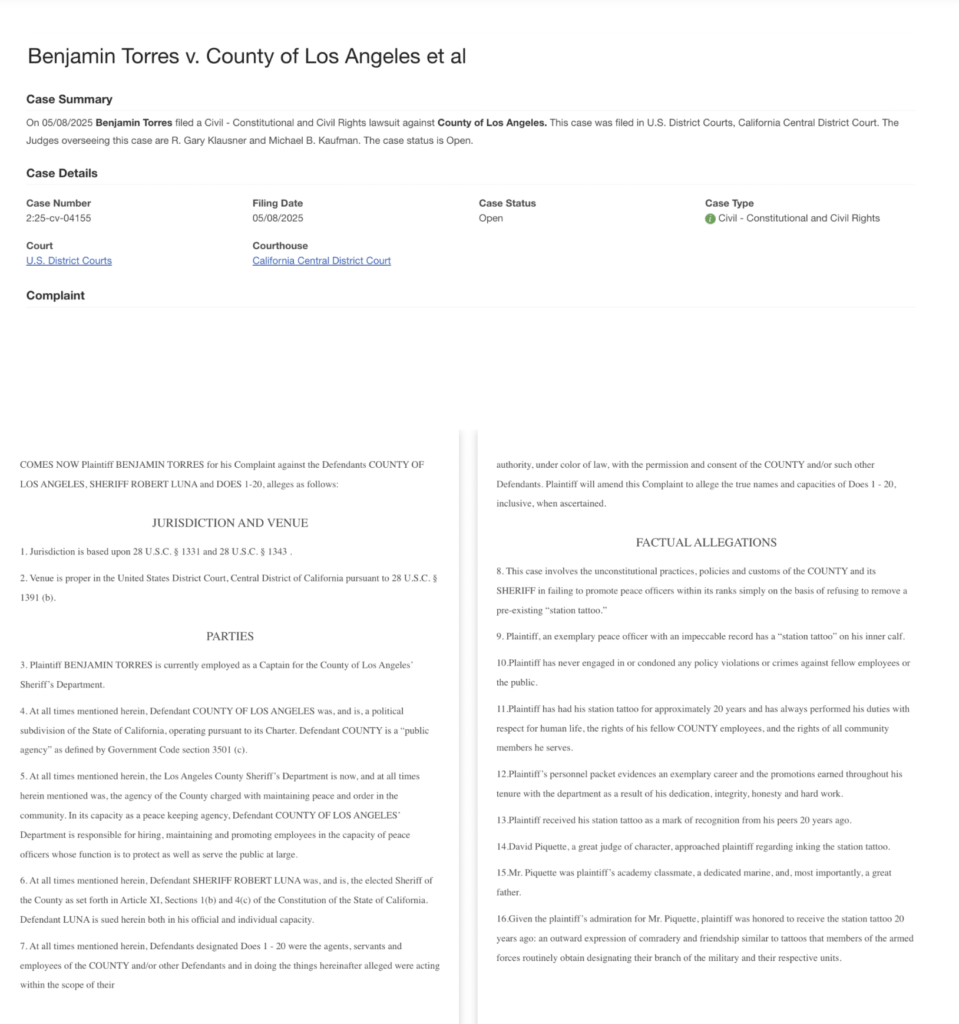
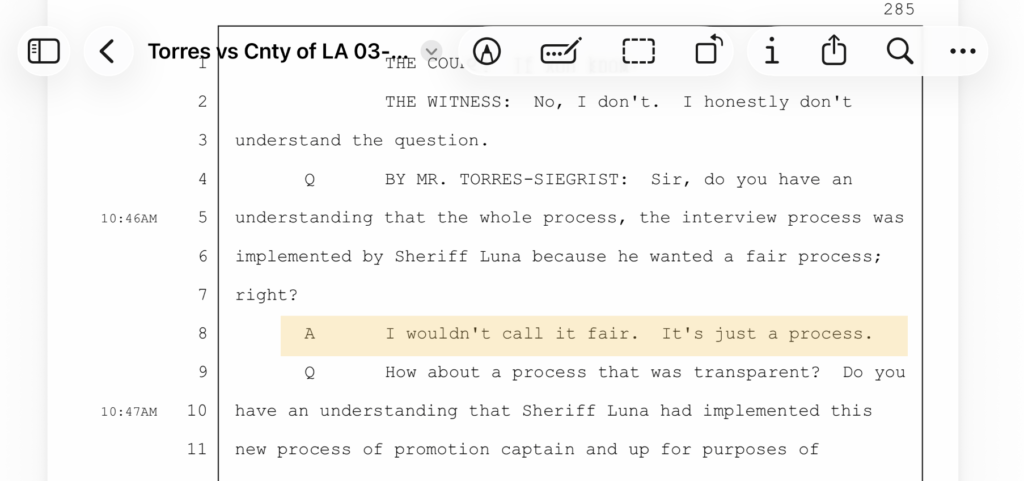
Johnson’s testimony centered on his role as a panelist in interviews for promoting captains to commanders, including two sessions with plaintiff Captain Benjamin Torres in May 2024 and March 2025. He described the process as one where panelists make recommendations to the undersheriff, but the final decision rests with Jason Skeen and Sheriff Luna. However, Johnson was blunt when questioned about the fairness of the system implemented by Luna, stating, “I wouldn’t call it fair. It’s just a process.” This admission from one of the department’s highest-ranking officials highlights how the promotional ladder favors those with insider ties, allowing Luna to handpick favorites while sidestepping objective criteria.
A key revelation was Johnson’s acknowledgment of a mandatory, unwritten question asked in every captain-to-commander interview: “Do you or have you ever had a station tattoo?” These tattoos, often associated with alleged deputy subgroups or “gangs” within the LASD, are scrutinized for potential conflicts like nepotism or favoritism in placements. Yet, Johnson testified that both the question and responses are deliberately not documented to avoid discovery, including through Public Records Act (PRA) requests. He explained that writing down answers could create a discoverable list, potentially violating employees’ First Amendment rights or leading to unfair labeling as gang members. “Anybody could fill out a Public Records Request Act and get that information,” Johnson said, emphasizing the department’s intent to shield such details from public scrutiny and transparency.
This lack of documentation, Johnson revealed, stems from pressure by the Civilian Oversight Commission (COC) on Luna to address alleged deputy gangs. However, he portrayed Luna’s rationale, “the sheriff wants to know everything about every candidate”, as disingenuous, a “fake question” designed to placate critics without creating traceable records. Notably, Johnson testified that staff are instructed not to record answers, ensuring they remain off-limits to PRA inquiries. This practice, he admitted, contradicts standard departmental expectations of thorough documentation for accountability, transparency and future reference.
Compounding the unfairness, Johnson disclosed that not all qualified candidates in “band one” (the initial eligibility tier) advance to interviews. Chiefs must nominate individuals, leading to situations where more qualified deputies are overlooked simply because they lack a chief’s endorsement. “Are you aware of individuals that were more qualified than others that didn’t get an interview simply because a chief did not nominate them?” he was asked. While Johnson claimed ignorance of specifics, his testimony implies a system ripe for cronyism, where personal connections determine opportunities.
The LASD has long recognized these flaws in lower ranks, eliminating interviews for sergeant and lieutenant promotions to curb bias and ensure fairness through exam-based assessments. Yet, for captain-to-commander roles, interviews persist, allowing Luna to “pick and choose who he wants,” as critics argue. Johnson’s testimony reinforces this: without objective tests, the process masks subjective favoritism under the guise of evaluation.
In a striking personal admission, Johnson revealed he himself has a tattoo associated with the Buffalo Soldiers, a group whose membership is exclusively for African American deputies within the LASD. This disclosure highlights inconsistencies in how tattoos are viewed, while station tattoos raise red flags for alleged gangs, other group affiliations like the Buffalo Soldiers face no such scrutiny.
Johnson’s testimony also touched on Undersheriff April Tardy, Luna’s second-in-command, who has a Temple Station tattoo. Despite Luna’s public vows to eradicate deputy gangs, he has never publicly acknowledged being surprised by Tardy’s ink or addressed its implications. Sources indicate Luna did not know about the tattoo during Tardy’s interview for undersheriff, yet appointed her anyway, raising questions about his commitment. Critics argue this selective enforcement, promoting those with modified or covered tattoos while sidelining others like Torres, who has an unmodified Regulator tattoo from Century Station, exemplifies the arbitrary nature of promotions.
Ultimately, Johnson’s sworn statements paint a picture of a promotional system reverted to the “good old boy” era, where transparency is promised but not delivered. Luna’s refusal to adopt exam-style tests for higher ranks ensures he retains control, bypassing merit for loyalty. As the trial unfolds, these revelations could prompt renewed calls for reform, ensuring the LASD’s leadership reflects true qualifications rather than hidden agendas.