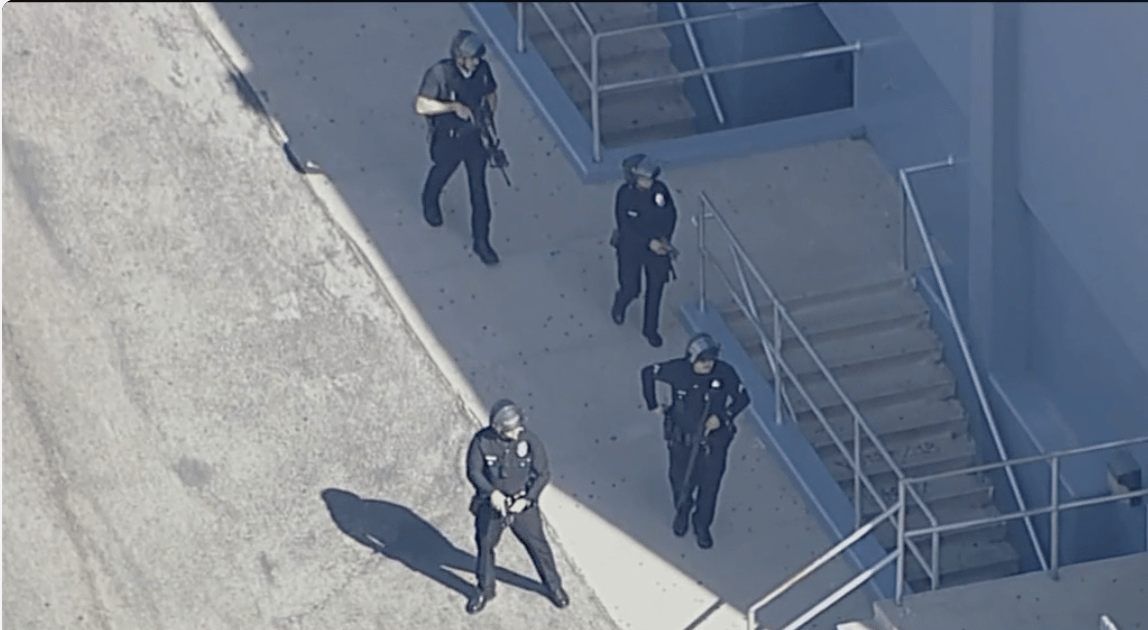
On Friday, March 13, Los Angeles High School was abruptly placed on lockdown after reports surfaced that armed suspects may have been on or near the campus along Olympic Boulevard. The alert triggered an immediate response from law enforcement and sent teachers and students into emergency protocols that unfolded in real time across classrooms throughout the historic Los Angeles Unified School District campus.
According to information provided by law enforcement and multiple accounts circulating within the school community, the lockdown was initiated after a threat suggested that as many as two armed individuals might be in the vicinity of the campus. Officers from the Los Angeles Police Department responded and conducted a sweep of the school grounds and surrounding area.
Within roughly an hour and a half, authorities issued an all clear.
No suspects were located.
Officials later indicated the call may have been a hoax or a swatting-style report designed to provoke a large police response.
But while the incident ultimately ended without physical harm, what unfolded inside classrooms during that hour paints a far more complicated picture about how prepared the nation’s second largest school district truly is when faced with the possibility of armed violence on campus.
Teachers described confusion, shouting, sounds of “popping” noises, and rapidly unfolding instructions as staff moved students into lockdown positions. Some classrooms reportedly struggled to secure doors quickly, forcing educators to improvise by blocking entrances and keeping students away from windows and hallways while they waited for confirmation about what was actually happening outside.
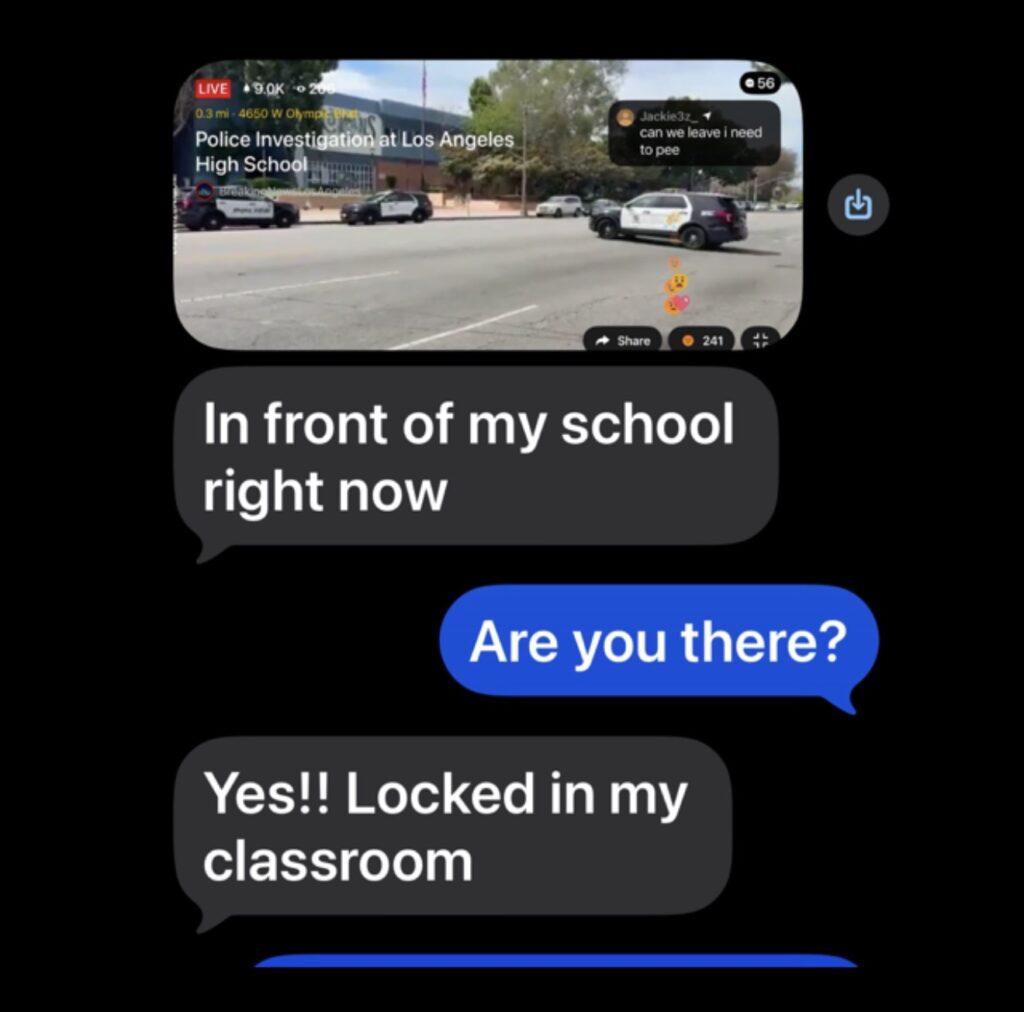
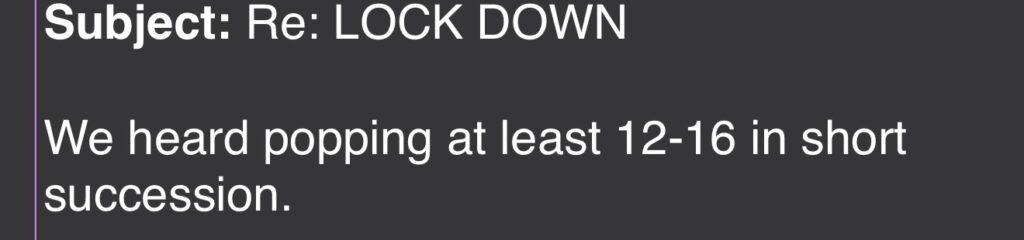
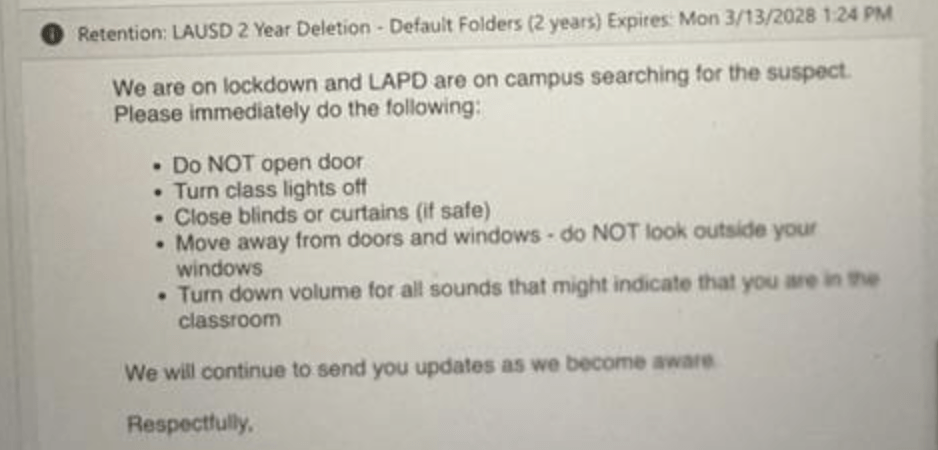
Substitute teachers in particular were left navigating unfamiliar classrooms and emergency procedures under pressure, an issue that has quietly become a recurring concern across LAUSD campuses as staffing shortages force schools to rely on rotating substitute coverage.
The scene inside the school, according to those present, was chaotic.
Students who had just minutes earlier been sitting in ordinary classes suddenly found themselves in the middle of what many believed could be an active threat situation. Yelling in hallways, hurried instructions from staff, and the presence of police vehicles outside the campus contributed to an atmosphere that many described as deeply unsettling.
But the episode raises a question that continues to surface each time a campus lockdown occurs inside Los Angeles Unified.
How prepared are schools for the moment when the threat is real?
Under California Education Code sections 32280 through 32289.5, every public school campus is required to maintain a Comprehensive School Safety Plan. These plans must be updated annually and are intended to guide staff through responses to emergencies ranging from natural disasters to armed intruders.
The plans are supposed to include detailed procedures for lockdowns, evacuation protocols, coordination with law enforcement, and tactical responses to criminal incidents involving weapons on school grounds.
On paper, the system appears robust.
In practice, incidents like Friday’s lockdown suggest that the gap between policy and execution can still be wide.
Even when a threat turns out to be a hoax, the response exposes the real world stress test placed on those safety systems. Every lockdown forces educators, administrators, and students to rehearse the possibility of catastrophic violence.
And each time it happens, the same uncomfortable questions return.
Are classroom doors capable of locking quickly and reliably?
Are substitute teachers trained well enough to manage emergency procedures?
Is communication between school officials and law enforcement seamless in the first critical minutes of a threat?
Those questions take on added significance when viewed against a series of policy decisions that reshaped school discipline and campus security across the district in recent years.
In February 2021, the Los Angeles Unified School District Board voted to remove 133 school police positions from campuses, reducing the department’s budget from approximately $77.5 million to $52.5 million. The positions were replaced with a new role known as school climate coaches. The move was driven by activists and advocacy groups who argued that police presence on campuses contributed to what they described as the school to prison pipeline.
The policy was strongly supported by the teachers union United Teachers Los Angeles, which pushed the district to reduce the presence of sworn officers in favor of restorative justice programs and social support systems.
During the debate over the proposal, one key provision was quietly removed.
The original plan would have allowed individual schools the option to request that school police officers remain stationed on their campuses. That provision was stripped out through an amendment introduced by board member Kelly Gonez.
As a result, individual schools across the district were left without the ability to opt in for a permanent on campus police presence even if administrators or communities believed it was necessary.
“Our jobs are to serve students and if you’re causing harm to a small group of students that is enough to address the action that is causing harm, even unintentionally causing harm,” Gonez said during the debate over the policy.
Instead of sworn officers, the district began deploying school climate coaches.
Unlike school police officers, climate coaches are not law enforcement personnel. They do not carry weapons, have no arrest authority, and are not tasked with providing physical security. Their responsibilities center on de escalation, conflict mediation, mentoring students, and implementing behavioral frameworks such as Positive Behavioral Interventions and Supports intended to improve the overall climate of a school.
The district has also emphasized hiring coaches from the communities they serve in an effort to build trust with students and address concerns about bias in school discipline.
At the same time, critics argue that the shift away from traditional discipline policies has created new challenges inside classrooms.
During the COVID era, district leadership and union advocates advanced discipline policies that made suspensions and expulsions significantly more difficult for schools to implement. The changes were framed as an effort to reduce disparities in discipline and keep students engaged in school.
Teachers and staff, however, say the practical effect has been a dramatic rise in classroom disruptions and behavioral incidents involving students who previously would have faced removal from campus.
Educators across the district increasingly describe classrooms where administrators have limited tools to address chronically disruptive or violent behavior. The burden of managing those situations often falls directly on teachers who must maintain order while continuing to deliver instruction.
For students who come to school focused on learning, the environment can become increasingly difficult to navigate.
Teachers say a small number of chronically disruptive students can consume a disproportionate amount of time and attention, creating stress not only for educators but also for the majority of students who simply want a stable environment to learn.
The tensions surrounding school safety are not theoretical. Los Angeles area campuses have a documented history of violent incidents occurring both on and near school grounds.
In one widely reported case in the San Fernando Valley in 2018, a high school employee and a student were wounded when gunfire erupted near a campus during the lunch hour. Authorities said the victims were struck after a shooting broke out at a nearby restaurant just across the street from the school. The campus was immediately placed on lockdown while police searched for suspects and secured the surrounding area.
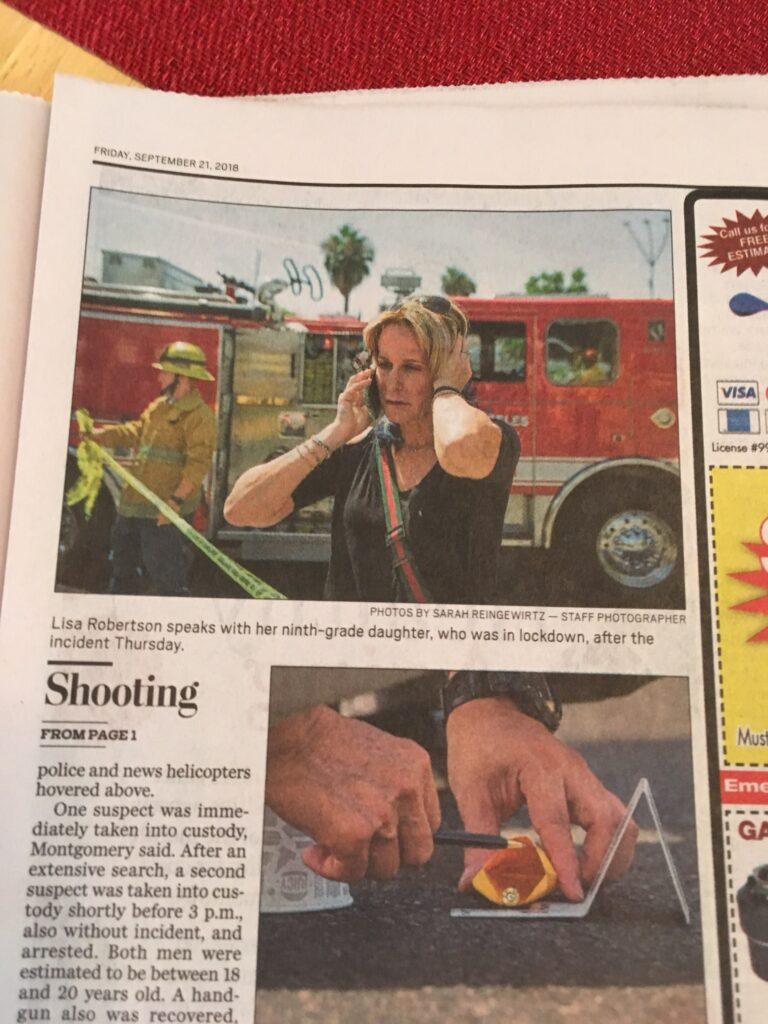
Although the shooting did not occur inside the school itself, the proximity to campus triggered panic among students and parents and forced administrators to activate emergency protocols while law enforcement secured the area.
For many families, incidents like that illustrate a broader reality facing schools in large urban districts. Violence does not always originate inside the campus gates.
Sometimes it is already happening just outside them.
That concern has only intensified in recent weeks.
Just weeks before the Los Angeles High School lockdown, the LAUSD community was shaken by another tragedy that has intensified scrutiny of how the district protects students.
On February 17, twelve year old Khimberly Zavaleta Chuquipa was seriously injured during an altercation at Reseda Charter High School after stepping in to defend her older sister from a group of students who had allegedly been bullying her.
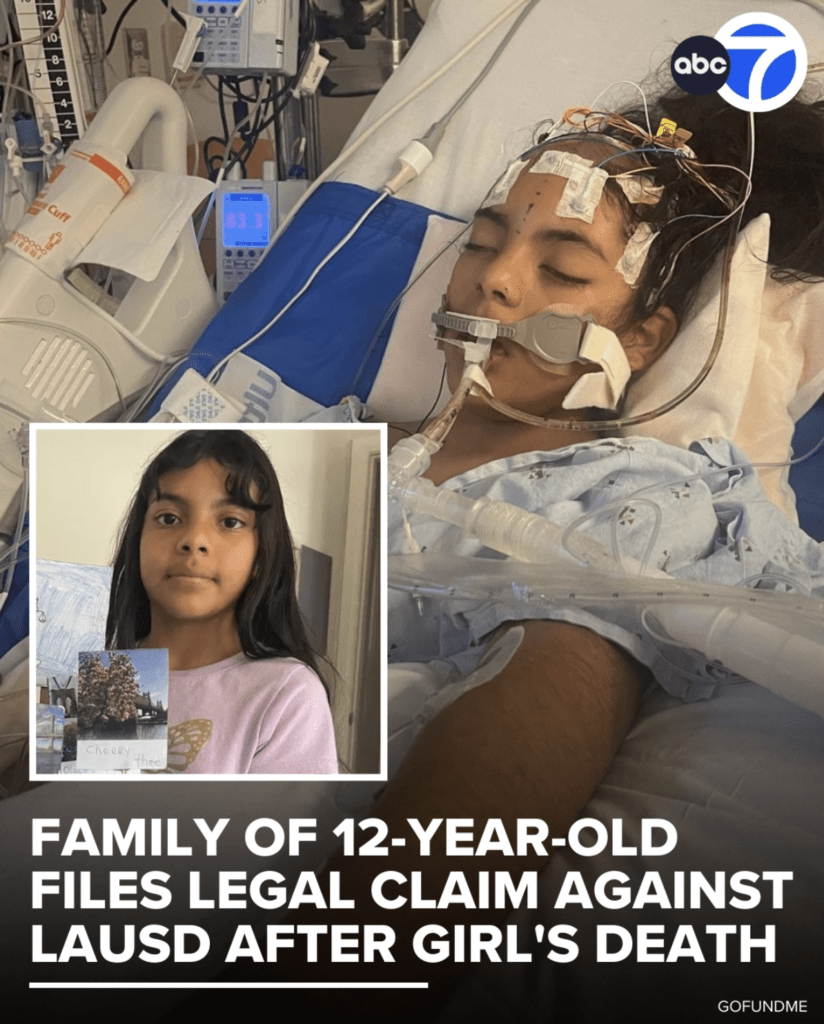
According to her family and their attorneys, Khimberly was struck in the head with a metal water bottle during the confrontation, suffering severe blunt force trauma that led to a traumatic brain injury and brain bleed. She was transported to UCLA Mattel Children’s Hospital where doctors placed her in a medically induced coma.
Eight days later, on February 25, Khimberly died from her injuries.
Her family has since filed a wrongful death claim against LAUSD, alleging that school officials had been warned about ongoing bullying involving the girls weeks before the incident but failed to intervene or implement meaningful protective measures.
Investigators with the Los Angeles Police Department opened a homicide investigation into the case.
For parents across the district, the tragedy has reinforced a difficult reality. School safety is not defined only by the threat of outside violence. It also depends on how effectively schools respond to dangers that arise within their own hallways.
Taken together, the death of Khimberly Zavaleta and the lockdown at Los Angeles High School reflect two different faces of the same concern: whether the systems designed to keep students safe are functioning the way the public believes they are.
The lockdown on Friday ended with relief rather than tragedy.
But it also served as a reminder that in modern American schools, the line between routine and crisis can disappear in an instant.
And when it does, the strength of the response is measured not by the plan written on paper, but by what actually happens inside the classroom door.