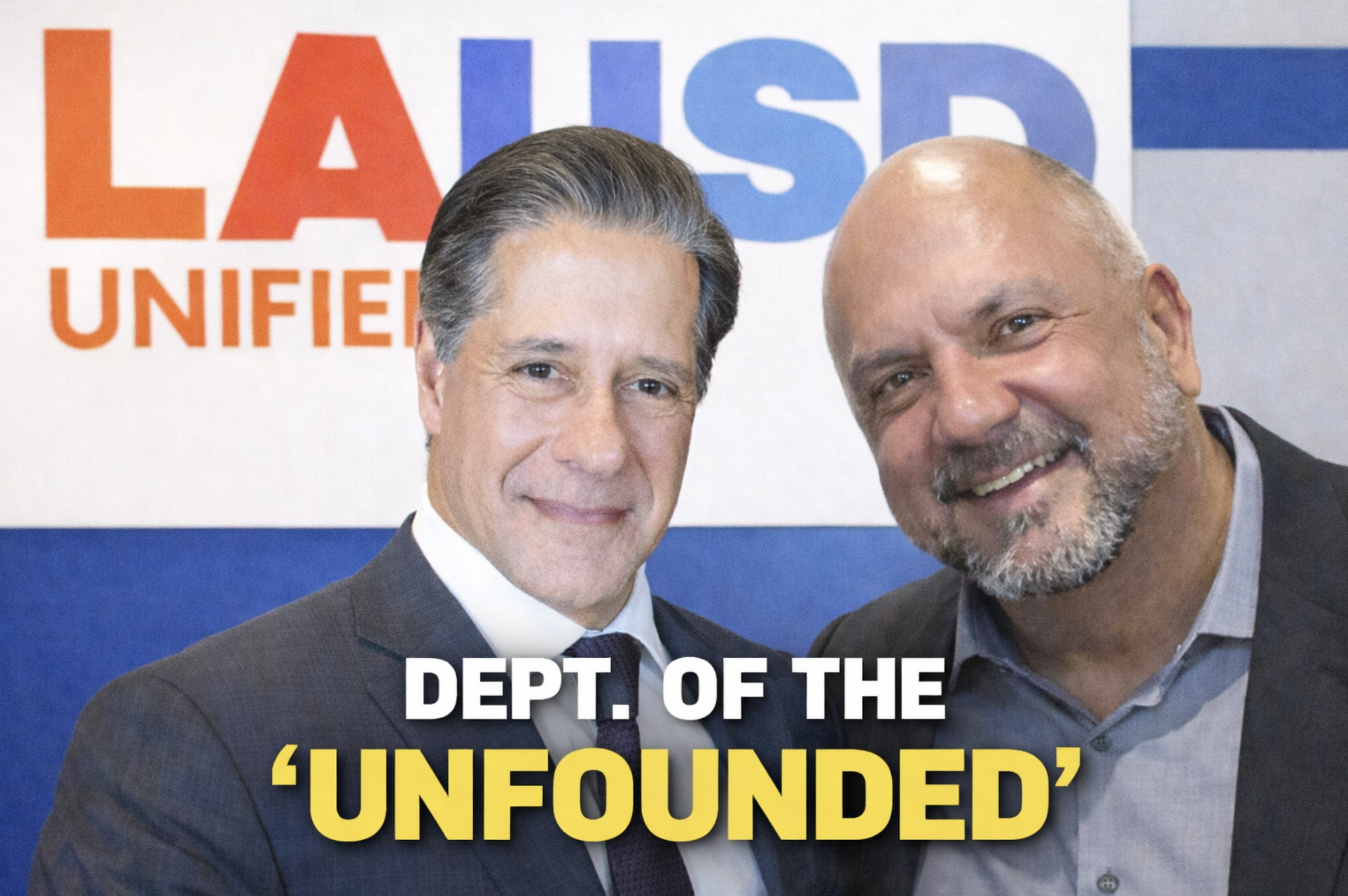
In Los Angeles Unified, accountability does not collapse in a dramatic scandal or a single catastrophic failure. It dissolves quietly, inside email acknowledgments, internal assignments, and findings that all arrive at the same, predictable conclusion: unfounded.
What emerges, when you follow the paper trail rather than the press releases, is not an oversight system. It is a closed loop.
A system where administrators investigate each other, within the same departments, under the same leadership structures, and where the outcome appears decided before the process even begins.
At the center of it is a structural flaw so obvious it borders on design: there is no separation between the accused and the investigator.
Complaints filed against school administrators are not routed to independent bodies. They are assigned internally—often within the same division, sometimes within the same reporting chain. In regions like Virtual Academy and Educational Options School (VAEOS) and Region North, the pattern repeats with mechanical precision. A complaint is filed. It is handed to another administrator. Findings are issued internally. The case is closed.
No outside review. No independent investigator. No firewall between power and accountability.
And every time, without exception across multiple complaints spanning 2024 through 2026, the conclusion is the same.
Unfounded.
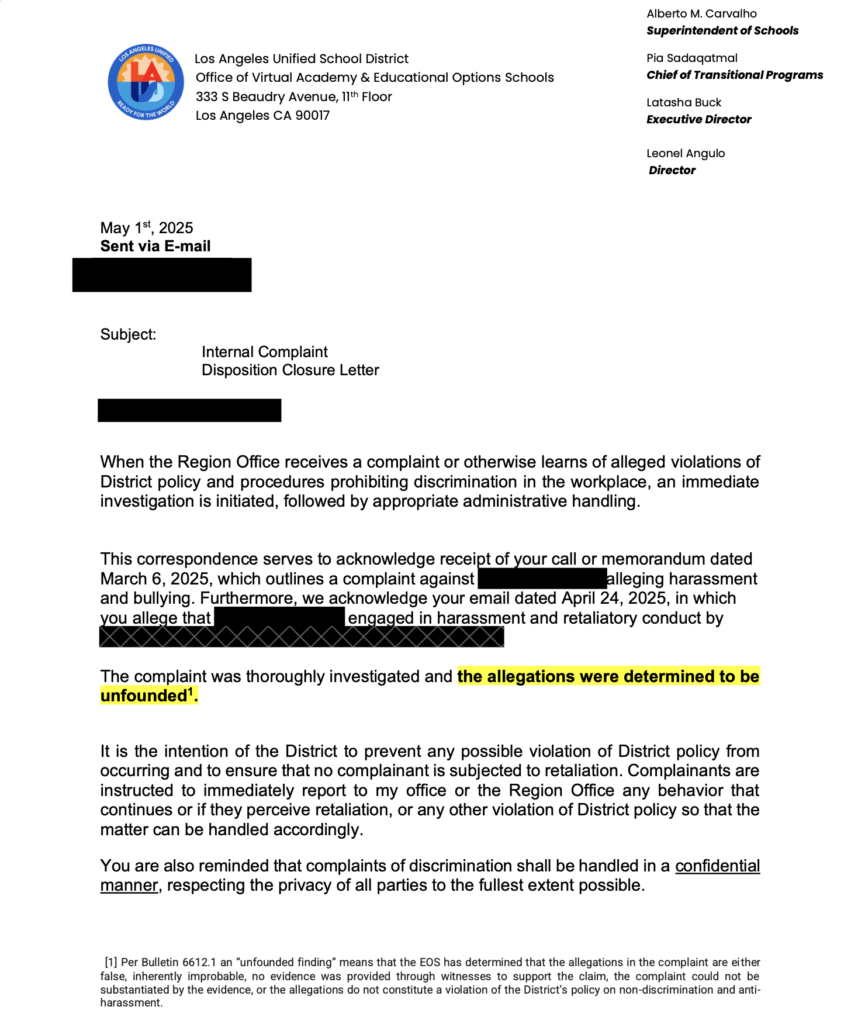
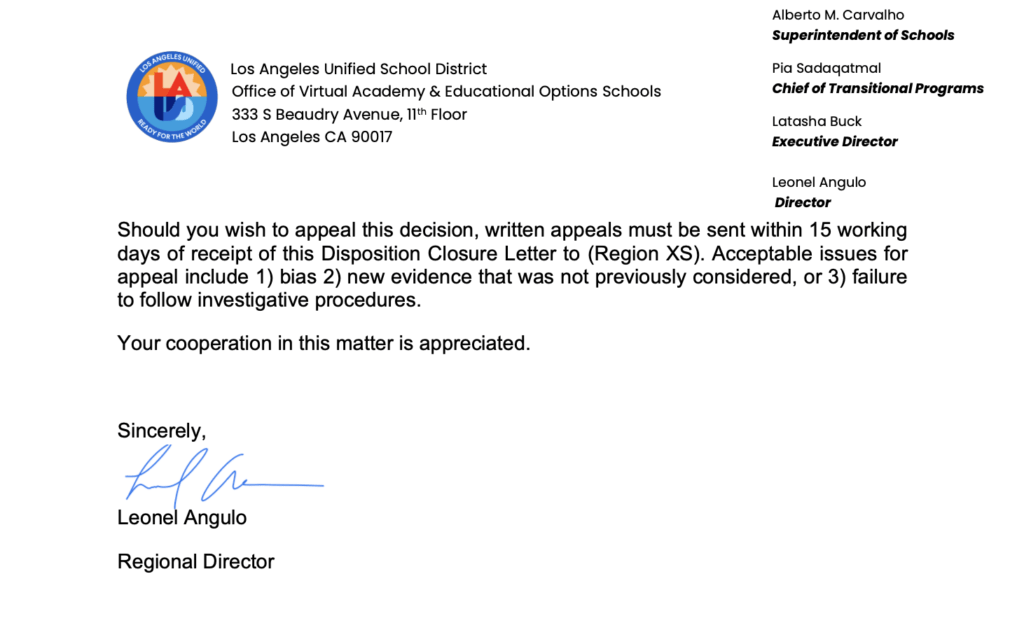
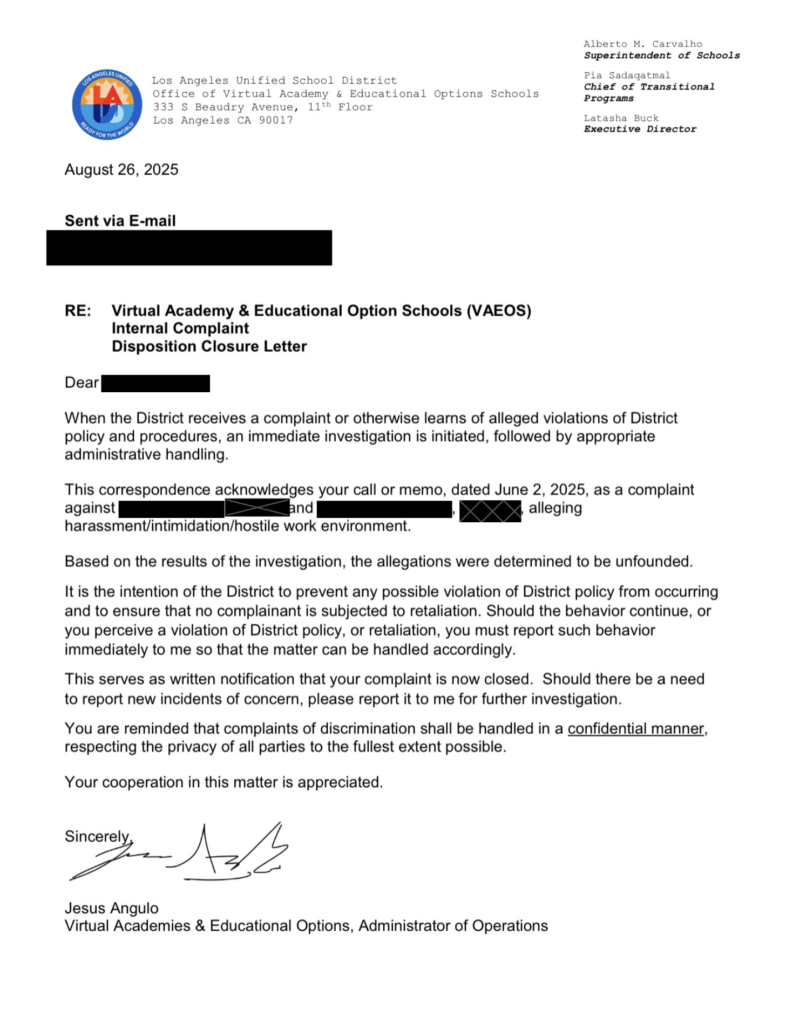
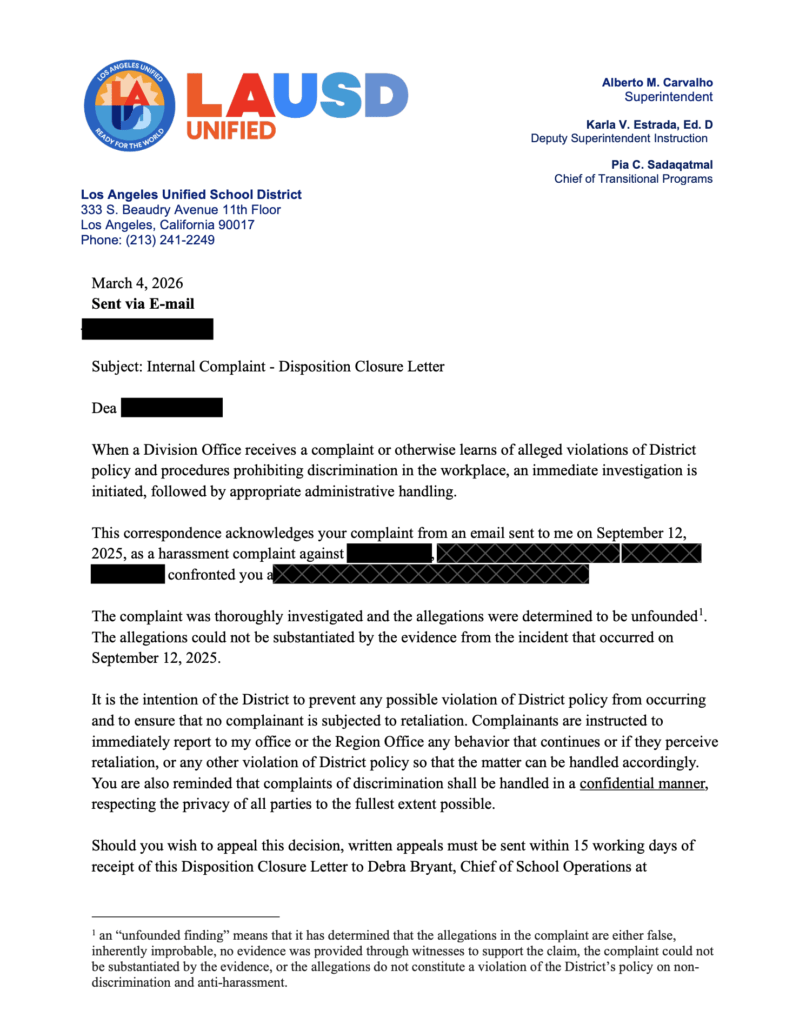
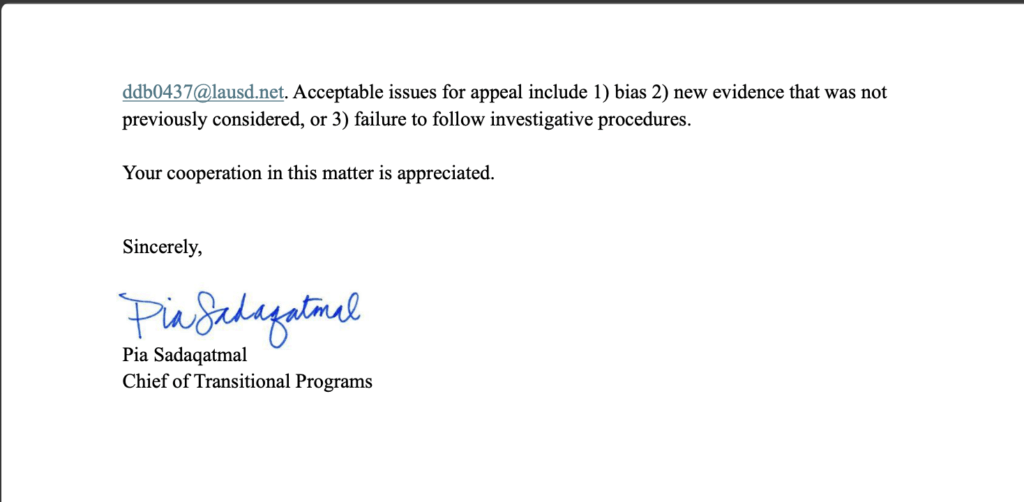
The term itself does the heavy lifting. It is elastic enough to mean anything and definitive enough to end everything. “Insufficient evidence.” “No policy violation.” “Not substantiated.” Different language, same result: dismissal without consequence.
But the deeper issue is not the outcome. It is the absence of any recognizable investigative process leading to it.
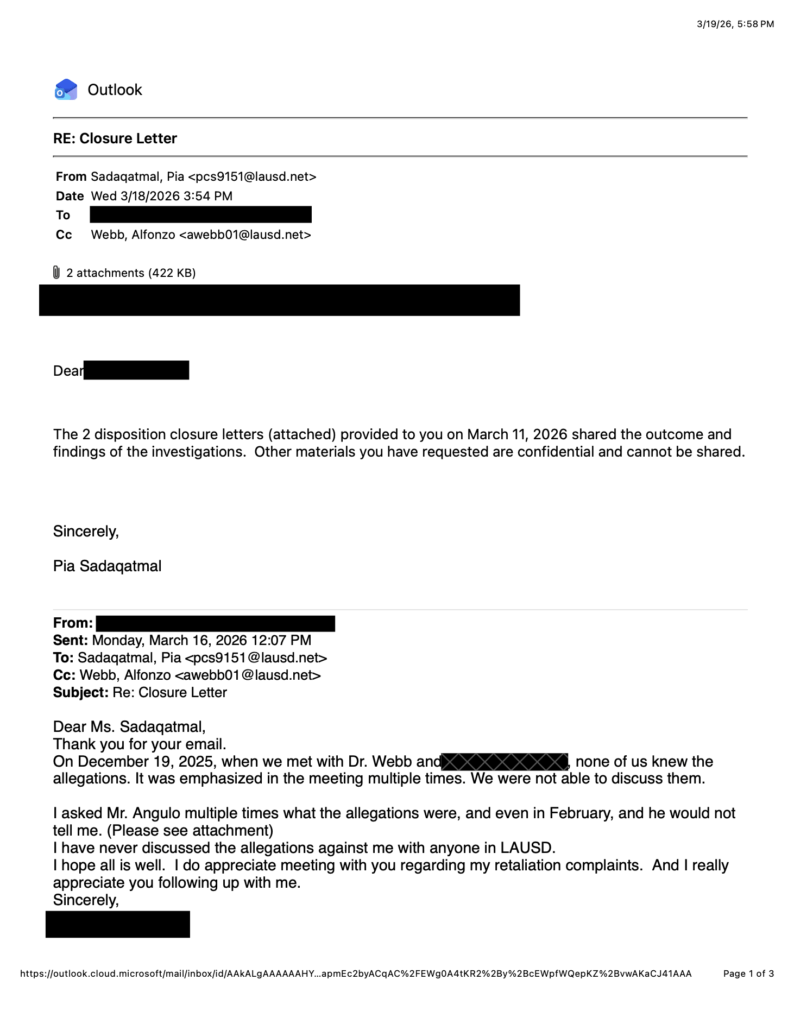
Documented cases show no interviews conducted. No formal disclosure of allegations. No opportunity for the accused—or the complainant—to respond. No investigative meetings. No procedural steps that would resemble even the most basic standard of due process.
And yet, in official findings, the language remains consistent: “All allegations were investigated thoroughly.”
It is a conclusion without a process. A verdict without a trial.
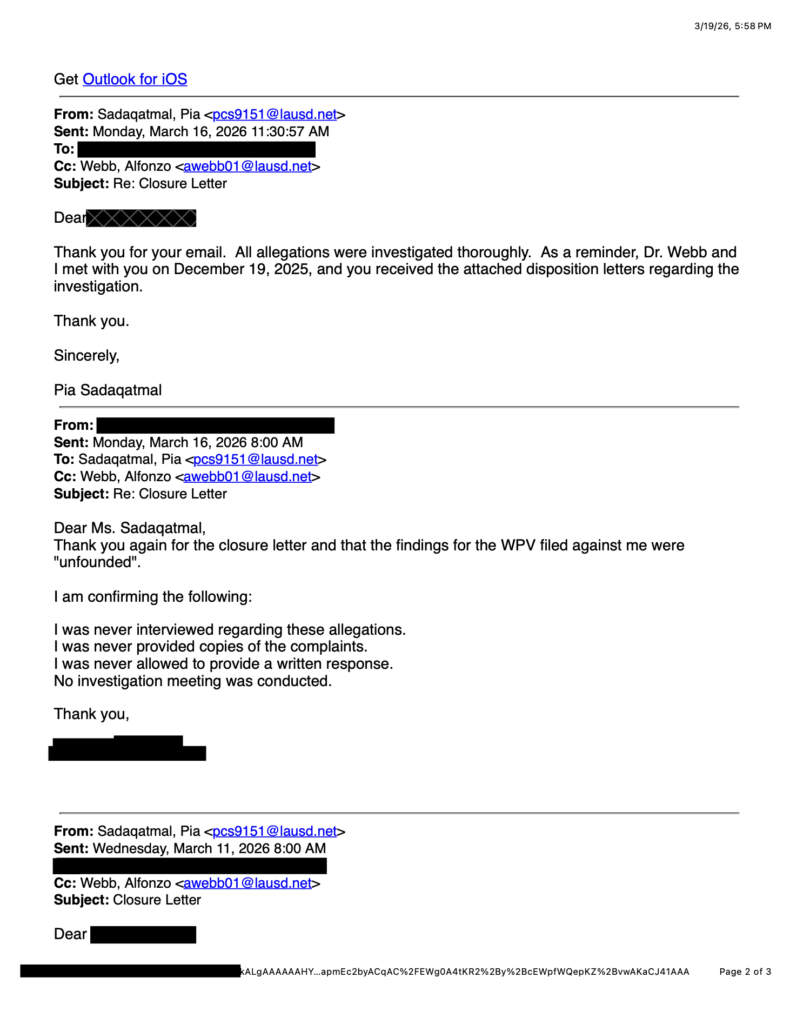

The system, once mapped out, reads less like oversight and more like choreography:
A complaint is filed.
It is assigned within the same department.
Administrators investigate other administrators.
A finding of “unfounded” is issued.
If escalated, the case is referred to the Office of Inspector General.
The OIG acknowledges receipt.
And then…nothing.
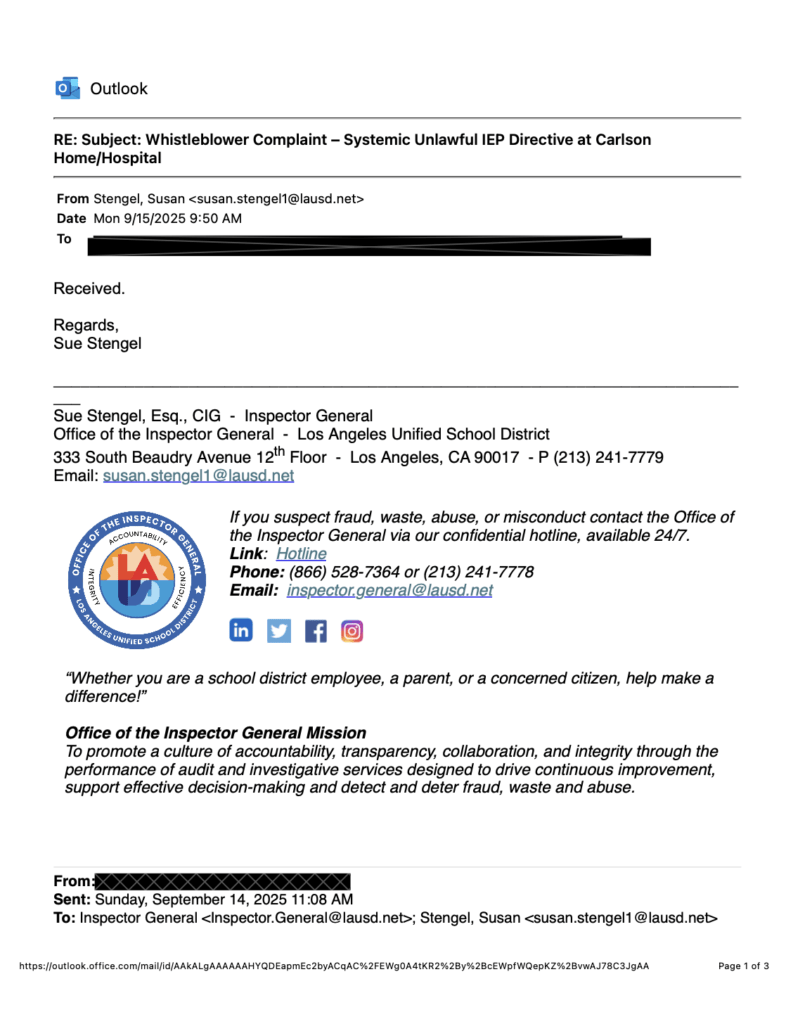
No report. No findings. No corrective action.
The file simply disappears into administrative silence.
And in at least one documented instance, the breakdown goes even further. Inspector General Don McMillan—whose office is supposed to function as a protected channel for whistleblowers—forwarded protected complaints against administrators directly back to those same administrators.
The implication is as stark as it is dangerous: the very mechanism designed to shield complainants instead exposed them to the subjects of their allegations.
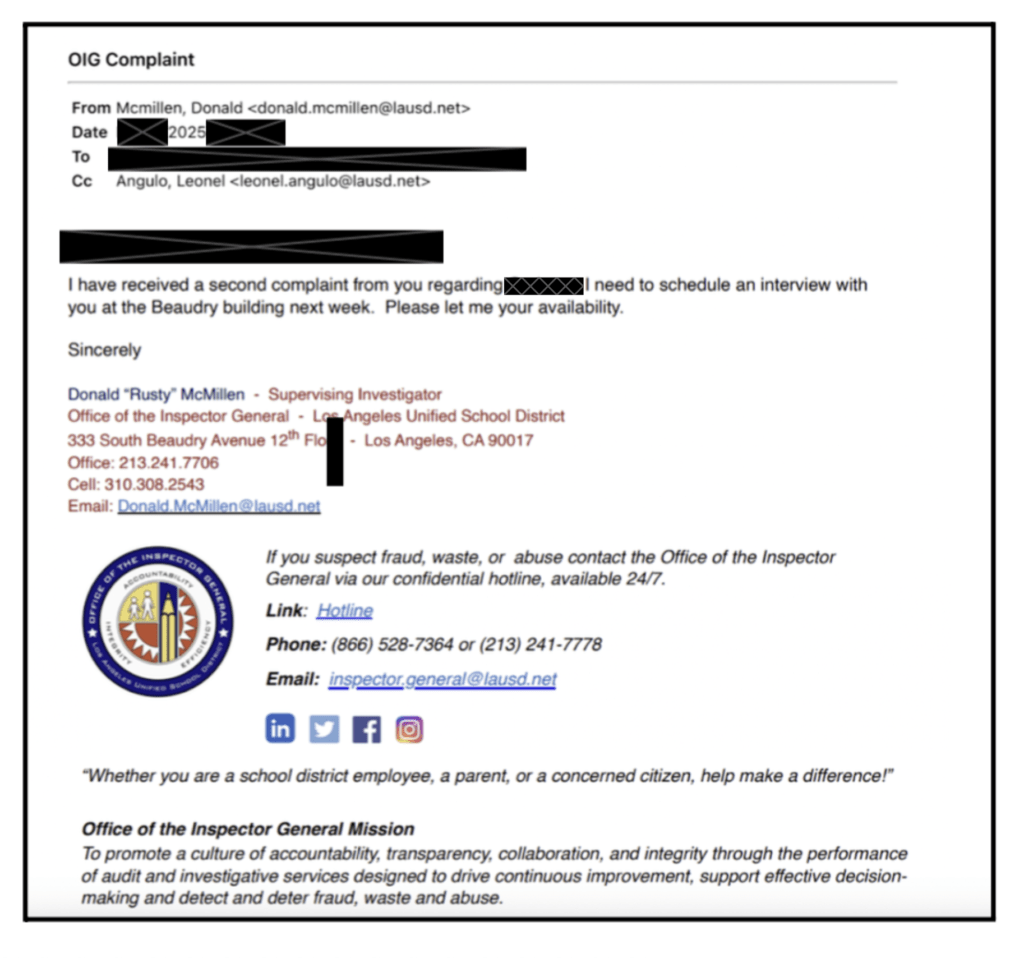
LAUSD maintains that the Office of Inspector General is the backstop, the safeguard for whistleblowers and retaliation claims. But in practice, the OIG functions as an endpoint, not an intervention. Complaints are received, logged, acknowledged, and left without visible resolution.
Oversight exists, but only on paper.
The human cost of that system becomes clearer in the context of retaliation.
Multiple complaints reviewed in this reporting were filed following whistleblowing activity. What followed, according to those records, was not protection—but escalation. Workplace violence complaints filed against the complainant. Public reprimands. Payroll and timecard discrepancies. Exclusion from the workplace itself.
In one allegation, the language is even more direct: a “hit list” targeting teachers.
Whether each individual claim can be substantiated is, in many ways, beside the point. Because within this system, substantiation is structurally out of reach. When investigations are conducted by colleagues, within the same chain of command, without independent review or procedural rigor, the outcome is not just predictable—it is inevitable.
And the scale is no longer isolated.
Over a two-year period, multiple complaints were filed, culminating in a single day in March 2026 when eleven formal complaints were submitted at once. Eleven new attempts to trigger accountability within a system that has yet to demonstrate it can produce any.
As of today, there has been no meaningful action.
No one has broken the loop.
Even the leadership structure surrounding these investigations raises new questions rather than answers. Pia Sadaqatmal, Chief of Transitional Programs, was previously involved in handling complaints. She is no longer overseeing the retaliation investigations presented to her. There has been no public explanation, no clarification of who now holds that responsibility, and no indication that the process itself has changed.
The absence of transparency is not incidental. It is systemic.
And it leaves one unavoidable conclusion:
LAUSD does not have an investigation problem. It has an independence problem.
Because when administrators investigate each other, when oversight bodies acknowledge complaints without acting on them, and when every case—regardless of severity—ends the same way, the issue is no longer about individual complaints.
It is about a system that has insulated itself from accountability entirely.
A system where the outcome is built in.
Unfounded.