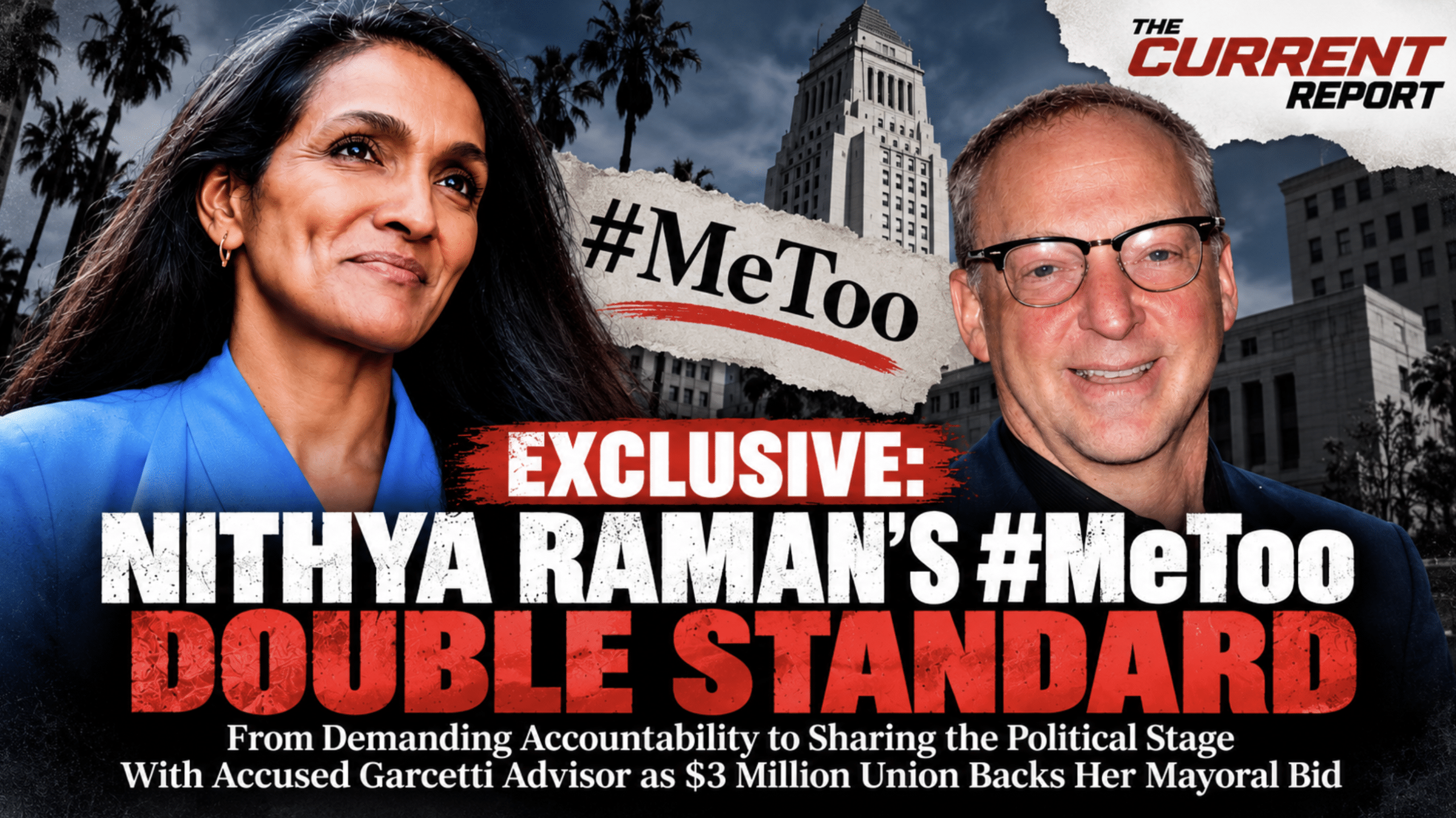
Federal records reveal millions in consulting payments to former Garcetti advisor Rick Jacobs, whose sexual harassment allegations Raman publicly condemned in 2020. Now, as she campaigns for mayor, Jacobs is appearing at political events alongside Raman and the powerful labor union investing millions in her election.
Los Angeles City Councilwoman and mayoral candidate Nithya Raman has spent years positioning herself as a champion of women’s rights, a defender of sexual harassment victims, and a vocal advocate for accountability when powerful political figures are accused of misconduct.
Before entering public office, Raman worked for Time’s Up, the organization established to combat sexual harassment and workplace inequality.
During her 2020 City Council campaign, Raman publicly criticized the handling of sexual misconduct allegations involving Rick Jacobs, a longtime political advisor to then-Los Angeles Mayor Eric Garcetti.
In April 2026, Raman went even further, demanding that Congressman Eric Swalwell resign from Congress and abandon his gubernatorial campaign following sexual assault allegations.
But six months later, as Raman pursues the Los Angeles mayor’s office, her own political associations are raising questions about whether the standards she demands of others apply equally to those connected to her campaign’s most influential supporters.
The same Rick Jacobs whose alleged misconduct Raman publicly addressed in 2020 has now been photographed at multiple political events attended by Raman, including appearances involving the Western States Regional Council of Carpenters — a powerful labor organization that endorsed Raman for mayor on August 3, 2026.
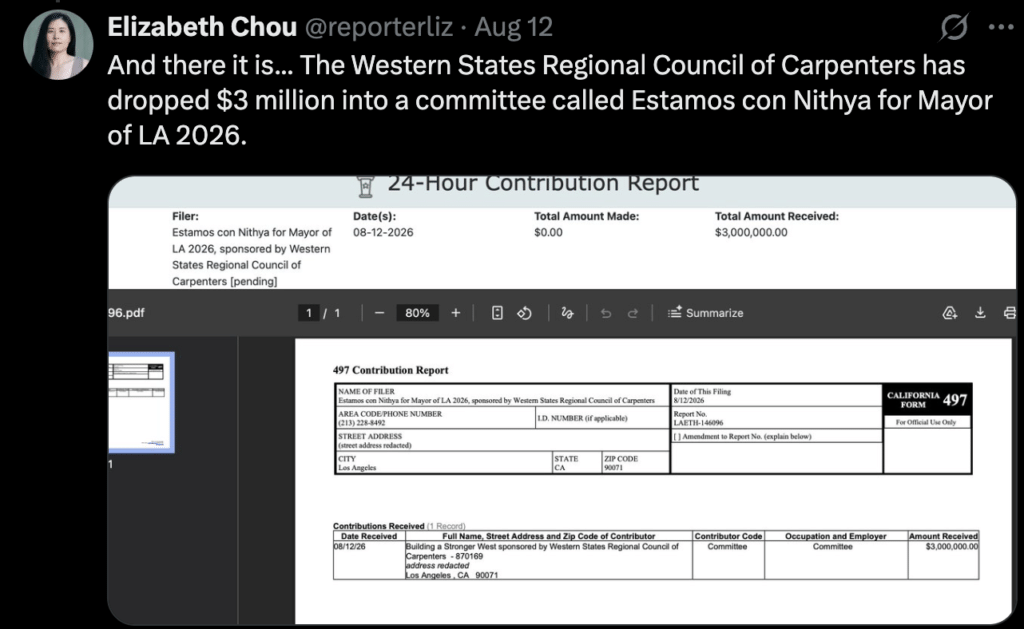
The union has reportedly committed $3 million to an independent expenditure committee supporting her mayoral bid.
Meanwhile, federal labor disclosure records reveal that Jacobs’ consulting company, RDJ Strategic Advisors LLC, has received millions of dollars in payments from Carpenters-affiliated labor organizations.
The records establish a longstanding and lucrative financial relationship between Jacobs and the labor network now investing heavily in Raman’s political future.
The overlapping political relationships raise legitimate questions about Raman’s consistency on sexual harassment accountability.
Has Raman’s commitment to protecting victims changed, or does political expediency now outweigh the principles she once championed?
IN HER OWN WORDS: Raman’s 2020 Statements Come Back to Haunt Her Mayoral Campaign
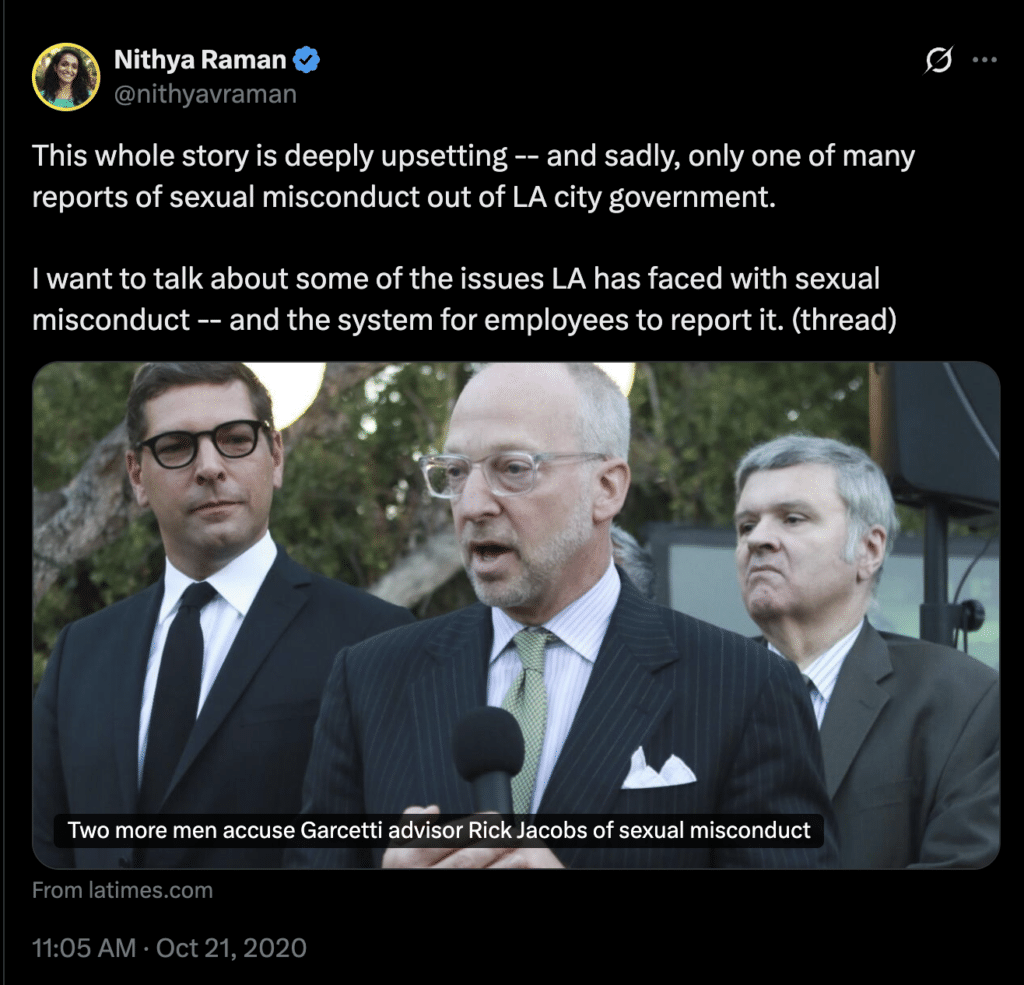
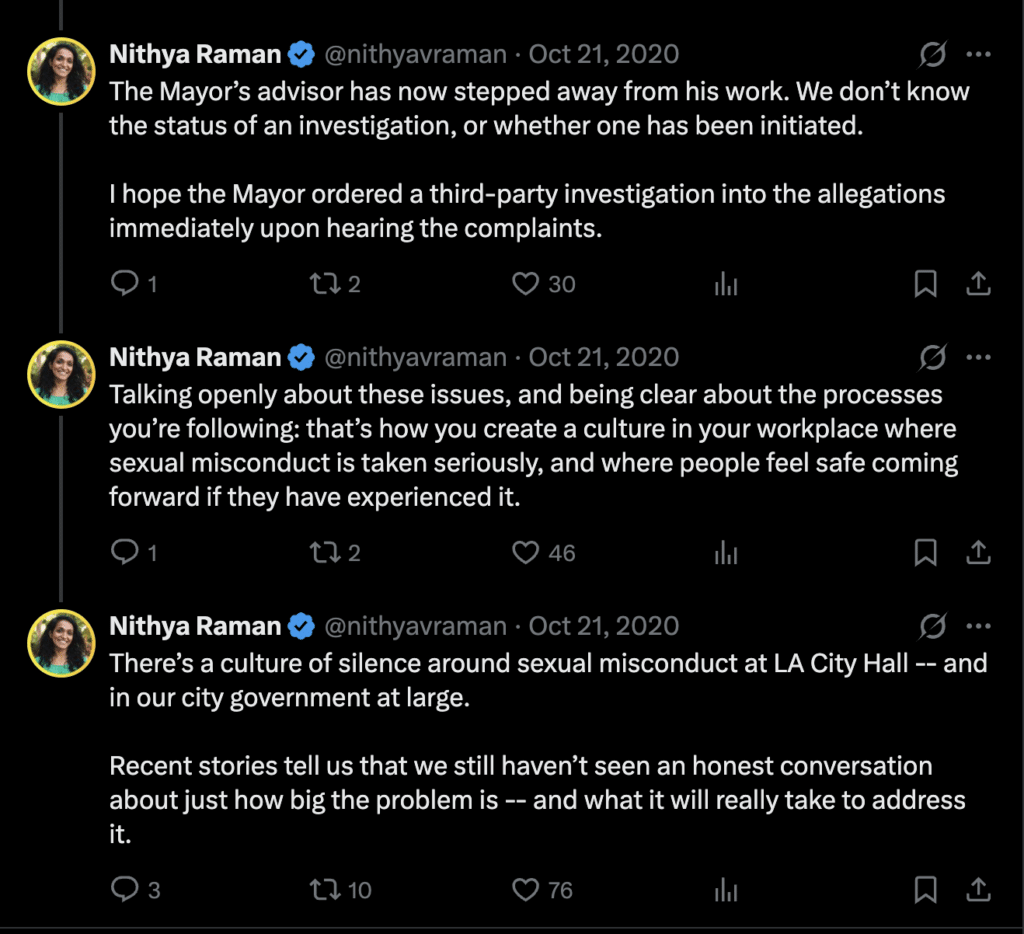
On October 21, 2020, then-City Council candidate Nithya Raman published a series of statements on Twitter addressing sexual misconduct allegations involving Rick Jacobs, a senior political advisor to then-Mayor Eric Garcetti.
Her statements were unequivocal.
Sharing a Los Angeles Times investigation detailing allegations against Jacobs, Raman wrote:
“This whole story is deeply upsetting — and sadly, only one of many reports of sexual misconduct out of LA city government.”
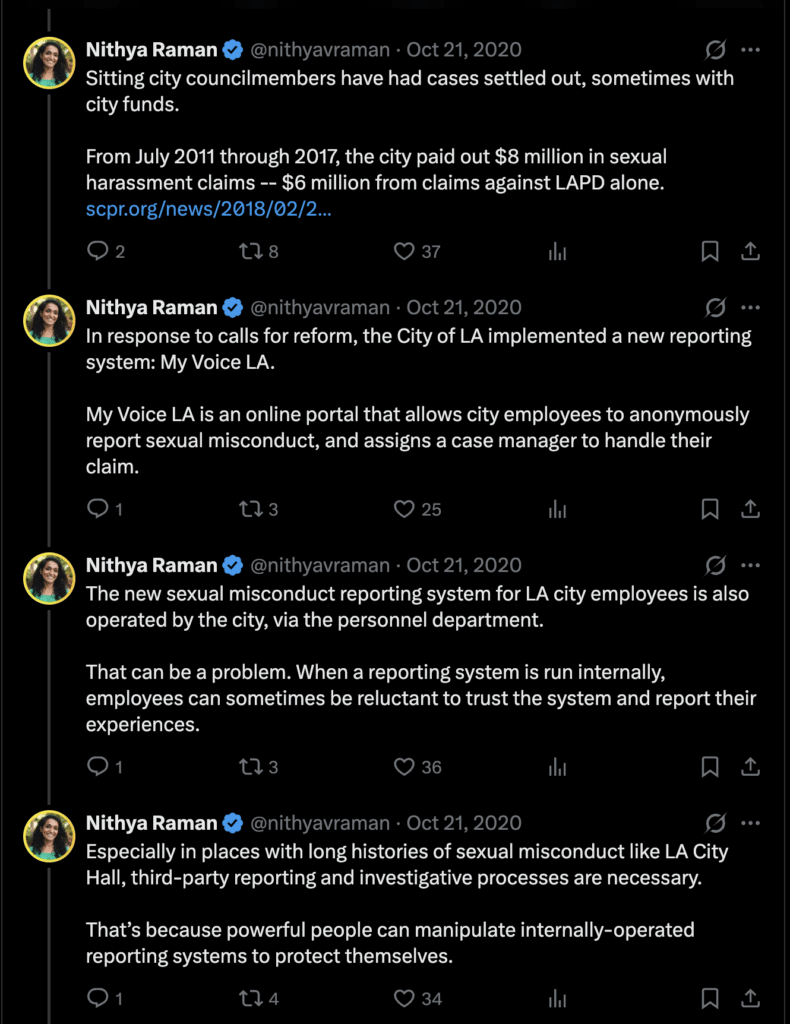
She continued by criticizing the city’s handling of sexual harassment complaints and questioning whether employees could trust an investigative process controlled by the same government officials responsible for overseeing their workplaces.
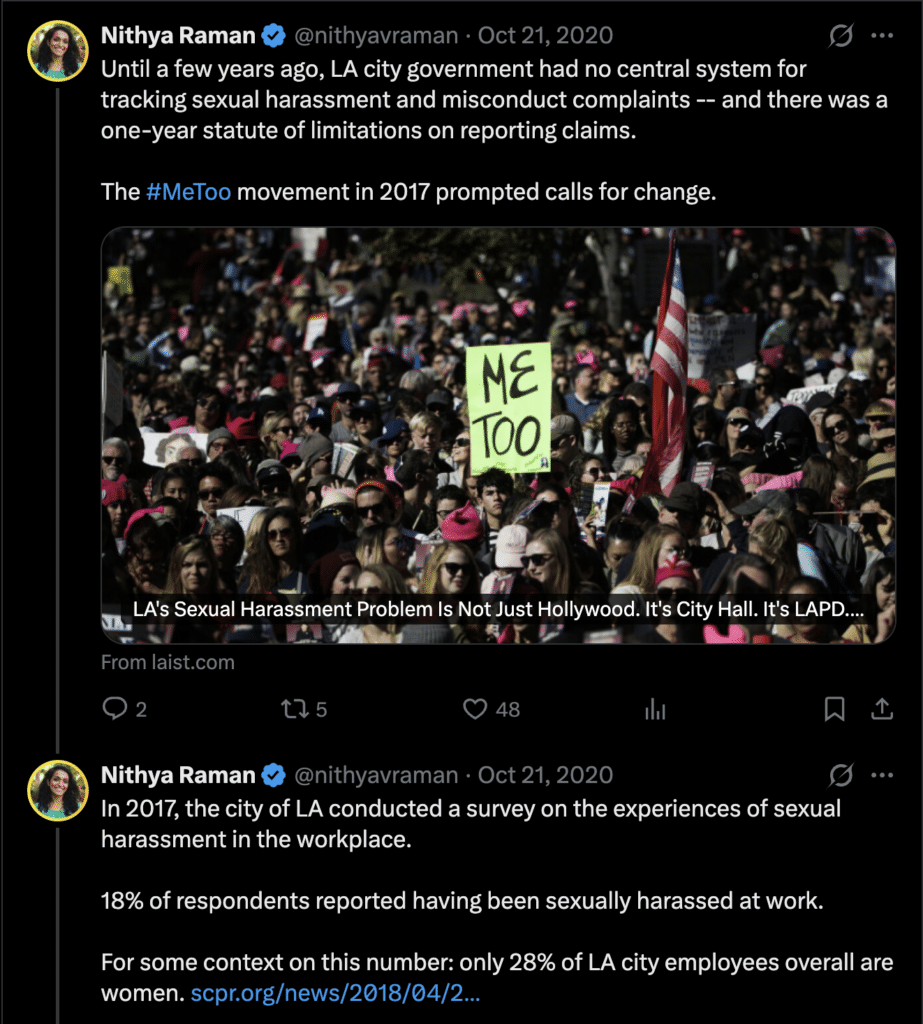
Raman pointed to a 2017 survey of Los Angeles city employees, noting that 18% of respondents reported experiencing sexual harassment at work.
She also highlighted the financial consequences of the city’s handling of sexual harassment complaints.
According to figures Raman cited at the time, Los Angeles paid approximately $8 million to settle sexual harassment claims between July 2011 and 2017, including $6 million involving the Los Angeles Police Department.
But one statement from that October 21 thread is particularly relevant today.
Raman wrote:
“Especially in places with long histories of sexual misconduct like LA City Hall, third-party reporting and investigative processes are necessary.”
She followed with an even more pointed observation:
“That’s because powerful people can manipulate internally-operated reporting systems to protect themselves.”
Those were Raman’s words.
Not those of a political opponent. Not an outside critic. Not an investigative journalist questioning her political associations.
Raman herself warned that powerful individuals could manipulate institutional processes to protect themselves from accountability.
She also addressed the allegations involving Jacobs directly.
“The Mayor’s advisor has now stepped away from his work. We don’t know the status of an investigation, or whether one has been initiated.”
Raman then called for an immediate independent investigation into the allegations.
She concluded the thread by criticizing what she described as a longstanding culture of silence surrounding sexual misconduct at City Hall.
“There’s a culture of silence around sexual misconduct at LA City Hall — and in our city government at large.”
Six years later, that same political advisor maintains a lucrative consulting relationship with a powerful labor organization that has endorsed Raman for mayor and reportedly committed $3 million to an independent expenditure effort supporting her campaign.
Jacobs has also appeared at public political events attended by Raman.
The circumstances raise an obvious question.
Does Raman still believe the same standards of accountability should apply to Jacobs now that he is connected to one of her most influential political supporters?
Raman’s 2023 #MeToo Statement: Survivors Should Never Be Silenced
Raman continued publicly advocating for victims of sexual violence after her election to the City Council.
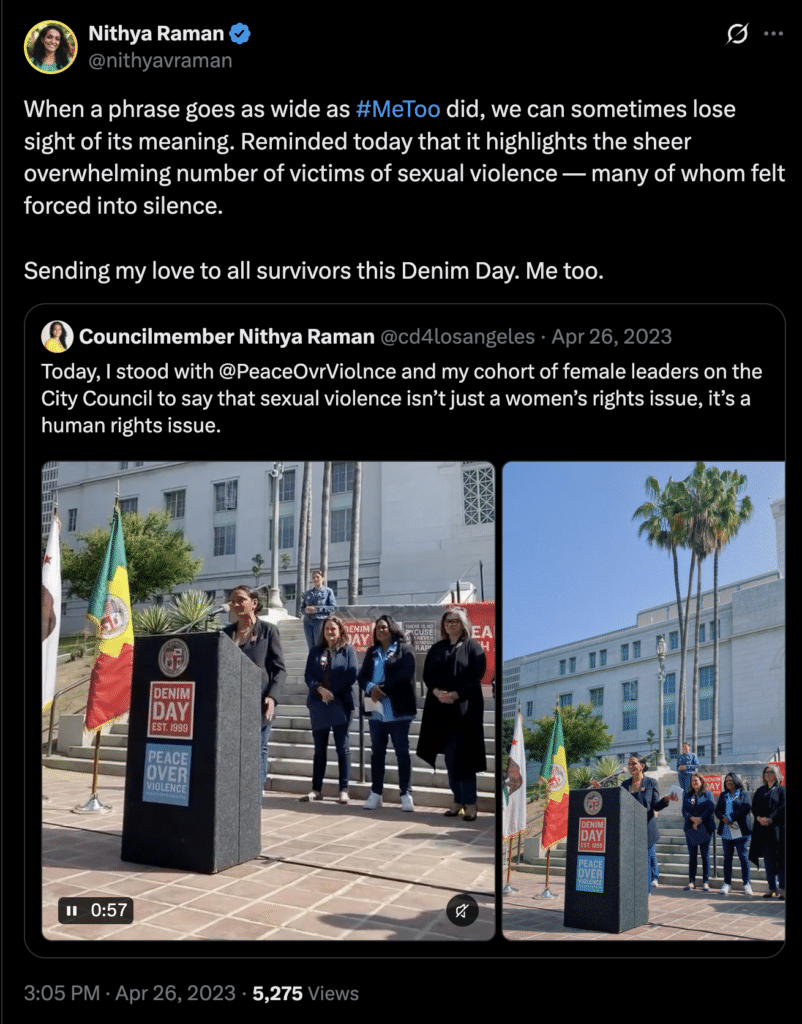
On April 26, 2023, she participated in Denim Day, an international campaign raising awareness about sexual assault and supporting survivors.
In a social media post, Raman reminded followers that the #MeToo movement represented the overwhelming number of victims who had experienced sexual violence, including those who felt compelled to remain silent.
Her accompanying City Council statement was equally emphatic:
“Today, I stood with @PeaceOvrViolnce and my cohort of female leaders on the City Council to say that sexual violence isn’t just a women’s rights issue, it’s a human rights issue.”
The message was clear.
Sexual violence and institutional accountability were not merely political talking points. Raman presented them as fundamental human rights issues.
April 2026: Raman Demands Eric Swalwell Resign Over Sexual Assault Allegations
Perhaps the most revealing comparison comes from a statement Raman published just six months ago.
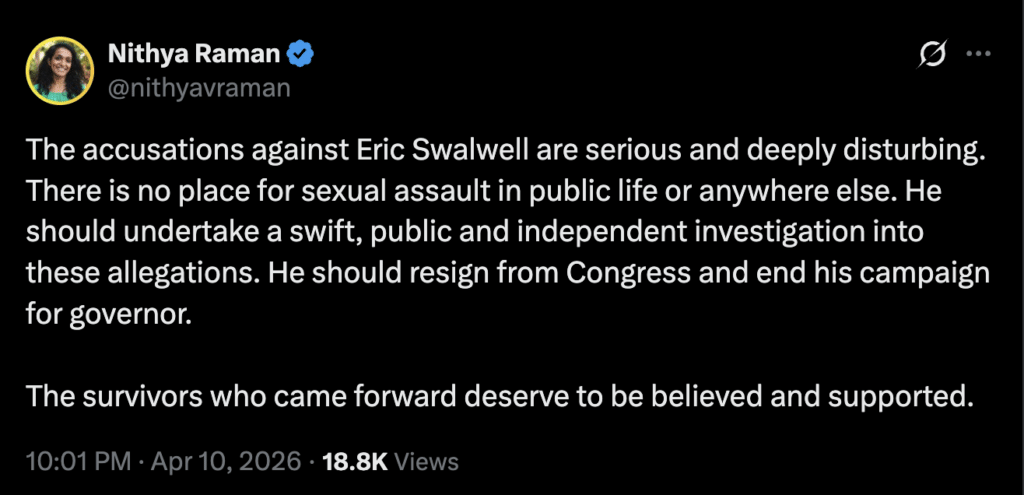
On April 10, 2026, Raman publicly addressed sexual assault allegations against Congressman Eric Swalwell, who was campaigning for California governor.
She described the accusations as serious and deeply disturbing.
But Raman went considerably further than calling for an investigation.
She demanded that Swalwell resign from Congress and withdraw from the gubernatorial race.
Her statement called for a swift, independent investigation and concluded:
“The survivors who came forward deserve to be believed and supported.”
The allegations against Swalwell were accusations, not findings of guilt. Nevertheless, Raman believed they warranted his immediate departure from public office and the termination of his gubernatorial campaign.
Compare that position with the circumstances surrounding Jacobs.
In 2020, Raman called for accountability over allegations involving the Garcetti advisor.
In April 2026, she demanded that another political figure resign over allegations of sexual assault.
Yet in the months following the Carpenters union’s August 2026 endorsement, Jacobs has appeared at political events attended by Raman, while the union with which he has a longstanding financial relationship is investing heavily in her mayoral candidacy.
The contrast raises legitimate questions about how Raman applies the principles she has repeatedly articulated.
If allegations of sexual misconduct are serious enough to demand that a political opponent abandon his campaign, what standard applies when an accused political insider has close professional ties to a major campaign supporter?
That is the question Raman should answer.
And as she campaigns to become the next mayor of Los Angeles, voters have every right to ask it.
THE RICK JACOBS SCANDAL: ALLEGATIONS THAT REACHED THE UNITED STATES SENATE
The controversy surrounding Jacobs was not an isolated political dispute.
In July 2020, LAPD Officer Matthew Garza, who served on Garcetti’s security detail, filed a lawsuit against the City of Los Angeles alleging that Jacobs had subjected him to repeated sexual harassment.
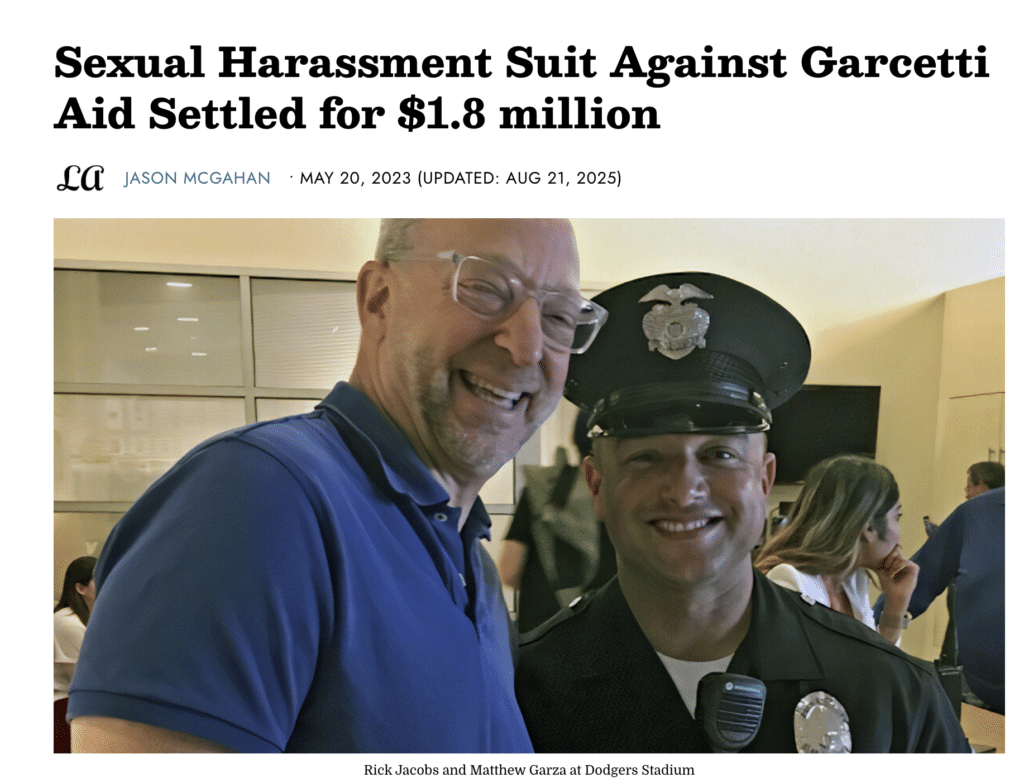
According to the lawsuit, Jacobs allegedly made inappropriate sexual comments and engaged in unwanted physical contact during trips involving the mayor’s office.
Garza further alleged that Garcetti witnessed some of the conduct but failed to intervene.
Jacobs denied the allegations.
The controversy eventually reached Washington, D.C., where Garcetti’s nomination to serve as U.S. ambassador to India came under scrutiny.
In March 2022, a city-commissioned investigation concluded that the allegations against Jacobs were not substantiated.
However, the investigation itself became controversial after questions emerged about witnesses who were not interviewed and evidence that critics argued had been overlooked.
A separate Senate investigation subsequently reached a substantially different conclusion.
Senate investigators working under Republican Senator Chuck Grassley determined that the available evidence supported allegations of sexual harassment involving multiple individuals and raised serious questions about Garcetti’s knowledge of the conduct.
The Senate investigation concluded that Garcetti likely knew, or should have known, about the alleged misconduct.
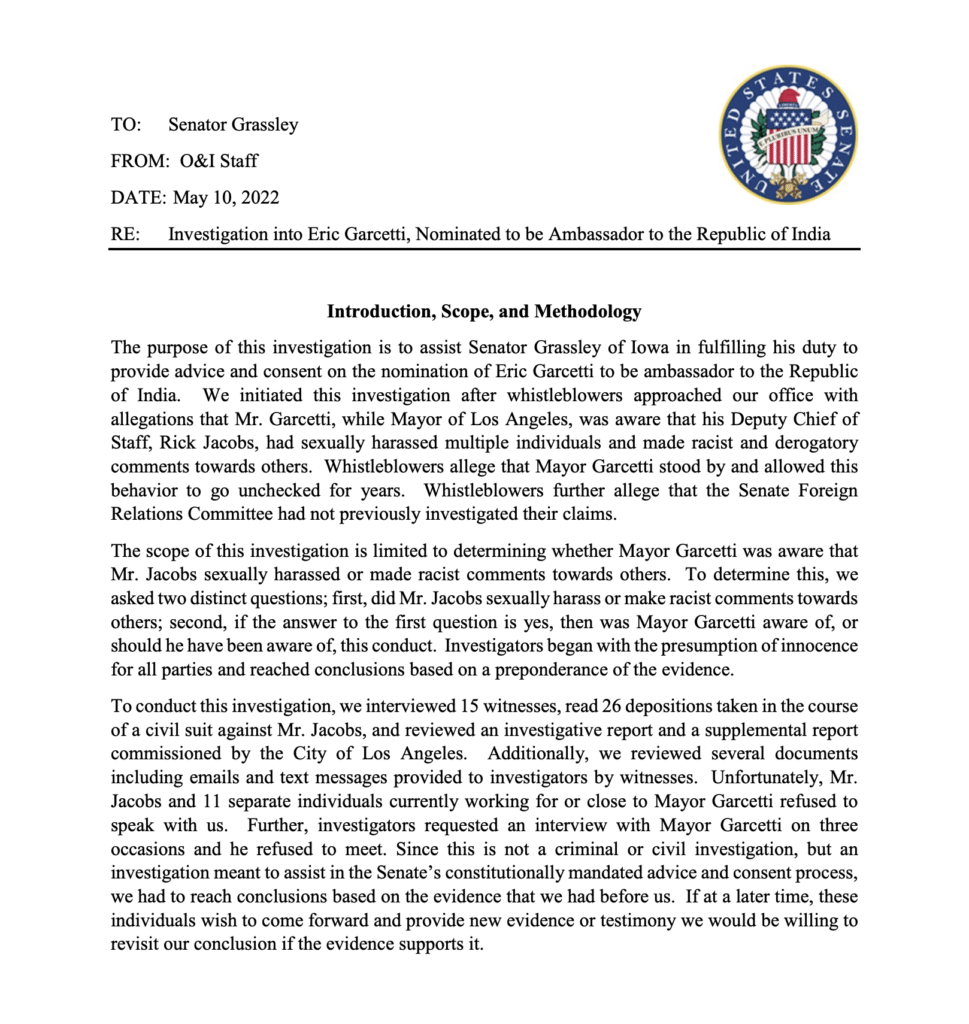
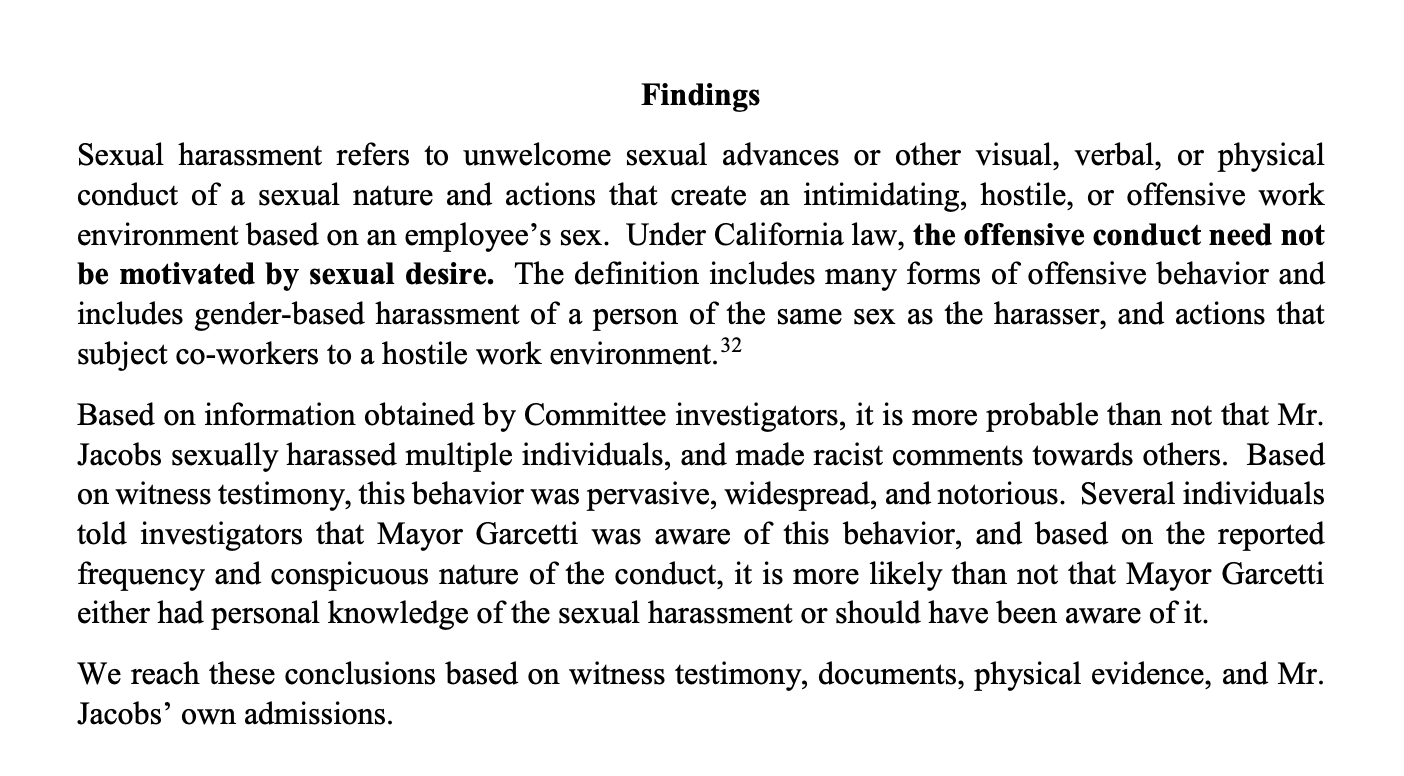
The competing findings are significant.
While the city-commissioned investigation cleared Jacobs, the Senate inquiry raised serious concerns about both his conduct and the handling of complaints within Garcetti’s administration.
For Raman, who had previously spoken out about the allegations, the controversy was hardly unfamiliar.
Which makes the developments surrounding her mayoral campaign particularly noteworthy.
FOLLOW THE MONEY: MILLIONS IN CONSULTING PAYMENTS TO JACOBS’ COMPANY
The financial connection between Jacobs and the labor organizations now supporting Raman’s mayoral ambitions is substantial.
According to records from the U.S. Department of Labor’s Office of Labor-Management Standards, Jacobs’ consulting company, RDJ Strategic Advisors LLC, has received millions of dollars in payments from Carpenters-affiliated labor organizations.
The records identify payments categorized as political consulting, representational activities, professional fees and general overhead.
Among the reported payments are:
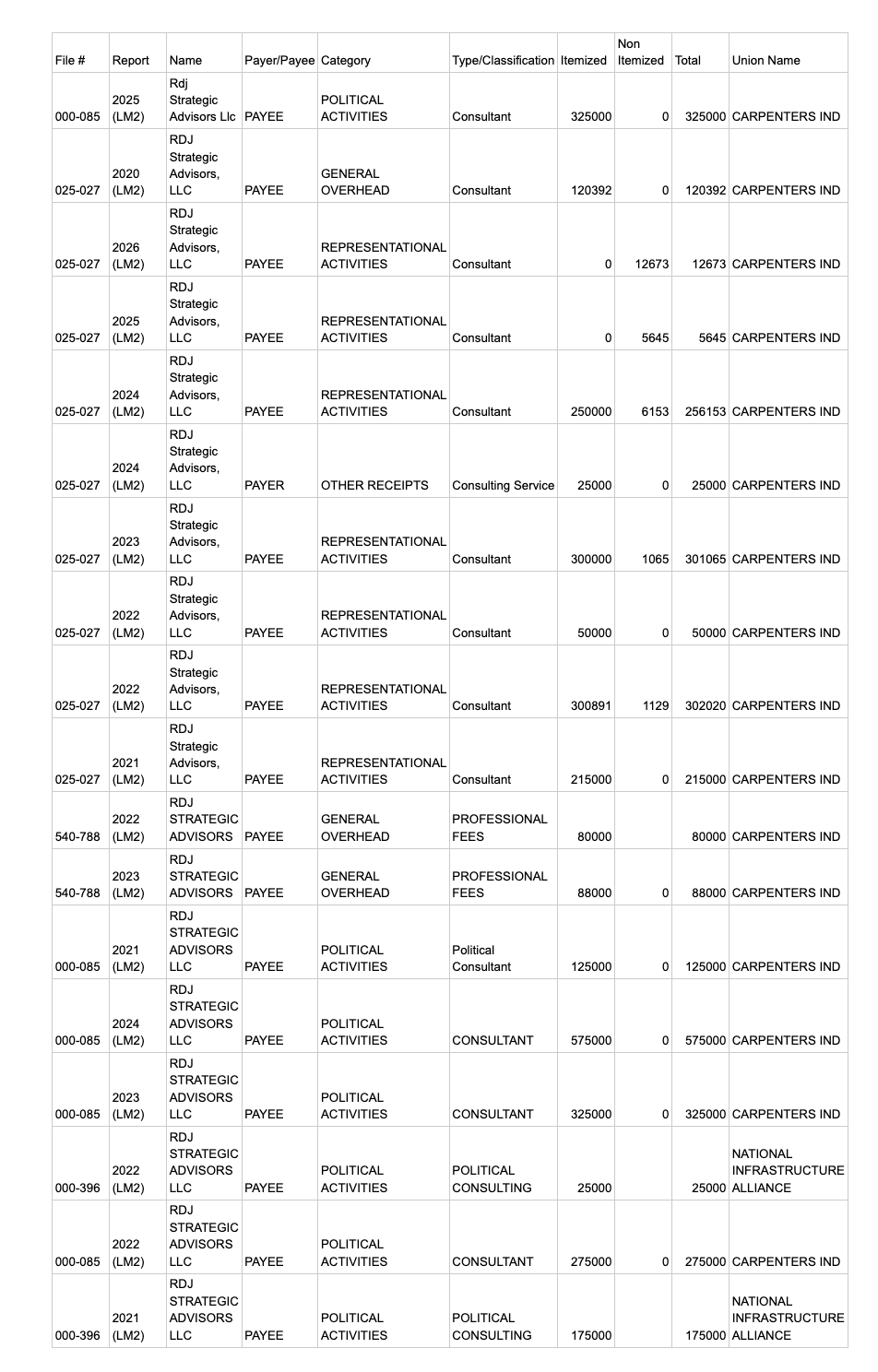
The supplied records also identify additional payments, including a $120,392 payment reported for 2020.
The entries demonstrate a longstanding financial relationship between Jacobs’ consulting operation and organizations within the Carpenters union network.
A calculation of the supplied records identifies approximately $2.94 million in gross payments from Carpenters-affiliated organizations for 2021 through 2026, excluding a separate $25,000 receipt reported by a union in 2024.
Additional payments from the National Infrastructure Alliance and the 2020 entry bring the broader collection of listed transactions to approximately $3.26 million, before accounting for that receipt.
The federal database is publicly accessible through the U.S. Department of Labor’s Online Public Disclosure Room.
The department requires qualifying labor organizations to disclose financial information through annual LM-2 filings, providing a public record of union expenditures.
The financial relationship establishes that Jacobs is not simply a casual acquaintance of an organization now investing heavily in Raman’s political future.
He is a longtime, highly compensated consultant within the same labor network.
And that relationship takes on additional significance when examined alongside the union’s decision to invest millions in Raman’s mayoral campaign.
THE $3 MILLION ENDORSEMENT THAT CHANGED THE POLITICAL LANDSCAPE
On August 3, 2026, the Western States Regional Council of Carpenters announced its endorsement of Raman for Los Angeles mayor.
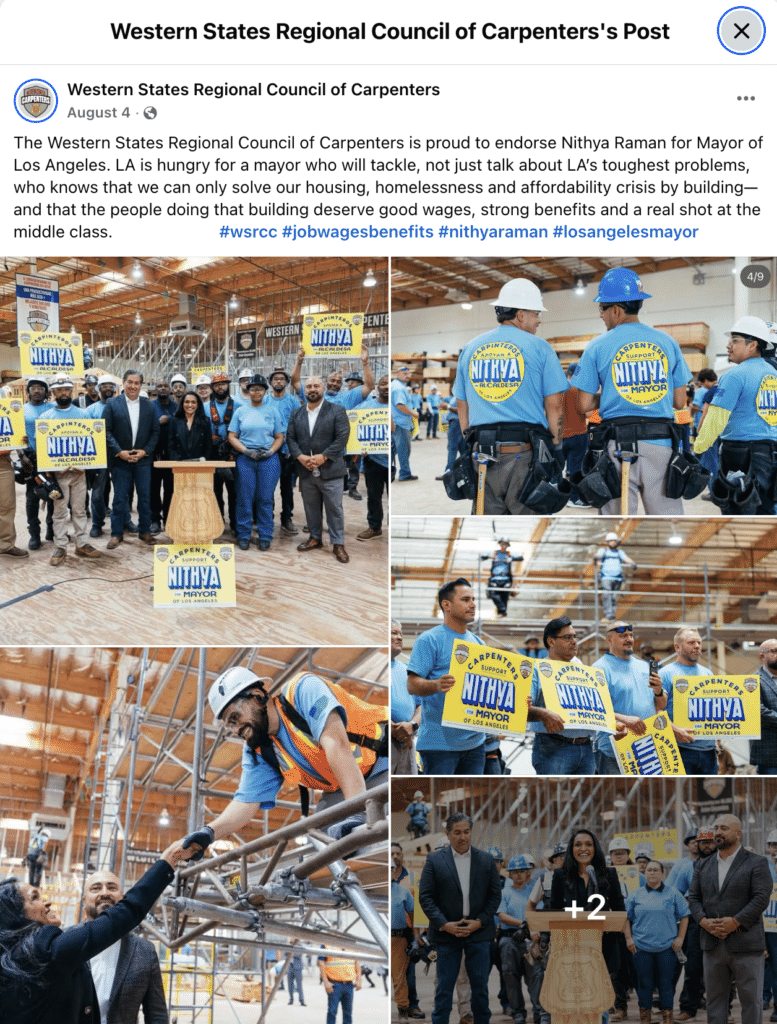
The endorsement represented a significant political development.
The organization, which represents approximately 60,000 carpenters, had previously supported Mayor Karen Bass during her 2022 campaign.
Its decision to switch allegiances provided Raman with an influential labor endorsement as she attempted to unseat the incumbent mayor.
At the endorsement announcement, Raman emphasized her commitment to housing construction and union employment.
But the political significance extended beyond the endorsement itself.
According to reporting by Elizabeth Chou on X, the Carpenters planned to provide $3 million to an independent expenditure committee supporting Raman.
That level of financial backing can have a substantial impact on a municipal election, particularly through advertising, voter outreach and other campaign activities. It represents a major investment in her election.
And Jacobs, whose alleged conduct Raman publicly addressed in 2020, has longstanding professional and financial ties to the organization making that investment.
So the real question now is whether Raman’s political ambitions have created a double standard when it comes to the powerful individuals she is willing to associate with.
SEPTEMBER 7, 2026: JACOBS AND RAMAN APPEAR AT THE SAME LABOR DAY EVENT
An Instagram video provided to The Current Report place Jacobs and Raman together with members of the Carpenters union at the annual Labor Day parade in Wilmington on September 7, 2026 shows Jacobs standing near Raman and photographing her with his phone while she speaks.
The video places Jacobs in close proximity to the mayoral candidate at an event involving the same labor organization that has committed substantial resources to supporting her campaign.
AUGUST 18, 2026: ANOTHER APPEARANCE INSIDE LOS ANGELES CITY HALL
On August 18, 2026, Jacobs Jacobs was reportedly at LA City Hall and seen with Dae Levine identified as Raman’s deputy chief of staff.
Levine’s presence is particularly noteworthy because of her previous professional association with the Garcetti administration.
Before joining Raman’s office, Levine served as a spokesperson for Garcetti.
During the controversy surrounding Jacobs, Levine provided public statements on behalf of the administration maintaining that Garcetti had no knowledge of the alleged sexual harassment.
That history creates an unusual convergence of political relationships.
A former Garcetti spokesperson who defended the administration’s position during the Jacobs controversy now works in a senior position for Raman.
Jacobs, meanwhile, continues to operate within the political network of a major labor organization supporting Raman’s mayoral campaign.
And Raman, who previously criticized the handling of sexual harassment allegations involving Jacobs, is now appearing at events where he is also present.
THE POLITICAL DOUBLE STANDARD
Raman has repeatedly positioned herself as a progressive reformer committed to challenging powerful institutions and holding public officials accountable.
Her association with Time’s Up and her public statements concerning sexual harassment reinforced that image.
But accountability cannot depend solely on whether the person facing allegations is politically inconvenient.
The principles Raman invoked during the #MeToo movement should remain relevant regardless of whether the individuals involved have influential relationships with labor organizations capable of spending millions of dollars in political campaigns.
That is the central issue.
When Jacobs was part of Garcetti’s political operation, Raman publicly addressed the allegations surrounding him.
When Swalwell faced allegations of sexual assault, Raman demanded that he resign from Congress and abandon his campaign for governor.
Now, Jacobs maintains a lucrative consulting relationship with a labor organization that has endorsed Raman and committed millions of dollars to helping elect her mayor.
The same individual whose alleged conduct became part of a major political scandal is appearing in photographs from events attended by Raman.
The circumstances surrounding this connection raise a legitimate questions about the consistency of her public positions.
Would Raman demonstrate the same willingness to criticize Jacobs today that she demonstrated in 2020, even if doing so risked alienating one of her most financially significant political supporters?
That is a question about political accountability, not simply personal association.
And it becomes particularly relevant when a candidate seeking the city’s highest office has repeatedly demanded that others face consequences over allegations of sexual misconduct.
THE BIGGER PICTURE: POLITICAL INFLUENCE AND SELECTIVE ACCOUNTABILITY
Los Angeles has spent years confronting scandals involving powerful political figures, allegations of sexual misconduct, institutional failures, and the corrosive influence of special interests operating behind the scenes of City Hall.
Yet despite repeated promises of transparency, reform, and accountability, the same political power brokers continue to resurface, often with the support of the very elected officials who once publicly condemned their conduct.
The Rick Jacobs controversy was among the most consequential scandals of Eric Garcetti’s administration. Allegations of sexual harassment involving one of the former mayor’s closest political advisors reached the United States Senate, complicated Garcetti’s nomination as ambassador to India, and raised serious questions about what City Hall knew, when officials knew it, and who was willing to look the other way.
Nithya Raman was not silent when those allegations first emerged.
She publicly demanded accountability, positioning herself as a defender of victims and a political outsider willing to challenge the entrenched power structure that had protected Los Angeles City Hall insiders for decades.
But six years later, as Raman pursues the city’s highest elected office, that commitment to accountability appears considerably less absolute.
The same candidate who once spoke forcefully about sexual misconduct is now benefiting from the financial backing of a powerful labor organization with longstanding financial ties to Jacobs’ political consulting operation.
In October 2026, Raman’s mayoral campaign is receiving support from a union that has committed $3 million to her election while having paid millions to the consulting company of the very political operative whose alleged misconduct once prompted her public condemnation.
The contradiction is impossible to ignore.
What changed? The seriousness of the allegations? The importance of protecting victims? Or simply the political and financial interests now at stake?
For a politician who built her public image around challenging institutional corruption and demanding accountability from powerful men, those are questions that deserve answers.
Because accountability is not a campaign slogan. It is not a political weapon to be deployed against opponents and quietly abandoned when the accused becomes connected to the financial interests supporting your political ambitions.
And the #MeToo movement was never supposed to come with an exemption for politically connected insiders.
Los Angeles voters have watched this pattern unfold for years: public outrage when allegations are politically convenient, followed by calculated silence when confronting those same allegations threatens powerful alliances.
Raman promised to represent a different kind of politics.
But when a candidate’s principles appear to shift alongside the political money, voters have every reason to question whether those principles were ever nonnegotiable in the first place.
The issue is no longer simply what Raman said about Rick Jacobs in 2020.
The issue is what she is willing to overlook in 2026.
And perhaps the most troubling question of all:
If Nithya Raman is willing to compromise the accountability standards she once championed while campaigning for mayor, what should Angelenos expect when she controls City Hall?
Because the true test of political integrity isn’t whether you’re willing to hold your enemies accountable.
It’s whether you’re willing to hold your political allies to the same standard — especially when they’re helping finance your path to power.