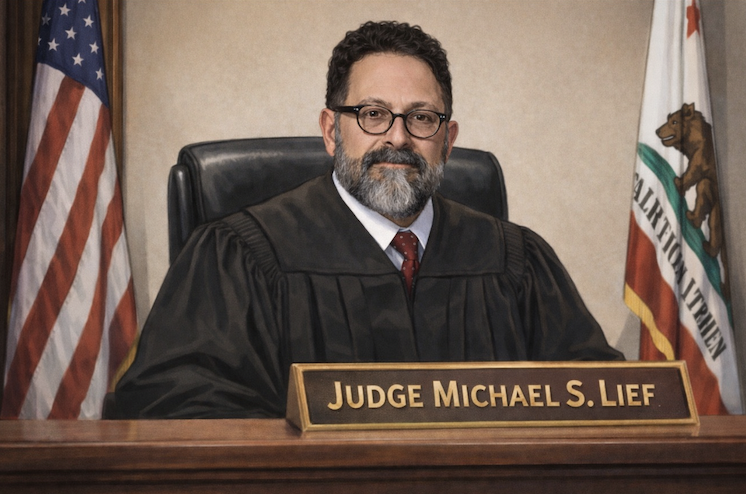
The Ventura County court is now under fire for widespread civil rights abuses and a brazen failure of due process that cuts across every corner of its legal system.
In one of the most egregious failures, a father lost his children not because of truth, but because the court embraced corrupted evidence and helped conceal the proof that would have cleared him.
That is not a metaphor. It is the factual spine of this case.
What follows is not interpretation, inference, or theory. It is sworn testimony, independent forensic confirmation, a documented criminal investigation, and a judicial record defined less by what it weighed than by what it refused to touch.
The Admission That Should Have Changed Everything
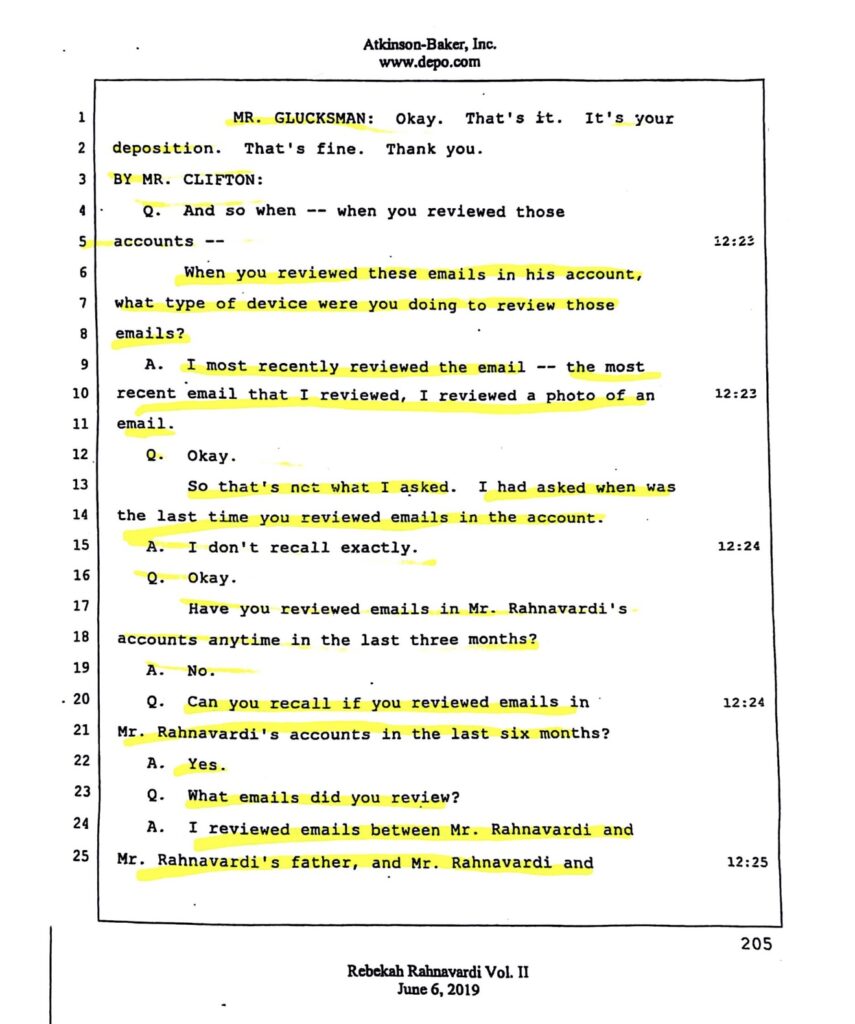
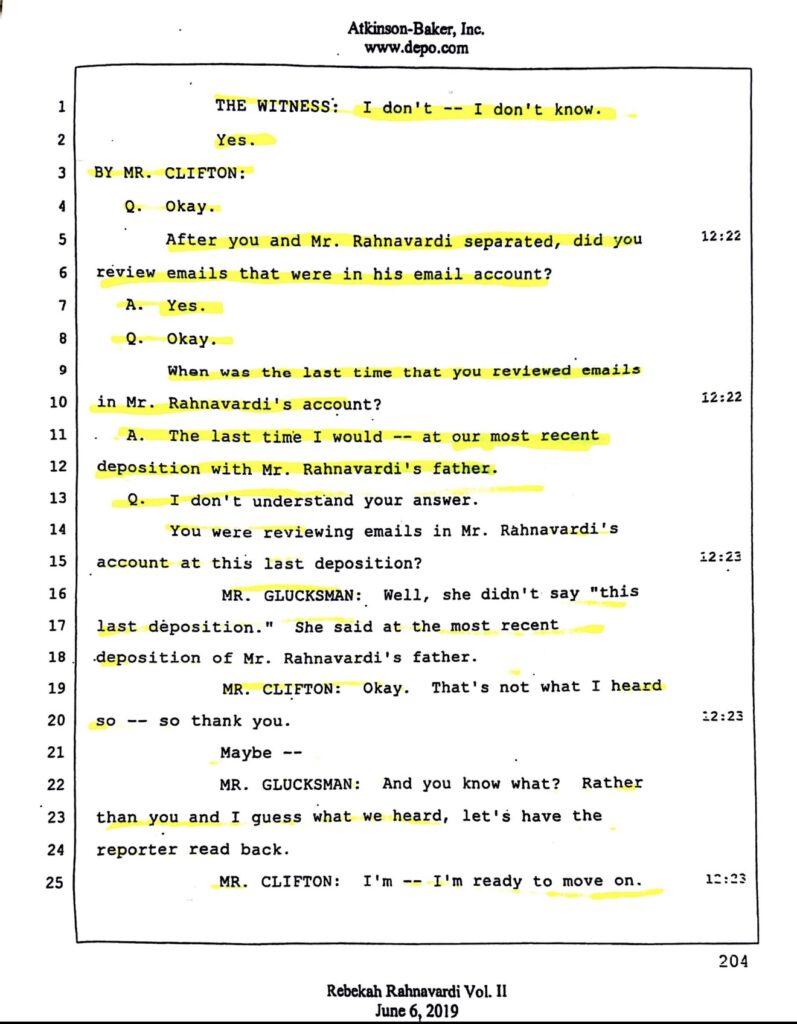
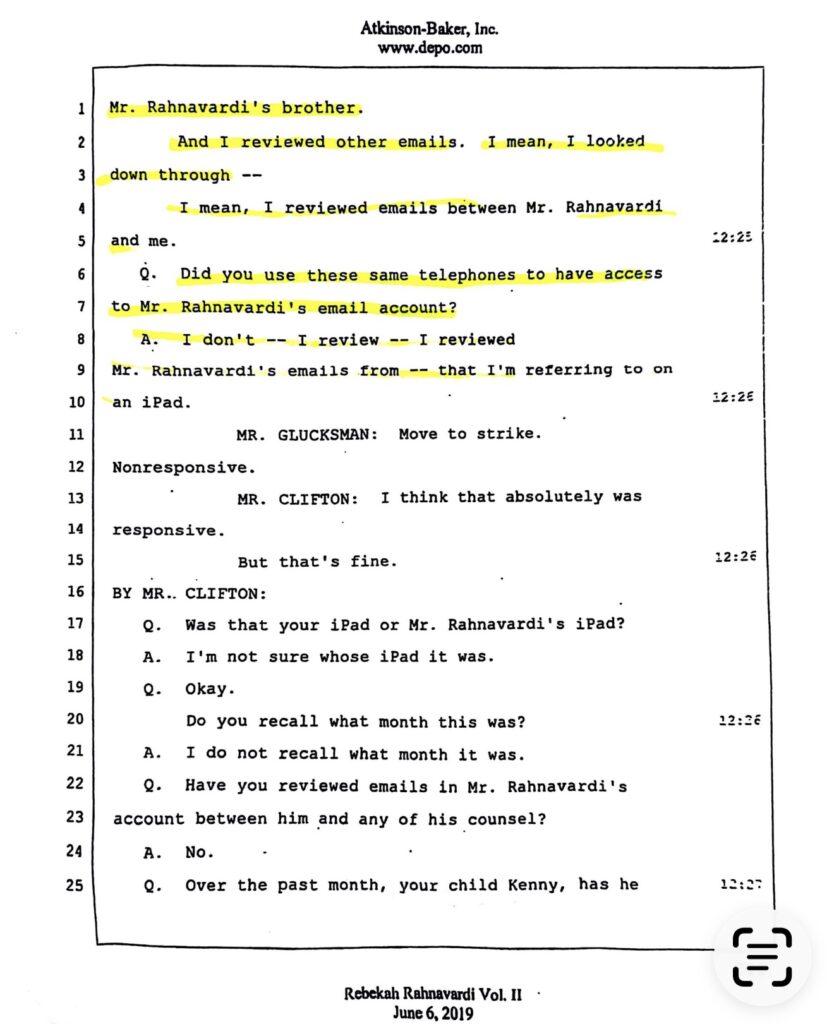
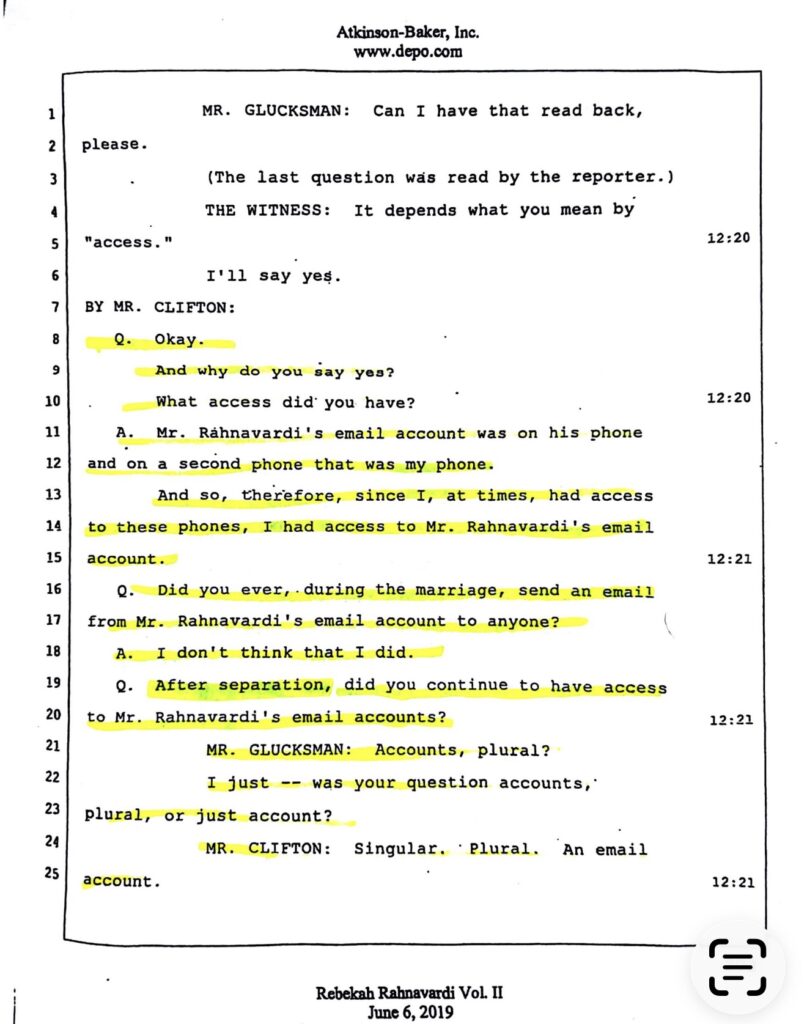
In a 2019 deposition, pages 202 through 206, Rahnavardi’s wife ex-wife Rebekah testified under oath. Not ambiguously. Not hypothetically. Directly.
She admitted she had access to Rahnavardi’s email on more than one phone.
She admitted she reviewed his emails after separation.
She admitted seeing emails between Amir and his family.
She described accessing accounts through an iPad she could not clearly identify.
This was not hearsay. This was not an allegation made by Rahnavardi. This was sworn testimony.
And it mattered, because the family court’s later rulings relied heavily on digital communications attributed to Rahnavardi – messages, screenshots, and reconstructed threads that would become the backbone of restrictions imposed on his parental access.
The Forensics That Confirmed the Admission
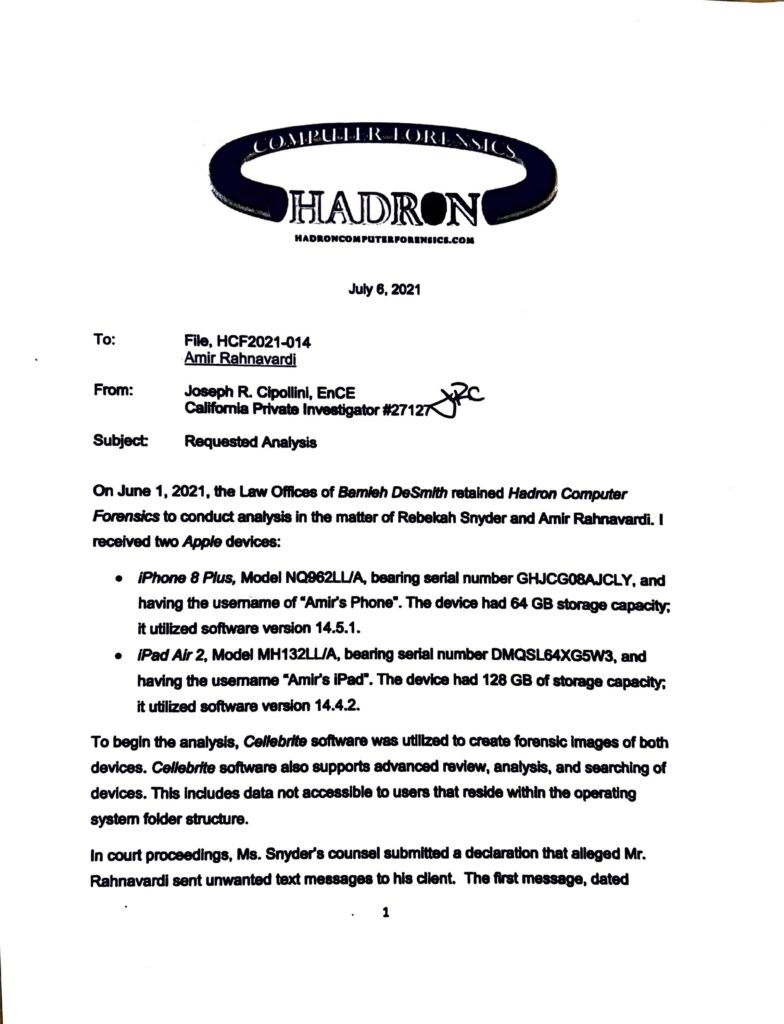
Independent digital forensic expert Joseph Cipollini examined the underlying data. His findings were not speculative and they were not subtle.
Unauthorized access activity dating back to 2019.
iCloud access from devices Rahnavardi did not own.
Messaging irregularities consistent with altered or reconstructed threads.
Activity patterns consistent with access from locations associated with his ex-wife Rebekah.
The connective tissue here is critical. The sworn admission and the forensic findings align. One explains the other.
This is how manipulation becomes possible. This is how altered timestamps appear. This is how screenshots replace native files. This is how messages emerge that were never sent.
The Recusal That Never Happened
According to Rahnavardi’s account – clearly labeled as such – Cipollini told him in 2021, “If Lief is your judge, he’ll have to recuse himself.”
What is not disputed is what followed.
Judge Michael Lief did not recuse.
No disclosure appears on the record.
Cipollini’s forensic evidence was suppressed.
The investigative question writes itself. If a recusal concern was raised, why did the judge remain on the case – and why was the forensic evidence erased from view?
When Law Enforcement Found a Crime
This was not confined to family court.
Detective Michael Spears opened Case #922-00259-2261-115 and documented unauthorized computer access under Penal Code 502(c)(1). The report included theft of Rahnavard’s iPad and unauthorized access to his accounts. Spears prepared the case for submission to the District Attorney.
The DA declined prosecution due to lack of prior criminal record. Not because no crime occurred.
That distinction matters. A declination is not an exoneration. It is a prosecutorial decision – and the underlying offense remains documented.
Yet the family court ignored the police report entirely.
How the Evidence Was Weaponized
Across the evidence used against Amir, the pattern is unmistakable.
Screenshots instead of native files.
Altered timestamps.
Threads Amir never sent.
Metadata inconsistent with his devices.
These manipulations were only possible because of the unauthorized access admitted under oath and confirmed by forensics. Without that access, the evidence collapses.
With it, the court built years of restriction.
A Pattern of Judicial Suppression
Based on the record, Rahnavardi alleges that Judge Lief blocked forensic evidence, ignored the Penal Code 502(c)(1) police report, prevented exculpatory material from entering the record, maintained supervised visitation without evidentiary basis, failed to rule on a 2021 phone-contact request for nearly four years, and issued rulings without hearings in 2022.
Added to that record is a stark procedural fact: the “Dusty” ruling was issued without holding any evidentiary hearing at all.
The issue is not what evidence existed. It is what the court refused to look at.
Science Rejected, Allegation Accepted
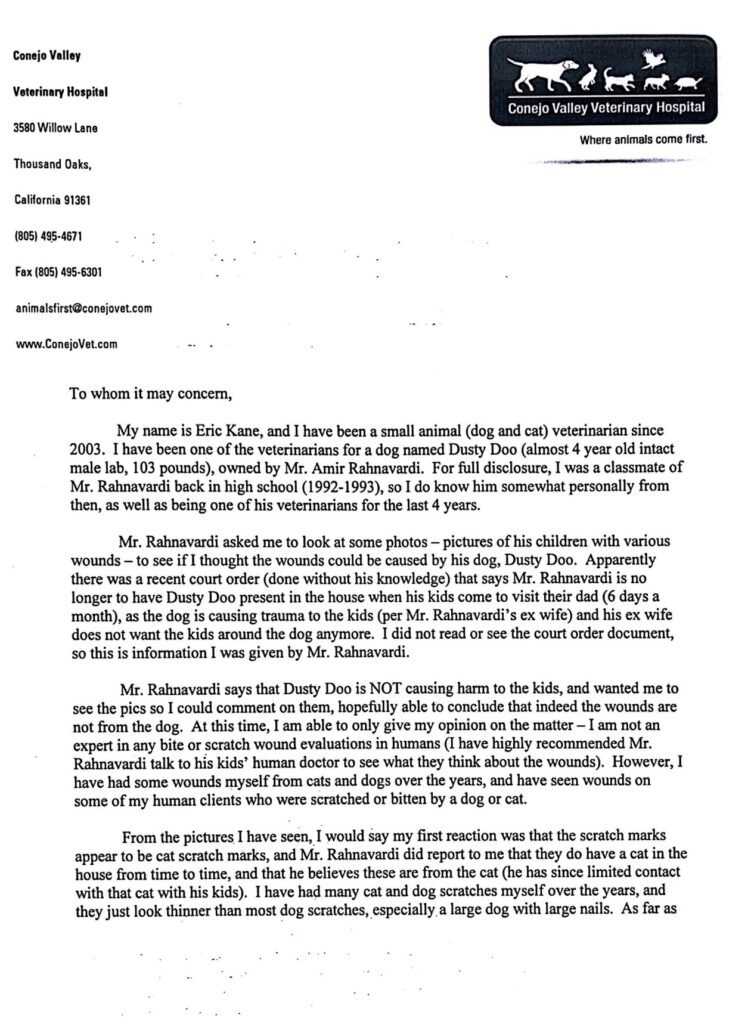
One allegation became foundational: that a family dog, Dusty, had bitten a child.
Two experts dismantled it.
Jill Miller, a canine bite-pattern expert, reviewed the injuries and concluded they were not dog bites. The findings were inconsistent with any canine bite pattern. She refused payment and expressed alarm. Her evidence was suppressed.
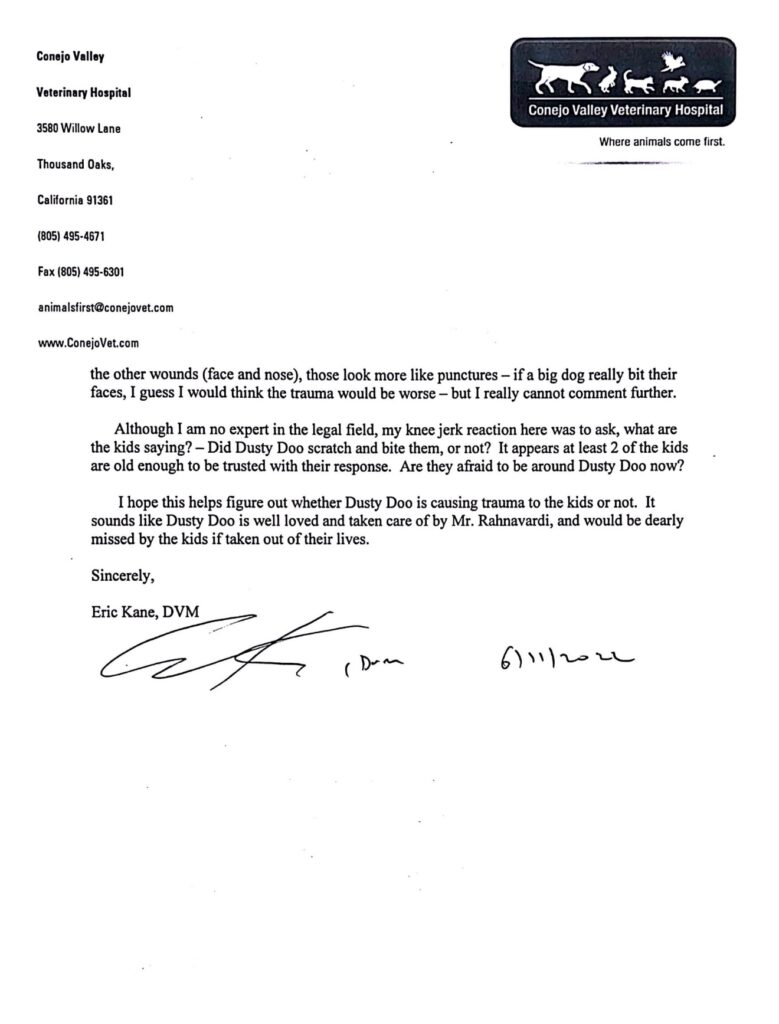
Dr. Eric Kane, DVM, found no aggression history, no bite history, and injuries inconsistent with canine bites. His evidence was also suppressed.
False allegation. Two experts contradict it. Experts excluded. Allegation elevated into years of restriction.
This is how outcomes are engineered.
The Cost That Never Makes the Docket
Amir has been deprived of normal parental access for years. His children endured prolonged alienation. His father spent his final years watching injustice inflicted on his son and grandchildren, powerless to stop it.
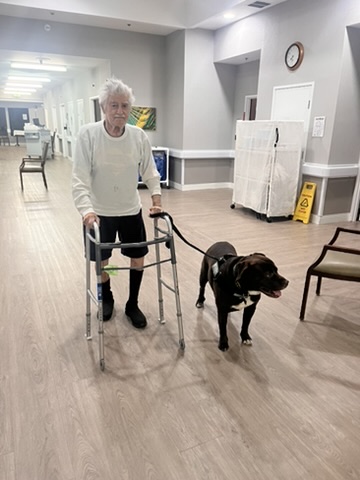
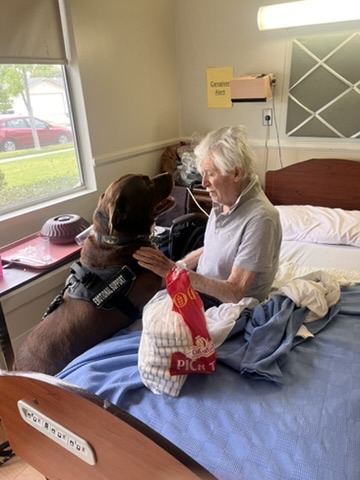
Dusty was not incidental. He was a stabilizing emotional presence through home care, hospice, and family life – a constant when everything else was stripped away.
This harm was not abstract. It was lived daily.
The Man Who Lost Faith
This is where faith in institutions breaks – not with a single ruling, but with the realization that every safeguard failed at once. That sworn testimony could be ignored. That forensic science could be buried. That police findings could be treated as irrelevant. That experts could be silenced while accusations stood alone.
A Moral Witness Beyond Borders
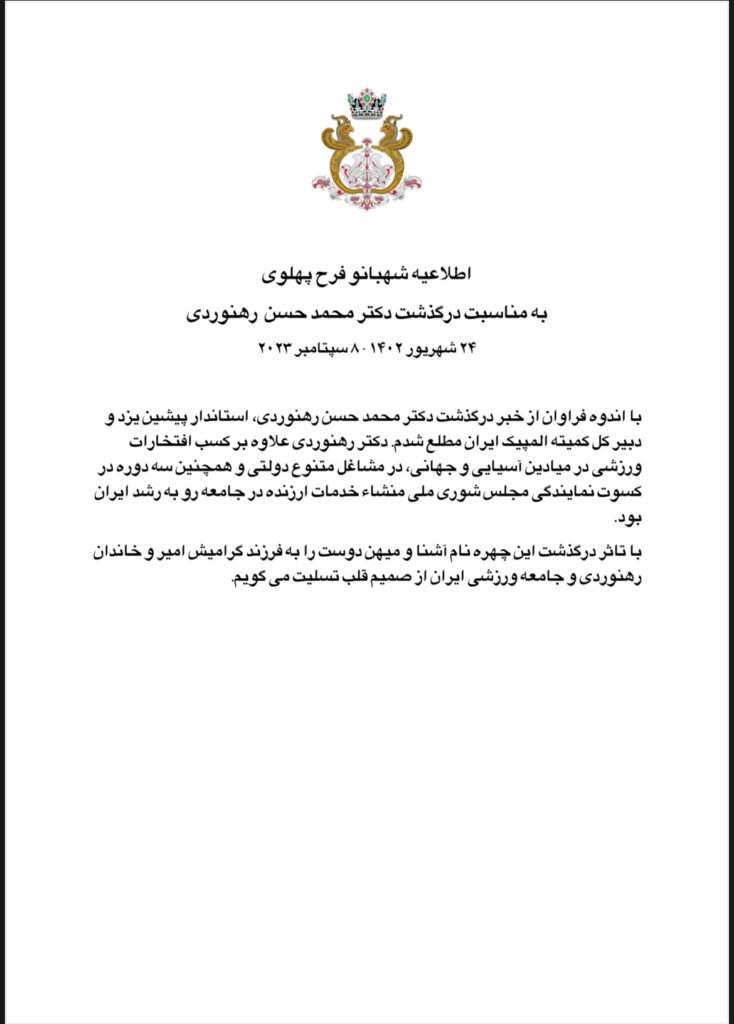
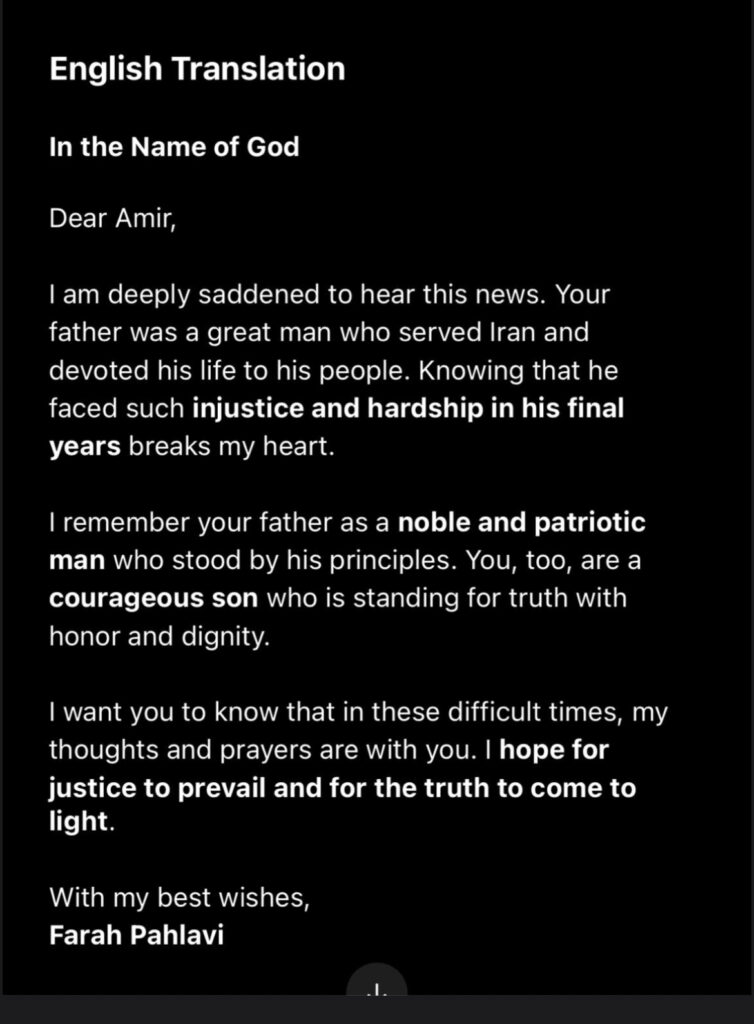
In a letter written in English and Farsi, Her Imperial Majesty Queen Farah Pahlavi recognized Amir’s father’s stature and expressed grief and concern over the injustice and hardship inflicted during his final years.
It was not political. It was moral.
And it underscored what the record already shows: this was not merely a legal dispute. It was a human one.
The Question That Ends the Story.
DISCLAIMER: Investigative reporting in high-profile litigation cases published by The Current Report is non-commercial, fact-based journalism; any project fees compensate research and reporting labor only, sources participate solely in accuracy verification, and final publication is approved exclusively by The Current Report after fact-checking is confirmed.