Sacramento never runs out of political choreography, the carefully staged moves, the curated performances, the behind-the-scenes orchestration masquerading as governance. But every so often, a document surfaces that doesn’t just disrupt the routine, it detonates it.
That’s exactly what happened when a quiet stack of campaign filings revealed something the Attorney General’s office undoubtedly hoped no one would notice.
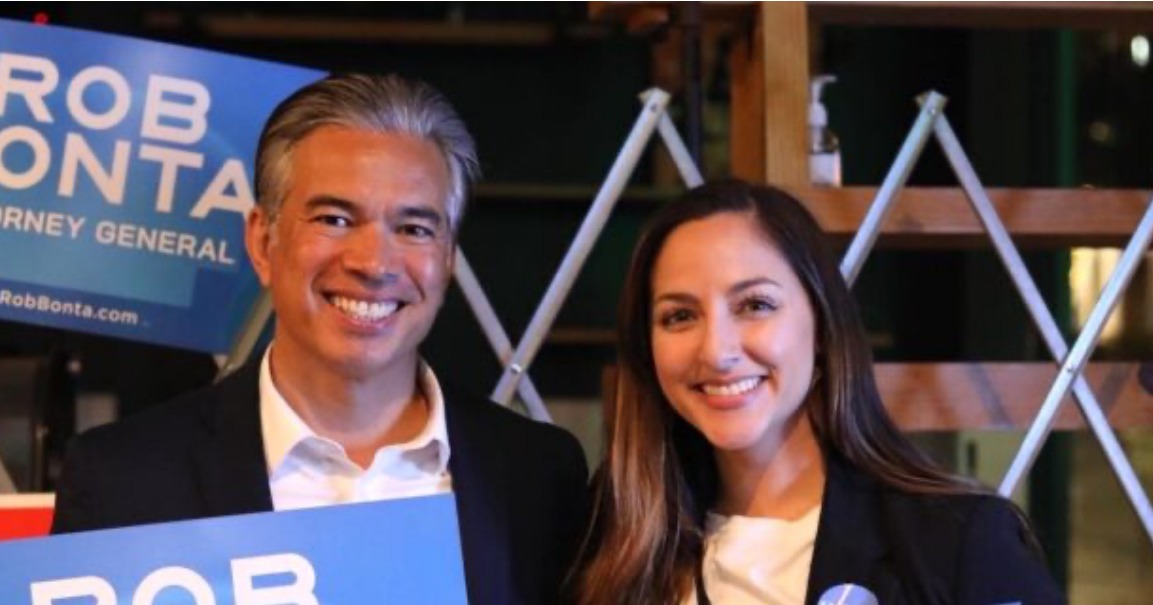
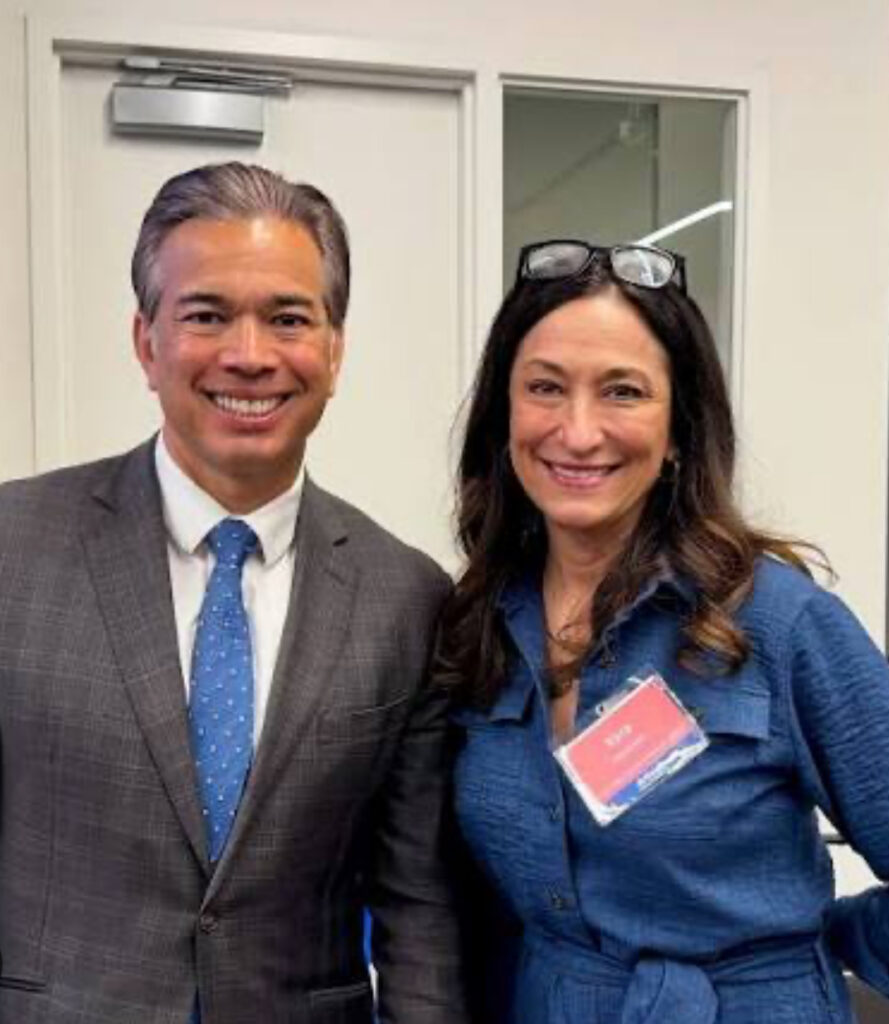
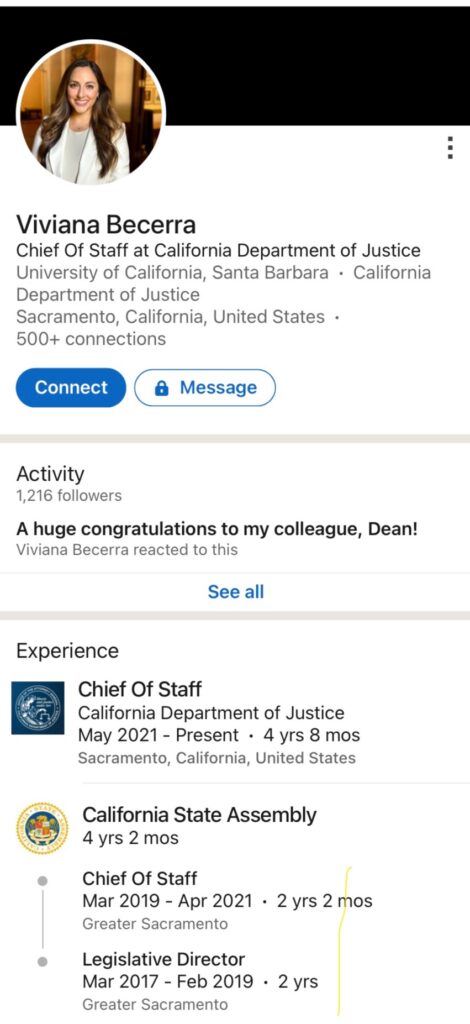
At the center is Viviana Becerra, Attorney General Rob Bonta’s longtime confidante, fixer, and current Chief of Staff. In the official world, she is the polished executive managing the operations of the California Department of Justice. Inside Sacramento’s inner circle, she is far more – the keeper of Bonta’s political ecosystem. But it is the campaign finance filings that finally put her dual roles in stark relief, and the picture isn’t pretty.
The numbers don’t whisper. They scream. On November 1, 2022, Rob Bonta’s campaign paid Viviana Becerra exactly fifty thousand dollars for “campaign consultants.” Not rumor. Not speculation. Not political gossip passed over cocktails. This is hard data filed under penalty of perjury. And the timing isn’t just suspicious – it’s explosive.
By late 2022, Becerra wasn’t moonlighting as a strategist. She wasn’t a campaign volunteer squeezing in work between government meetings. She was the Chief of Staff to the Attorney General, overseeing one of the most powerful public agencies in the state. Yet while she was running DOJ operations on the taxpayer’s dime, Bonta’s campaign dropped a $50,000 check directly into her pocket.
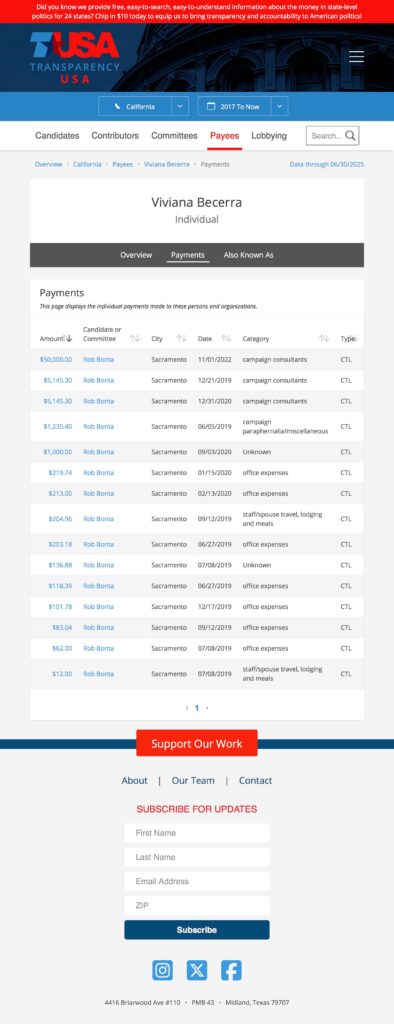
Nearly sixty-four thousand dollars in total flowed to her over the years. Smaller payments in 2019 and 2020. Office expenses. Travel. Consulting fees. But it’s the jump to fifty thousand – the moment she was already controlling the AG’s office – that exposes the deeper truth about how Sacramento’s power structure actually functions. She wasn’t just a staffer. She was part of the political machine. And the machine always rewards its own.
California law technically allows public employees to engage in political work on their own time. But that’s the sanitized version, the one meant to keep watchdogs at bay. The reality is far murkier. When the Attorney General’s Chief of Staff is simultaneously cashing massive campaign checks, the public is expected to swallow a level of ethical gymnastics that would never fly in any other department. If this were a Chief of Staff of a law enforcement agency, a school district’s top administrator, or a planning department executive, every oversight board in the state would be circling.
The questions that emerge here are unavoidable. What kind of “consulting” is worth fifty thousand dollars to someone already embedded in the AG’s political orbit? Was the work actually done outside state hours? Or was this the soft, unspoken currency of political loyalty, the way insiders are quietly compensated for keeping the machinery running smoothly behind closed doors? And how does it not constitute an obvious conflict of interest when the person controlling the Attorney General’s access, messaging, and internal strategy is also being paid by his campaign?
This isn’t a story about legality. Sacramento wrote its ethics laws to look airtight while leaving wide-open escape hatches for political insiders. The real story is the structure that enables these arrangements. Public salaries and campaign cash flowing side by side. Government authority entwined with political loyalty. A Chief of Staff who operates in a blurry zone between public service and campaign strategy, financially rewarded by the very political operation she helps protect.
Where it goes from here is a test of accountability, not just for Becerra, but for Bonta himself. He owes Californians clear answers. What work did she do? Why was it worth fifty thousand dollars? Why did his top law-enforcement aide receive campaign money while directing DOJ operations? And how is this remotely acceptable in a state that prides itself on transparency?
Silence is not an answer.
And while Sacramento may prefer these stories never see daylight, the filings tell a far more honest story than any press release ever will. The Current Report’s investigation continues, because the truth isn’t found in political talking points, it lives in the numbers. And these numbers reveal a power structure far more invested in protecting itself than serving the people of California.
How to File a Complaint With the FPPC
If you believe a campaign finance violation or ethics violation may have occurred, the California Fair Political Practices Commission (FPPC) accepts formal complaints from the public.
Online Complaint Form (Recommended):
https://fppc.ca.gov/enforcement/file-a-complaint.html
Use the “Complaint Form” link to submit electronically. You may attach evidence, screenshots, or campaign filings.
Email for Submissions or Questions:
complaints@fppc.ca.gov
FPPC Enforcement Division – Mailing Address:
Fair Political Practices Commission
1102 Q Street, Suite 3000
Sacramento, CA 95811
Phone (General Line):
(916) 322-5660
What You Need to Include in a Complaint:
- The names of the individuals or campaign committees involved
- The specific violation you believe occurred
- Dates, amounts, and any supporting documents (campaign finance reports, screenshots, etc.)
- Your contact information (anonymous complaints may be submitted, but they are less likely to lead to enforcement action)
Note: The FPPC does not take sides in political disputes. They open investigations only when documentation suggests a potential violation of the Political Reform Act.