By any honest measure, what happened to mobile home owners after the November 2018 Woolsey Fire was not an accident. It was a foreseeable outcome, and the legislative record proves it.
Earlier drafts of SB 610 (2025), authored by Ben Allen, included a provision that would have required park owners who owned multiple mobile home parks to offer vacant spaces in their other parks to displaced residents. A public April 29, 2025 Senate Judiciary Committee analysis explains that if the number of displaced homeowners exceeded the number of available spaces in those other parks, placement could be determined by lottery.

That relocation framework did not guarantee that every displaced resident would receive a space. It did not require like-kind replacement. It did not preserve rent control, coastal proximity, lot size, or long-term tenancy protections. A homeowner displaced from a rent-controlled coastal park could have been offered, or assigned by lottery, a space in a different city, potentially inland, without equivalent economic value or protections. The proposal addressed relocation only; it did not restore in-place market value equity compensation.
When the lottery provision was removed, nothing replaced it.
What remained was far more consequential. SB 610 added subdivision (k) to Government Code § 65863.7, explicitly removing the requirement that park owners pay in-place market value when a park closure or cessation is labeled “disaster-related.” In plain terms, the law eliminated guaranteed in-place market value equity compensation when disaster is invoked.
The result is stark. Residents have no guaranteed right to return. No guaranteed right to rebuild. And no guaranteed in-place market value equity compensation.
Disaster Did Not Erase Tenancy – Until the Legislature Did
When the Woolsey Fire tore through Malibu and the Santa Monica Mountains in November 2018, mobile homes were damaged and destroyed. But disaster alone did not terminate leasehold rights. At the time, there was no statutory carve-out that erased tenancy or in-place equity because of wildfire. Mobile home parks had long operated under the assumption, supported by decades of law, that disaster did not nullify ownership or tenancy.
If a park was temporarily uninhabitable due to fire damage, residents were not required to pay rent because the space could not be occupied. But that interruption did not terminate tenancy, erase equity, or relieve the park owner of statutory obligations if the park was not restored to operation. Critically, disaster was not treated differently from any other reason a park ceased operating. If an owner chose not to reopen, that decision constituted a closure or change of use, triggering mitigation and compensation obligations under Government Code § 65863.7 and applicable local ordinances.
Fire excused rent during uninhabitability. It did not authorize permanent displacement without compensation.
That changed just months later.
February 2019: SB 274 Creates a Disaster Exception
In February 2019, SB 274, authored by Bill Dodd, was introduced. Effective January 1, 2020, it created a disaster-specific carve-out under the Mobile home Residency Law, codified in Civil Code § 798.62. For the first time, a lease could terminate after a disaster unless the park owner elected to rebuild.
Under SB 274, once a park is destroyed by disaster, tenancy terminates unless the owner elects to rebuild. That decision rests solely with the landowner. If the owner does not rebuild, residents cannot return to their spaces. Because no formal change-of-use proceeding is required in that circumstance, the in-place market value equity compensation protections tied to Government Code § 65863.7 are not triggered.
SB 274 imposed no mandatory rebuilding timeline and no penalty if an owner delayed debris removal or rebuilding decisions. Post-disaster control shifted entirely to the landowner.
2020: AB 2782 Strengthened Change-of-Use Protections – But Only on Paper
In 2020, AB 2782, authored by Mark Stone and signed into law on August 31, 2020 (Chapter 35, Statutes of 2020), expanded Government Code § 65863.7. The bill strengthened protections for mobile home residents facing park closures by requiring formal change-of-use impact reports and, when displaced residents could not obtain adequate housing elsewhere, payment of in-place market value compensation.
Those protections, however, apply only when a park owner initiates a formal change-of-use or closure proceeding.
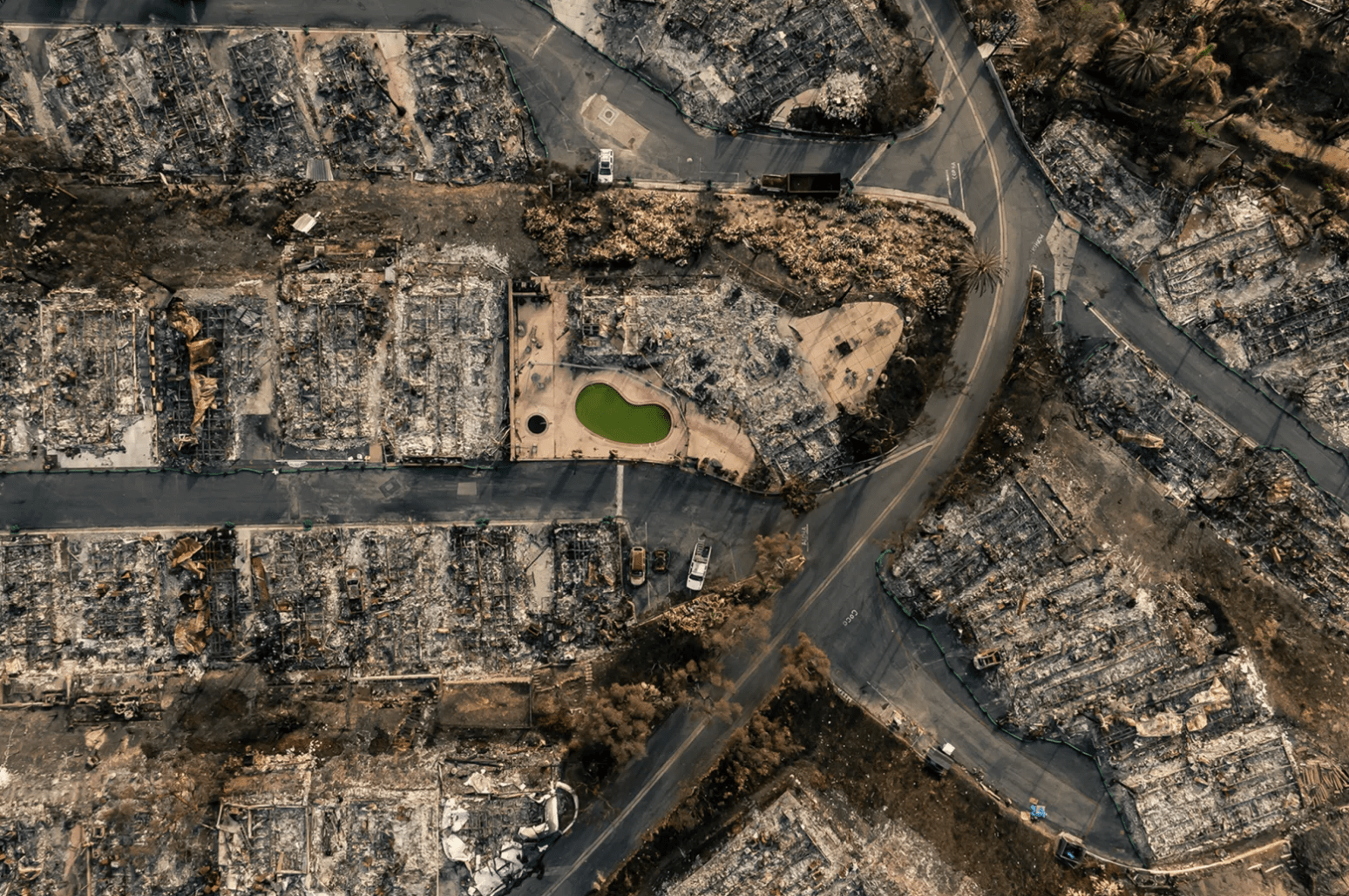
After the January 7, 2025 fire, no such change-of-use application was filed for Pacific Palisades Bowl. Instead, the park fell entirely under the disaster framework created by SB 274. Because no formal closure process was triggered, the compensation mechanism strengthened under AB 2782 was never activated.
In practical terms, the statutory framework allowed owner delay to operate as a shield: by not initiating a formal change-of-use proceeding, the in-place market value compensation requirement was never triggered, and residents were left without the equity protections AB 2782 was designed to provide.
The statute remained on the books, but unreachable in disaster scenarios where the owner does not initiate formal change-of-use proceedings.
2025: SB 610 Finishes the Job
SB 610, authored by Senators Pérez and Ben Allen and signed into law on October 10, 2025 (Chapter 549, Statutes of 2025), amended Government Code § 65863.7 to specify that when a cessation of use is “disaster-related,” the in-place market value compensation requirement does not apply.
This change is critical.
Before SB 610, if a park closed and residents could not obtain adequate housing elsewhere, owners were required to compensate residents for the real market value of their rent-controlled location. After SB 610(k), when cessation is classified as disaster-related, that in-place market value equity compensation does not apply.
Combined with SB 274, the effect is decisive. SB 274 terminates tenancy unless the owner rebuilds. AB 2782’s compensation trigger requires a formal change-of-use proceeding. SB 610 removes in-place market value compensation when disaster is invoked.
What AB 2782 was designed to guarantee becomes functionally unreachable in disaster scenarios.
This is not a technical tweak. It is the statutory structure that permits permanent displacement without guaranteed in-place market value equity compensation.
The Human Cost, in Practice
Under SB 274, landowners face no deadline to decide whether residents may return. There is no requirement to rebuild, no mandatory timeline to clear debris, and no independent enforcement mechanism.
More than a year after the fire, many residents remain displaced. Each additional month without action entrenches the loss of equity, leasehold value, and rent-control protections extinguished by operation of law.
Pacific Palisades Bowl is a coastal, rent-controlled community established in 1954. Residents purchased homes in reliance on that recognized, grandfathered use.
For residents of this park, the combined effect of these statutes has resulted in the destruction of substantial in-place equity. Market estimates tied to individual lots show losses reaching into the seven figures.
Relocation alone is not compensation unless it is like-kind, equal in value, and preserves rent control. A space in a distant or higher-rent park does not replace a rent-controlled coastal home. Yet the current statutory scheme allows that outcome while providing no enforceable rebuilding timeline and no guaranteed in-place market value equity compensation.
As Pacific Palisades Bowl resident Bonnie L. Kanner explains:
“The fire started this, but the government’s disaster loopholes, SB 274 and SB 610, finished it. They allowed our homes to be terminated and our equity erased overnight, while the land we lived on for 70 years is being put up for sale. We are living with the rage and PTSD of a historic betrayal, yet we lack the means to pay an attorney to defend our Fifth and 14th Amendment rights. The clock is ticking toward a January 7, 2027, deadline for justice, and new bills like SB 1092 and SB 1093 offer no fix and no path home. If this stands, my story is the blueprint for the destruction of all 540,000 mobile-home households in California.”
The Record Speaks for Itself
The legislative trail, from SB 274 to AB 2782 to SB 610, shows a steady narrowing of rights following wildfire destruction.
Disaster did not erase these rights.
Legislation did.
Supporting Legislative Sources
SB 610 legislative record and bill history
https://leginfo.legislature.ca.gov/faces/billNavClient.xhtml?bill_id=202520260SB610
SB 610 bill text and chaptered statute (Chapter 549, Statutes of 2025)
https://leginfo.legislature.ca.gov/faces/billTextClient.xhtml?bill_id=202520260SB610
Government Code § 65863.7 (mobile home park change-of-use and compensation provisions)
https://leginfo.legislature.ca.gov/faces/codes_displaySection.xhtml?sectionNum=65863.7&lawCode=GOV
SB 274 legislative record
https://leginfo.legislature.ca.gov/faces/billNavClient.xhtml?bill_id=201920200SB274
Civil Code § 798.62 (termination of mobilehome tenancy after disaster)
https://leginfo.legislature.ca.gov/faces/codes_displaySection.xhtml?sectionNum=798.62&lawCode=CIV
AB 2782 legislative record
https://leginfo.legislature.ca.gov/faces/billNavClient.xhtml?bill_id=201920200AB2782
AB 2782 chaptered law (Chapter 35, Statutes of 2020)
https://leginfo.legislature.ca.gov/faces/billTextClient.xhtml?bill_id=201920200AB2782
California Senate Judiciary Committee bill analyses archive
https://sjud.senate.ca.gov/analysis
California Mobilehome Residency Law (Civil Code §§ 798–799.11)
https://leginfo.legislature.ca.gov/faces/codes_displayText.xhtml?lawCode=CIV&division=2.&title=2.&part=2.&chapter=2.5.