

What unfolded outside New York City’s Gracie Mansion over the weekend could have easily become one of the deadliest domestic terror attacks in recent years. Instead, it ended as a narrowly avoided catastrophe after two improvised explosive devices allegedly thrown toward a protest crowd failed to detonate.
Federal authorities have now charged Emir Balat, 18, and Ibrahim Kayumi, 19, with multiple terrorism-related offenses stemming from what prosecutors describe as an ISIS-inspired bombing attempt near the mayor’s official residence on Manhattan’s Upper East Side.
The charges were unsealed in federal court in the Southern District of New York. According to the federal complaint. prosecutors allege the two suspects traveled from Pennsylvania to New York City carrying improvised explosive devices intended for use during a politically charged protest outside Gracie Mansion.
The explosives, investigators say, were not symbolic or non-lethal protest devices. They were real improvised explosive devices capable of causing serious injury or death.
According to law enforcement reporting and details contained in the charging documents, the bombs allegedly contained TATP, a highly unstable explosive compound frequently associated with international terrorist attacks. Counterterrorism investigators often refer to the substance as the “Mother of Satan” because of both its volatility and destructive capability.
But the chemical composition of the devices is only part of what has alarmed investigators.
Authorities say the bombs were packed with screws, nails, bolts, and other metal fragments designed to act as lethal shrapnel once the device detonated.
That design is not accidental. Packing explosives with metal hardware is a well-known tactic used in terrorist bomb construction to maximize casualties by turning ordinary objects into high-velocity projectiles capable of tearing through a crowd.
The devices were allegedly thrown into a protest area where demonstrators and counter-demonstrators had gathered near the mayor’s residence. According to prosecutors, one of the suspects ignited and threw a device toward the crowd before attempting to use another device during the chaotic scene. Both failed to explode, and police moved in quickly to detain the suspects before additional harm could occur.
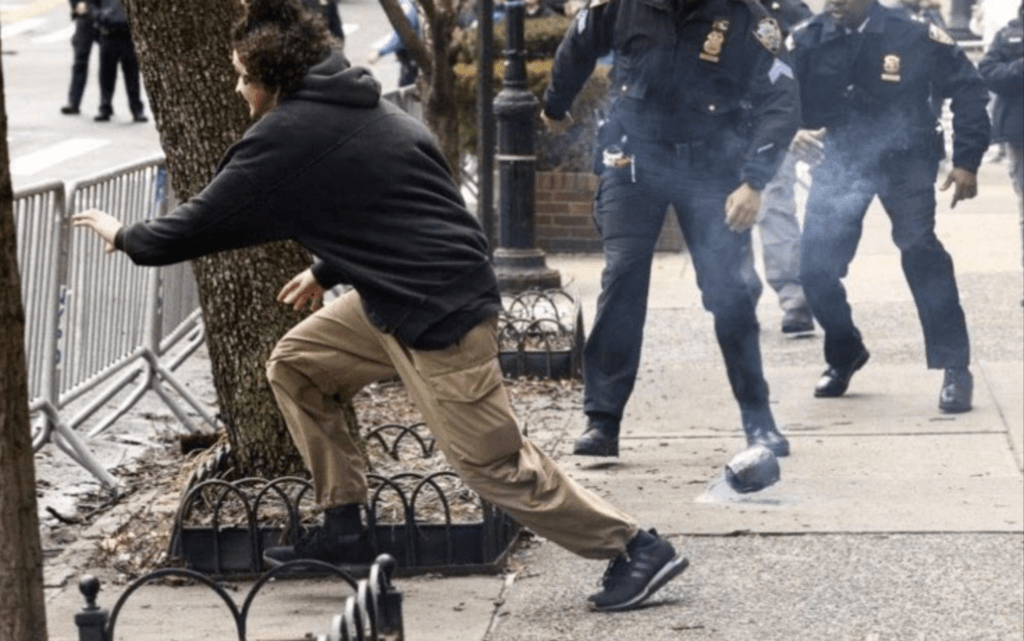
Investigators later recovered another suspicious device connected to the suspects, raising further questions about how many explosives had been assembled and what the full plan may have involved.
What has drawn particular attention in the federal complaint is the alleged intent behind the attack.
According to prosecutors, one of the suspects referenced previous mass-casualty terrorist attacks and reportedly expressed a desire to carry out an operation larger than the 2013 Boston Marathon bombing, which killed three people and injured hundreds.
That detail has intensified concerns among investigators that the events outside Gracie Mansion may have been intended as more than a single isolated act of violence.
Authorities say the suspects also expressed support for the Islamic State during the investigation, leading officials to examine whether the pair had been radicalized through extremist propaganda circulating online. Law enforcement officials have indicated the case is being investigated as ISIS-inspired terrorism, though there is currently no confirmation of direct operational coordination with the foreign terrorist organization itself.
That distinction matters.
Over the past decade, federal counterterrorism investigations have increasingly focused on individuals who become radicalized online rather than through direct contact with established terror networks. These individuals often consume extremist content through encrypted messaging apps, forums, and social media before attempting to carry out attacks using homemade weapons.
The devices recovered in this case appear consistent with that pattern.
TATP-based explosives have appeared in numerous terrorist plots worldwide because they can be constructed using commercially available materials. When combined with shrapnel components like nails and screws, the resulting device is specifically designed to cause maximum harm in densely populated areas.
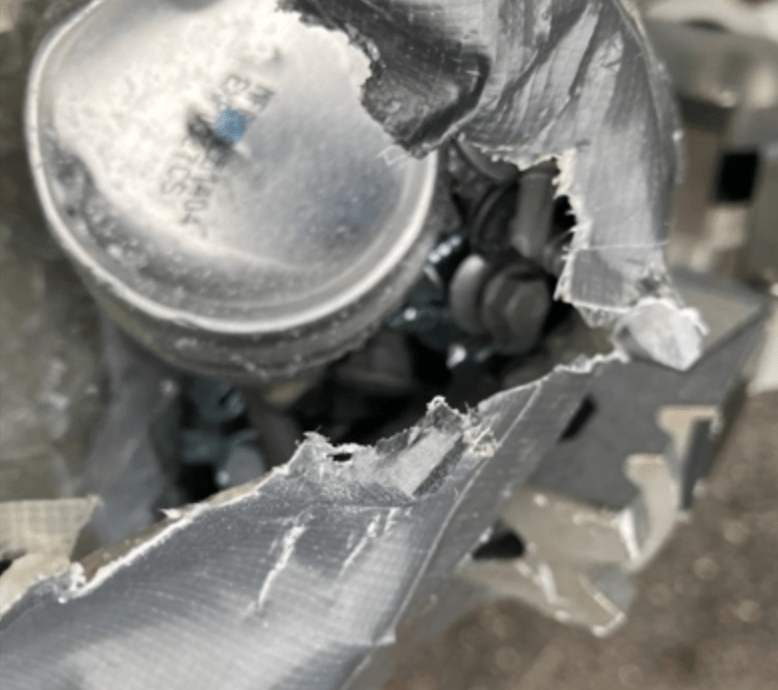
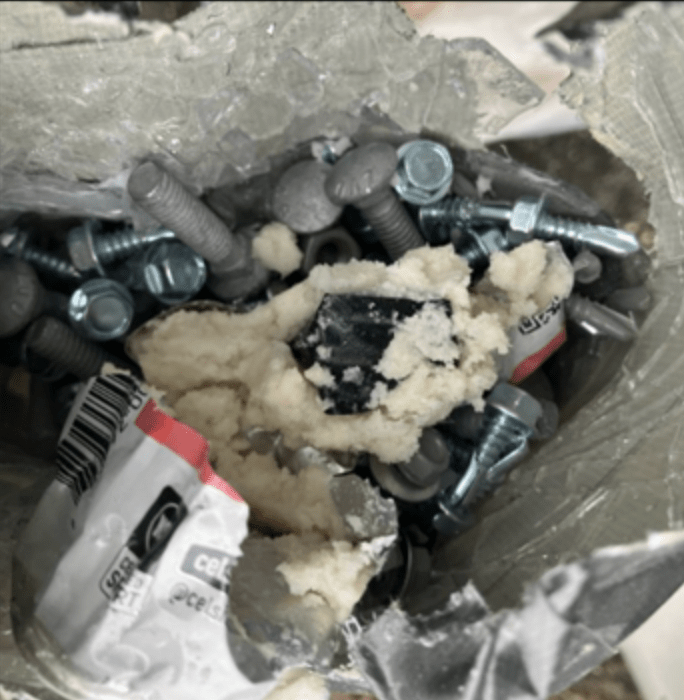
The location chosen for the alleged attack underscores that risk.
Gracie Mansion sits within a densely populated area of Manhattan where protests routinely draw large crowds and significant media attention. A successful detonation of a shrapnel-packed device in that environment could have produced devastating results within seconds.
Investigators are now working to determine where the explosive materials were obtained, where the devices were assembled, and whether anyone else may have assisted in planning or encouraging the attack. Federal authorities have already executed search warrants connected to the suspects in Pennsylvania as the investigation expands.
For now, Balat and Kayumi remain in federal custody as prosecutors pursue charges including providing material support to a foreign terrorist organization and use of a weapon of mass destruction.
What remains most striking about the case is how close the alleged plot came to unfolding as intended.
Improvised explosive devices packed with nails and screws are designed for one purpose: turning a crowded public space into a field of shrapnel and chaos.
In this case, the bombs never detonated.
And a planned attack that investigators believe may have been intended to cause far greater devastation ended not with a blast, but with two failed devices and a rapidly expanding federal terrorism investigation.