
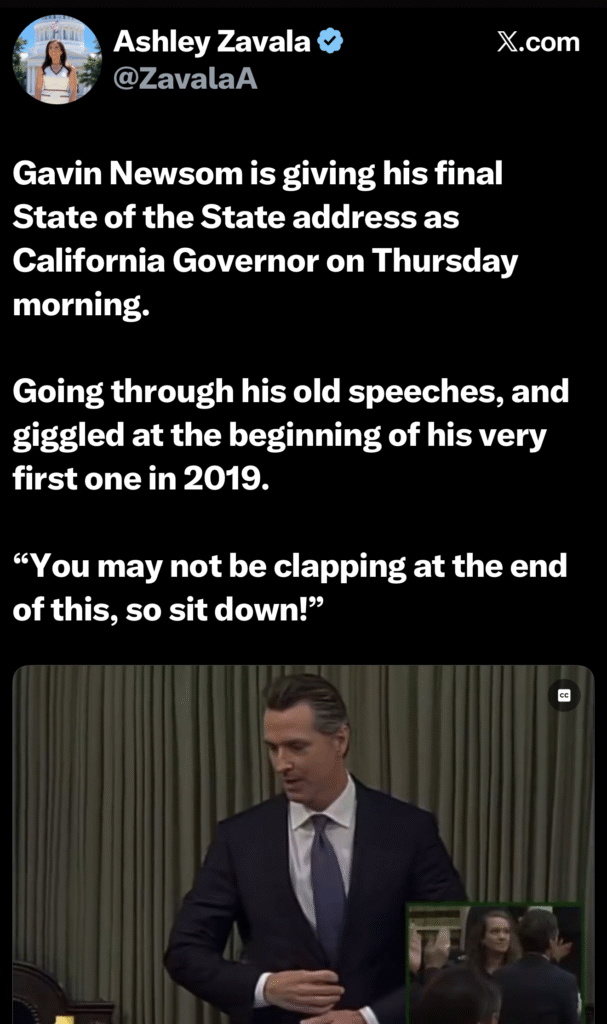
As Gavin Newsom delivers his final State of the State address, Californians should remember his first. Back in 2019, Newsom smirked and warned the room, “You may not be clapping at the end of this, so sit down.”
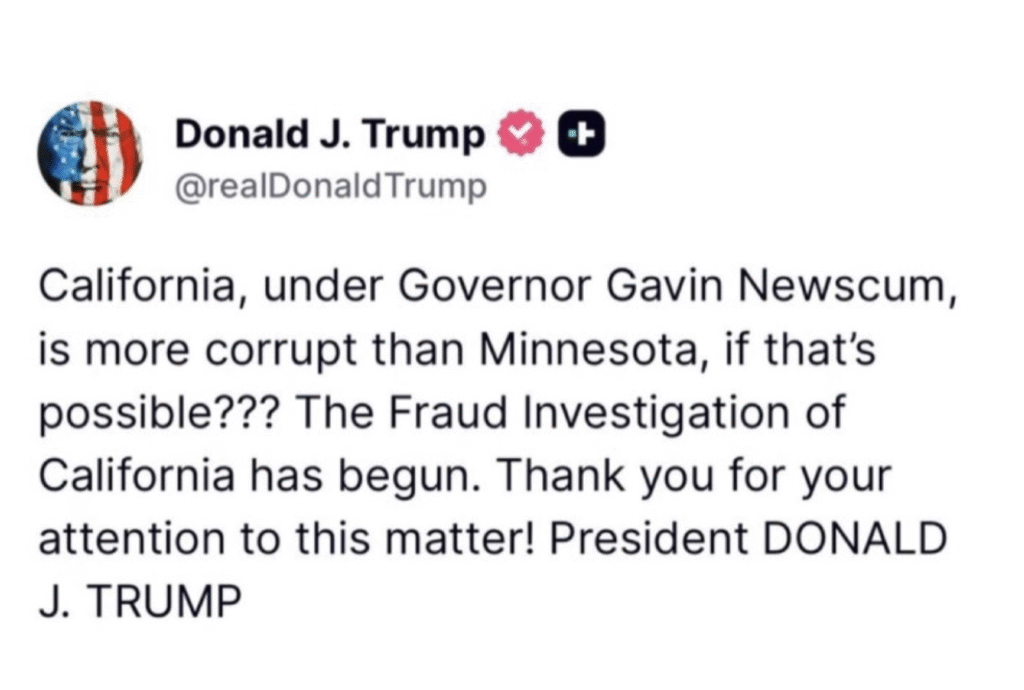
After recent events, including the Trump administration announcing a federal fraud investigation into California’s missing coffers. It looks like Newsom is the one who may need to sit down and digest the enormity of the large scale investigation that has already begun – and long overdue.
Eight years of one-party rule, California is no longer the progressive model sold to the nation. It has become a case study in unchecked power, where fraud is normalized, disasters are quietly rewritten, and accountability only arrives when federal authorities step in from the outside. The applause never came. The audits did. And now the investigations are here.
If Newsom’s legacy can be summed up in one word, it is FRAUD. Not isolated. Not accidental. Systemic.
The California State Auditor confirmed what whistleblowers and independent analysts had been warning for years. Under Newsom’s administration, California lost eighty-eight billion dollars to waste, mismanagement, and outright theft. That total includes tens of billions in homelessness funding with no clear accounting, billions siphoned from unemployment programs, and massive COVID-era fraud that state agencies failed to stop even after red flags were raised.
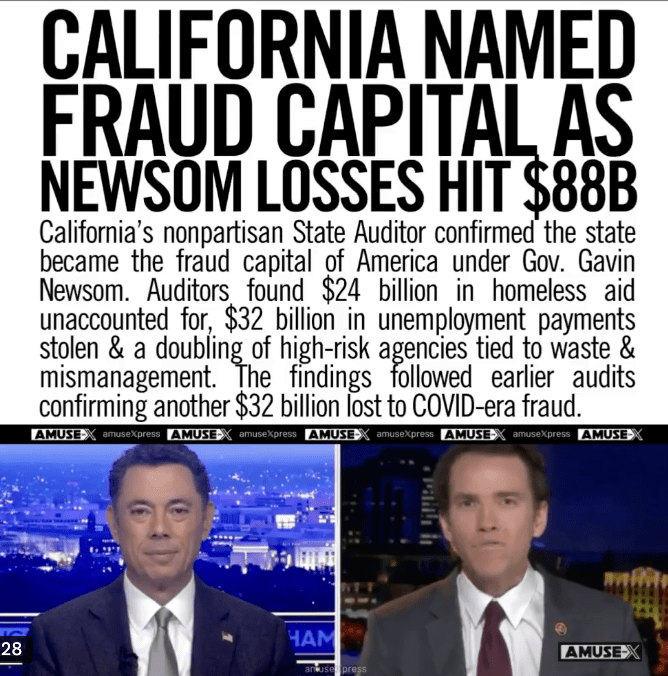
Independent estimates place California’s true exposure far higher, closer to a quarter-trillion dollars statewide. At the center of this failure sits the Employment Development Department, repeatedly flagged as high risk and still hemorrhaging improper payments years after the scandal broke. The Governor’s office insists no money was truly lost, pointing to selective prosecutions and partial recoveries. That defense collapses under scrutiny. This was not incompetence. It was governance without consequences. And systems like that do not reform themselves. They collapse when exposed.
That exposure escalated rapidly.
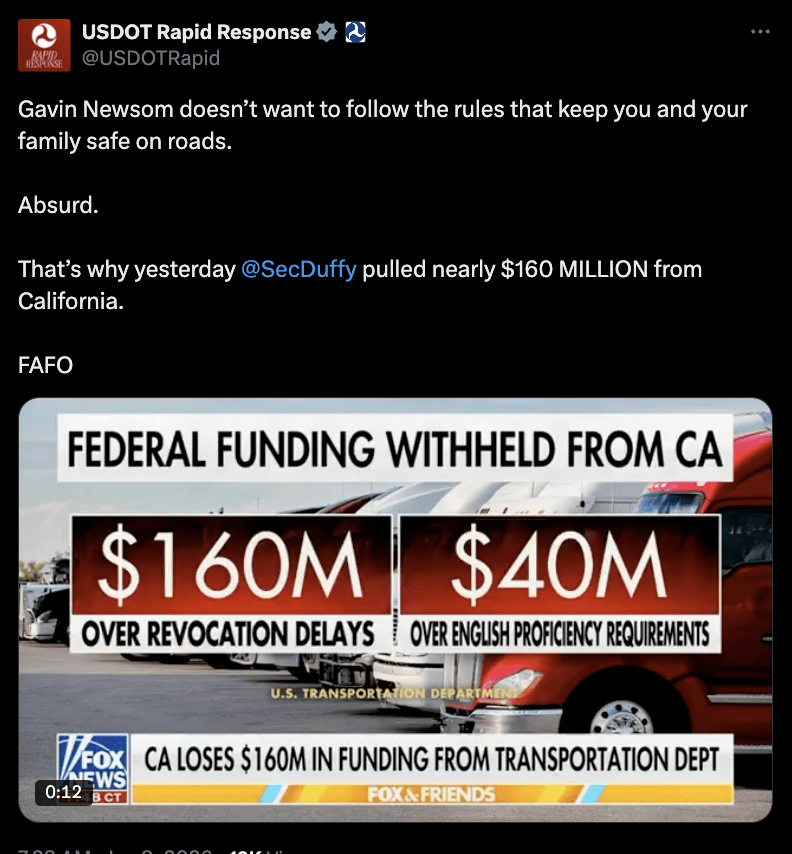
The U.S. Department of Transportation froze nearly one hundred sixty million dollars in highway funding after California refused to revoke thousands of improperly issued commercial driver’s licenses. The state was given time to comply. It chose politics instead. Public safety lost. Federal money vanished. For the first time in years, Washington imposed consequences.
But the funding freeze was not the real shock.
Two days later, the U.S. Department of Justice, under Donald Trump’s administration, announced it had launched a formal investigation into fraud, misuse of federal funds, and election-related vulnerabilities tied to California governance. DOJ does not announce probes lightly. It does so when evidence already exists and when the money trail is too large to ignore.
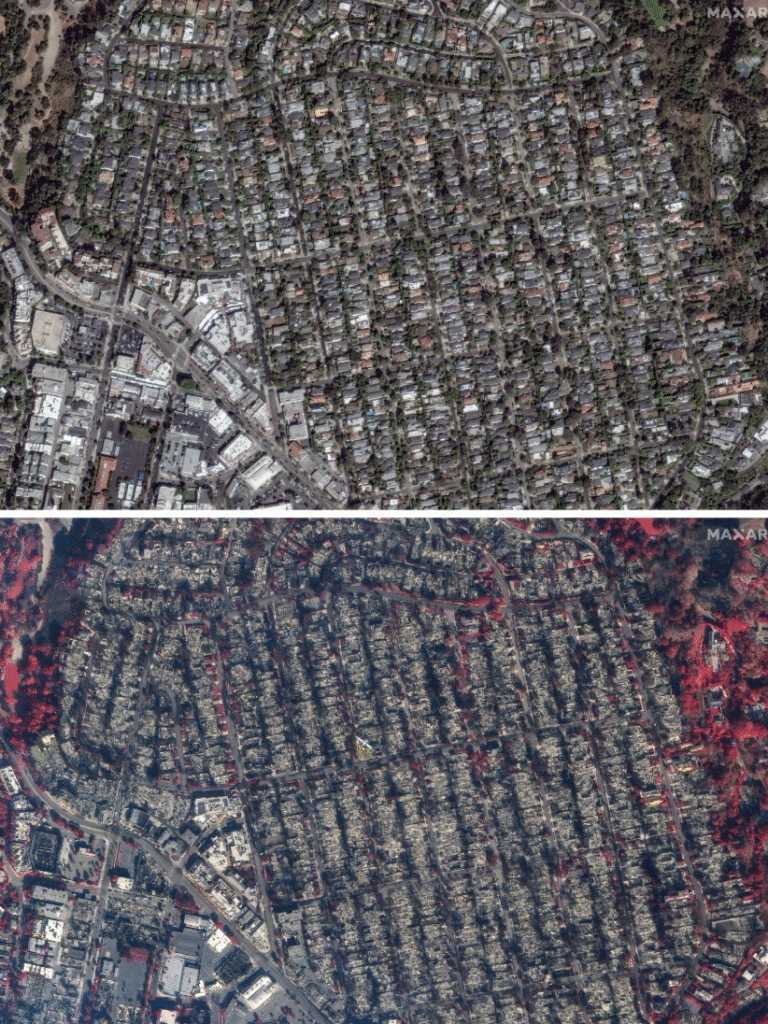
Nowhere is the pattern clearer than the Palisades fire.
The January 2025 wildfires killed hundreds of Californians and erased entire neighborhoods. But while residents searched for answers, city and state leadership moved quickly to control the narrative. After-action reports were softened. Warnings were minimized. Key criticisms quietly disappeared. Whistleblowers later revealed that internal drafts were altered before release, with original authors refusing to sign final versions that no longer reflected what actually happened. This was not about learning lessons. It was about limiting exposure.
That same instinct surfaced again in an even more damaging way.
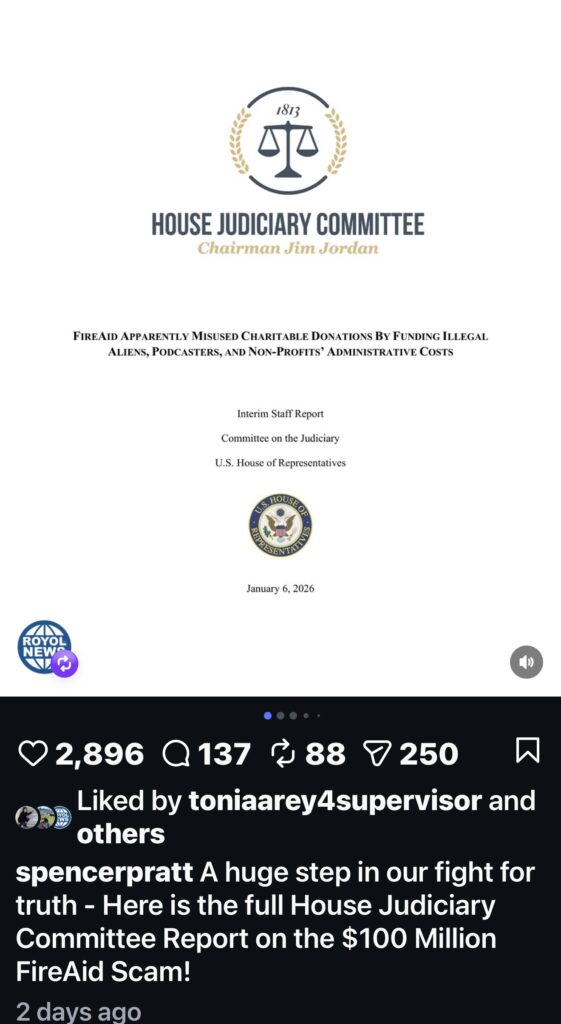
Just days ago, the House Judiciary Committee, chaired by Jim Jordan, released an interim staff report that reads less like oversight and more like a roadmap for prosecutors. The report documents how FireAid, the nonprofit created in response to the Palisades and other wildfires, raised one hundred million dollars from the public under explicit promises that donations would go directly to wildfire victims.
That promise was not kept.
According to the Committee’s findings, seventy-five million dollars was distributed to one hundred eighty-eight nonprofits, many with little or no nexus to wildfire relief. Funds were redirected to political advocacy groups, voter participation initiatives, organizations paying salaries and bonuses, podcasters, and nonprofits serving illegal aliens. FireAid later claimed it never intended to provide direct payments to victims, a statement flatly contradicted by public representations made during its benefit concert. Redefining a mission after the money is raised is not charity administration. It is misrepresentation. And when disaster funds intersect with federal oversight, misrepresentation carries criminal exposure.
Then came a detail that changed the timeline.
Two days before the Judiciary Committee publicly released its report, Spencer Pratt announced on Instagram that he had already received an advance copy of the document. Congressional investigative reports do not circulate early by accident. Advance distribution typically signals coordination, briefings, or preparation for enforcement action. Pratt was not reacting to headlines. He was referencing the report itself. Within forty-eight hours, DOJ’s investigation was publicly acknowledged. That sequence is not coincidence. It is process.
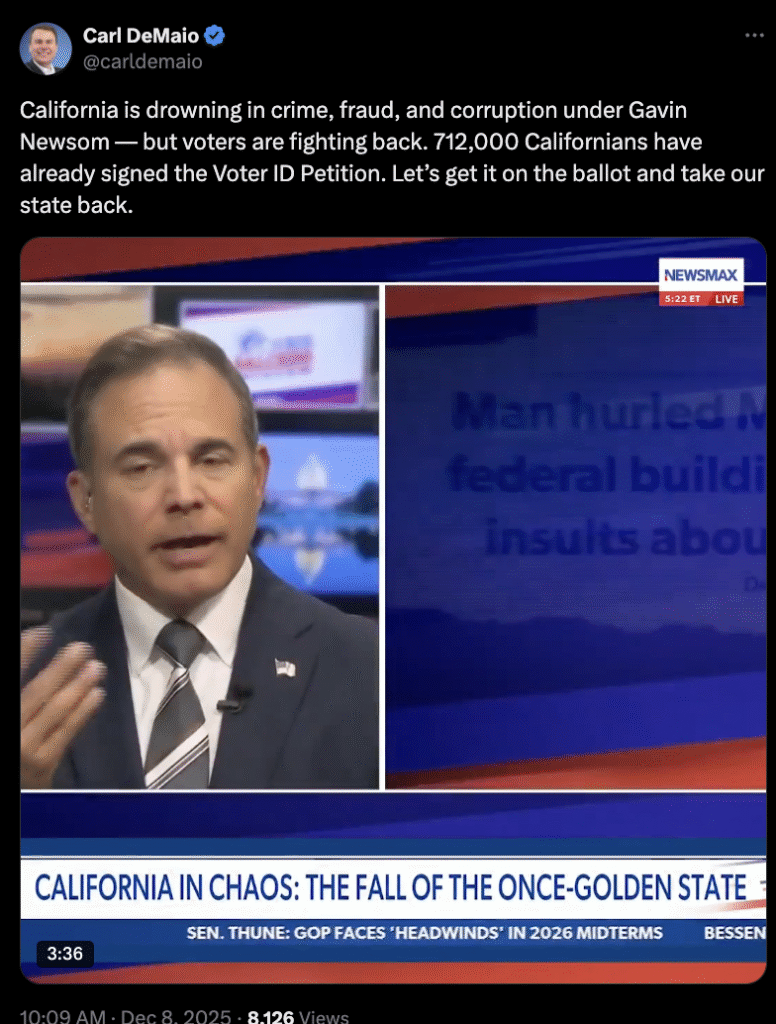
As federal scrutiny intensifies, Californians are no longer waiting for Sacramento to police itself. That is why the Voter ID movement has surged. Assemblymember Carl DeMaio, through Reform California, has collected more than one million signatures to place a Voter ID initiative on the November ballot. Supporters are not claiming it fixes everything. They are saying it restores the first missing ingredient, accountability, in a state that lost tens of billions, rewrote disaster reports, and quietly rerouted wildfire donations once the cameras left.
Today, Newsom will tout economic strength, declining homelessness, and expanded education funding. He will not dwell on the eighteen-billion-dollar budget deficit, the frozen federal funds, the DOJ investigation now underway, or the unanswered questions surrounding the Palisades fire and FireAid. This is not a victory lap. It is damage control.
The real question facing California is not who claps today. It is what finally ends this era of political insulation. Will it be a federal investigation that follows the money where Sacramento refused to? Will it be Voter ID, restoring accountability from the bottom up? Or will it be both, grassroots resistance paired with federal enforcement, closing the escape hatches permanently?