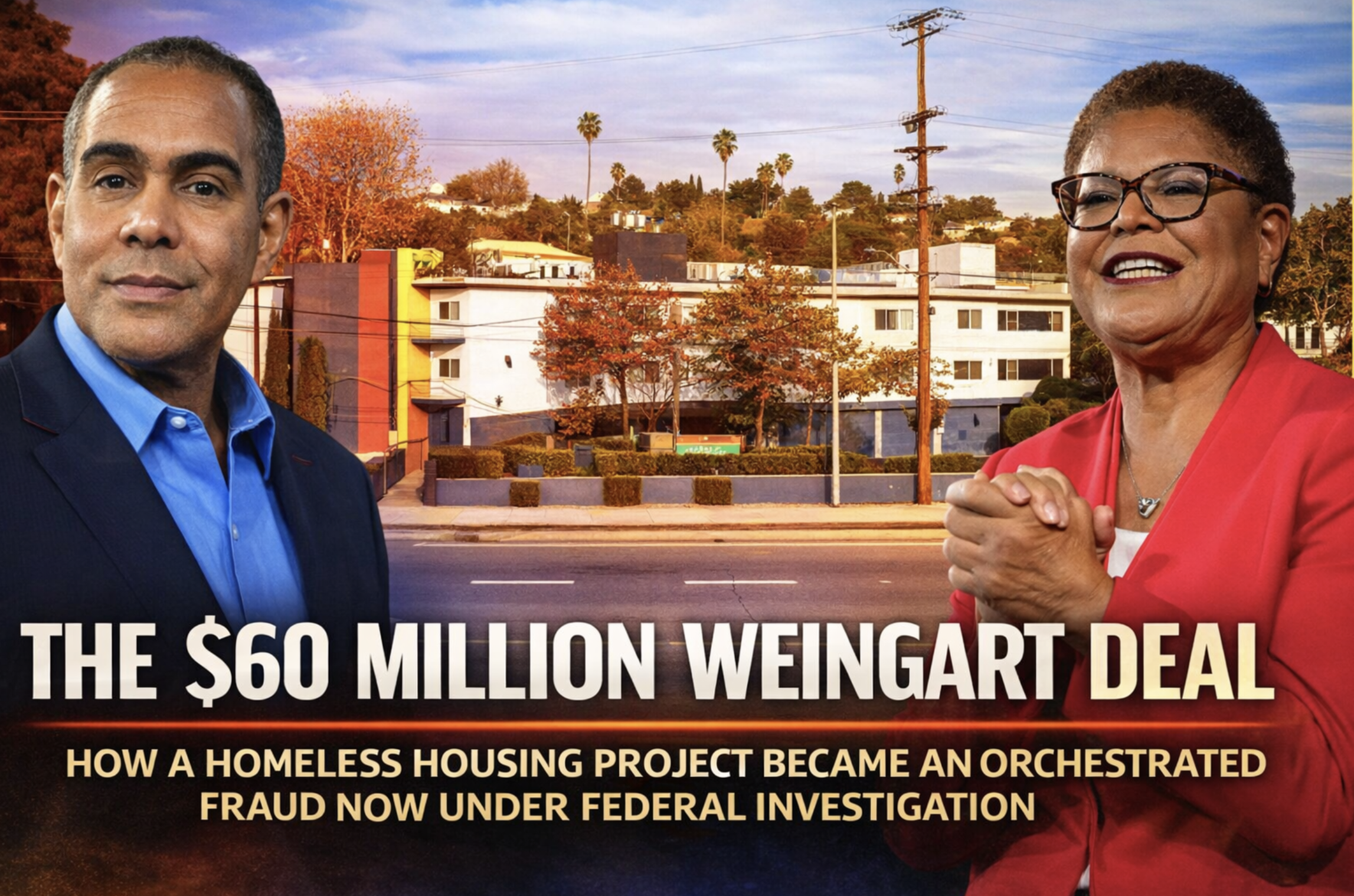
What happened at 3340 Shelby Drive was never about urgency. It was about access, who had it, who controlled it, and how far they were willing to stretch the boundaries of public trust to keep it.
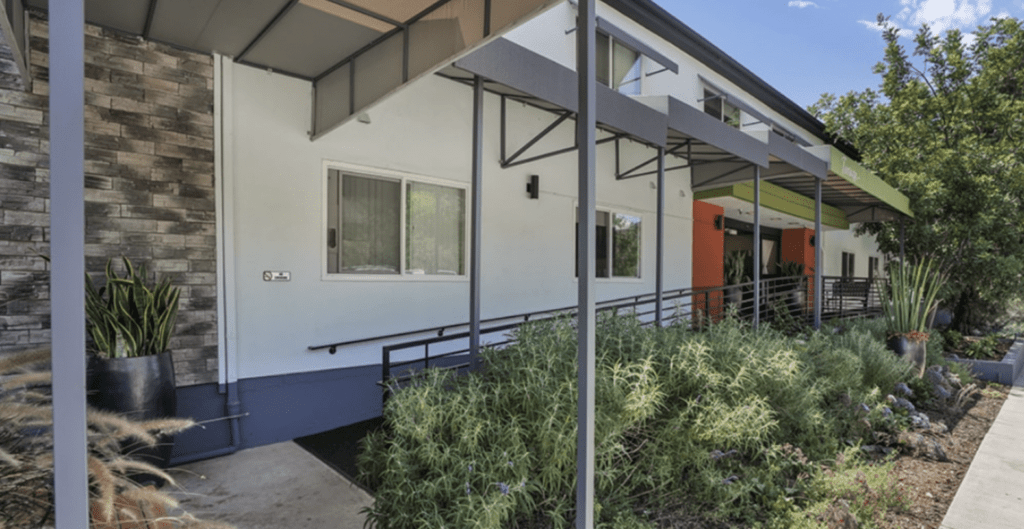
In 2023, under the banner of a declared homelessness emergency, the City of Los Angeles entered into a partnership with the Weingart Center through Project Homekey, a program designed to fast-track housing by cutting through red tape. What followed instead was a deal structure so deeply flawed that a Superior Court judge has already found “prima facie evidence of excessive payment, waste, and probably fraud.” Nearly $60 million in public funds were committed. A senior assisted living facility was emptied. And more than a year later, the building still has not housed a single person.

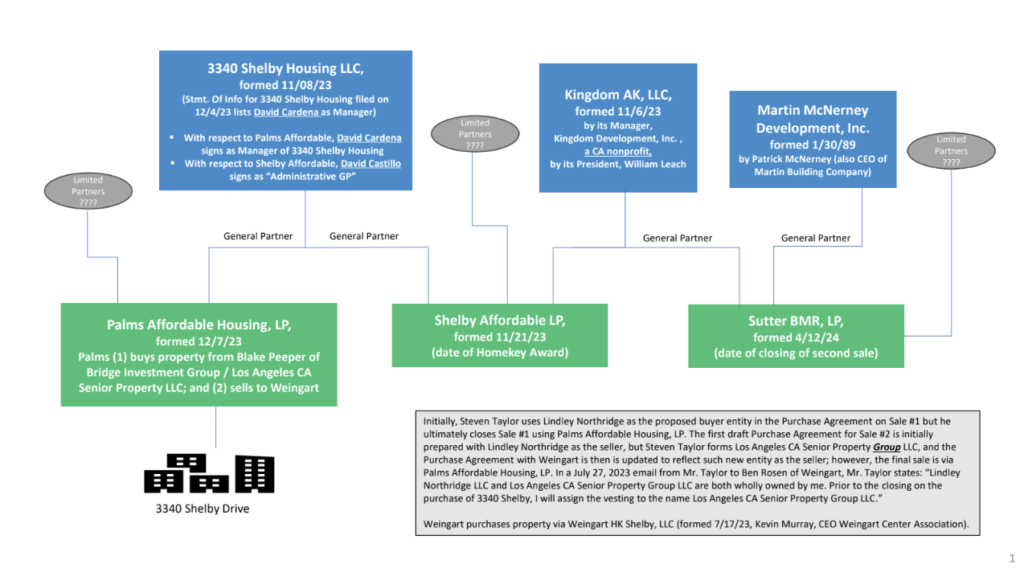
At the center of the transaction is a number that refuses to reconcile: $27 million. That is what Weingart paid for the Shelby property. But at the exact same time, the building was sitting in escrow for $11 million with a middleman who did not yet own it. This was not a historical purchase or a prior sale, it was a concurrent transaction. The City and Weingart were negotiating with that middleman in May 2023, before he had any legal claim to the property. He did not open escrow until June 16, 2023. And yet, by then, the price had already been set.
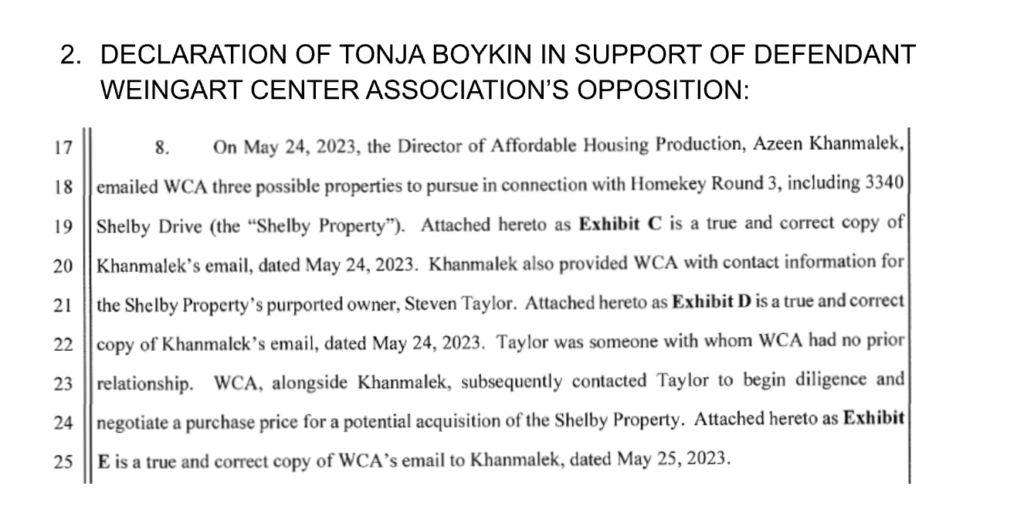
The court has already recognized what that gap represents: approximately $16 million in taxpayer money that cannot be justified by market value. The explanation offered that Weingart did not know the price of the underlying deal, does not withstand even basic scrutiny. They were acting as stewards of public funds, entering into a double escrow structure, and never asked the most fundamental question: what is this property actually being purchased for? If true, it is not a defense. It is an admission of gross negligence.
Behind the acquisition, the funding itself appears to have been just as loosely constructed. Internal City communications confirm that $47 million in Inside Safe funds, intended for hotel acquisitions, were redirected toward Homekey projects through what was described as a verbal agreement between the Mayor’s office and the Los Angeles Housing Department. There is no indication that this arrangement was formally documented or subjected to standard oversight. Of that amount, more than $20 million was already transferred into the Shelby project, with the remaining funds earmarked for operations, awaiting further direction. Public money, committed on the basis of a conversation.
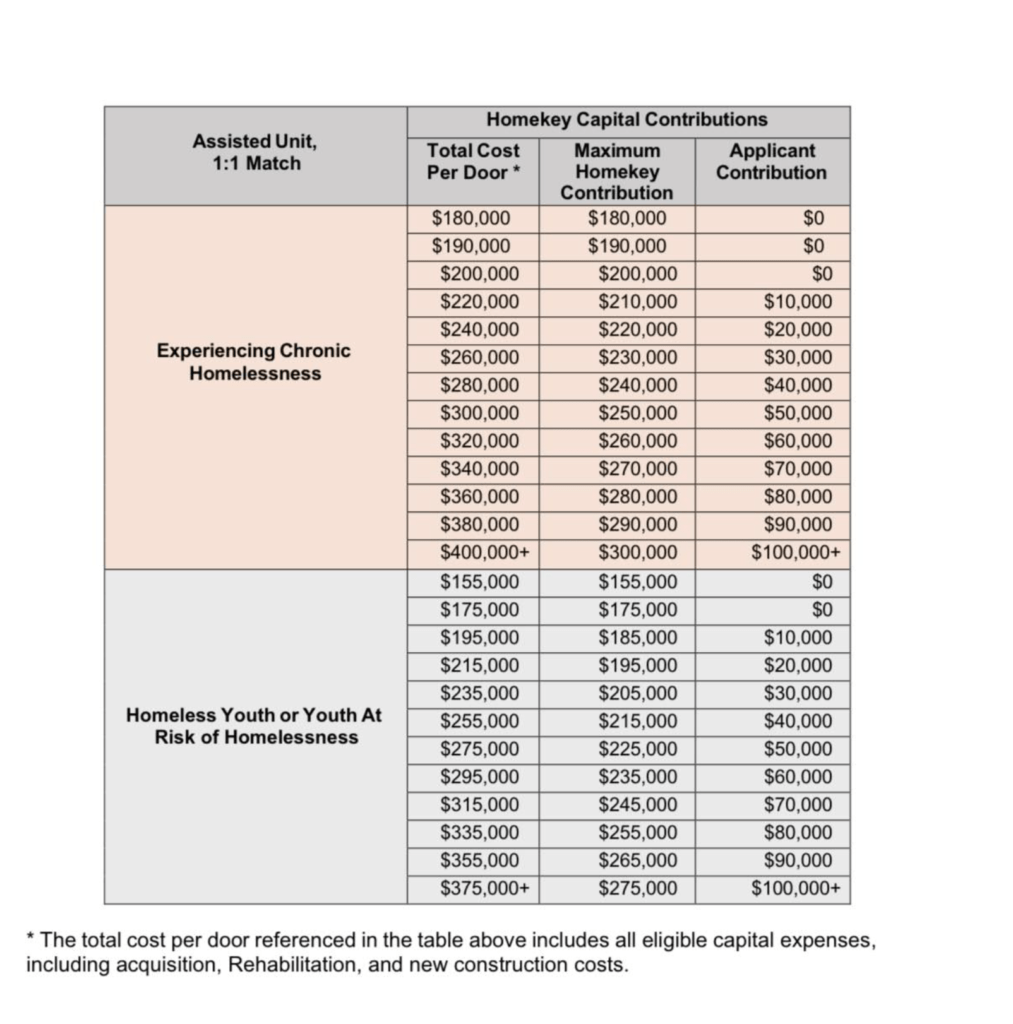
The pricing model used to justify the acquisition reveals how these numbers are manufactured rather than discovered. Under Homekey, properties are evaluated on a “per door” basis, a framework that sets maximum funding thresholds per unit. In practice, this flips the traditional valuation process on its head. The funding cap becomes the target price, and everything else is built to support it. In Shelby’s case, that meant roughly $350,000 per room. The appraisal did not determine the price, the price dictated the appraisal.
That appraisal was obtained only after the City had already approved the project and committed funding. It falsely identified the middleman as the property owner and failed to acknowledge the pending escrow at $11 million. A later internal review flagged multiple compliance failures, raising serious questions about whether it met Homekey requirements at all. Yet, despite those findings, a City official submitted a declaration under penalty of perjury defending the appraisal’s validity. The system did not correct itself. It doubled down.
Once the inflated acquisition cost was locked in, the rest of the financial structure appears to have been engineered to absorb the remaining funds with precision. Weingart requested an operating budget of $100 per room per day, totaling just under $3 million annually. The most striking aspect is not the amount, it is the guarantee. The payment is not tied to occupancy. The building could sit empty and still generate full operating revenue. In a program designed to house the unhoused, the incentive structure does not require anyone to be housed at all.
What remains after acquisition and operations is categorized as renovation. Early assessments suggested approximately $1.5 million in construction costs. That number later expanded to roughly $8 million. The increase was not driven by a new scope of work so much as it aligned almost perfectly with the remaining available funds. The budget did not respond to the project. The project responded to the budget.
Then, buried in a final data dump produced on February 20 in response to public records requests, another piece of the system came into focus, this time not about the money, but about how the building is intended to operate once it finally opens.
Inside that production was a management plan submitted by Weingart for the Shelby site. The language is not ambiguous. It explicitly states that substance abuse violations, including a felony conviction for the sale of narcotics, will be addressed through a “housing first” and “harm reduction” framework with the stated goal of keeping the individual housed. It goes further: the use of drugs or alcohol, in and of itself, “will not be a reason for discharge.” In fact, the document emphasizes that discharges are “extremely rare.”
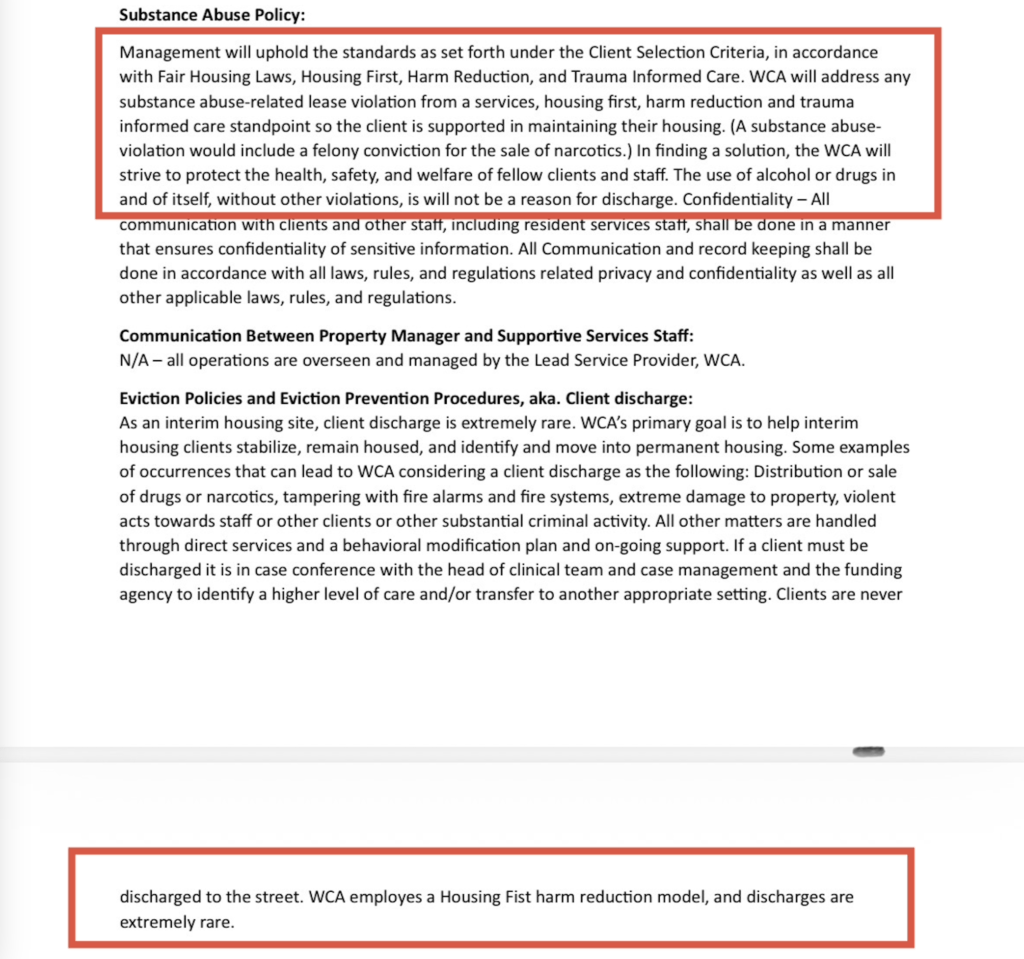
This is not a loose interpretation. It is written policy.
In practical terms, it means that the very behavior most communities assume would result in removal, ongoing drug use, even drug sales, does not automatically disqualify someone from remaining in the facility. The threshold for removal is not simply criminal conduct. It is something far more extreme, and even then, the stated objective is retention.
This is the operational reality attached to a project that displaced seniors, consumed nearly $60 million in public funds, and sits in a residential neighborhood within walking distance of schools.
And it raises a question that has been largely absent from the public discussion: what exactly is the City funding?
Because this is no longer just about a failed acquisition or an inflated appraisal. It is about the full lifecycle of the project, from how it was purchased, to how it is funded, to how it is intended to function once occupied.
The paper trail reflects more than aggressive financial structuring. It shows signs of deliberate concealment at every stage. A tenant replacement plan was submitted to secure funding, describing protections that could never legally occur under the purchase agreement, which required the building to be delivered vacant. Eviction records contradict official narratives about when and how residents were relocated. Documentation contains inconsistencies in ownership, signatures, and identity representations. Each layer reinforces the same pattern: the appearance of compliance, constructed after decisions had already been made.
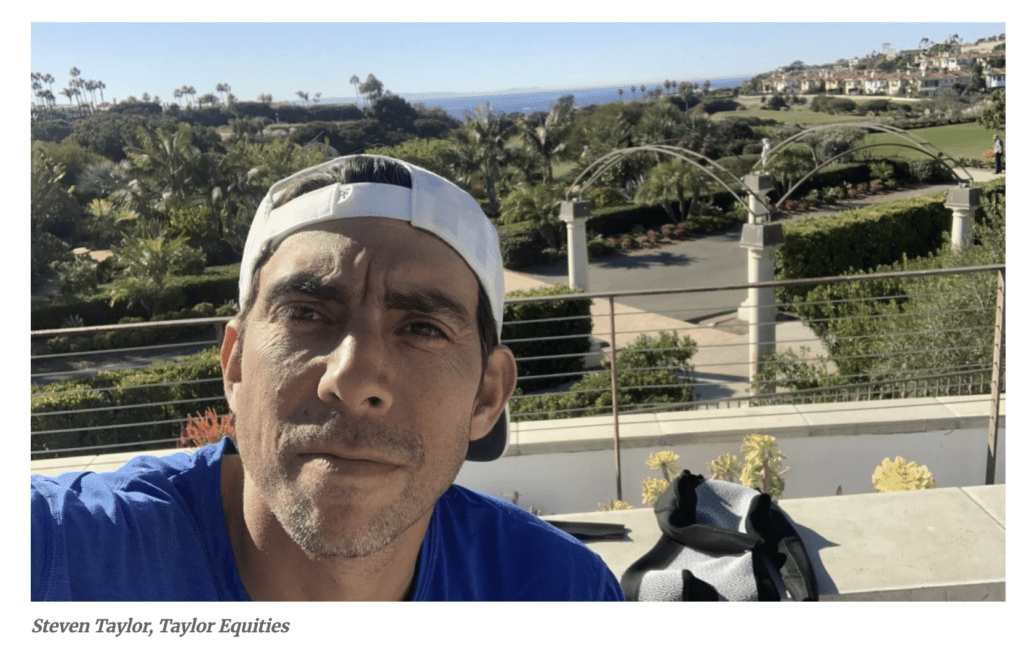
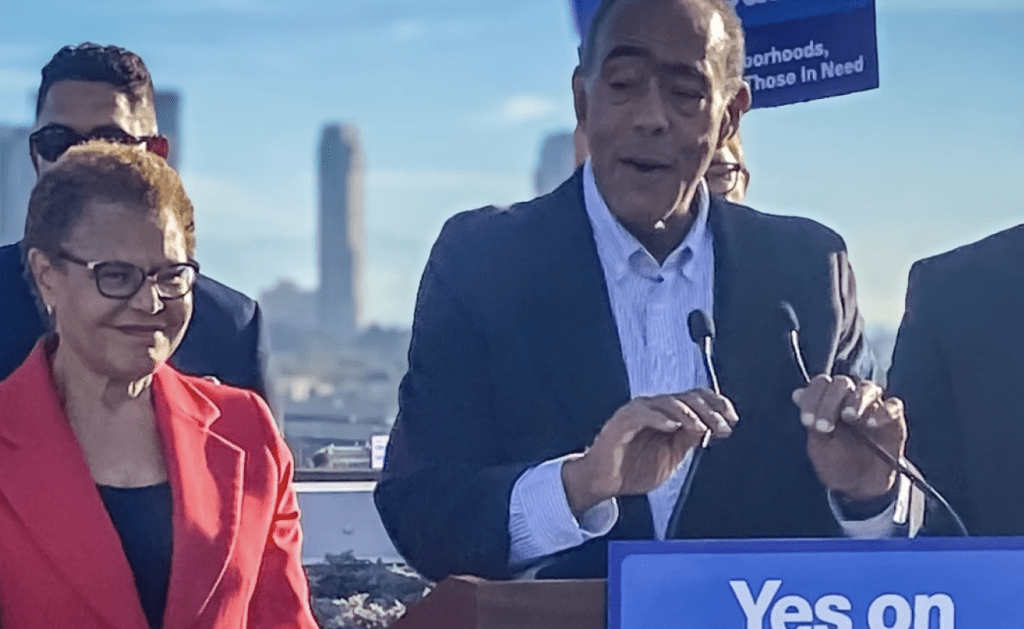
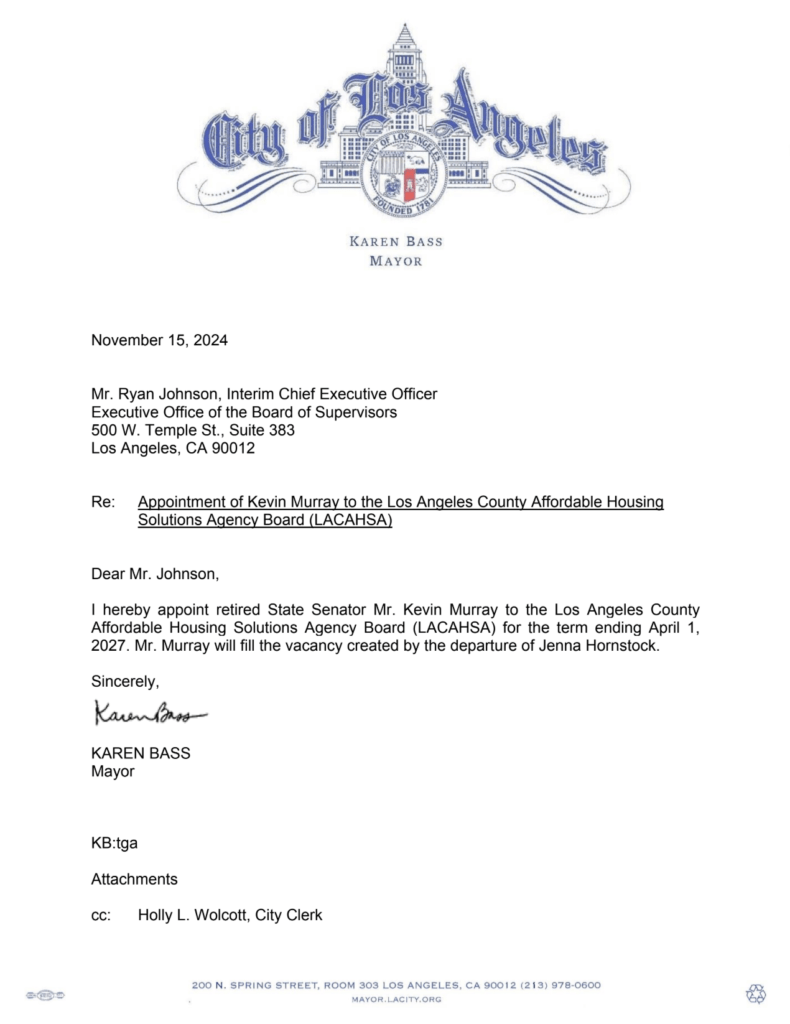
The individuals involved have not emerged untouched. Steven Taylor, the middleman at the center of the transaction, has been arrested. Kevin Murray, former state senator and CEO of the Weingart Center, has been placed on leave, yet notably remains absent from any legal defense in the ongoing case. The silence surrounding his role is as telling as any document.
Meanwhile, the network that facilitated the deal continues to rotate. Azeen Khanmalek, who helped assemble the transaction from within the Mayor’s office, has since moved into an organization funded in part by the same ecosystem tied to Weingart. The movement is not illegal. But in the context of a project under federal investigation, it underscores how tightly connected these relationships are.

Residents who raised concerns early were ignored. Elected officials declined to intervene. Housing agencies did not respond. Even after an arrest and confirmation of an ongoing federal investigation into all associated parties, the project continued forward, extensions granted, deadlines pushed, money still flowing.
That is when residents turned to the courts, filing a taxpayer lawsuit under California Code of Civil Procedure §526a. The claim is not complicated. It is about unlawful spending, extreme waste, and the misuse of public funds under the cover of emergency authority.
The case is now moving toward discovery. Depositions are coming. And for the first time, the internal mechanics of these deals may be forced into the open under oath.
What has already surfaced is enough to establish a pattern: funding commitments made without documentation, valuations created to justify predetermined prices, budgets engineered to exhaust available funds, and operational policies that fundamentally alter the expectations of what these facilities are meant to be.
This is not just a story about one building on Shelby Drive. It is a blueprint. A model that shows how public money can be routed, justified, and protected long enough to become irreversible.
Because when nearly $60 million is spent, a vulnerable population is displaced, a project sits unfinished, and the stated policy allows drug use, and even drug-related felony conduct, to coexist with guaranteed residency, the issue is no longer whether the system failed.
It is whether the outcome we are seeing is exactly what the system was built to produce.