

When families enter probate court, they expect protection. They expect oversight. They expect a system designed to safeguard vulnerable adults who cannot protect themselves.
What many families say they do not expect, according to sworn filings now before California courts, is isolation, financial consolidation, rapid medical deterioration, and a wall of administrative opacity.
For some, the moment is unforgettable. A judge speaks. A ruling is made. And in an instant, a mother, a father, a son, or a daughter, a human being who has fought to survive, becomes a ward of the county. Families who reorganized their entire lives around caregiving are suddenly reduced to observers. The people who knew the conservatee’s medical triggers, emergency thresholds, daily rhythms, and hard won progress are deemed unfit, often without a meaningful opportunity to be heard.
Decision making authority over health care, living arrangements, doctors, and treatment shifts to court appointed professionals previously unknown to the family. Introductions are not required. Approval is not sought. Oversight is assumed. Families walk out of court stunned, disoriented, and often traumatized, grappling with how years of intimate, hands on care could be erased in minutes by a procedural ruling.
That experience forms the backdrop of what is now before the courts in Ventura County in the matter of Joshua Saeta, a medically fragile, wholly dependent adult.
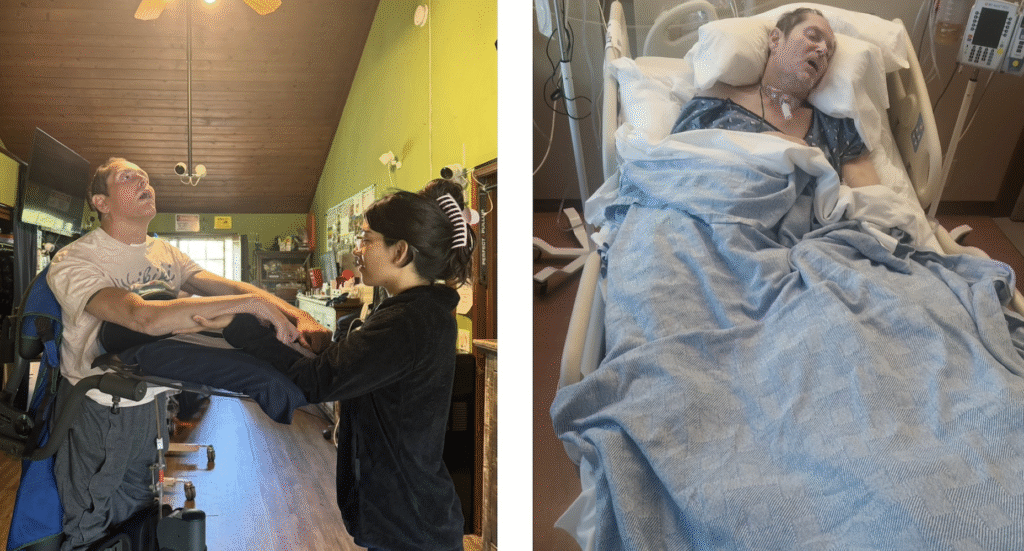
Joshua did not enter the probate system because of age, dementia, or gradual decline. According to sworn filings and medical records submitted to the court, he became wholly dependent after suffering a catastrophic cardiac arrest in 2017 that resulted in a severe anoxic brain injury. His brain was deprived of oxygen long enough to cause permanent neurological impairment. He survived, but survival came at a cost.
From that point forward, Joshua required round the clock care, complex medical management, and constant monitoring to remain alive. He could not advocate for himself. He could not manage his medical needs independently. His survival depended entirely on the consistency, precision, and continuity of the care surrounding him.
In the years that followed, Joshua did not languish. According to physician letters and court filings, he achieved relative medical stability under a physician directed, home based care model. That model emphasized continuity, familiar caregivers, specialized nutrition protocols, carefully monitored therapies, and immediate response to subtle changes that could signal medical emergency.
Central to that care was his sister, Jennifer Saeta, who became his primary caregiver and medical advocate. For more than eight years, she lived beside him, learning his baseline condition, emergency warning signs, and recovery thresholds. Treating clinicians relied on her longitudinal knowledge to prevent life threatening decline. The stability Joshua achieved, according to the record, was not accidental. It was built deliberately, over years, through constant hands on care.
This is not a social media dispute or a family disagreement reframed as legal drama. What has been filed in Ventura County Superior Court under Case No. 201700495761PRCE, and in related appellate proceedings, is an extensive emergency record alleging a repeatable pattern within probate administration, one that according to the filings begins with caregiver removal and culminates in severe medical decline.
The allegations are not informal. They are sworn, structured, and supported by documentary exhibits.
According to Jennifer Saeta’s sworn filings, Joshua’s stability deteriorated after conservatorship authority shifted. The care structure was altered. Placement changed. Family access was restricted. She asserts that this sequence functioned as a divide and conquer process, first removing the individuals most knowledgeable about Joshua’s daily medical management, then isolating him from the continuity of care that had sustained him for years.
Jennifer further alleges that no meaningful investigation preceded her removal and that she was denied a full opportunity to advocate for her brother before decisions affecting his life and care were finalized. These assertions are presented as allegations, not adjudicated findings.
Families caught in this process often describe the same refrain. You may visit, but you may not intervene. Advocacy is reframed as obstruction. Objection is characterized as noncompliance. While families are told to support court appointed conservators, they allege they are instead forced to watch as quality of life diminishes under the control of strangers with no prior relationship to the conservatee.
The emergency petition in the Saeta matter does not accuse criminal conspiracy. It documents patterns.
On February 10, 2026, Andrew Rose submitted a sworn declaration in support of emergency appellate review. Under penalty of perjury, he describes recurring similarities he states he has observed across unrelated Ventura County probate matters. Long standing caregivers characterized as uncooperative. Sudden exclusion from medical decision making. Institutional placement. Rapid medical decline. Restricted communication. Difficulty obtaining records.
Attached to that declaration is a Unified Pattern Summary, which explicitly states that it does not allege criminal conduct or reach legal conclusions. It consolidates recurring factual similarities across cases and leaves questions of culpability to judicial or investigative review.
In the Saeta matter specifically, Jennifer Saeta alleges that a court appointed professional charged with safeguarding Joshua’s interests failed to function as an independent advocate. She does not allege explicit collusion or criminal coordination. Instead, she asserts that the professional’s actions and billing records reflected conduct inconsistent with independent advocacy, leading her to conclude that Joshua’s interests were not being meaningfully advanced. That distinction is central to the filings, which frame the issue as systemic misalignment rather than overt misconduct.
The financial dimension of the case is significant, though partially shielded by confidentiality provisions. Court exhibits confirm that Joshua is associated with a high value trust governed by a nondisclosure agreement. Jennifer Saeta alleges that while Joshua’s physical condition declined, substantial administrative and professional fees were drawn from the trust. She argues that the pattern reflects incentive rather than coincidence. These claims remain allegations and have not been adjudicated.
Additional exhibits include a certified Ventura County Clerk Recorder search documenting numerous estate related filings associated with a recurring fiduciary name. The filings themselves are not alleged to be unlawful. They are presented to demonstrate frequency, volume, and concentration of fiduciary activity within a limited professional ecosystem.
As the legal record expanded, the medical situation intensified.
While declarations were being prepared and exhibits compiled, Joshua’s medical condition deteriorated. According to physician letters submitted to the court, based on photographic review, longitudinal treatment history, and clinical assessment, he now exhibits extensive muscle wasting, depleted subcutaneous fat stores, and findings consistent with severe malnutrition.
The filings state that Joshua has declined to the point of requiring total parenteral nutrition, an intravenous intervention typically reserved for cases in which the gastrointestinal system can no longer sustain life through enteral feeding. The reviewing clinician characterized his condition as an imminent threat to life, citing aspiration risk, pressure ulcer risk, and medical instability associated with prolonged bed confinement.
Jennifer Saeta attributes this decline to the sequence of legal and medical decisions she is challenging. That attribution is presented as her allegation.
The filings cite statutory frameworks governing elder and dependent adult protection in California. Those statutes impose affirmative duties to prevent neglect, broadly defined, and to investigate when a dependent adult experiences unexplained decline. The filings do not assert that Ventura County or its officials have been criminally charged. They ask whether statutory obligations were fulfilled when a wholly dependent adult declined precipitously under court supervised care.
What began as a dispute over authority within a complex probate structure has, according to the petitioner, evolved into an urgent life safety matter. Jennifer Saeta states that after she sought independent legal counsel and challenged decisions affecting Joshua’s care, she was removed from participation in his daily medical oversight. She argues that what appears procedurally administrative on paper has, in practice, resulted in prolonged separation from the person most familiar with Joshua’s medical baseline.
One of the most consequential aspects of the emergency petition is procedural rather than financial. The Unified Pattern Summary notes that in multiple probate matters, conservatees allegedly declined beyond recovery before appellate review could occur. By the time higher courts addressed the issues, the medical outcomes rendered the legal questions effectively moot.
That is the urgency now before the courts.
Review the legal docs HERE.
DISCLAIMER: Investigative reporting in high-profile litigation cases published by The Current Report is non-commercial, fact-based journalism; any project fees compensate research and reporting labor only, sources participate solely in accuracy verification, and final publication is approved exclusively by The Current Report after fact-checking is confirmed.