
The Rebecca Grossman trial was never about evidence. It was about selling a public narrative so overpowering, so emotionally charged, and so deliberately misleading that the facts ceased to matter.
A tragic accident was sculpted into a murder through unverified testimony, scripted recollections, and strategic omissions by people who knew exactly what they were doing. The record now shows that the most damaging testimony against Rebecca was never corroborated, never verified, and never honestly presented to the jury.
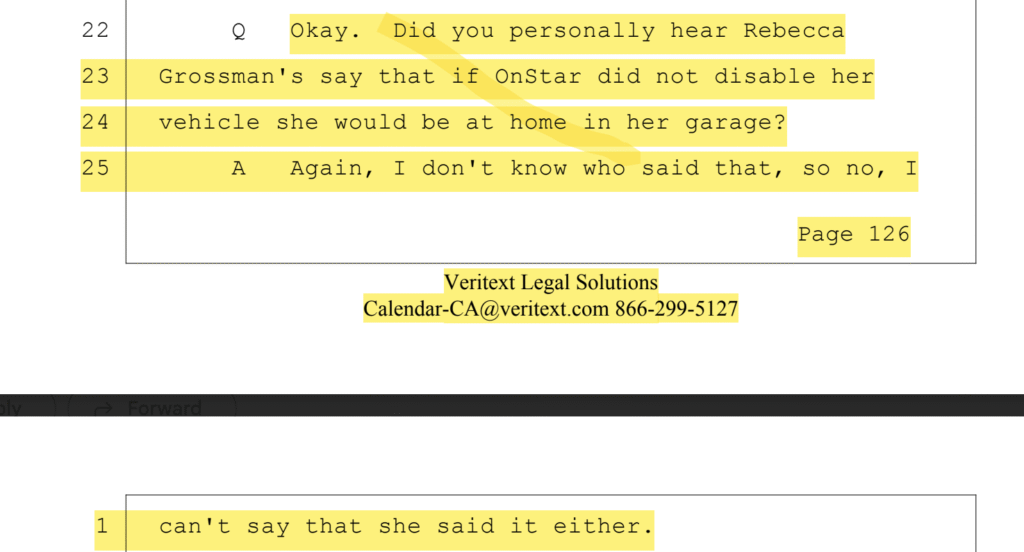
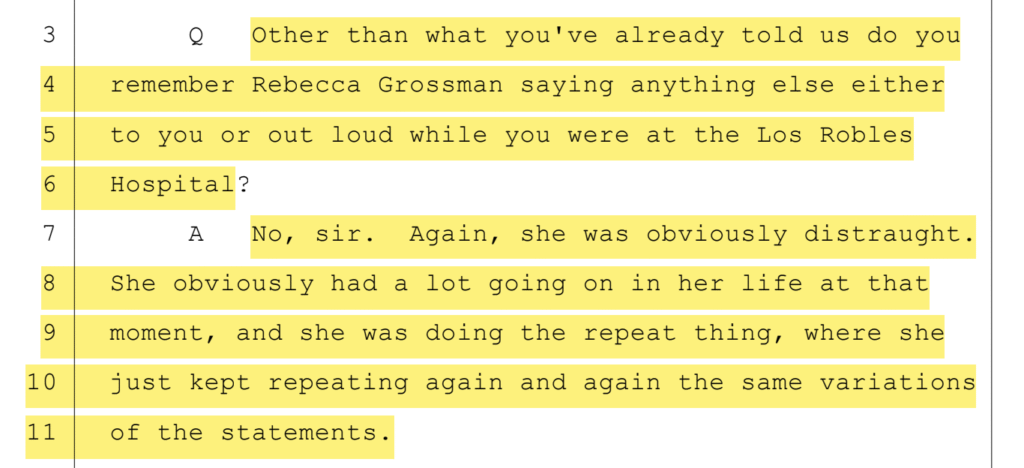
The centerpiece of this deception was the testimony of Teryl Grasso, a hospital technician who made the preposterous claim that Grossman while awaiting a blood draw, stated if not for certain circumstances she “would be home right now”. Grasso’s story conveniently evolved over time, culminating in the dramatic quote she suddenly “remembered” three years after the crash. Yet the only person who could have confirmed or denied the alleged quote, the deputy standing directly beside Rebecca during the entire encounter, says he never heard it.
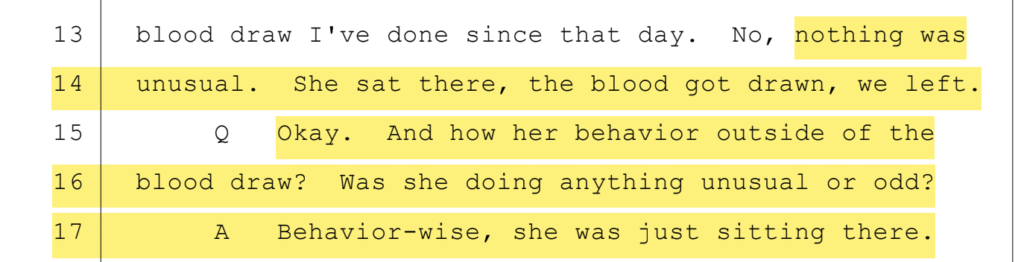
Former LASD deputy Jason McGee’s sworn deposition leaves no ambiguity. He was next to Grossman at all times. He recorded the field sobriety test. He photographed her vehicle and injuries. He transported her to the hospital. His responsibilities and every movement he made at the scene are documented in his deposition, where he confirms his physical proximity to her both inside the vehicle, throughout the investigative process, and at the hospital.
Prosecutors Ryan Gould and Jamie Castro never verified the claim with McGee – and that alone is troubling. But far more disturbing is the possibility that they did ask McGee, learned he never heard the comment, and chose to move forward anyway. Presenting Grasso’s dramatic “memory” while concealing the only witness who could contradict it isn’t just unethical, it borders on prosecutorial misconduct. If McGee told them he didn’t hear the statement, and they buried that fact, then they hid exculpatory evidence from the defense and the jury. And that strikes at the heart of due process.They purposely avoided verification because the truth would have collapsed the narrative they were constructing.
The prosecution desperately needed a villain, and Grasso conveniently handed them one, magically appearing years after the tragedy, right on cue for trial, armed with a dramatic, heartless quote designed to sway the jury.
The courtroom choreography between Grasso and Deputy McGee was unmistakable. It was engineered to block the defense from questioning the deputy about what actually happened at the hospital, because Gould and Castro knew his testimony would have blown their theory apart. McGee was the one person whose account could have dismantled Grasso’s story, so they made sure the jury never heard it.
Post criminal trial, Grasso’s credibility subsequently suffered another blow from the civil deposition testimony. Both Cohen and Grasso admitted under oath to collaborating on a social media post by Grasso that was taken down at Cohen’s direction because it made them “look bad.” Was that prior or during the criminal trial? When pressed to describe the post, both Grasso and Cohen suddenly could not remember a single detail about it. Their memories aligned on the existence of the post, on the removal of the post, and on the belief that it harmed them, but nothing else. The choreography speaks for itself, and Cohen’s own deposition shows the selective amnesia that conveniently shielded the prosecution’s narrative.
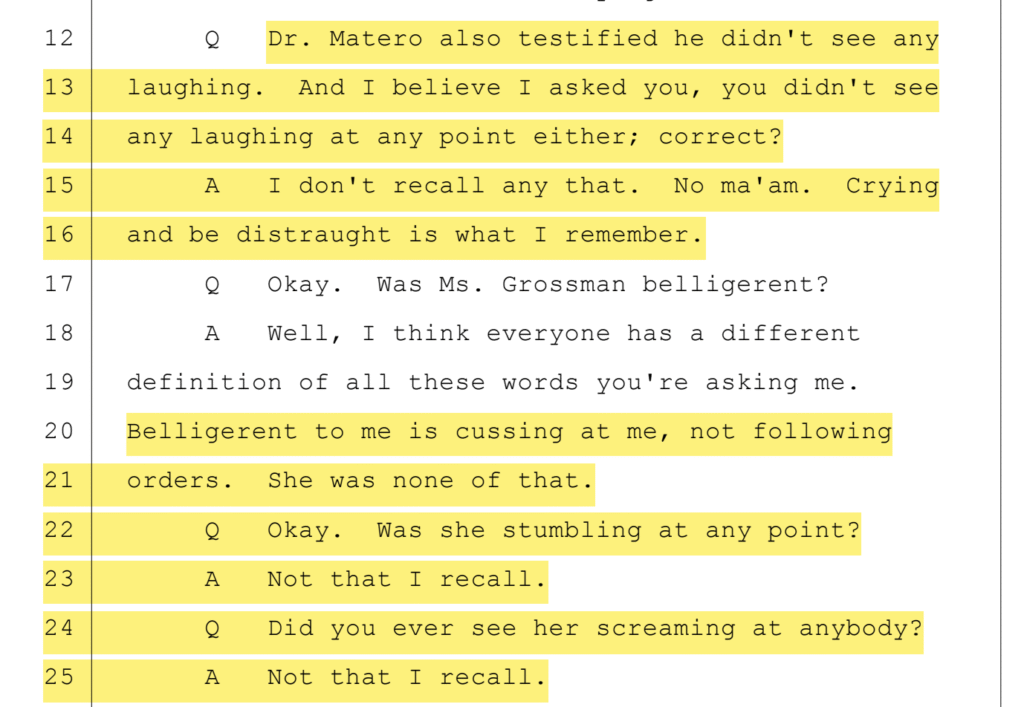
The prosecution and its media allies leaned hard on the claim that Grossman showed “no remorse.” This line became the emotional engine of the case, hammered into public consciousness long before the jury ever entered the courtroom. Yet the documented truth is the exact opposite. Grossman expressed remorse the moment she learned children were involved at the scene. LASD video footage clearly confirms her deep concern for the children.
Grossman sobbed in the hospital. She left handwritten letters of sorrow at the memorial site. She wrote heartfelt letters to the Iskanders over the years, including one sent through the District Attorney’s office that Gould personally received. Whether he delivered it remains an open – and damning – question.
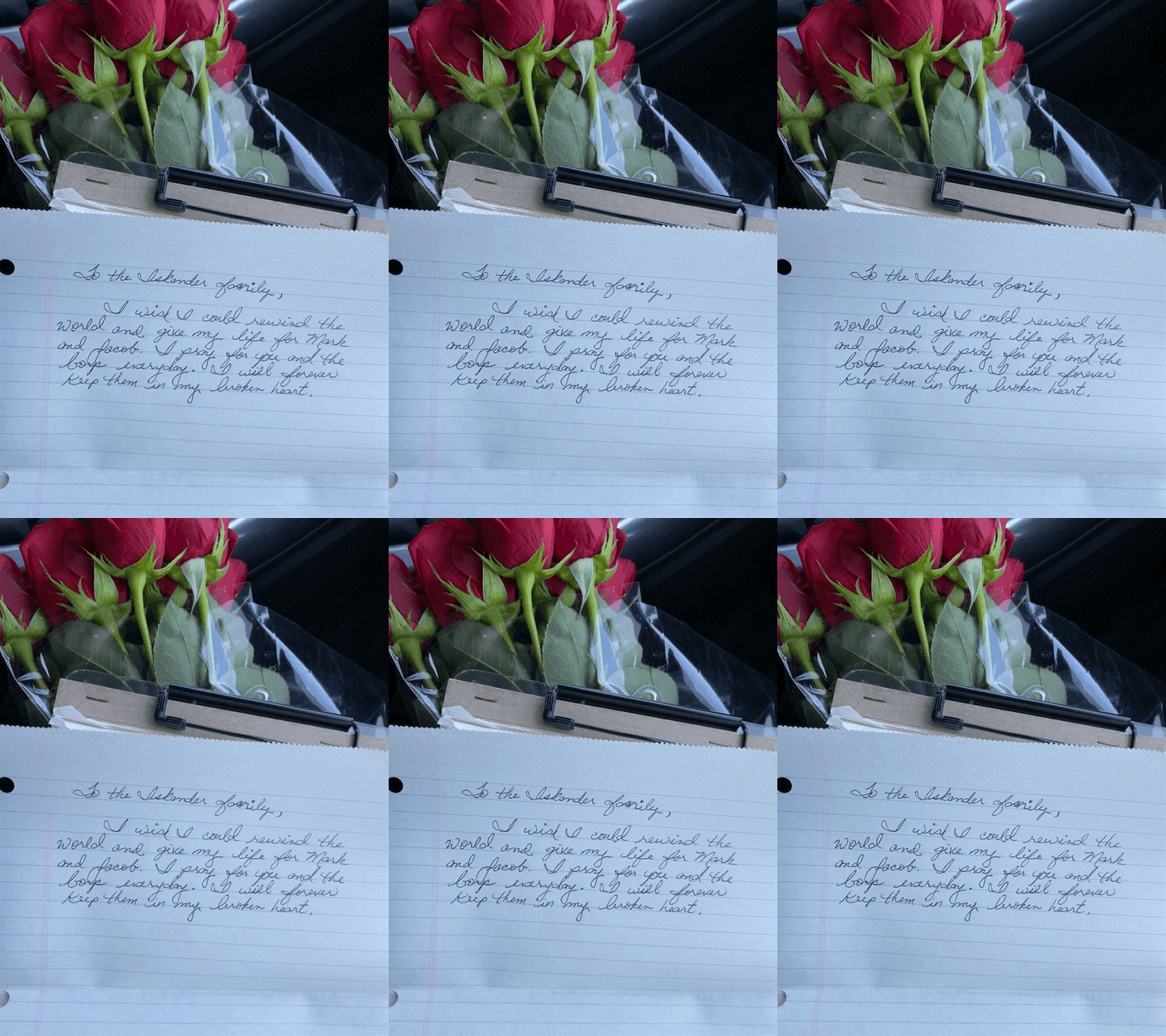
Additionally, Grossman anonymously donated $25,000 to help with funeral expenses within weeks of the accident, long before any charges were filed. These acts were either hidden from or inaccurately reported while the DA repeatedly told the world she was cold, indifferent, and self-interested. After her conviction, when she sent one final letter of sorrow to Nancy Iskander, prosecutors responded not with humanity, but with punishment. They ran to the judge to sanction her for expressing grief, revealing once again that the narrative mattered more than the truth.
The transformation of this accident into a murder was never anchored in forensic evidence. It was anchored in character assassination. Intent was never proven. Street racing was never proven. Awareness was never proven. Malice was never proven. Instead, prosecutors carved malice out of manipulated testimony, social media venom, and emotional theatrics designed to bypass reason entirely. The public wanted a villain, and Gould and Castro supplied one.
Another witness raised immediate red flags about the prosecution’s credibility. A CHP officer suddenly “remembered” a seven-year-old traffic stop and claimed Grossman made a damning remark he somehow never wrote down. Any statement that inflammatory would have appeared in the officer’s notes, on the ticket, or in an incident report. It didn’t. Yet Judge Brandolino allowed the unverified quote to prejudice the jury without a shred of contemporaneous documentation to support it. The officer testified that he dug the original ticket out of boxes stored in his garage. The idea that a CHP officer just happens to keep years-old minor traffic citations in personal storage, and can locate one on command, defies logic. The far more plausible explanation is that someone asked him to look. During the investigation, Grossman’s driving record would have been reviewed, revealing the citation and the officer’s name. Once that happened, the question becomes unavoidable: who contacted whom, and did the CHP officer and Lost Hills traffic sergeant Travis Kelly coordinate their stories? The timing, the sudden recollection, and the convenient narrative alignment all demand immediate scrutiny.
Then there is the unspoken truth hovering over the Scott Erickson plea deal. Erickson had a DUI history, had been drinking, was placed at the scene by multiple witnesses, was identified as the black car speeding ahead moments before the collision, and fled the scene entirely. Yet he walked away with a diversion offer for reckless driving, while Grossman was charged with murder. That only makes sense if Erickson possessed information damaging to the DA’s theory and Gould was willing to bury it to preserve his home run. A diversion is not justice. It is a bargain. And the prosecution’s silence about the terms of that deal speaks louder than anything presented in court.
The coordination between Grasso, Cohen, and Gould emerges clearly when the testimony is read side by side. They communicated. They aligned on key details. They synchronized their lapses in memory. And they delivered exactly what the prosecution needed: a mosaic of outrage, unverified comments, and emotional cues that painted Rebecca as a heartless monster. Not one of these claims was ever checked against McGee’s testimony, even though he was the only neutral witness in a position to confirm any of it. His trial and deposition testimony further establishes that everything he did on scene was recorded, timed, and documented, and nothing in his recollection matches the prosecution’s character narrative.

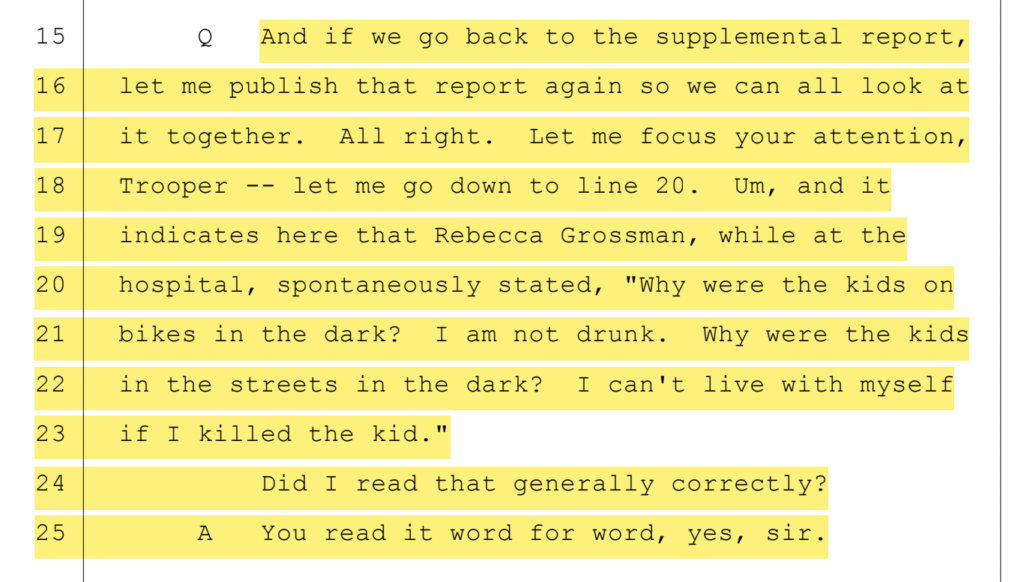


In the end, the prosecution won not through evidence but through narrative engineering. They built a media-ready villain, amplified by selective leaks, incomplete facts, and a social media ecosystem primed for outrage. What the public never saw was the truth: a mother devastated by tragedy, expressing remorse again and again, sabotaged at every turn by prosecutors who withheld her words, denied her humanity, and shaped a story that bore little resemblance to reality.
The lies were deliberate. The omissions were strategic. The witnesses were coordinated. The media was complicit. And a tragedy that should have demanded honesty became a political spectacle fueled by deception.
DISCLAIMER: Investigative reporting in high-profile litigation cases published by The Current Report is non-commercial, fact-based journalism; any project fees compensate research and reporting labor only, sources participate solely in accuracy verification, and final publication is approved exclusively by The Current Report after fact-checking is confirmed.