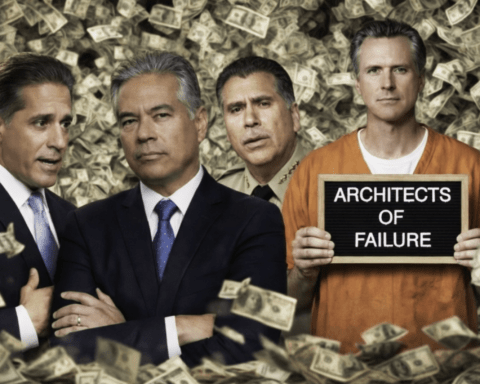
California Attorney General Rob Bonta’s latest guidance to local law enforcement, encouraging agencies to investigate and prosecute federal officers for alleged state law violations, is being framed as a bold defense of state sovereignty. In reality, it may be an invitation to legal disaster for the very deputies and police chiefs being urged to carry it out.
Bonta’s message was unambiguous. Local and state agencies, he said, have the authority to pursue criminal cases against federal agents operating in California, even when those agents are carrying out federal duties. His warning was paired with a direct political threat aimed at the White House: if federal officials “break the law and hurt Californians,” the state will sue and prosecute.
What sounds like tough talk plays dangerously close to a constitutional fault line that has swallowed law enforcement leaders before.
And Los Angeles County has already lived this movie.
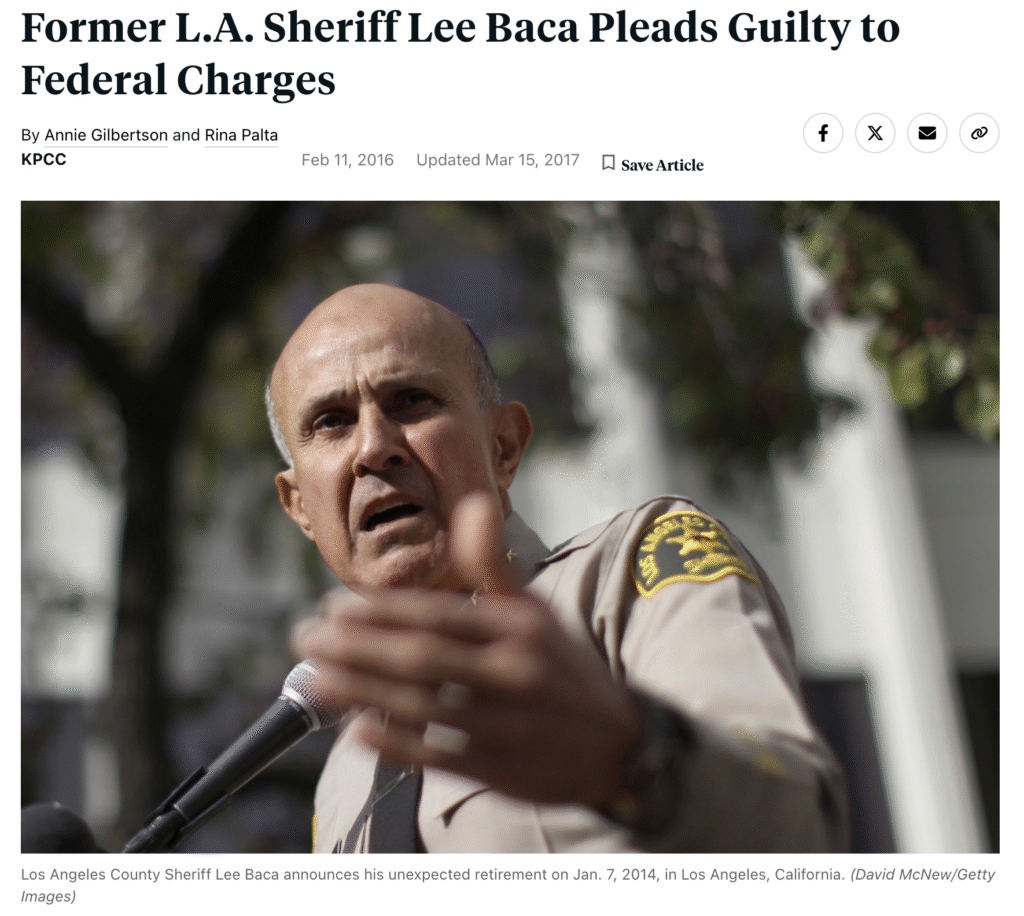
Before any agency takes legal advice from Attorney General Rob Bonta, they may want to research how it went for LASD when they tried that under Sheriff Lee Baca.
Let’s just put it this way… it didn’t end well.
The Baca Precedent: When Local Power Met Federal Authority
Under former Sheriff Lee Baca, the Los Angeles County Sheriff’s Department attempted to interfere with a federal investigation into deputy abuses inside county jails. Rather than cooperate with federal authorities, LASD executives launched surveillance on the FBI, intimidated a federal informant, concealed him from federal agents, and treated the federal probe as a threat to be neutralized instead of a lawful investigation to be addressed. What followed became one of the largest federal civil rights prosecutions in modern law enforcement history, as federal grand juries indicted top LASD commanders, multiple high-ranking officials were sent to prison, and Baca himself was ultimately convicted for obstruction of justice related to the department’s efforts to derail the investigation.
The federal government did not hesitate in asserting its authority, and it did not lose. The message that emerged from those prosecutions was unmistakable: when local agencies obstruct, challenge, or interfere with federal operations under the belief that state authority will shield them, federal prosecutors respond with overwhelming force and personal criminal liability.
Now, nearly a decade later, Rob Bonta is signaling that California officers should move even further down that dangerous path by pursuing criminal cases against federal agents themselves. This is not a legal gray area shaped by conflicting jurisdictions or unsettled case law, but a direct confrontation with constitutional supremacy that historically ends in federal indictments, career destruction, and courtroom defeats for those who believed political backing could override federal power.
Federal Supremacy Is Not a Suggestion
Under the U.S. Constitution’s Supremacy Clause, federal law, and federal officers acting within the scope of their duties — overrides state interference. While there are narrow and highly specific circumstances where state charges may apply, courts have consistently ruled that state prosecutions cannot be weaponized to obstruct or punish lawful federal enforcement. When states attempt to cross that line, the response has historically been swift and unforgiving, bringing civil rights indictments, obstruction charges, conspiracy prosecutions, and career-ending criminal cases against those who thought political cover would shield them from federal authority.
Local officers do not receive immunity because a state attorney general encouraged aggressive enforcement theories. They receive federal charges.
What makes Rob Bonta’s instruction especially dangerous is the illusion of protection it creates. State leaders can issue guidance, hold press conferences, and posture for headlines, but when federal prosecutors determine that a local agency has crossed into obstruction or unlawful interference, Sacramento will not be sitting at the defense table. Individual deputies, sheriffs, chiefs, and commanders will be the ones answering in federal court, where political narratives collapse under sworn testimony and constitutional law. That courtroom is not built for spin. It is built for accountability.
History already provides the blueprint. Law enforcement executives who believed they were acting in the department’s interest discovered too late that federal prosecutors view interference with federal authority as a serious crime, not a policy dispute. Ask the LASD officials who learned that lesson the hard way.
The consequences of challenging federal authority under the illusion of local protection can be seen clearly in the cases of Lee Baca, Paul Tanaka, and other high-ranking LASD officials who were federally charged, convicted, and incarcerated for their roles in obstructing federal operations.
Under former Sheriff Lee Baca, the Los Angeles County Sheriff’s Department attempted to interfere with a federal investigation into deputy abuses inside county jails by refusing to cooperate, launching surveillance on the FBI, intimidating a federal informant, concealing him from federal agents, and treating the federal probe as an intrusion to be neutralized rather than a lawful inquiry to be addressed. That effort did not quietly disappear but instead exploded into one of the largest federal civil rights and obstruction prosecutions in modern law enforcement history. Federal grand juries ultimately indicted and convicted ten members of the Sheriff’s Department directly tied to the obstruction scheme, ranging from deputies to top commanders, while the broader jail investigation produced at least twenty-one federal convictions connected to civil rights violations, conspiracy, and systematic cover-ups inside the department. Former Undersheriff Paul Tanaka was convicted for orchestrating much of the obstruction campaign and sentenced to federal prison, and Baca himself was convicted for obstruction of justice and related offenses after attempting to derail the federal probe.
The outcome left no room for misinterpretation. When local agencies interfere with federal operations under the belief that state authority will shield them, federal prosecutors respond with sweeping indictments and personal criminal liability that reaches all the way up the chain of command.
And when this goes wrong, because legally it almost always does, the consequences will not land on politicians or press secretaries or elected officials issuing bold statements from behind microphones. The price will be paid by street-level officers ordered to act on this guidance, by supervisors who approve questionable cases, and by agencies that follow political marching orders straight into constitutional quicksand. Bonta will collect headlines. Law enforcement will collect indictments.
California has already tested what happens when local authorities challenge federal power in the name of state interests. It ended with prison sentences, destroyed careers, and a national scandal that reshaped law enforcement oversight. Yet here we are again, with the state’s top law enforcement officer encouraging agencies to walk directly back into the same fire.
If recent history is any guide, this will not play out as a victory for local control or political defiance. It will play out in federal courtrooms, with defendants wearing badges.