Senator Ben Allen is calling it a “fix.” Sacramento insiders are branding it “progress.” But for many displaced mobile-home residents, SB 1093 looks less like recovery and more like a legislative cleanup operation designed to finish what the fire started.
At the center of the outrage is one simple question that lawmakers still refuse to answer:
Why should the cost of a hypothetical replacement home be deducted from equity homeowners spent decades building if those same homeowners are not actually being allowed to rebuild and return?
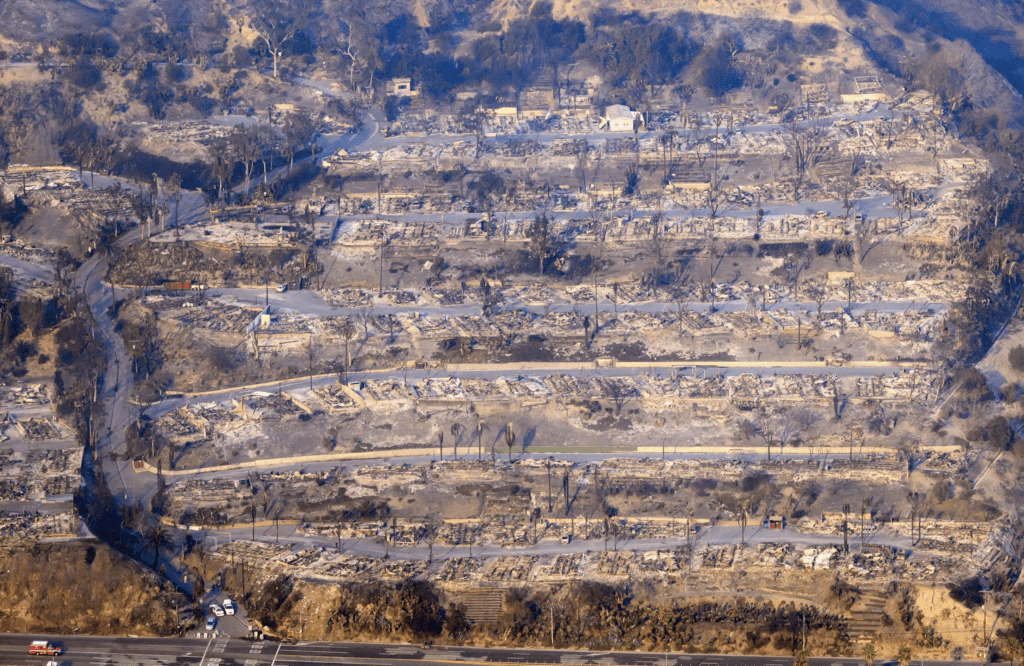
SB 1093 is being sold as the legislative remedy to SB 610, the controversial disaster law residents say destroyed protections tied to the “in-place value” of mobile-home communities wiped out in the January 7, 2025 fires. But displaced residents now fear the so-called fix simply repackages the same scheme under cleaner political language.
For communities like the Pacific Palisades Bowl Mobile Home Estates, this was never just about burned structures. What was lost goes far beyond lumber and ash.
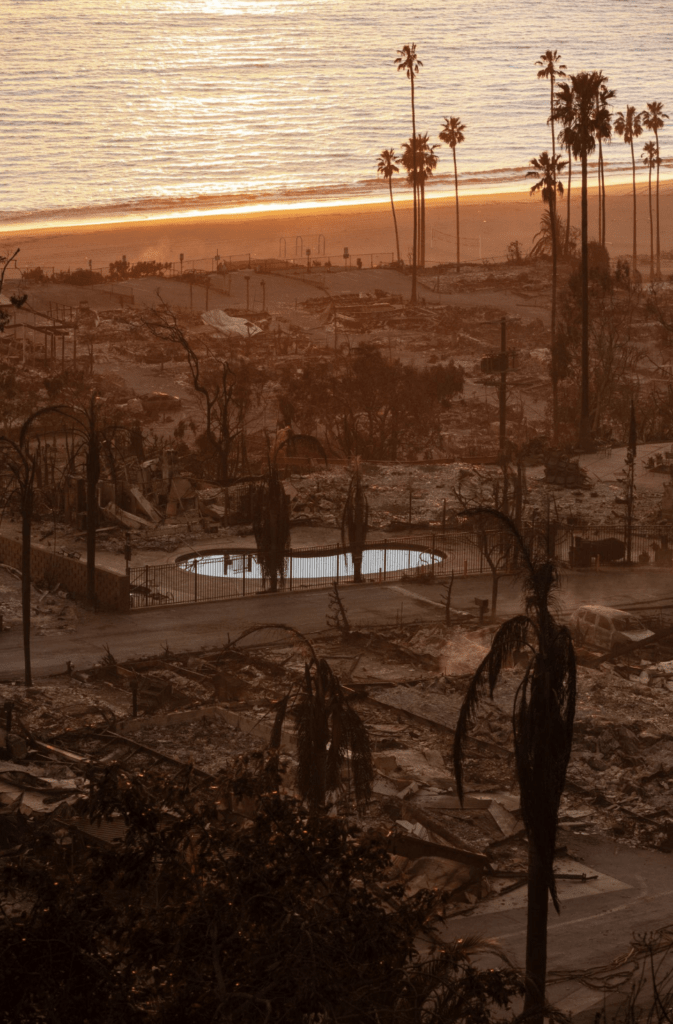
Residents lost three separate pillars of value.
The first was home equity, the physical structure itself and the accumulated ownership value built over decades.
The second was leasehold rights, the legally protected right to occupy land under long-term tenancy and rent stabilization protections.
The third was location value, the economic premium attached to living steps from Will Rogers State Beach in one of the most valuable coastal corridors in California.
And that distinction matters.
Residents paid monthly space rent. That rent was the landowner’s profit. It did not make the landowner a partner in homeowner equity.
The landowner still owns the dirt. But the homeowners are the ones who lost their homes, their protected leasehold rights, their communities, and decades of accumulated coastal value.
What makes the situation even more disturbing is the broader wave of legislation quietly stripping mobile-home owners of long-standing protections across California.
Residence point to bills they were trying to pass like AB813 which would allow park owners to terminate tendencies based on complaint from disgruntled employees. Under AB 768, authored by Assemblymember Ávila Farías in 2025, park owners can even strip residents of long-term rent-control protections by claiming a home is no longer a “primary residence” if an owner travels or is absent for extended periods of time.
Now comes SB 1093.
Under the proposed formula, the cost of a hypothetical replacement home can be deducted from the in-place equity value homeowners held before the fire — including the value of the home itself, the leasehold protections, and the location value attached to coastal residency.
But if homeowners are not actually being allowed to rebuild and return, why should they be financially penalized for a replacement structure they may never legally occupy?
That is the core issue Sacramento continues dancing around.
No private landowner should have the power to permanently uproot disaster victims, erase decades of accumulated equity, and destroy entire communities unless full compensation is paid for every layer of value that was taken.
And no government should be facilitating it.
Meanwhile, displaced residents continue burning through savings, insurance payouts, retirement funds, and temporary housing resources while ownership retains control of the land underneath it all.
For many seniors surviving primarily on Social Security, traditional SBA disaster loans remain out of reach because of rigid income qualifications. That lack of access has pushed elderly residents toward alternative “assistance” programs carrying devastating long-term financial consequences.
Some residents report being offered as much as $250,000 in zero-interest recovery assistance, but attached to a 20-year occupancy trap. If the resident cannot remain in the replacement home for the full term, the assistance reportedly converts into debt with interest rates approaching 9.25 percent.
Residents who questioned what would happen if another fire destroyed the replacement home, or if they were once again denied the right to return — were reportedly told the debt obligation and penalties would still apply.
In other words, the victim absorbs the risk while the system protects the asset.
For elderly disaster victims, that is not recovery. It is financial entrapment disguised as aid.
The constitutional concerns surrounding SB 1093 are impossible to ignore.
The Fifth Amendment prohibits government from taking private property without just compensation.
The Fourteenth Amendment protects citizens from being deprived of property without due process.
Allowing rebuilding-cost deductions against real homeowner equity while simultaneously denying displaced residents the ability to rebuild and return raises serious questions under both constitutional protections.
And while Sacramento talks about “equity,” residents of the Pacific Palisades Bowl continue watching neighboring communities move through recovery while their own community remains trapped in limbo.
The contrast with Tahitian Terrace has become impossible to ignore.
The Pacific Palisades Bowl dates back to 1939 as “Palisades Bowl by the Sea” before transitioning into a modernized mobile-home park in 1955. Some of those original vintage trailer structures remained standing right up until the January 2025 fire.
Tahitian Terrace did not open until 1962.
That age gap matters because older structures likely carried significantly heavier toxic contamination exposure, including materials predating federal bans on lead paint and asbestos.
Records show both parks appeared on CPUC-related utility restoration priority lists for gas and electric infrastructure restoration. Pacific Palisades Bowl was identified as Park ID 19-1103. Tahitian Terrace was listed as Park ID 19-1105.
Yet the recovery timelines were dramatically different.
Tahitian Terrace moved quickly into federally supported debris removal beginning in May 2025. While both communities housed retirees and seniors, Tahitian Terrace also included celebrity residents and higher-profile homes.
Meanwhile, the historic Pacific Palisades Bowl — home to many working-class residents and disabled homeowners — was denied free debris removal despite appearing on the same restoration priority lists.
Tahitian Terrace residents, despite uncertainty about the future, reportedly remained in communication with ownership throughout the process.
As of May 12, 2026, Bowl residents say they still had received no communication whatsoever from the landowner regarding rebuilding plans, compensation protections, relocation procedures, or the future of the community itself.
Then there is the paperwork loophole.
Under AB 2782, protections tied to in-place market value depended on formal filings and relocation procedures connected to park-closure and change-of-use requirements.
Those filings were never completed.
The legal safeguards designed to protect residents never activated.
The result was catastrophic.
Homeowners lost homes, leasehold rights, community protections, and decades of accumulated coastal equity while the legal mechanisms supposedly designed to protect them sat dormant behind procedural technicalities.
At the same time, residents watched the Coastal Commission’s presence weaken across the burn zone, creating what many now see as a legislative vacuum increasingly filled with redevelopment-driven bills disguised as disaster recovery.
AB 2596, authored by Assemblymember Gipson in 2024, creates pathways for resident-owned communities to be converted into federally subsidized rental housing models under the banner of HUD alignment.
SB 549, authored by Senator Allen in 2025, establishes a “Resilient Rebuilding Authority” empowered to acquire fire-destroyed land.
Taken together, the legislative framework paints a deeply disturbing picture.
Wildfire-destroyed resident-owned coastal communities could ultimately be transformed into corporate-controlled rental properties where the very people who spent decades building the community’s value no longer own anything at all.
What the fire failed to erase, Sacramento legislation may finish.
And while lawmakers continue talking about “resiliency,” displaced residents continue draining savings, insurance payouts, and retirement accounts while ownership retains control over the land and its future redevelopment potential.
The stakes become even clearer when looking at housing costs in Pacific Palisades itself.
Traditional homes in the area now command multi-million-dollar prices. That reality underscores exactly why localized rent stabilization protections were so critical to preserving socioeconomic diversity along the coast.
The Bowl was never just a “mobile-home park.”
It was one of the last legally protected pathways allowing working-class residents, retirees, and seniors to remain housed near the beach in one of the most expensive coastal markets in the country.
Residents were not simply renting dirt.
They were part of a legally protected, stabilized housing ecosystem designed to prevent total economic displacement from the California coast.
On August 26, 2025, officials held a press event celebrating the final Palisades property cleared through public debris-removal programs — an event framed publicly around healing and recovery.
Former Bowl residents used that same event to ask why their protected community had been subjected to disproportionate delays while toxic debris remained sitting through rainy season conditions threatening runoff into Will Rogers State Beach and the Pacific Ocean.
Residents fear the October 2025 nuisance declaration could ultimately be weaponized to bypass Mello Act protections and permanently erode the rent-stabilization requirements historically tied to the land.
Then came the number that stunned many former residents.
Approximately $90 million.
As of May 12, 2026, many Bowl residents say they still had received no communication from ownership regarding rebuilding plans or the future of the property before reportedly learning the land had been listed for roughly $90 million.
That number says everything.
A speculative real-estate valuation does not erase constitutional property protections. It does not eliminate localized land-use mandates. And it does not extinguish the rent-stabilization protections historically attached to this coastal community.
The flames may be out.
But for many displaced homeowners, the real destruction may only now be entering its final phase.