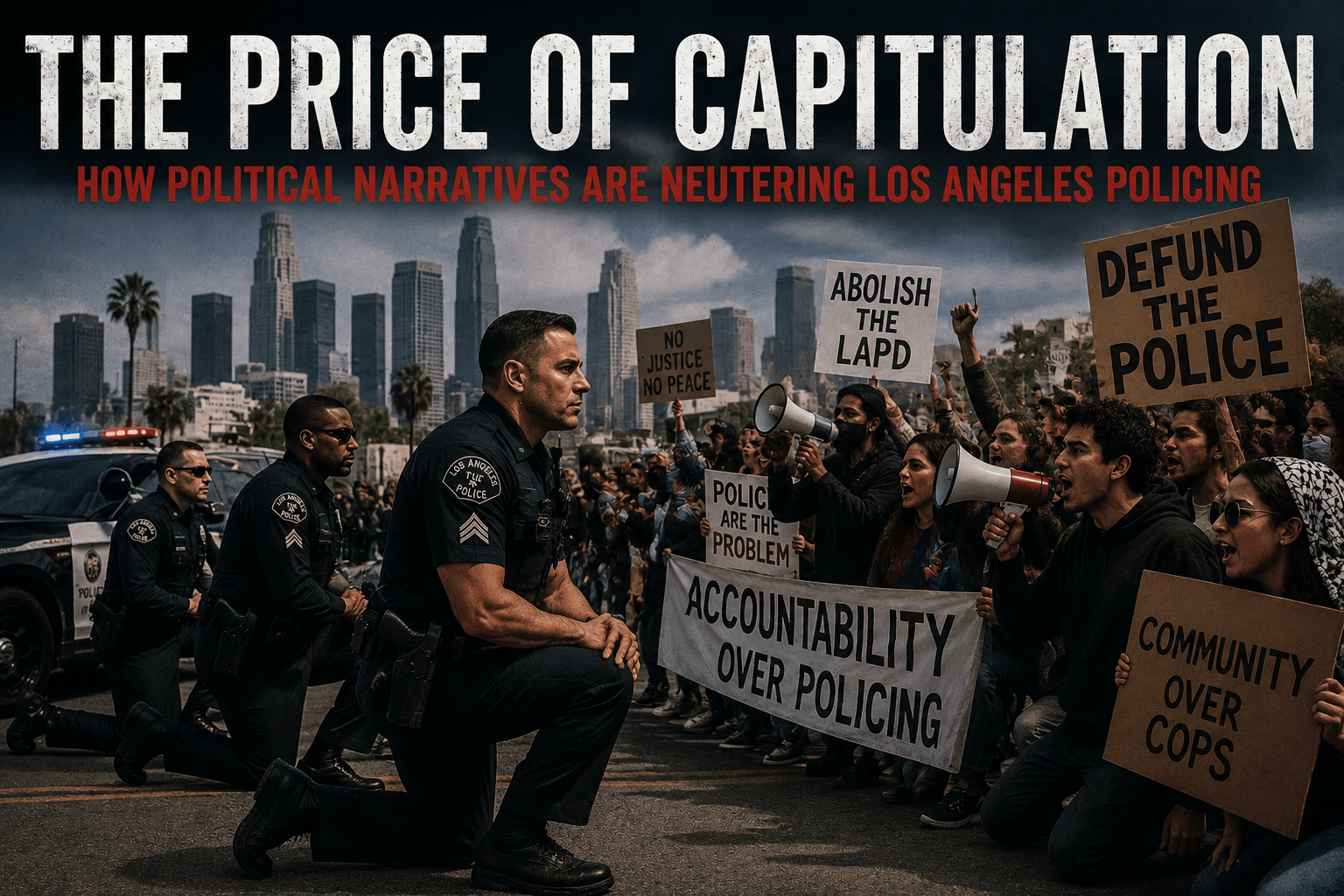
Capitulation= “To surrender”
In the high-stakes world of law enforcement leadership, there is a fine line between progressive reform and political capitulation. Real leadership requires a spine—the ability to stand firm when the safety of a city is at odds with the demands of political activists. Unfortunately, for the Los Angeles Police Department, 2022 marked the year that line was crossed. This shift represents more than a change in policy; it is a fundamental retreat from the mission of proactive public safety, trading the security of the city’s most vulnerable residents for a temporary reprieve from political criticism.
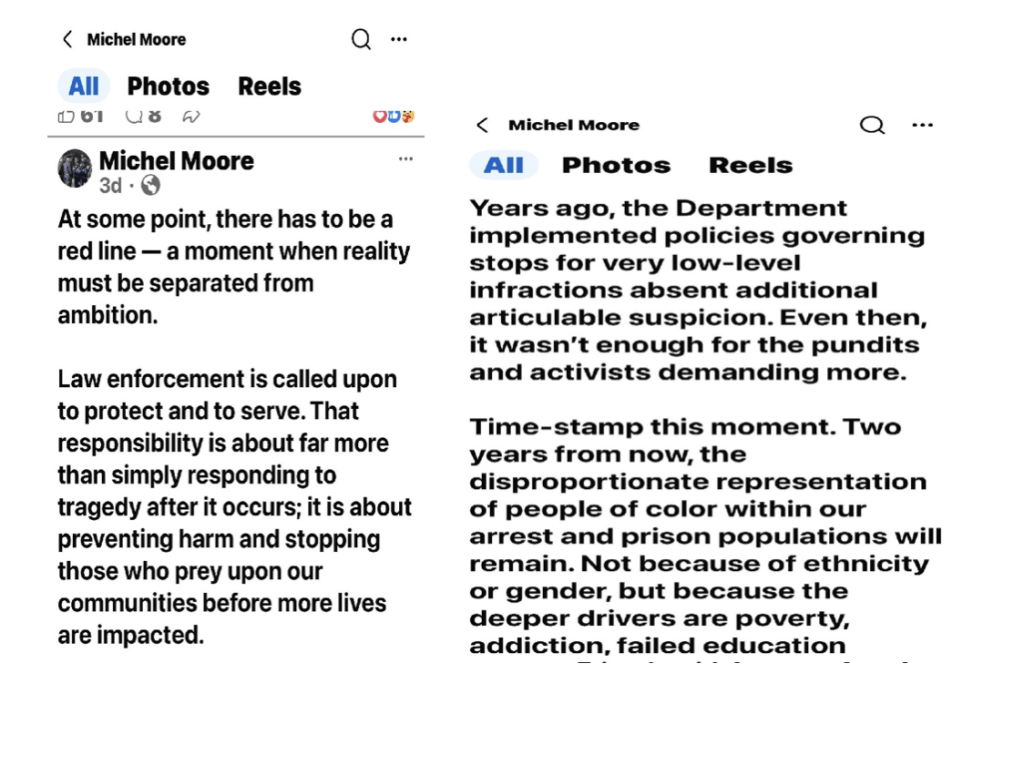
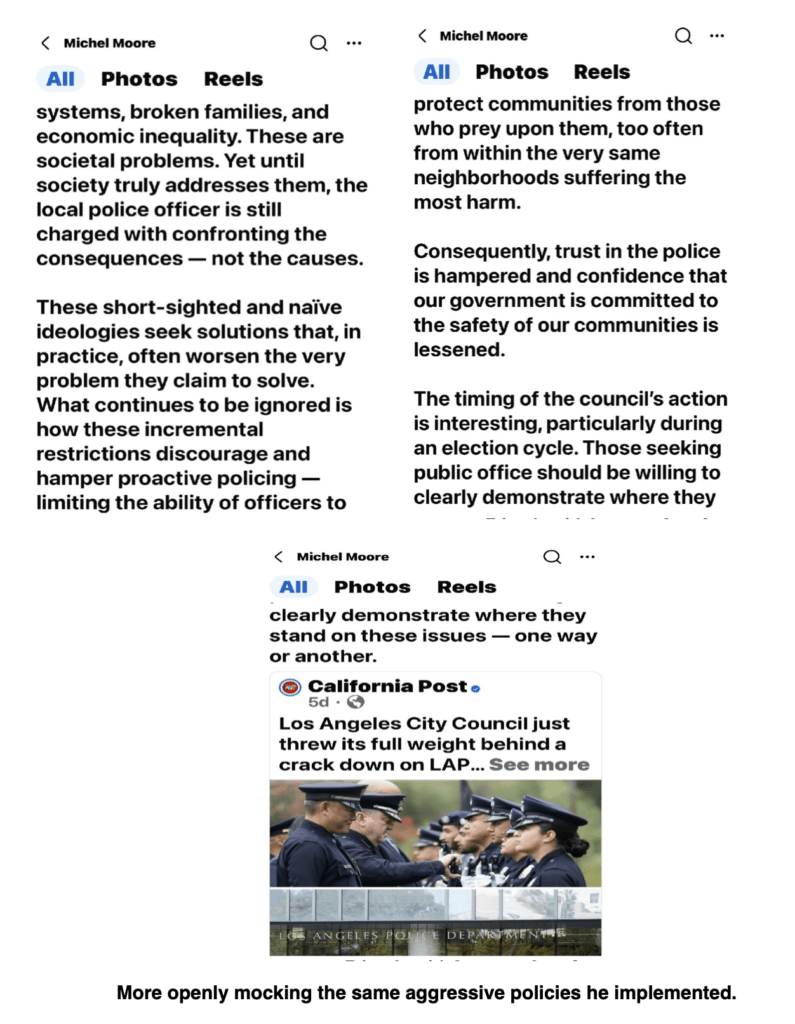
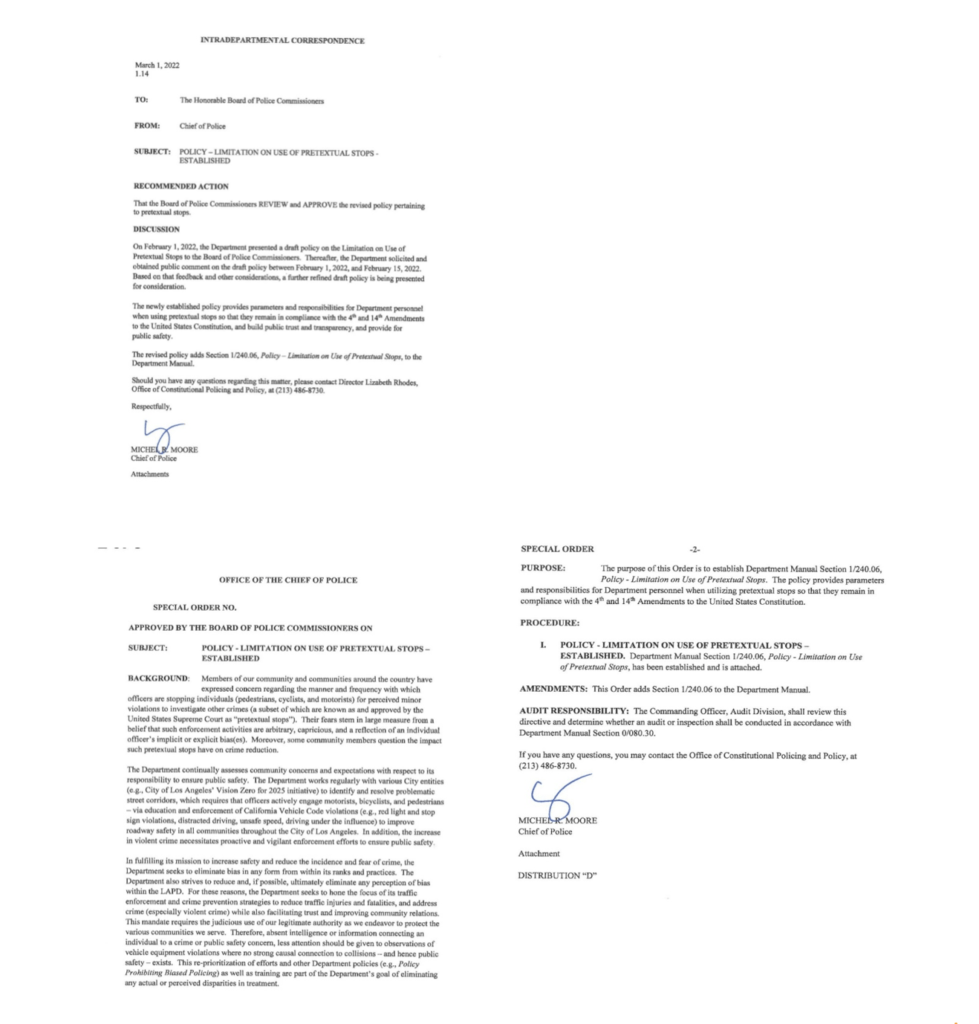
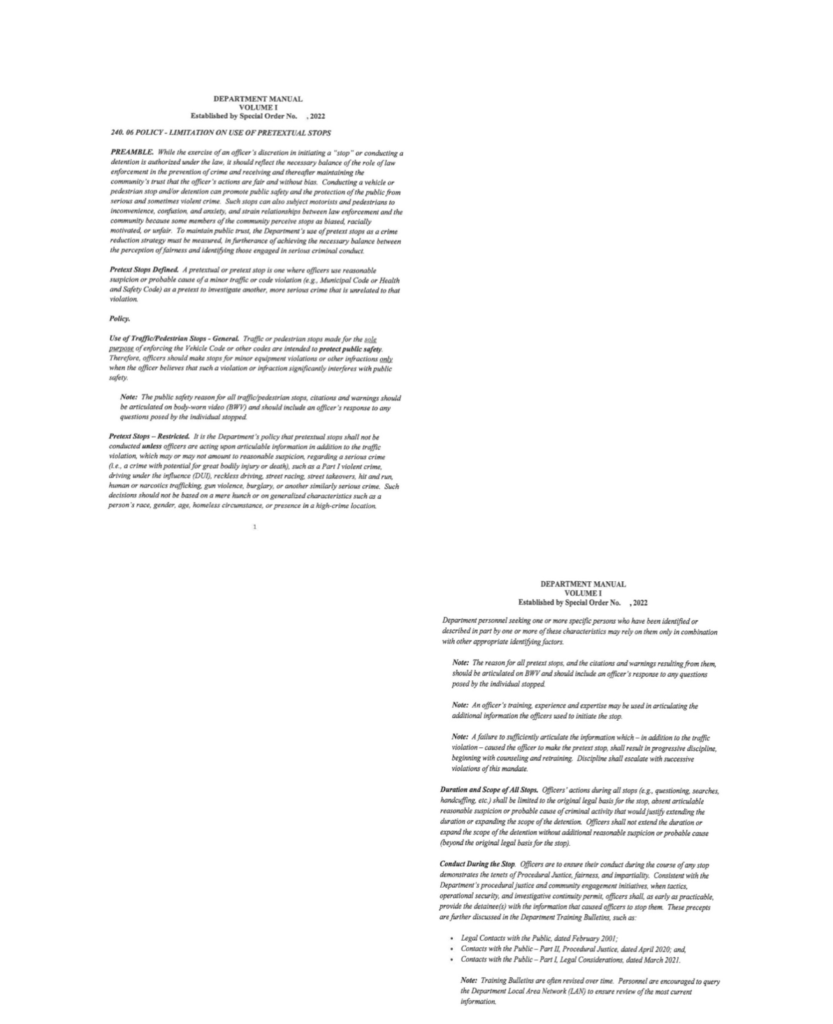
Former Chief Michel Moore personally initiated this decline by implementing Special Order #3 in March 2022. While Moore now publicly complains about the restrictive nature of City Council decisions, he was the architect of the very policy that initiated the “neutering” process. By empowering every scream for “racism” and failing to shut the door on loud-mouth activists, Moore allowed the LAPD house to be run amok, whereas surrounding cities and the County Board of Supervisors maintained their integrity by refusing to grant these disruptive elements a platform. Now Moore openly complains and mocks the same loud activists he helped breed and the same policies he openly created and promoted.
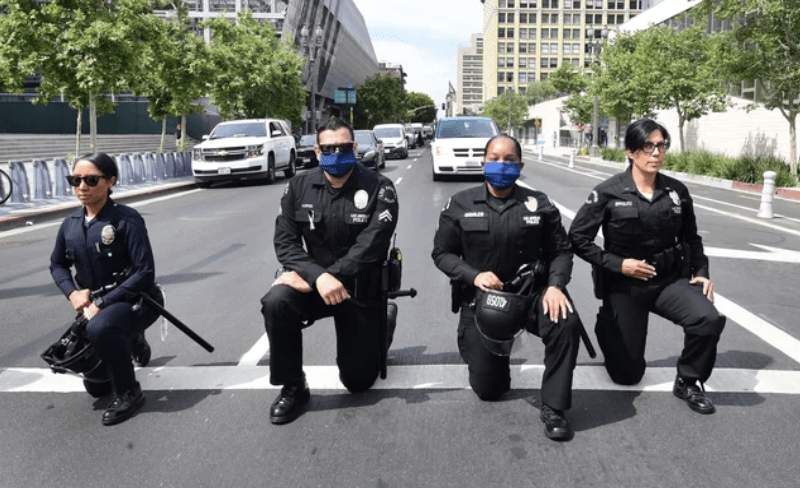
This trend highlights a broader failure in modern police leadership: the tendency to appease the loudest in the room, not because it is the right thing to do, but simply because that is where the political wind is blowing. We saw this clearly in 2020 when leaders were literally kneeling at the feet of activists. Moore set the tone, but the surrender of authority trickled down.
For instance, now-Captain Eppolito (formerly Smith) officers were assigned under her supervision in 2020 to protect HQ. Reportedly gave direct orders to officers under her command to kneel, utilizing her authority as a Lieutenant to force subordinates into a gesture of political submission during the 2020 riots in Los Angeles. A surrendering technique initiated by former Chief Moore when he knelt and later initiated policy to once again surrender to activists. This captain now preaches leadership at conferences through the women’s organization. While officers were taking rocks and bottles, doing heavy lifting this leader and others were surrendering (Capitulating) continuing with a trend Moore started.
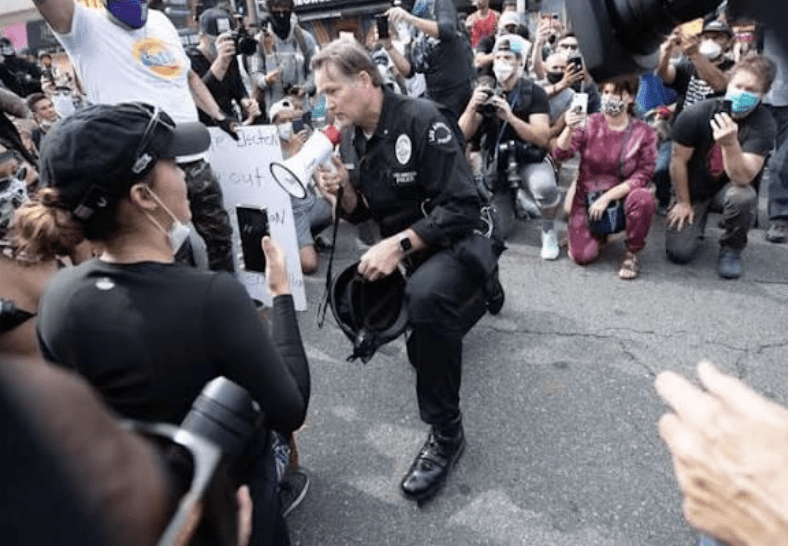
Similarly, we saw Commander Cory Palka—the same individual Moore later protected amid scandalous revelations—kneeling during the 2020 protests. Palka’s legacy remains a stain on the department, characterized by criminal allegations that Moore allegedly helped bury, including Palka providing “heads-up” tips to CBS executives regarding sexual assault investigations. When leadership protects those who trade in back-room favors while forcing rank-and-file officers to kneel for political theater, the moral authority of the uniform evaporates.
The profession is further undermined from within by startling failures in field accountability, most recently highlighted by the disturbing gang stop incident in the 77th Area. Reports that gang officers chose to shut off their body-worn cameras during critical encounters are indefensible and represent a catastrophic failure of supervision. These cameras are meant to protect officers by documenting their observations; when they are purposefully disabled, it provides the exact ammunition needed by those who wish to dismantle the profession.
There is a disturbing similarity in these failures that points back to command-level oversight. Recently transferred out from 77th Captain Johnny Smith, who served as a patrol captain in the 77th Area, has seen a pattern of “body-worn camera failures” and pretextual allegations follow his assignments. He is the same Moore crony who openly called a fellow captain a “wetback” and later told another officer, “Why are you looking at me, did I F””’k your wife” comments which Moore allowed to disappear by allowing them to fall out of statute or simply moving him to 77th Area.
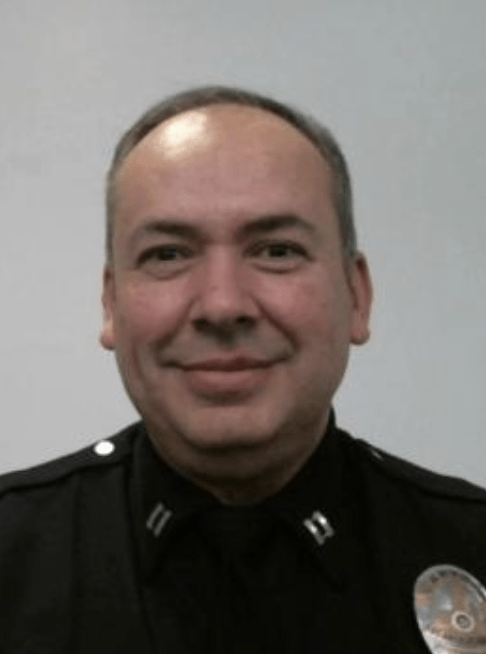
Remember the initial allegation against gang officer stops that that later shifted to Mission area Gang unit began at Foothill under Smiths watch. He was soon thereafter transferred to 77th area. Now leaving 77the Area we learn of another incident of failures to activate, and ghost stops under Smith’s watch. Pattern of incompetency or maybe more cover ups while moving him out after a scandal begins. Frustrated insiders confirm Choi continues to run LAPD which is an ongoing extension of Moore reaching out to protect his cronies. If you have the same mindset managing the shop nothing changes same archaic policies and hidden pasts to continue to keep the ship afloat.
Despite being the same individual who has filed lawsuits alleging “cover-ups,” and retaliation, Smith’s tenure has been marked by a lack of accountability and ongoing inappropriate comments to subordinates. Under Smiths watch he has allowed a culture of “dark cameras” to take root. You cannot scream about transparency in a courtroom while allowing a culture of “dark cameras” in the divisions you lead. In the mission incident, IA leadership spearheaded by Captain Shah allowed the behavior to continue hoping for a larger Rampart type scandal that never materialized. The whole-time keeping leaders at Valley Bureau and Mission in the dark. Later after they realized they had very little and then accused the same leadership that was kept in the dark of not acting to stop the behavior, yet IA surveillance allowed it to continue rather than stopping the alleged illegal behavior. Oh, and they added a “officer belonging to a gang unit” because he was flying a mission gang flag in the office. Let’s see how this is latest scandal is handled by Choi who is truly the one running the department.
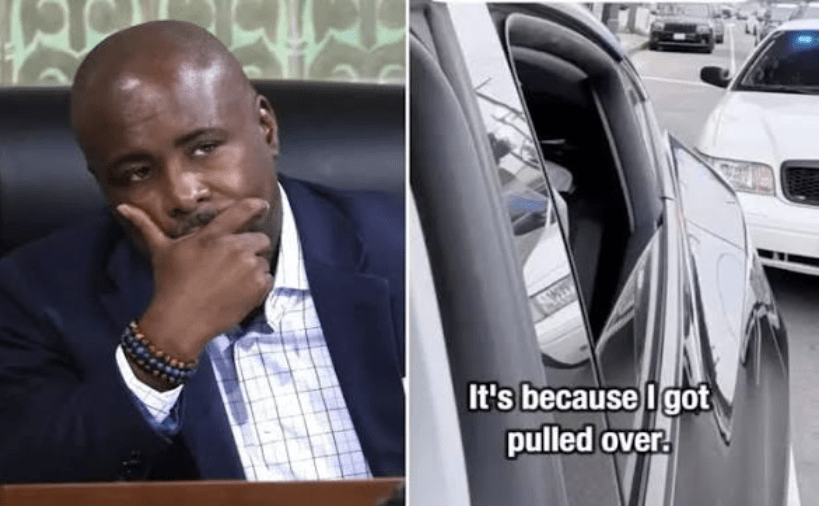
The race narrative is vacuum sustained by a pervasive “victim narrative” fueled by leaders like City Council President Marquese Harris-Dawson, who frequently claims profiling while omitting objective facts. Whether it was his 2020 stop in a city-owned Tesla with blacked-out windows where his race was invisible to officers, or his recent school-zone speeding violation which he attempted to frame as “trauma,” these theatrical narratives prioritize political gain over community safety. During the 2020 incident Dawson reported he was stopped for being black. The reality is he made an illegal U-turn on Crenshaw Blvd.
When stopped by officers he played the race card game. The truth was the windows in his car were dark and there was no way officers saw his race. The body worn video showed and Dawsons own wife confirmed the officers were professional and polite. Later Dawson filed a complaint and went public as an alleged victim of racism. Very similar to the recent televised drama session at city council where he alleged LA School police officers stopped him for being black.
While he clearly omitted the fact that he was speeding in a school zone. These are the same city elected who are creating and making policies to further split communities and reduce public safety.
Having worked in South Bureau and Central Bureau for over 24 years, I know the reality is clinical: these are predominantly Black and Brown communities where residents frequently victimize one another. Data from 2026 shows that Black individuals have the highest rate of stops initiated by a direct call for service (12.5%), showing that many of these interactions are driven by citizens asking for help, not bias.
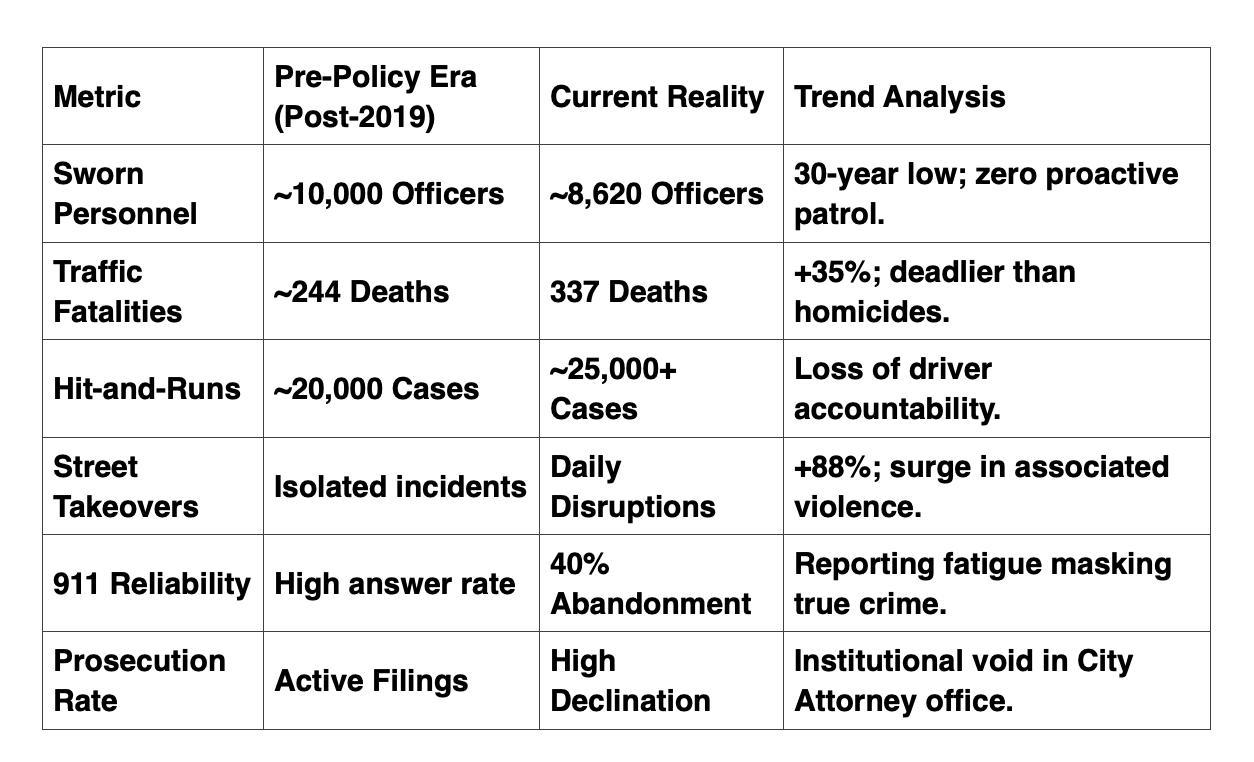
The transition from a proactive model to a restricted one has resulted in a measurable collapse in public safety.
This creates a statistical mirage: crime isn’t necessarily down; reporting is down because citizens have developed “Reporting Fatigue.” When people realize the police aren’t coming, they simply give up.
The current state of public safety in Los Angeles is increasingly defined by the “price of capitulation “a hidden social cost where citizens and law enforcement leaders alike retreat from a system that no longer yields results. While the Mayor’s office consistently touts a narrative of declining crime, critics argue that these “on-paper” successes mask a more troubling reality where the city’s infrastructure and legal standards have begun a spiraling trajectory toward systemic lawlessness.
The central pillar of the mayor’s “reduction in crime” narrative is the recorded drop in burglaries and property crimes. However, this data is increasingly disconnected from the ground reality due to a almost total collapse in 911 reliability. As of 2026, the LAPD is facing a 30-year staffing low, with approximately 8,620 officers—a 14% drop from historical benchmarks.
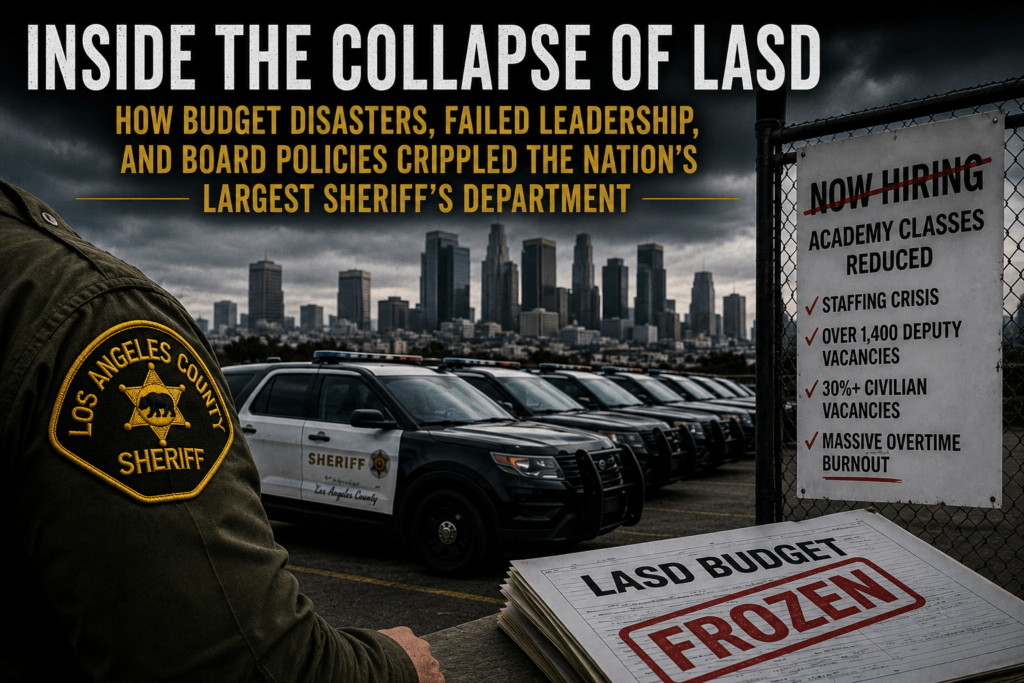
The staffing crisis at the LAPD’s Communications Division has become a primary bottleneck in the city’s emergency response pipeline. Currently, the department is operating with a severe deficit of dispatchers and 911 operators, often hovering at nearly 30% below authorized levels. This shortage means that during peak hours or major incidents, there are simply not enough hands to answer the phones, forcing callers into holding patterns that violate state safety standards. For the remaining operators, the workload is unsustainable, leading to high burnout rates and further resignations, which only accelerates the “spiraling trajectory” of the crisis.
When the public hears “all operators are busy” during an emergency, it is the most visceral evidence that the city’s leadership has failed to prioritize the fundamental mechanics of public safety, effectively rendering the 911 system a lottery rather than a lifeline. This shortage has crippled the dispatch system, where wait times for non-emergency or property crime reports often exceed 45 minutes. The result is a 40% call abandonment rate; when victims realize that help is not coming, they hang up. In the eyes of the city’s data tracking, an abandoned call is a crime that never happened. The “reduction” in burglary is not a victory for safety, but a symptom of public surrender.
The decline of order was set in motion by former Chief Michel Moore’s aggressive restriction of pretextual stops in 2022. Intended to appease the Police Commission and abolitionist voices on the city payroll, this policy essentially made the Vehicle Code optional. By removing the support for officers to pull over vehicles for minor equipment or registration violations, the department lost its most effective tool for proactive deterrence.
The consequences have been grisly. In 2025, Los Angeles recorded 337 traffic fatalities, marking a historic milestone where road deaths surpassed the city’s homicide count. This represents a 35% increase in fatalities compared to the pre-2022 policy era. Furthermore, hit-and-runs have surged to over 25,000 annually, as reckless drivers no longer believe they will be caught or prosecuted. Safety is being traded for political comfort, and the most vulnerable Angelenos are paying the price.
Perhaps the most visible manifestation of this municipal decline is the 88% surge in street takeovers. These events, which disrupt neighborhoods daily, have evolved into hubs for shootings, looting, and vandalism. This lawlessness is fueled by an institutional void in the City Attorney’s office. While the LAPD struggles with staffing, City Attorney Hydee Feldstein Soto has been criticized for “sitting on her hands,” failing to aggressively file charges against participants or push for the amended penalties, such as permanent vehicle forfeiture, needed to break the “revolving door” of justice.
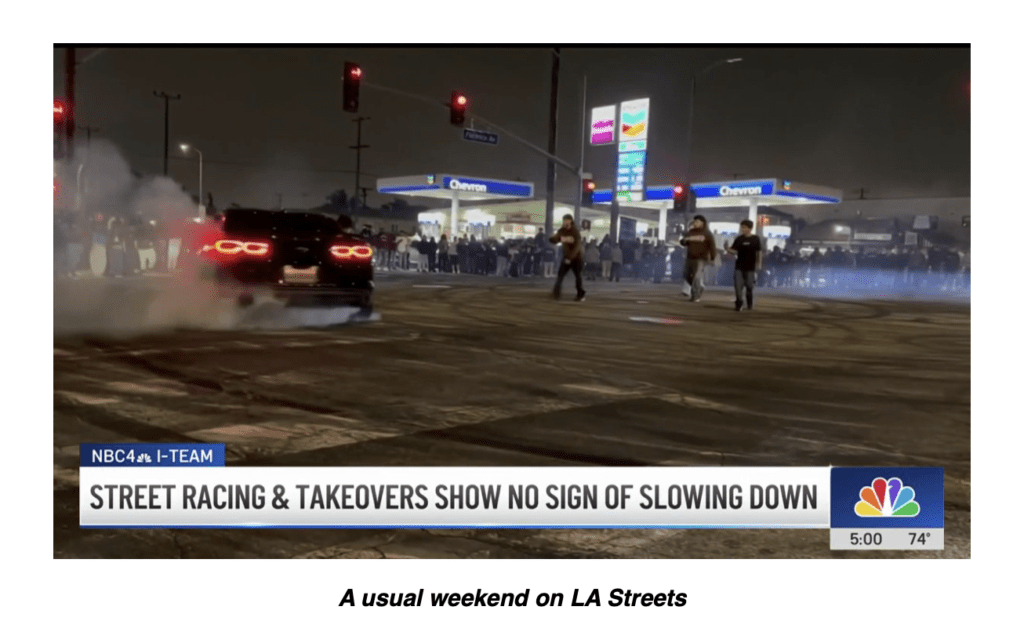
This spiraling trajectory is sustained by an ideological disconnect within City Hall. Frontline officers express deep frustration with elected officials who publicly scream anti-police and abolitionist rhetoric while privately relying on police as a personal security detail. This climate has driven veteran officers to retire in droves, accelerating the staffing crisis.
To manage the resulting chaos, the city has fallen into a cycle of throwing “good money after bad” through a “chaos tax” on taxpayers: Millions are spent “hardening” intersections with Bott’s dots and rumble strips to prevent the takeovers that enforcement should be stopping. The Bureau of Street Services (StreetsLA) saw a $31.7 million budget increase largely to repair the vandalism and asphalt damage left by unchecked sideshows. The city continues to pay roughly $47 million in police overtime to patch staffing holes while expanding automated camera enforcement to replace the physical presence of officers.
The “price of capitulation” in Los Angeles is a city that is becoming “quieter” on paper but increasingly dangerous in reality. The spiraling trajectory toward lawlessness—initiated by Moore’s restrictive policies and sustained by a City Attorney who refuses to prosecute—cannot be fixed with street bollards or political optics. Until the city moves away from appeasing abolitionist activists and returns to the baseline of proactive enforcement and consistent prosecution, the social contract will remain broken.