

What is unfolding inside the Los Angeles County Sheriff’s Department is no longer a staffing problem. It is a full-scale operational collapse years in the making.
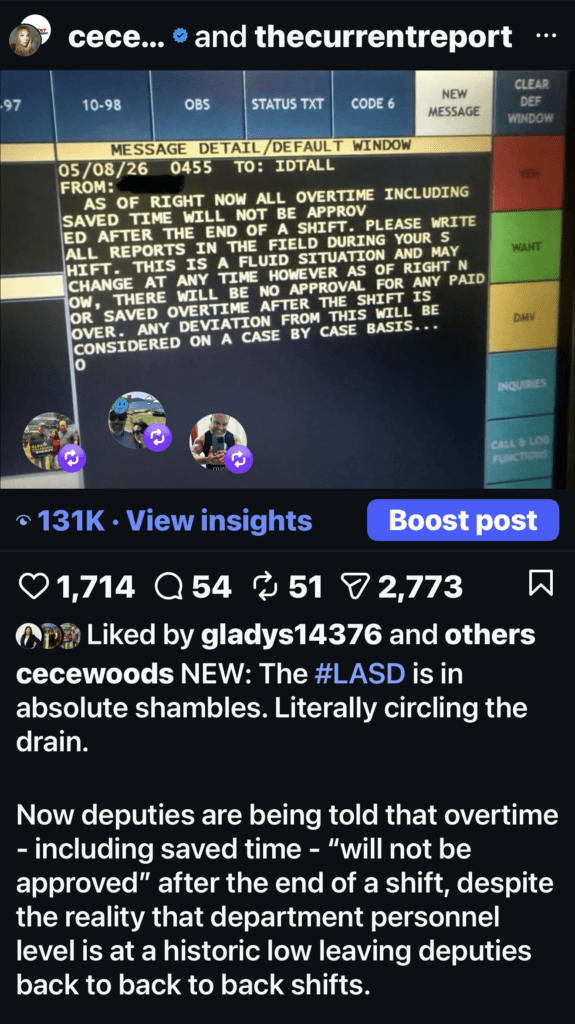
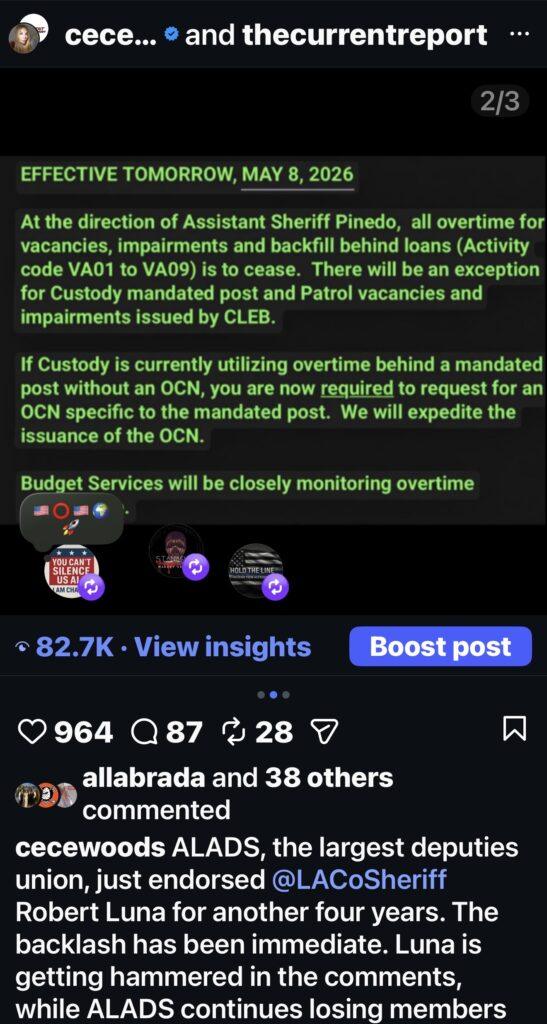
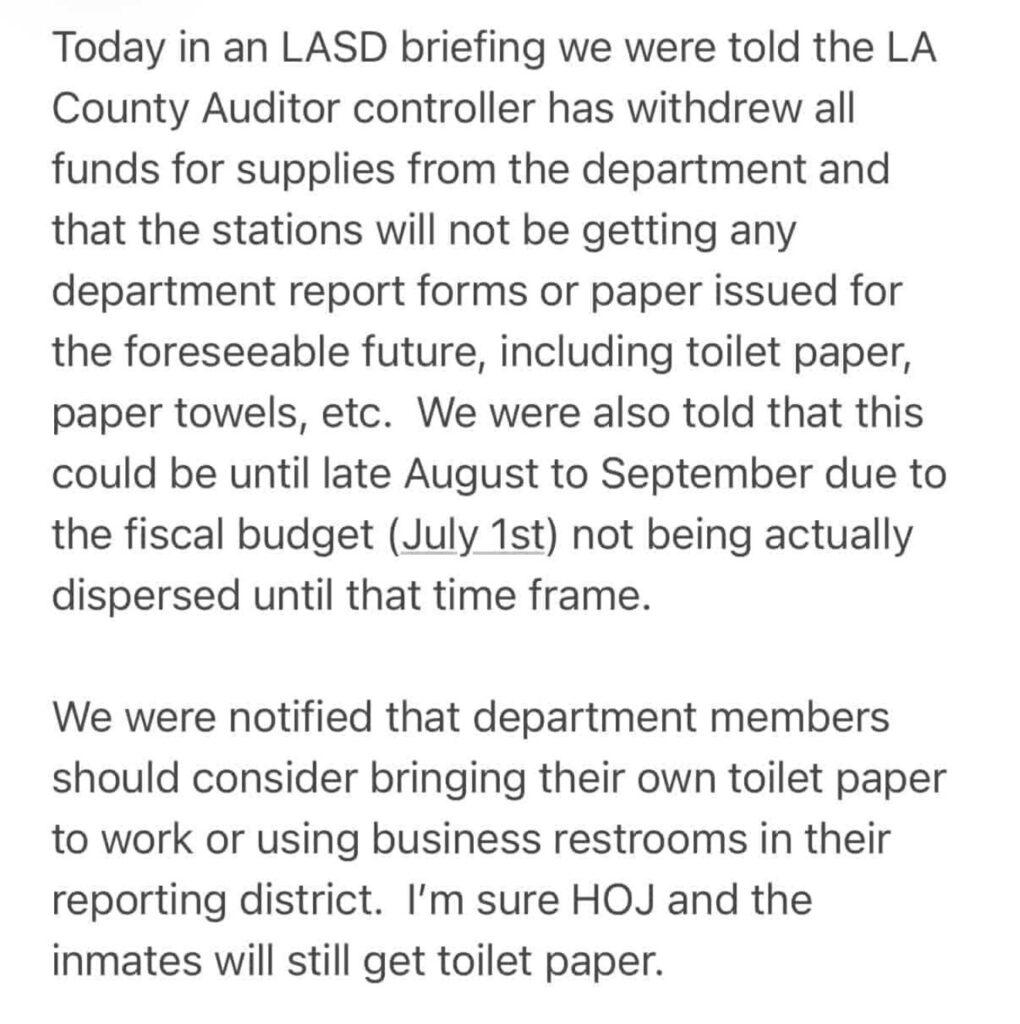
The nation’s largest sheriff’s department is now drowning in vacancies, runaway overtime, frozen hiring, blocked promotions, and mounting internal frustration as personnel describe an agency struggling to maintain even basic day-to-day operations. Deputies are burning out. Civilian staffing is gutted. Units reportedly cannot purchase essential supplies. And insiders say the leadership decisions driving the crisis are disconnected from the reality on the ground.
But the roots of this disaster go far deeper than one administration.
Under former Sheriff Alex Villanueva, the Los Angeles County Board of Supervisors defunded the department $261,000,000, froze hiring across the board, cancelled academy classes, froze LASD service and supply funding, and redirected enormous amounts of taxpayer money into politically popular “reimagining public safety” initiatives while sworn staffing levels steadily deteriorated. Warnings from inside the department were ignored. Now the consequences are impossible to hide.
In October 2024, Sheriff Luna appointed Gerardo Pinedo as Assistant Sheriff of Administration and Chief Financial Officer. Pinedo came from Yolo County, where he managed a substantially smaller operation with roughly an $800 million budget and approximately 2,000 employees. LASD, by comparison, operates with a multi-billion-dollar budget and oversees nearly 14,000 personnel across one of the most demanding law enforcement environments in the country.
Less than two years later, sources inside the department describe a growing operational crisis.
According to multiple sources, a recent closed-door meeting resulted in an immediate freeze impacting civilian hiring, transfers, promotions, and even certain purchasing functions inside the department. Employees describe divisions unable to secure basic supplies necessary for daily operations while staffing shortages continue to spiral.
Civilian vacancy rates are reportedly exceeding 30% in some support divisions. Total staffing shortages have surpassed the 4124 Assistant Sheriff Jason Skene admitted to in May, 2025, at the Civilian Oversight Commission meeting, forcing remaining deputies into relentless overtime cycles that continue driving burnout, retention failures, and declining morale throughout the department.
Despite Sheriff Luna’s proclamations of a 25% increase in recruitment, academy class sizes continue to shrink. This week’s graduating class consisted of an anemic 30 recruits, down from the previous graduating class of 40 and far below the required 85 recruits per class minimum.

Contract cities are not receiving discounts on their contracts despite LASD losing nearly 30% of its sworn personnel. During the June ICE-related riots last year, Malibu City liaison Sergeant Chris Soderlund was asked how much of Lost Hills Station personnel had been deployed to the riots. The sergeant’s response: “50%.”
The silence from city council members following that answer spoke volumes about the severity of the department’s staffing crisis, and that was without fully understanding that nearly 25% of the department’s personnel was already missing.
The station was already operating at roughly 75% staffing at the time, meaning half of an already depleted workforce had been pulled away from contract city coverage. That staffing reality had been publicly revealed the previous month during a Civilian Oversight Commission meeting, yet it was never disclosed during the Malibu discussion.
And while personnel shortages intensify, insiders question department spending priorities, including costly modernization initiatives and electric vehicle programs that many inside the agency say have done little to address the immediate staffing emergency devastating patrol operations and support services.
This is not the first time concerns have surfaced regarding outside financial leadership overseeing major law enforcement agencies in Los Angeles County.
Former Sheriff Jim McDonnell reportedly brought in Jill Serrano to oversee department budgeting despite longstanding controversy surrounding her prior tenure at LASD. Sheriff Alex Villanueva fired Serrano immediately upon taking office after she amassed a $101 million deficit under McDonnell. Villanueva has repeatedly asserted his own personnel stabilized department finances and ended with a significant surplus. Despite knowing Serrano’s failed track record, Luna rehired Serrano after he took office in December 2022, with Pinedo assuming the position in fall of 2024.

Sources inside LASD say frustration among rank-and-file personnel is reaching dangerous levels. Many believe the department’s leadership structure has become increasingly detached from operational realities while prioritizing political relationships and optics over stabilization of the workforce itself.
Internal tensions have reportedly intensified between executive leadership figures as the crisis deepens. Personnel describe confusion, declining morale, and growing concern over the long-term sustainability of current operations if staffing and hiring failures continue unchecked.
Meanwhile, the public is beginning to see the consequences firsthand.
Longer response times. Fewer available deputies. Reduced proactive policing. Increased strain on custody operations. Exhausted personnel making critical decisions under relentless fatigue.
The damage is no longer theoretical.
The collapse now unfolding inside LASD was not caused by one person, one budget cycle, or one administration alone. It was built over years through political decisions, leadership failures, hiring restrictions, fiscal mismanagement, and ideological experiments imposed on one of the largest law enforcement agencies in America.
The deputies and civilian personnel inside the department are now left carrying the weight of those decisions while the people responsible continue holding press conferences about “reimagining” public safety.
What Los Angeles County is experiencing today is the real-world outcome of those policies.
And the crisis is still accelerating.