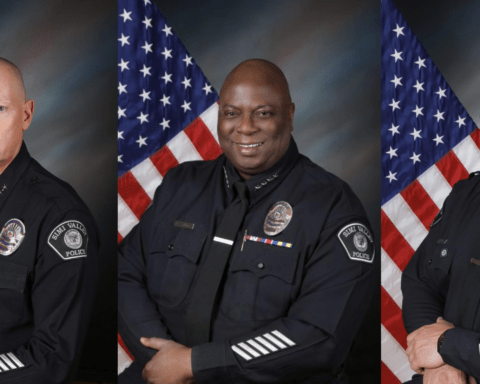

In the early morning hours of July 18, 2025, an explosion tore through the parking lot of the Biscailuz Center Training Academy in East Los Angeles, killing three veteran Los Angeles County Sheriff’s Department deputies, Detectives Victor Lemus, Joshua Kelley-Eklund, and William Osborn. All were assigned to the department’s Arson and Explosives Detail within the Special Enforcement Bureau, tasked with what should have been a controlled evaluation of grenades recovered the night before from a Santa Monica apartment complex.
Instead, a live grenade detonated. And in an instant, a training facility became a fatal blast site.
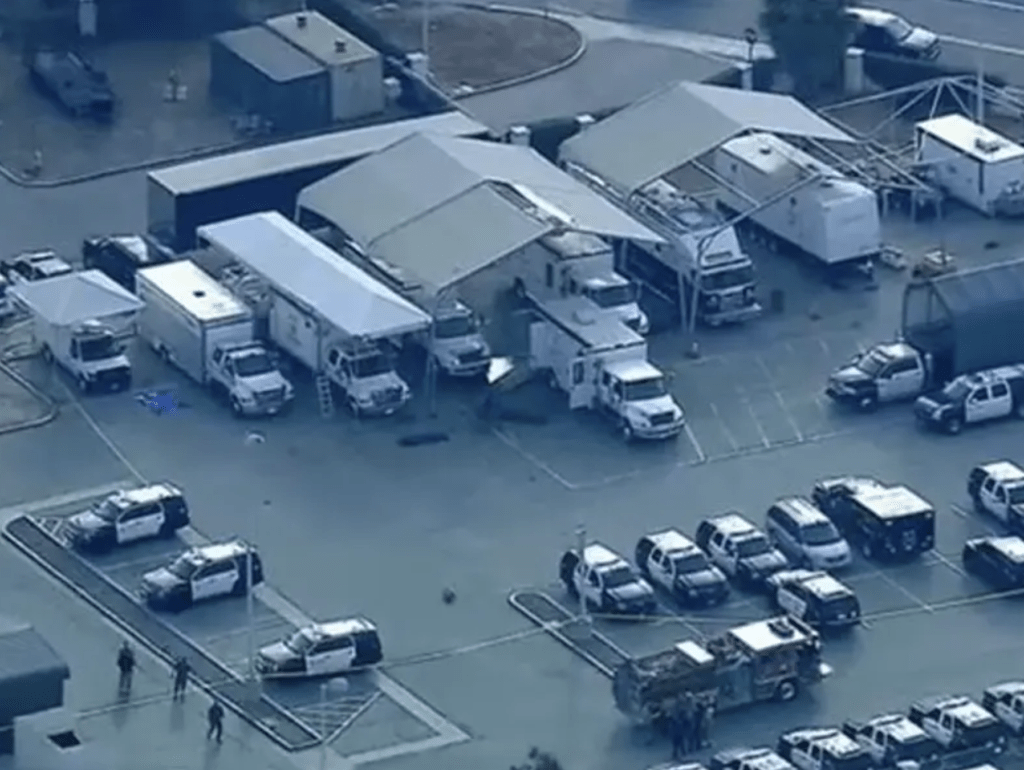
What followed was not just grief, but a deeper, more troubling reality.
After a months-long investigation by The Current Report – including interviews with explosives and munitions experts from the military, federal agencies, and local jurisdictions – the conclusion is unavoidable: this was not an equipment failure. It was a systemic breakdown in training, oversight, and command.
And that distinction matters. Because equipment can malfunction. Systems can be corrected. But when leadership fails, when training is insufficient, oversight is absent, and critical decisions are made without the expertise required, the outcome is not unpredictable. It is inevitable.
And in this case, the result was catastrophic.
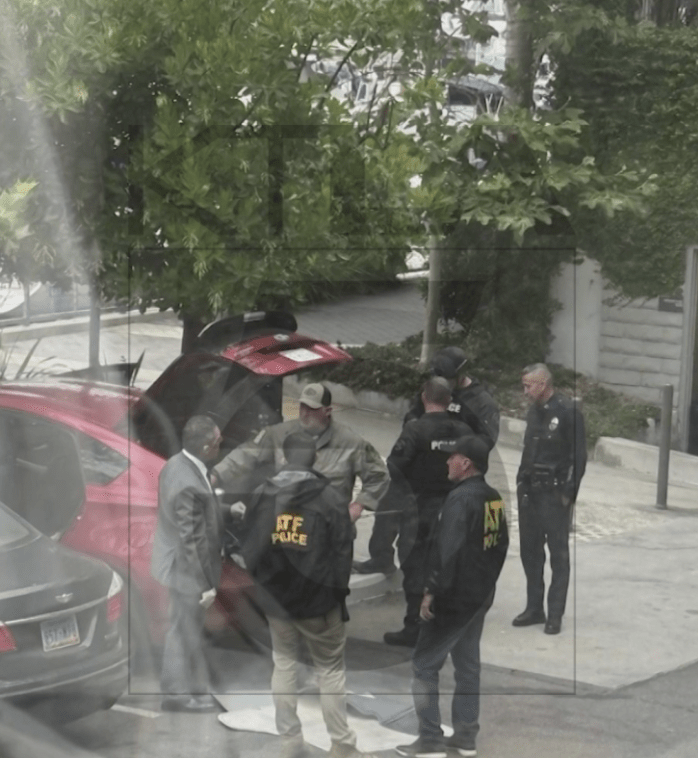
What has emerged about the suspect raises the stakes even further. He was a decorated Pararescueman (PJ) – the formal military designation often referred to as a “para jumper” – with extensive experience and deep familiarity with military-grade ordnance. He voluntarily consented to a search of the boat he was living on in Marina Del Rey, where additional ammunition was recovered.
This was not an unknown or low-level threat.
This was an individual with deep ties to military and government systems, in possession of military ordnance that demanded immediate recognition of risk. That context should have elevated the response from routine to critical, triggering consultation with military Explosive Ordnance Disposal (EOD) at the outset.
It didn’t.
And that failure to recognize the level of threat, and to bring in the appropriate expertise, goes directly to the core issue: a lack of training, judgment, and command oversight at the moment it mattered most.
The Critical Failure Point
Detectives Kelley-Eklund and Osborn, operating at the same rank, responded to the July 17, 2025 Santa Monica call after a tenant discovered two grenades in an outdoor storage unit. Santa Monica Police secured the scene and turned it over to the Los Angeles County Sheriff’s Department Arson and Explosives Unit.
Multiple sources familiar with the scene and explosive ordnance protocols say the condition of the grenades, described as atypical, should have triggered immediate escalation: at minimum, a hard stop, reassessment, and consultation with local military Explosive Ordnance Disposal (EOD). Under standards consistent with the FBI’s Hazardous Devices School, unknown or degraded munitions are treated as live threats – no assumptions, no shortcuts. Military EOD resources are available around the clock to assist local agencies in evaluating suspected military ordnance.
Instead, the devices were X-rayed, deemed inert, and moved, without supervisory oversight.
That decision sealed the outcome.
The margin for error in this area of work is zero. Yet at the most critical decision point, the safeguards designed to prevent exactly this kind of catastrophe failed. No intervention. No escalation. No check strong enough to override a flawed call.
This was not an equipment failure. It was a failure to recognize risk, to correctly interpret what was in front of them, and to act accordingly, a breakdown rooted in training, experience, and supervision.
Operators trained to the standard of the FBI’s Hazardous Devices School are taught to question the read, not rely on it; to recognize when something doesn’t add up; to slow the process down, not push it forward. In this field, experience is not theoretical, it is the last line of defense.
That line failed.
And when it did, three detectives paid the ultimate price.
This was not bad luck. It was a collapse at the exact moment expertise and leadership were supposed to take over.
Command Without Competence: No Explosives Background, No Special Enforcement Experience
The Arson and Explosives Detail, an elite unit tasked with handling high-risk ordnance and conducting render-safe operations, is under the command of Captain Robbie Royster.
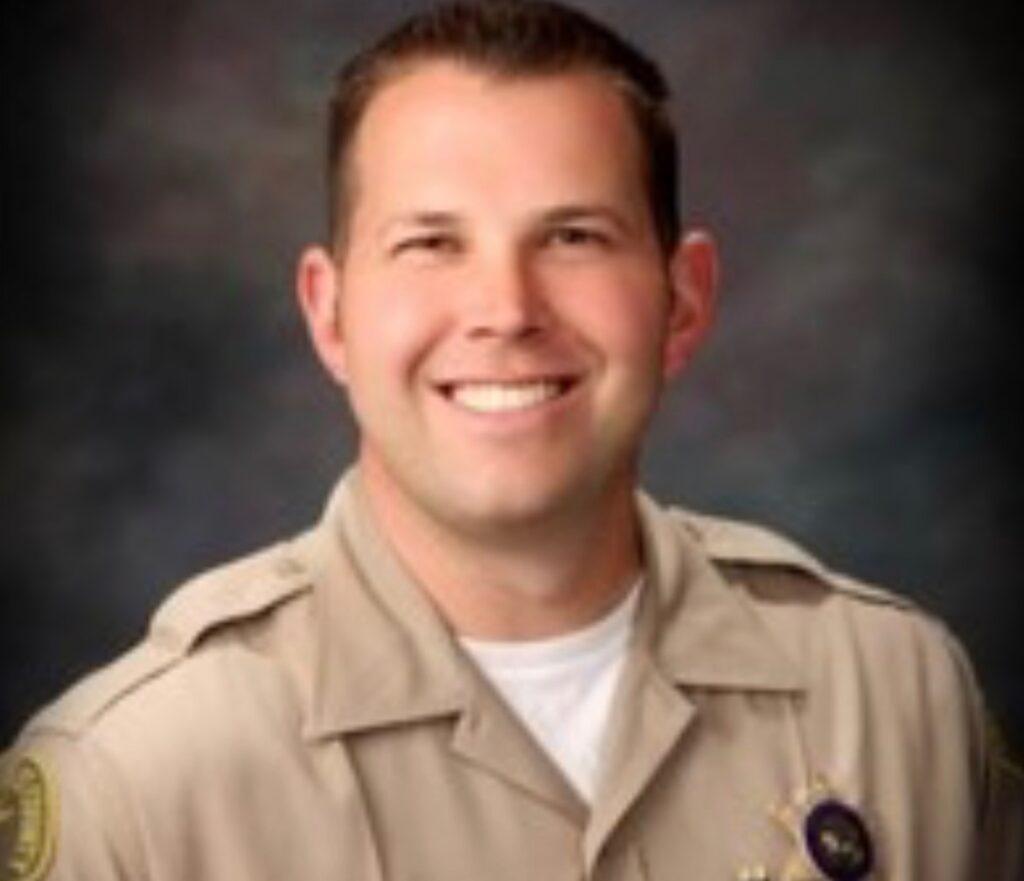

According to department sources and internal records, Royster’s career trajectory reveals a critical gap: no prior experience in special enforcement operations or arson/explosives work. He spent years as a sergeant in the Emergency Operations Bureau (EOB), was later promoted to lieutenant and assigned to county services, and eventually returned to EOB. There, his primary responsibilities centered on special event coordination, stadium security planning, large-scale public gatherings, and logistical operations, not bomb disposal or explosive ordnance handling.
That absence of relevant experience is not a minor oversight, it is central to a broader pattern that has taken hold within the department. A pattern where leadership assignments are misaligned with operational demands. And in this case, one that contributed to the conditions surrounding the preventable deaths of three detectives.
The Arson and Explosives Detail operates in an environment where decisions are immediate, consequences are irreversible, and the margin for error does not exist. Command requires not just rank, but deep technical expertise and operational credibility in the field.
By every available measure, Royster’s background did not align with those demands.
Yet Sheriff Robert Luna Luna and Assistant Sheriff Jason Skeen personally elevated him to command this critical bureau.
Sources within the department describe the appointment not as a calculated operational decision, but as a loyalty-driven promotion, another example of internal advancement untethered from subject-matter expertise. In a unit defined by risk, that kind of decision-making carries consequences far beyond optics.
Because when leadership lacks the experience to recognize danger, the risk doesn’t disappear.
It transfers to those on the ground.
Systemic Failures Exposed: Willful Violations, Broken Protocols, and Preventable Deaths
In the aftermath of the July 18, 2025 explosion, findings from California Division of Occupational Safety and Health did not point to a single mistake, they outlined a pattern of systemic failure.
Investigators identified a cascade of serious safety violations tied to how explosive materials were handled, transported, and supervised. Among the most alarming: explosives were moved in personal work vehicles instead of designated bomb transport units; live devices were, at times, left unsecured; and critical safety protocols, including the use of proper protective equipment and adherence to required training standards – were not consistently followed.
Some personnel involved reportedly lacked full compliance with training expectations aligned with the FBI’s Hazardous Devices School, raising further questions about readiness in a unit tasked with managing live ordnance.
Cal/OSHA classified several of these violations as “willful.”
That designation carries weight. It does not describe an accident. It means investigators concluded the department either knew, or should have known, the standards in place, and failed to follow them anyway.
This aligns with broader reporting surrounding the incident, including legal claims filed by families of the fallen deputies, which allege inadequate training, flawed procedures, and systemic lapses in oversight contributed directly to the explosion.
Taken together, the picture that emerges is not one of isolated error, but of institutional breakdown.
Protocols existed.
Training standards were established.
Safety measures were clearly defined.
And yet, at multiple points in the chain, they were ignored – and in turn, became fatal.
Accountability Absent: Leadership Shields Its Own
Despite the scale of the catastrophe, and mounting legal action alleging failures in training, equipment, and oversight, Sheriff Luna and Assistant Sheriff Skeen have taken no visible action against the leadership directly responsible for the Arson and Explosives Detail.
Despite losing three detectives under his watch, Captain Robbie Royster remains in command of Special Enforcement and Arson/Explosives.
The only known disciplinary action? Commander Thomas Giandomenico was placed on leave, not for operational failures tied to the explosion, but for the unrelated allegation of photographing body bags at the scene.
No public accountability for command decisions.
No corrective action tied to training deficiencies.
No acknowledgment of leadership failure at the unit level.
When a catastrophic failure produces no consequences for those in charge, it signals something deeper than hesitation. It reflects a command culture where accountability is selective, and protection runs upward.
Sources within the department describe a system where loyalty carries more weight than operational competence, where relationships insulate decision-makers, even when outcomes turn fatal.
And the consequences are no longer isolated.
As lawsuits mount and incidents involving suicides, accidental deaths, and in-custody fatalities continue to draw scrutiny, the pattern becomes harder to dismiss. The absence of accountability at the top does not contain risk, it compounds it.
What this moment reveals is not just a failure to act. It is a decision not to.
The Second Grenade: Disappearance, Disposal, and a Growing Credibility Crisis
In the immediate aftermath of the explosion, Sheriff Luna made a statement that raised immediate alarm: a second grenade recovered in Santa Monica had gone “missing.” That admission alone pointed to a fundamental breakdown in control and accountability over military-grade ordnance already in law enforcement custody.
What followed has only intensified those concerns.
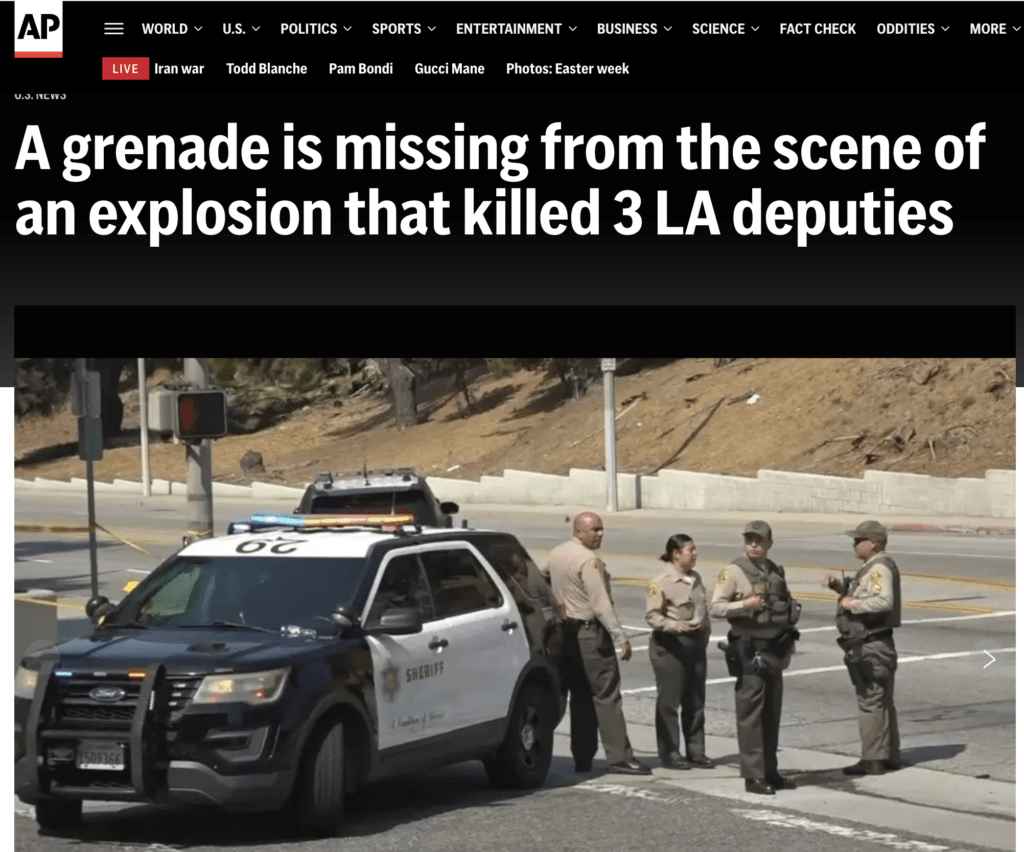
According to multiple sources, individuals closely connected to the responding detectives on that fateful call, were aware of the second grenade’s location shortly after the explosion, and took it upon themselves to dispose of it.
Sources describe that disposal as unsafe, unauthorized, and outside every established protocol governing the handling of live military ordnance. Critically, those involved allegedly lacked the training and experience required to handle or render safe such a device. This was not a judgment call, it was a fundamental breach of protocol, training, and command responsibility: a deliberate departure from established safeguards in a discipline where deviation carries lethal consequences.
And it mirrors the same failures that led to the fatal explosion: deviation from protocol, misjudgment of risk, and a willingness to operate outside the chain of command in a zero-margin environment.
What makes this even more difficult to justify is how unnecessary it appears. There were clear, established alternatives to have safely secured and handled the device. There was no operational urgency that required improvisation, and no legitimate reason to bypass those resources.
The absence of basic judgment is striking.
The disposal of the second grenade is currently being investigated by the ATF, indicating that both Sheriff Robert Luna and Assisstant Sheriff Jason Skeen are aware of the circumstances surrounding the second grenade, and the cover-up.
And yet, the public narrative has not moved.
At best, this is a failure of transparency. At worst, it is containment, an effort to control exposure in the wake of a catastrophic incident already under legal and public scrutiny.
Because when explosive evidence effectively disappears, and no one is held accountable, the failure no longer sits at the operational level.
It exposes something far more dangerous: a collapse of credibility in a high-stakes environment where trust, competence, and accountability are not optional, they are the only safeguards between order and catastrophe.
Nepotism, Crashed Morale, and a Historic Deputy Shortage
The elevation of Robbie Royster is not an isolated misstep, it is part of a broader pattern that defines the current state of the department. Sixteen suicides. Six work-related accidental deaths. One hundred thirty-three in-custody deaths. These are not disconnected statistics; they are indicators of a system under strain, shaped by leadership decisions under Sheriff Robert Luna and Assistant Sheriff Jason Skeen.
Department insiders and multiple reports describe a culture where advancement is driven less by expertise and performance, and more by proximity and loyalty. The consequences are visible across every level of the organization. Morale has eroded to historic lows. Deputies describe relentless burnout fueled by forced overtime, chronic understaffing, and a leadership structure perceived as insulated from accountability, more focused on protecting itself than supporting those on the front lines or safeguarding the public.
The operational impact is no longer theoretical, it is measurable.
LASD is hemorrhaging personnel. Staffing levels have dropped to their lowest point in decades, with an estimated 2,500 deputy vacancies and hundreds more on extended leave. Recruitment pipelines have weakened, retention has deteriorated, and the department has been forced to rely on staggering overtime expenditures, $458 million in a single fiscal year, simply to maintain basic patrol operations.
This is not a temporary shortfall, it is a structural failure.
And with the 2028 Summer Olympics on the horizon, the stakes are about to increase exponentially. The demands of global-scale security will collide with a department already stretched beyond its limits.
Yet the leadership model that produced these conditions remains unchanged.
The same decision-making that elevated unqualified leadership, failed to enforce critical safety protocols, and allowed preventable tragedies to unfold is still in place. The grenade explosion. The mishandling of the second device. The growing volume of legal claims.
These are not anomalies.
They are the predictable outcomes of a system where accountability is absent, and the consequences are accelerating.
The Legal Reckoning Begins
Last week, Nancy Lemus, the widow of Detective Victor Lemus, filed a government claim against Los Angeles County and the Los Angeles County Sheriff’s Department, the required legal precursor to a lawsuit. The claim alleges that the failures leading to her husband’s death were not unforeseeable, they were systemic. Among the most significant: supervisors failed to follow basic render-safe protocols, the very standards designed to prevent catastrophic detonation. Those deficiencies did not occur in a vacuum. They unfolded under the command of Captain Robbie Royster.
This is no longer an internal issue. It is now a matter of legal record.
And it is unlikely to stop here.
The families of Detectives Lemus, Kelley-Eklund, and Osborn, and the families behind every suicide and in-custody death, are owed more than condolences and carefully worded press conferences. They are owed accountability. They are owed a department where leadership is earned through expertise, not proximity. Where failures of this magnitude trigger consequences, not silence.
Instead, what remains in place is the same leadership structure that produced these outcomes.
Until Robert Luna and Jason Skeen confront the culture they have allowed to take root, where competence is secondary to loyalty, this trajectory will not change. Deputies will continue to leave. Lawsuits will continue to mount. And the risk to both personnel and the public will continue to grow.
The explosion at Biscailuz was not an anomaly.
The legal claims that followed are not opportunistic.
They are the inevitable collision between a broken system and the reality it can no longer contain.