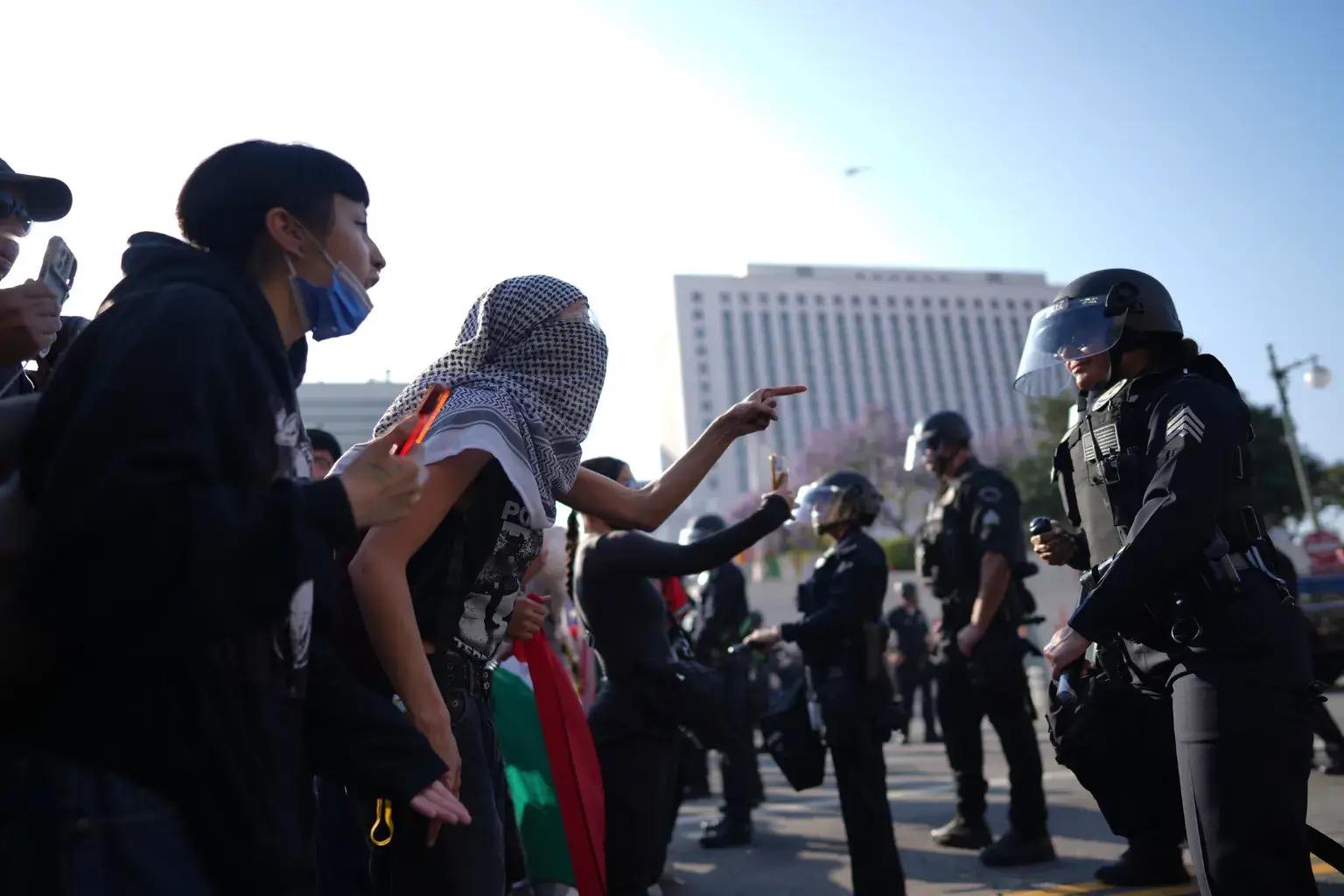
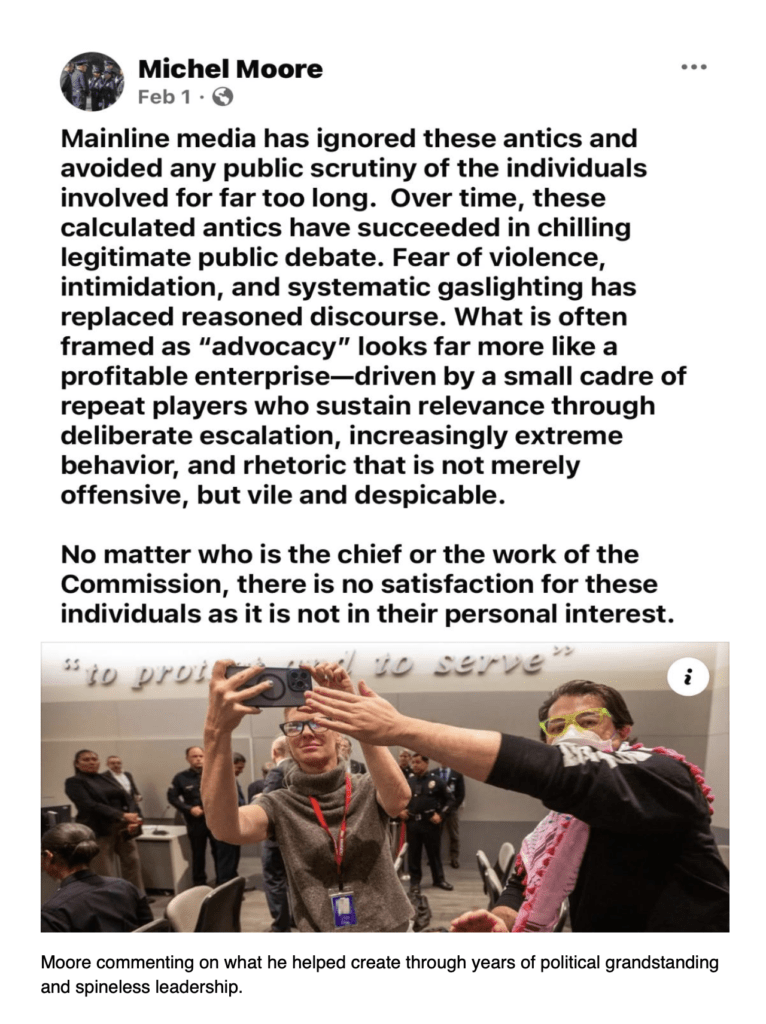
We created these monsters. By treating chronic agitators as “stakeholders” rather than professional disruptors, the Department validated their tactics. Most disturbingly, we now see some Los Angeles Police Department command staff acknowledging and condoning these street terrorists, even using them to belittle and scream at their own rank-and-file officers. When leadership empowers the very people who want to dismantle the Department, the chain of command has switched sides.
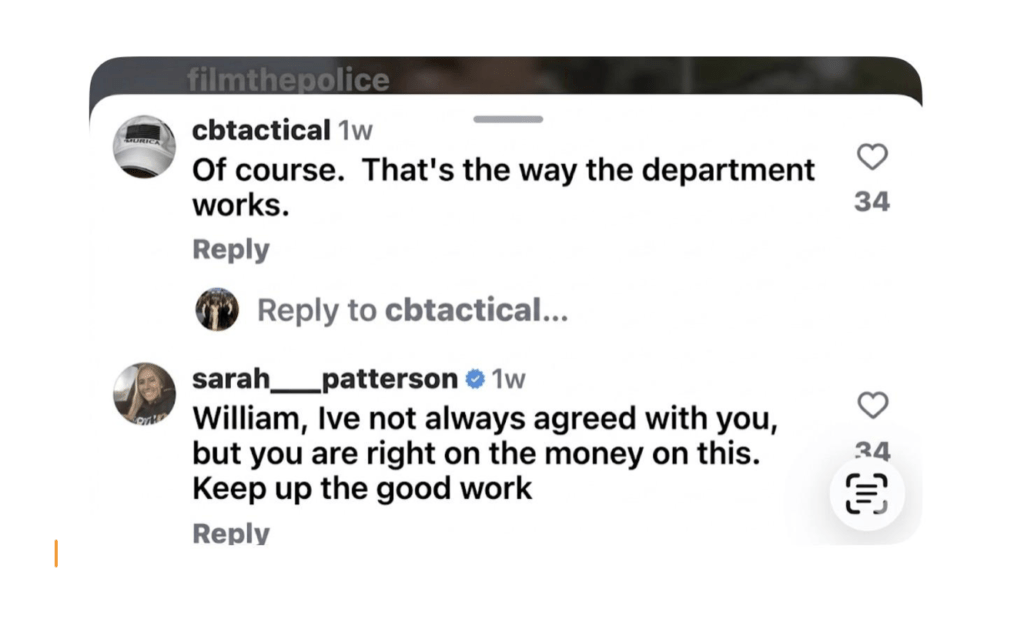
L.A. is increasingly an outlier. You only need to look at neighboring jurisdictions to see that this “idiocracy” is a choice. Beverly Hills, other surrounding cities, and the Los Angeles County Board of Supervisors maintain strict decorum. In those forums, the same individuals who treat L.A. City Hall like a playground are met with immediate removal. In L.A., we gave them a VIP pass, and now that same mob-driven culture has migrated from the Commission room to the street corners of DTLA.
The disparity between the number of arrests law enforcement makes and the number of cases a prosecutor actually files is the heartbeat of this “revolving door” system.
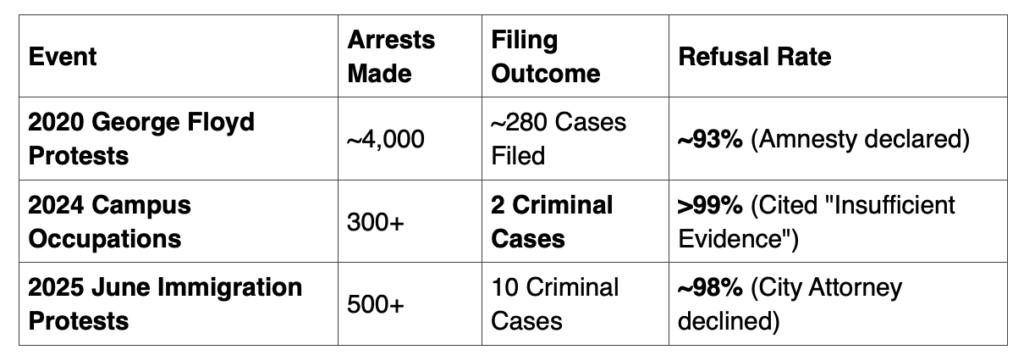

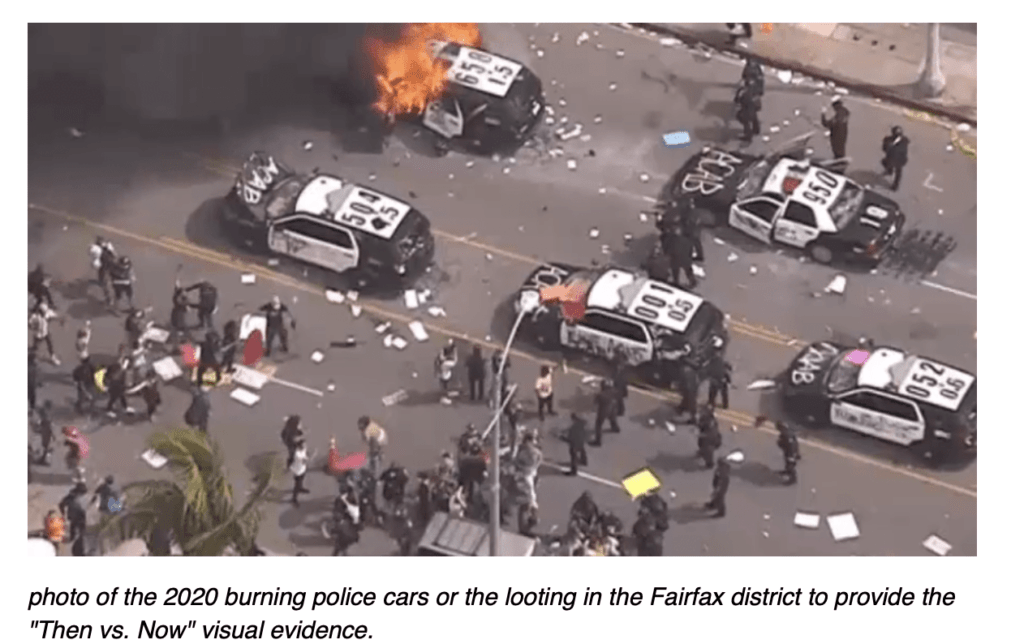
The “No Kings” movement is using the 2020 blueprint because it is the only one L.A. leadership allows. We saw the same enabling during the unruly Lakers and Dodgers riots, where “celebration” was used as an excuse for lawlessness.
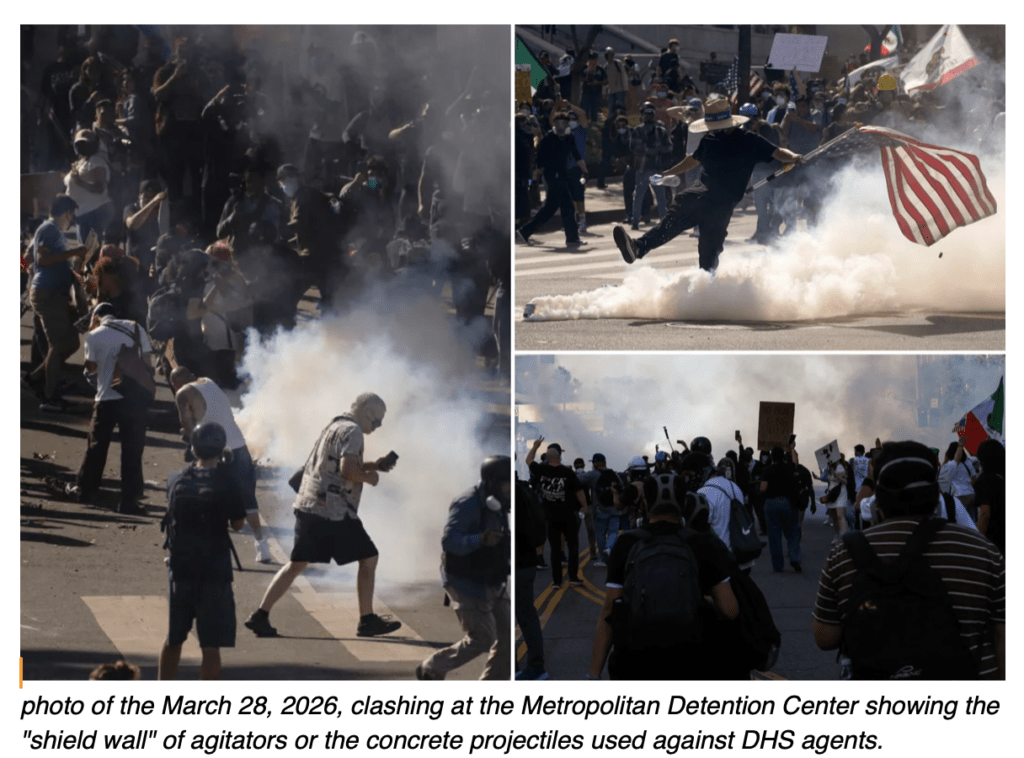
While the morning of Saturday, March 28, 2026, saw a peaceful turnout of nearly 100,000 demonstrators, the afternoon shift toward the Roybal Federal Building marked a significant escalation in agitator tactics. Agitators dismantled concrete barriers near the Metropolitan Detention Center, using the fragments as projectiles. Two federal officers were hospitalized after being struck by concrete blocks. Protesters reported skin burns from tear gas and one significant eye injury from a pepper ball.
Los Angeles Police Department’s tactical alert resulted in 75 total arrests: 66 for “failure to disperse,” one for possession of a “dirk or dagger,” and eight juveniles, all cited for “failure to disperse.” The success of these arrests now depends on a fragmented legal landscape where political ideologies often dictate the final charges.
First Assistant U.S. Attorney Bill Essayli has already confirmed that his office is using high-definition video to identify and arrest individuals for assaulting federal officers, a felony. Unlike local misdemeanors, these federal charges carry mandatory minimums and are largely shielded from local “diversion” programs.
DA Nathan Hochman has made it clear that “the line was crossed” on Saturday. Having already filed felony assault and conspiracy charges in previous 2025 protests, Hochman is expected to pursue maximum penalties for the “dirk or dagger” suspect and any agitators identified in the concrete-throwing incidents. His administration serves as the primary pivot back toward traditional “law and order” at the county level.
City Attorney Hydee Feldstein Soto remains the biggest variable. Historically, her office has been a “filing graveyard” for mass-arrest misdemeanors. If she repeats her 2025 pattern, where she declined more than 300 cases from campus protests, the 66 “failure to disperse” arrests from Saturday will likely be dismissed or reduced to “office hearings” with no lasting consequences.
Attorney General Rob Bonta adds another layer of scrutiny that often hampers aggressive local filing. By monitoring the Los Angeles Police Department’s use of chemical agents and projectiles under AB 48, the California Department of Justice creates a “cooling effect” on prosecutors. If Bonta’s office opens an inquiry into the use of force, it may give the City Attorney the political cover needed to decline filings altogether.
And that is where the system collapses in plain sight: when enforcement is second-guessed, prosecution is politicized, and accountability is optional, the message to agitators is unmistakable – there is no real consequence. What remains isn’t justice, but a cycle of containment, release, and repeat. And one that that almost certainly guarantees the next confrontation will be bigger, bolder, and far more dangerous.