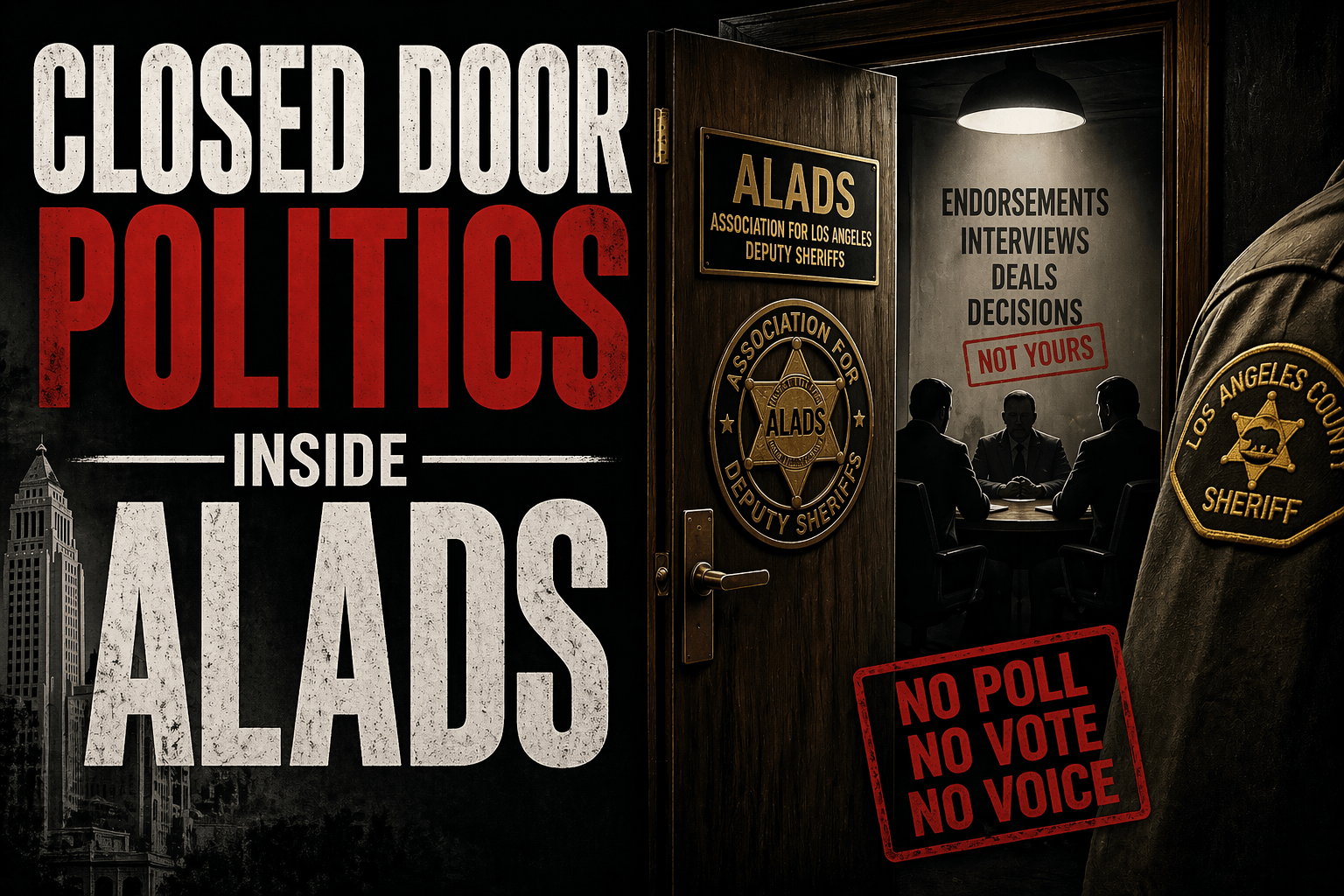
Unions are built on a simple premise. The members fund it. The members are the voice. The leadership carries that voice forward. That is the structure deputies in Los Angeles County have been paying into for decades through ALADS, the Association for Los Angeles Deputy Sheriffs.
What those members are now confronting is something far less straightforward. The structure still exists. The voice does not.
Behind the scenes, and increasingly out in the open, deputies are beginning to realize they are not being asked the most basic question in the middle of a critical election cycle. Who do you want leading your department?
That question is not being put to a vote. It is not being broadly surveyed. It is not being measured in any meaningful way across the rank and file.
Instead, the process is being handled by a much smaller circle.
Internal discussions and direct source conversations point to a system where candidates are interviewed, evaluated, and filtered through a political endorsement committee before being handed off to the Board of Directors for final approval. Technically, that process complies with internal structure. Functionally, it removes the broader membership from the decision entirely.
There is no department wide polling effort. No ballot. No mechanism that captures the collective will of thousands of working deputies who will live under the consequences of that endorsement.
And that absence is not going unnoticed.
The frustration is not theoretical. Deputies understand what they are paying for. Legal protection. Representation. Advocacy. Those are tangible. Those are measurable. What is now being questioned is why the most powerful tool the union has, its political endorsement, is being handled without directly consulting the people funding it.
Conversations among members reflect a growing divide. The expectation was never blind trust. It was participation. Even in past cycles, flawed as they may have been, there were at least attempts to involve the membership through internal voting or surveys. That acknowledgment, however limited, recognized that endorsements carry weight beyond leadership preference.
That acknowledgment appears to be fading.
What is emerging instead is a model where decisions are shaped through internal interviews and committee recommendations, then finalized by leadership without a clear, documented mandate from the membership itself. The optics are controlled. The outcome is contained. The rank and file are expected to accept it.
Compounding that concern is who is still being included in the process.
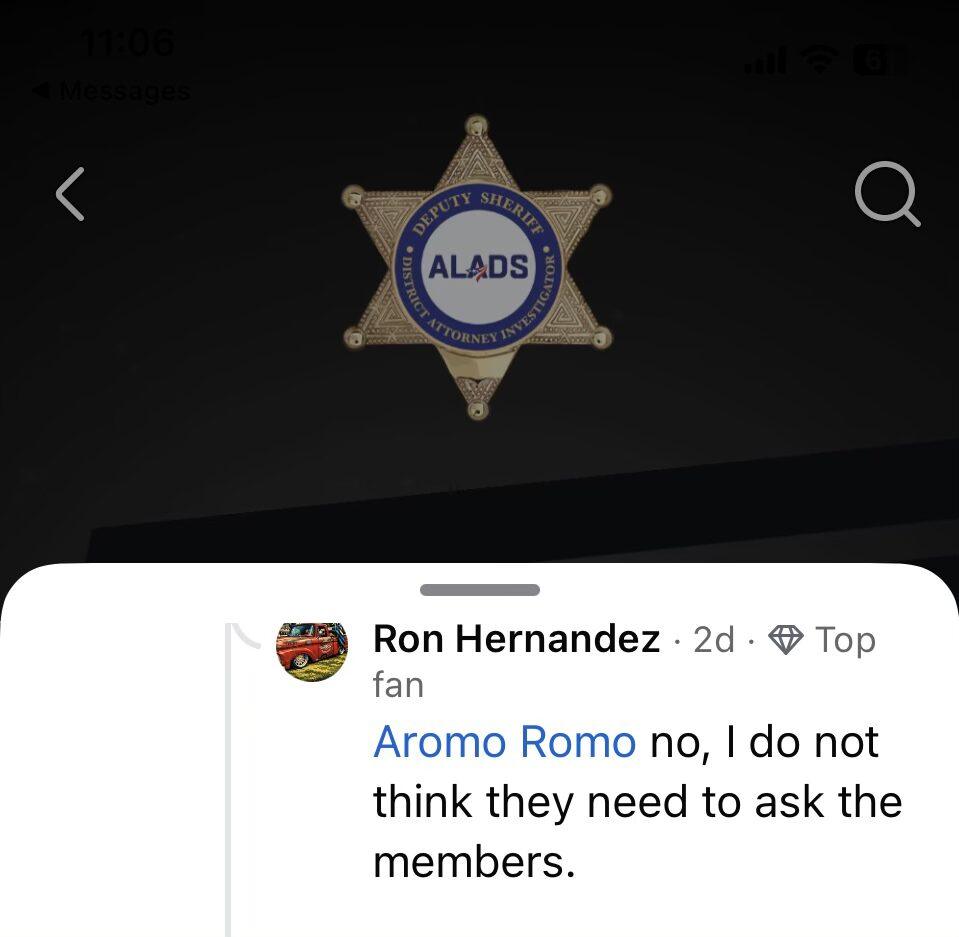
Sources indicate that retirees, specifically former ALADS President Ron Hernandez, who can participate as an associate member, was present in discussions and interviews connected to endorsements.
A source familiar with the process made the following observations:

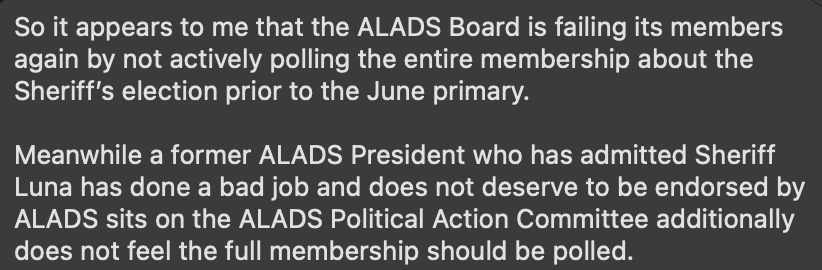
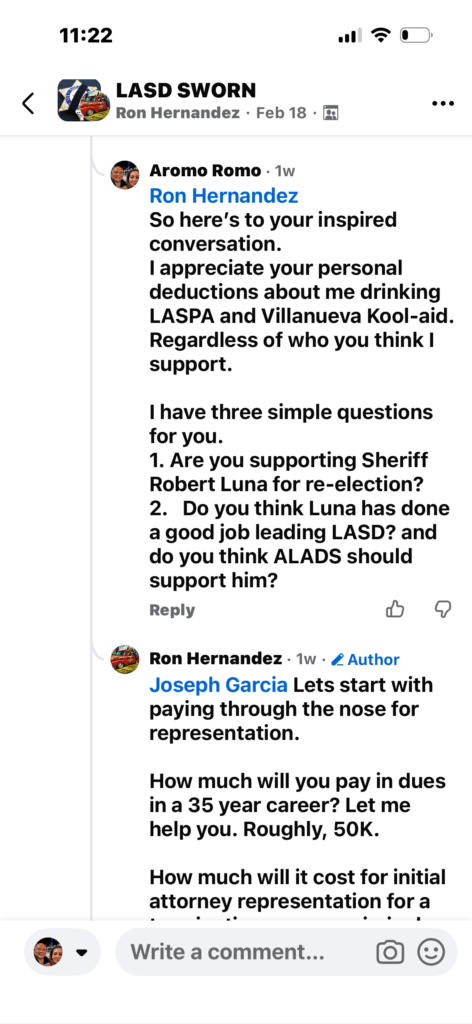
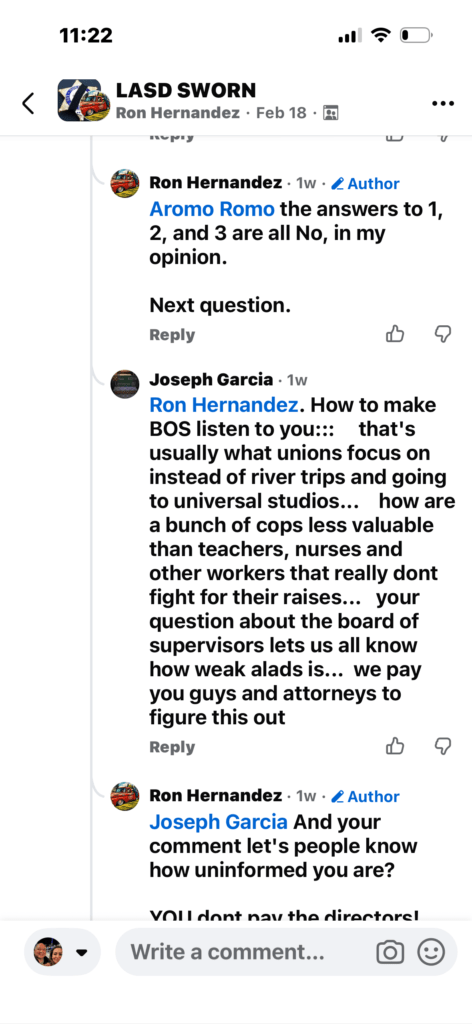
At the same time, active duty deputies are not being broadly polled. The people currently working patrol, custody, and investigations, those dealing firsthand with the consequences of leadership decisions, are not being directly asked where they stand.
That imbalance raises a question that leadership has yet to answer. Whose perspective is shaping these endorsements?
The issue is not about excluding retirees. It is about excluding active voices.
The sheriff’s race is not an abstract political contest. It determines department culture, discipline, staffing, morale, and the operational reality deputies face every day. An endorsement from ALADS carries significant influence. It signals to voters, to politicians, and to the department itself where the union stands.
But if that position is not grounded in a measurable consensus from its own members, it raises a deeper concern about legitimacy.
This is where the gap between representation and control becomes impossible to ignore.
ALADS is not a small organization. It represents thousands of deputies across Los Angeles County. The financial and political power it wields is substantial. That power is derived entirely from its membership. When that same membership is not consulted in decisions of this magnitude, the structure begins to shift.
It stops being a collective voice. It becomes a centralized one.
That shift may not be visible on the surface. The meetings still happen. The committees still operate. The endorsements are still issued. But beneath that process, the fundamental relationship between the union and its members begins to erode.
This is not an isolated concern. ALADS has navigated internal conflict before, particularly around leadership direction and political influence. What makes this moment different is how clearly the issue is being articulated by those inside the system.
They are not asking for access. They already fund it. They are not asking for information. They already see the outcome.
They are asking why they are not being asked.
As the primary approaches, that question becomes more urgent. Endorsements will be made. Political positions will be taken. The union will speak.
The only question left is whether it is speaking for its members or over them.