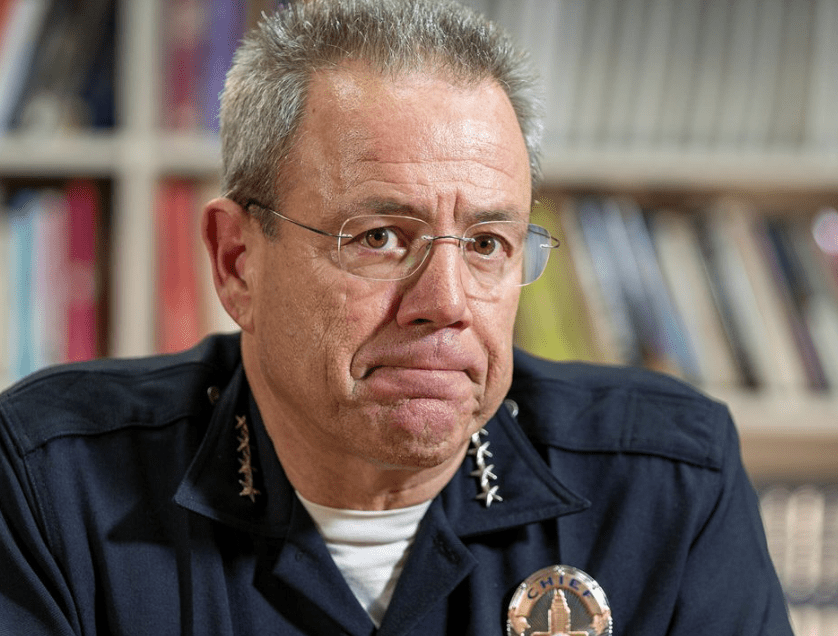
The Los Angeles Police Department is currently grappling with a legacy of administrative weaponization that prioritized personal patronage over public trust. Under former Chief Michel Moore, the department’s public messaging was dictated not by policy or transparency, but by a stark double standard: absolute privacy for “drinking buddies” and aggressive public shaming for those deemed expendable.
The inconsistency of Chief Moore’s leadership and the department’s selective application of “privacy” is most visible when comparing the treatment of Assistant Chief Jorge Villegas to my own experience. When Villegas was embroiled in a 2018 scandal involving public sexual misconduct, Moore cited state privacy laws to decline all public commentary and shield him from scrutiny.
Despite documented allegations involving hit-and-run incidents and the unauthorized sale of prescription drugs sourced from Cabo, as documented and dismissed as “nothing to see here” in LAPD complaint CF#18-003262, there were also numerous known extramarital affairs with department subordinates. In one instance, Moore proactively called off surveillance and delayed a personnel complaint for months, as referenced in LAPD complaint CF#19-001124, until legally compelled by a Pitchess motion. Moore took no immediate action. His only response to those who identified the misconduct occurring under his watch was, “give me 100 days to fix it.” That “corrective behavior” amounted to hiding illegal conduct. Moore justified this protection by stating there were “no criminal actions,” effectively shielding a close friend from public defamation, as seen in The Current Report, Weaponization of Internal Affairs.
Most egregious was Moore’s on-camera statement that there was “no criminal activity to report” regarding Villegas, effectively providing a public-facing character defense for a close associate despite a litany of misconduct. This stands in stark contrast to my situation, where the department allowed the weaponization of stolen data and private materials to fuel a public campaign of defamation and physical threats against me. While Moore used the “no criminal actions” threshold to protect a friend, the department failed to provide me with similar protection despite documented criminal acts, including residential burglary and unauthorized data access (Ontario Police Case #2309000291).
The comparison between my case and that of Villegas is not incidental. Despite ongoing denials, Dawn Silva – my accuser – was also the individual found in the car with Villegas in 2018. I had doubts at times but ultimately believed her. What followed, however, was not merely deception or betrayal; it was a manufactured narrative for financial gain. The troubled local media has failed to report the facts, instead favoring a soap opera narrative over verifiable evidence.

In a radical departure from prior practice, Moore ignored those same privacy protections in my case in 2023. Before any local news outlet broke the story, Moore issued an unprecedented news release. By using the word “actions” instead of “allegations,” and by specifically naming me, bypassing the standard “senior staff member” designation, Moore attempted to convict a command officer in the court of public opinion before a single fact was verified.
Moore further escalated the situation when I questioned his unethical release of my information and targeted approach. The most concerning aspect of his conduct was the complete lack of due process and the failure to conduct a thorough investigation into timelines, inconsistencies, and the credibility of witnesses and the accuser. California’s Public Safety Officers Procedural Bill of Rights Act (POBR, Gov. Code §§ 3300–3313) guarantees due process for peace officers during investigations that could lead to discipline. The law does not create tiered penalties based on rank. Punitive actions are defined uniformly, and accountability is meant to come from fair, timely investigations, not selective enforcement. Apparently, this was a standard Moore applied only to his inner circle.
Further evidence of this selective media strategy appears in the department’s handling of three LAPD officers charged with falsifying field interview cards. In that case, Moore strictly adhered to the Police Officer Bill of Rights, shielding the officers’ identities. That professional courtesy was denied in my case.
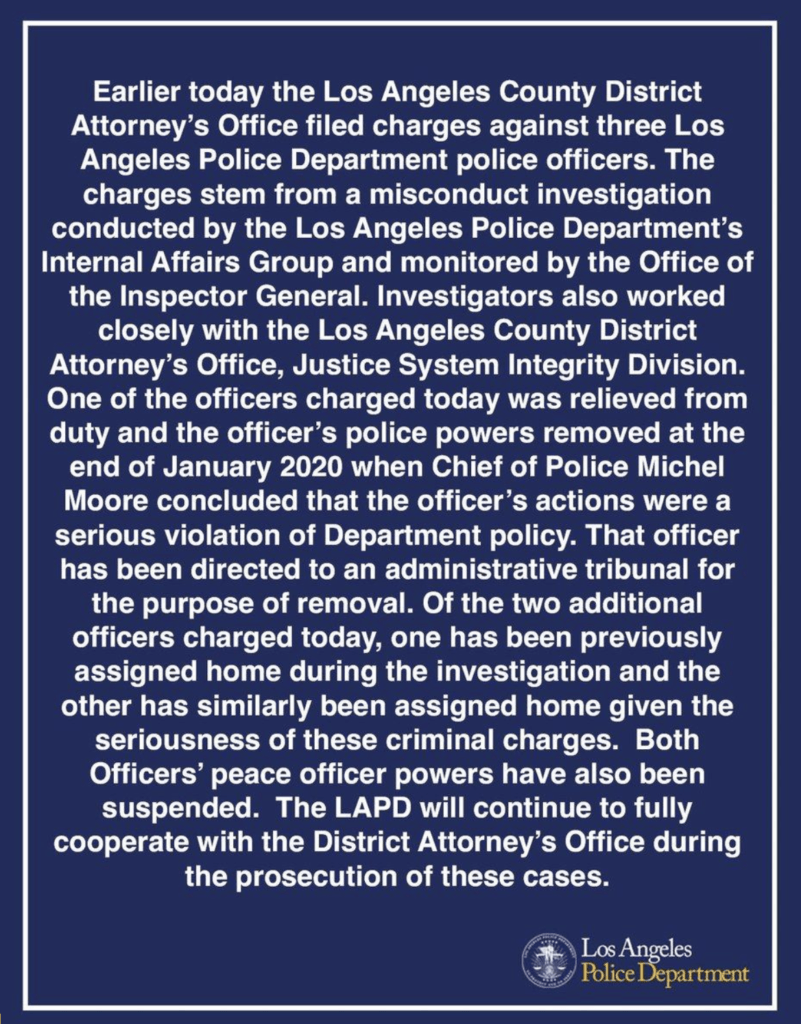
The contrast is stark. No names were released for officers charged with crimes, including Nicholas Martinez, one of the officers implicated in the falsification case and initially listed as a witness to Silva’s allegations. Martinez was quietly removed by Internal Affairs as a witness after being charged. Internal Affairs investigators omitted him from later narratives, likely to avoid further undermining the credibility of what has come to be known as the “Silva Script.”

Perhaps the most damning evidence of a manufactured narrative is the sequence of events before any official report was filed. Despite claiming she was fearful of being tracked, Silva’s actions suggest retaliation. After accusing me of having other relationships, she ransacked my home while I was on a college visit with my son and accessed my personal devices. She then began contacting friends, accusing them of relationships with me. This behavior began after she was served with the formal termination of our domestic partnership. In addition to making false accusations, she was facing the loss of anticipated financial stability, including early retirement benefits. What followed was retaliatory escalation.


Silva, despite claiming victimhood, accessed my home, ransacked personal items, and accessed my Instagram and email accounts. She later denied this in her police report. Instead of following standard police protocols, Silva activated a private network before reporting anything to law enforcement. She contacted retired Sergeant Manny Redruello, who then contacted LAPPL attorney Jody Gonda. Gonda, in turn, contacted LAPPL directors attending a conference. This network mobilized and synchronized the narrative before any police report was filed, ensuring that aligned witnesses emerged only after the narrative had been established.
Silva was served with termination of the domestic partnership on September 3 but did not report to Ontario PD until September 7. Initially, she claimed she found the device herself but refused to bring it in out of fear of being tracked. On September 8, she changed her story, stating she withheld evidence to consult her attorney. The District Attorney’s memo questioned why a trained officer would delay six days in turning over evidence if she genuinely feared for her safety. None of these inconsistencies were meaningfully investigated by Internal Affairs.
The DA memo speaks for itself, yet Moore ensured it was excluded from the Internal Affairs report and withheld for six months.

To understand Moore’s actions, one must revisit October 30, 2018, when the Villegas scandal broke. On that day, I returned home to find Silva unconscious in the bathroom after ingesting sleeping pills, with a loaded Beretta handgun registered to LAPD Sergeant Mike Goosby beside her. Silva claimed she was distraught over rumors linking her to Villegas. I transported her to San Antonio Hospital and notified the chain of command. Despite the seriousness of the situation, no action was taken. Moore’s later actions in 2023 appear to reflect an effort to scapegoat me and bury the connections between Villegas, Silva, and others within his inner circle.
The culture of dishonesty at the top has reached a breaking point, underscored by the recent Mehringer verdict. Moore’s pattern of manipulating facts to protect allies has contributed to systemic failures in truthfulness. When a Chief suppresses evidence to protect friends, it establishes a precedent for the kind of misconduct later exposed in other investigations. Observations I made during Internal Affairs briefings reinforce this pattern, including instances where Moore directed advocacy efforts after unfavorable decisions.
When internal mechanisms failed, the alliance between Silva, Captain Johnny Smith, and Sergeant Bell transitioned into public harassment. Silva’s attorney has been accused of distributing internal leaks and data, allegedly obtained from my Apple Watch, to anti-police activists to influence public opinion. This conduct raises serious concerns under California Penal Code § 502 and reflects broader ethical violations in handling evidence and using media to litigate cases.
Not to mention a clear violation of ethical rules governing the handling of evidence and the misuse of social media to try a case. We also saw misinformation from an attorney who has been sanctioned by a federal judge, along with documented instability reflected in the scripted October article published by the Los Angeles Times. However, as clarified and corrected in The Current Report, The Facts the LA Times Omitted.


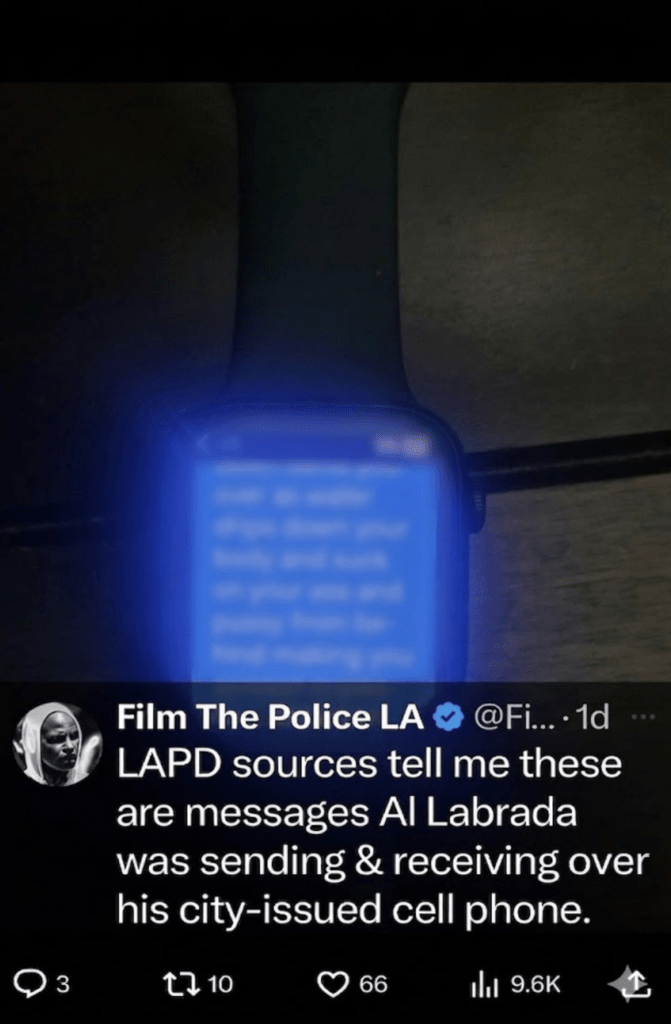

Silva has acknowledged entering my home after the breakup and accessing my Apple Watch, capturing screenshots that were later distributed publicly. These actions, alongside multiple retaliatory complaints, reveal a coordinated effort to harass and discredit. One of the six “anonymous” complaints was traced back to Silva herself when intake notes revealed she authored follow-up communications.

Despite these actions, Silva and her legal team continue to claim victimhood while facing potential allegations related to false statements, burglary, and the unauthorized release of private communications. The irony is compounded by attorneys citing anti-police activists while claiming to represent first responders.
The collapse of the “Silva Script” and the restoration of my peace officer certification by POST serve as a systemic indictment of Moore’s leadership. While he attempted to use me as a shield for his own failures, the underlying facts have prevailed.
Silva’s claims of fear are contradicted by her close relationships with senior command staff, including Deputy Chief Jose Perez and Deputy Chief Martin Baeza. Her six-month relationship with Villegas further underscores her proximity to power. These relationships often translated into professional advantages, including preferential assignments and intervention on behalf of friends and family.
Far from being intimidated, Silva leveraged her connections to navigate the department to her benefit, frequently bypassing standard protocols. Her actions reflect a pattern of using influence rather than avoiding it.
This network of individuals, Moore, Villegas, Baeza, Redruello, and Perez, created an environment where loyalty outweighed policy. When the events of 2023 unfolded, it was not the action of a single individual but a coordinated effort among aligned parties.
The rushed and flawed LAPD investigation further illustrates this breakdown. After the District Attorney declined to file charges and identified credibility concerns, efforts shifted toward alternative administrative actions, including a temporary restraining order supported by selective evidence and incomplete narratives.
A critical issue also emerged in the handling of witness testimony. A recorded statement was altered in the final Internal Affairs report, transforming a neutral comment into an allegation of coercion. No follow-up interviews were conducted despite discrepancies, raising serious concerns about investigative integrity.

Ultimately, despite being subjected to a weaponized disciplinary process, I have emerged with my record intact. A thirty-one-year career cannot be dismantled by coordinated narratives, administrative misconduct, or retaliatory tactics.