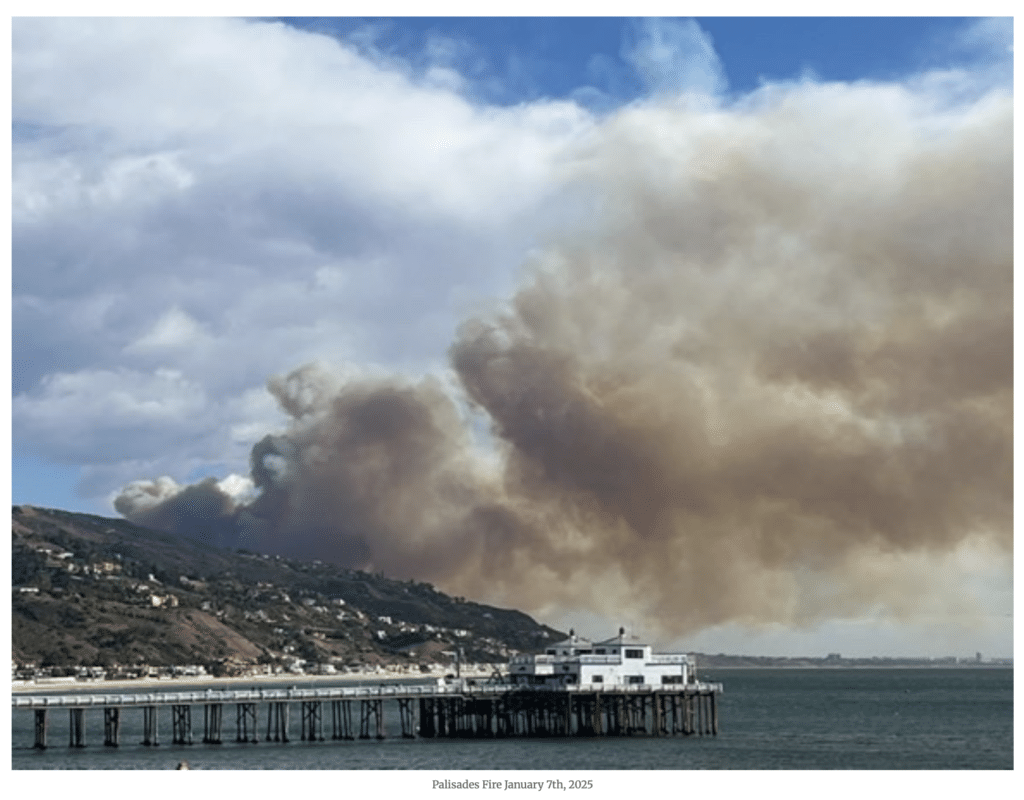
Survivors allege California State Parks interfered with the mop-up of the Lachman Fire and failed to monitor the burn scar. Six days after the original fire started, it came back to level the Palisades and Eastern Malibu.
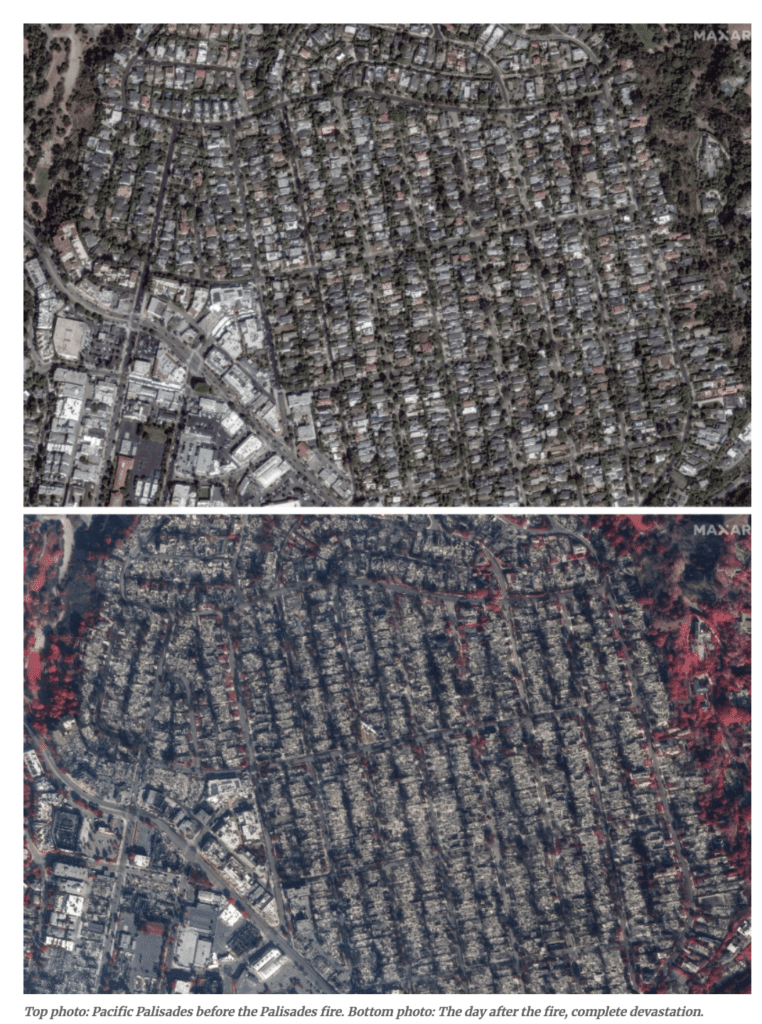
On Jan. 2, 2025, Los Angeles firefighters returned to the Lachman Fire burn scar to retrieve their hoses. A captain questioned whether it was too soon to take them out. Firefighter Scott Pike later testified that he found red-hot coals in the dirt and warned colleagues that the site needed more work. By early afternoon, an LAFD battalion chief had notified commanders that the hoses and equipment had been removed. Five days later, Santa Ana winds drove fire out of the same burn area. Twelve people died, and 6,837 structures were destroyed.
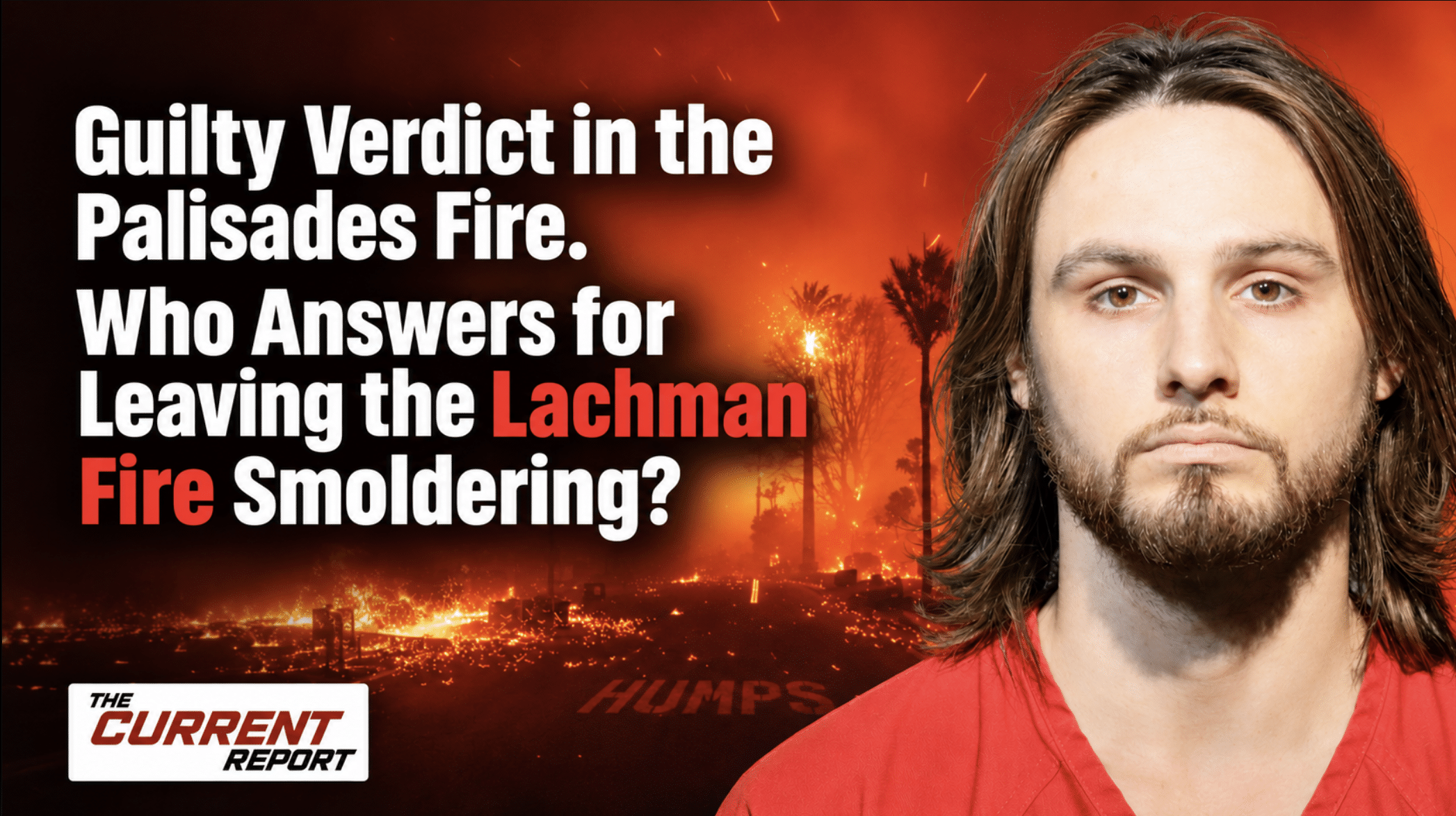
On Nov. 20, a federal jury found Jonathan Rinderknecht guilty of destruction of property by means of fire and arson affecting property used in interstate commerce. The verdict followed a June mistrial and a retrial in which prosecutors narrowed one count to the original Lachman Fire while the other still covered both fires. Prosecutors used cellphone records to place Rinderknecht about 30 feet from the growing fire, contradicting his account of where he first saw it. His defense challenged the government’s determination of the fire’s origin and raised fireworks as an alternative explanation. Judge Anne Hwang scheduled sentencing for March 17, 2027.
The government’s case was that the New Year’s Day fire kept burning underground until it resurfaced on Jan. 7. That makes the intervening days central to the public accountability story. Firefighters reported signs of heat after containment. A separate report of smoke came in the following day. The wind forecast gave officials another opportunity to check the hillside. The records show how those opportunities were handled, and where responsibility for monitoring the site becomes disputed.
LAFD pulled the hoses. Who was supposed to go back?
LAFD announced the Lachman Fire was contained within hours of the Jan. 1 response. Crews continued mop-up, the work of locating and extinguishing heat that can remain after a fire’s spread has been stopped. When crews returned Jan. 2, a captain questioned removing the hose and later saw a wisp of smoke, according to the independent review. Pike reported a hot spot and raised concerns about the control lines. Other firefighters reported finding no hot spots. The crews removed the hoses under LAFD command.
On Jan. 3, LAFD received another report of smoke. Personnel who responded said they saw none. The Fire Safety Research Institute found no evidence that LAFD went back to patrol the burn scar as critical fire weather approached. Its review also found that the department lacked comprehensive wildland mop-up procedures, leaving room for different judgments about when to pull hoses, when to patrol and what should trigger another inspection. LAFD accepted the review’s findings and said it had introduced post-containment procedures using drones and thermal imaging. The test of those changes is whether a report of residual heat now triggers a documented decision about who goes back and when.
The dispute over California State Parks
Part of the Lachman Fire burned inside Topanga State Park. Attorneys representing survivors allege a California State Parks official interfered with mop-up by restricting the use of a bulldozer and hand tools around native plants. They also allege the agency failed to adequately monitor the burn scar after containment. State Parks denies interfering with firefighting and says operational decisions belonged to LAFD. The independent review found that State Parks representatives asked for vegetation to be placed over an access route cut through unburned ground to prevent the public from using it and asked that a hose eventually be removed. Those requests are documented. Whether park personnel restricted work needed to extinguish the fire remains disputed.
There is a separate question about what happened once crews left. LAFD firefighters testified that a ranger told them State Parks would patrol the area. Reporting on the depositions also documents park employees visiting the site on Jan. 2. The accounts raise a basic question about the purpose of those visits. Had anyone accepted responsibility for checking the scar for residual heat, or were park employees there to assess damage to the land? A handoff, if one occurred, should be traceable through the assignment records, messages or testimony of the people involved.
CAL FIRE, the state firefighting agency, is separate from California State Parks. CAL FIRE’s own incident updates identify it as part of Unified Command for the Palisades Fire alongside L.A. city and county agencies after the Jan. 7 flare-up. The records reviewed for this article place the Jan. 2 hose removal under LAFD command and identify State Parks personnel in the dispute over restrictions and patrols. Those records establish CAL FIRE’s role in the later response. They leave any claim that CAL FIRE directed the original mop-up unsupported.
When the fire came back, hydrants lost pressure
The Santa Ynez Reservoir was empty for cover repairs on Jan. 7. As the fire spread and demand surged, some hydrants at higher elevations lost pressure. A state review concluded that draining the reservoir was necessary to protect drinking water and that the local pipes and pumps would have been overwhelmed even with a full reservoir. The review left open how much longer a full reservoir might have sustained pressure. For residents whose streets lost water while crews were still fighting to protect homes, the timing and location of those losses matter.
The reservoir returned to service in June 2025 after the initial repairs. LADWP later took it offline for a full cover replacement, and the city reported in late October 2026 that refilling had begun. The utility’s published schedule calls for a return to service by year’s end. The reservoir work addresses the cover. The operational question is how quickly firefighters can get supplemental water to neighborhoods when the distribution system loses pressure during another wind-driven fire.
The civil case is still pending
In March, The Current Report covered the ruling that allowed claims against LADWP to proceed past an early challenge to the legal sufficiency of the complaint. The utility’s chief executive, Janisse Quiñones, announced her resignation around the same time. No official statement linked her departure to the ruling. The consolidated litigation, Grigsby v. City of Los Angeles, includes claims against the city, LADWP, the state and other defendants. The litigation portal lists a revised master complaint dated Sept. 22 and an October filing addressing initial discovery deadlines. The plaintiffs still have to prove their claims.
Plaintiffs’ liaison counsel Trey Robertson said in August that the city and LADWP had agreed to mediation, with talks expected to begin in October. No settlement terms were publicly confirmed in the sources reviewed for this article. In Malibu, where The Current Report previously covered residents’ frustrations with the rebuilding process and the removal of rebuild ambassador Abe Roy, the city announced its 100th rebuild permit and its first certificate of occupancy in September. Big Rock residents Denise and George Toberman received that certificate nearly 11 months after getting their permit. That is one family’s timeline from permission to rebuild to permission to come home.
The Palisades Fire destroyed 720 structures within Malibu city limits. By Sept. 14, 2026, the city had issued its 100th permit to begin reconstruction and its first certificate of occupancy for a rebuilt home. As of Nov. 4, nearly 22 months after the fire, the city manager reported 105 rebuild construction permits and one completed home. That works out to 14.6 permits for every 100 structures destroyed.
On the first anniversary of the Palisades Fire, survivors gathered under the words “They Let Us Burn.” A federal jury has since convicted the man who started the Lachman Fire, and an independent review has documented the warnings that followed. The city and state still owe survivors a public accounting of who authorized the hose removal, whether anyone took responsibility for monitoring the burn scar, and why the record shows no follow-up patrol as dangerous winds approached.