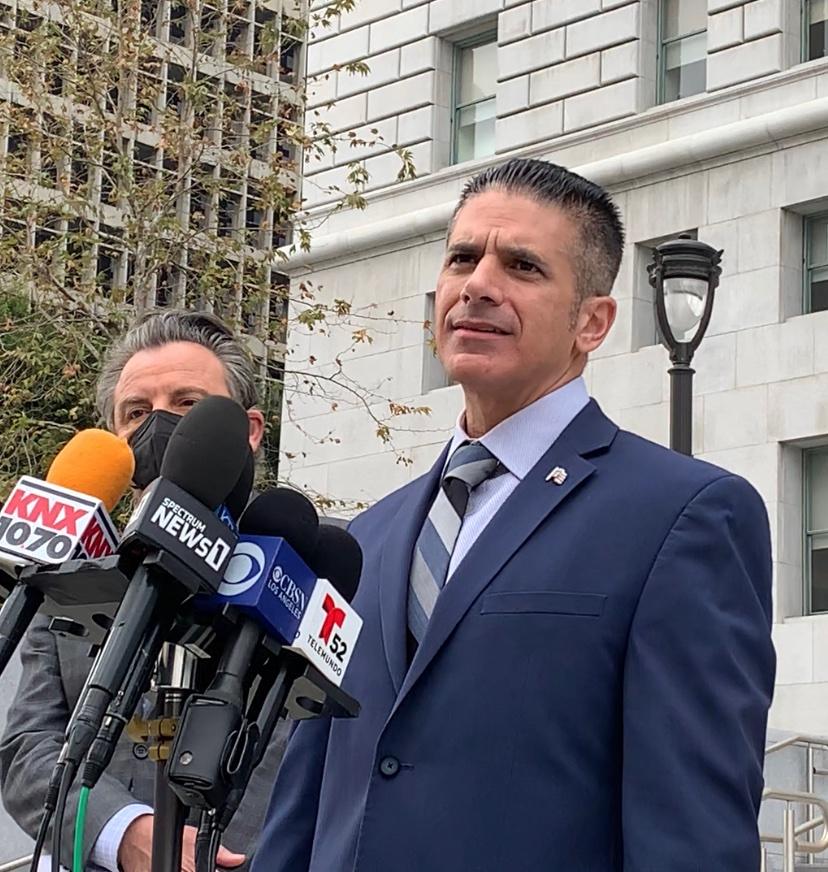
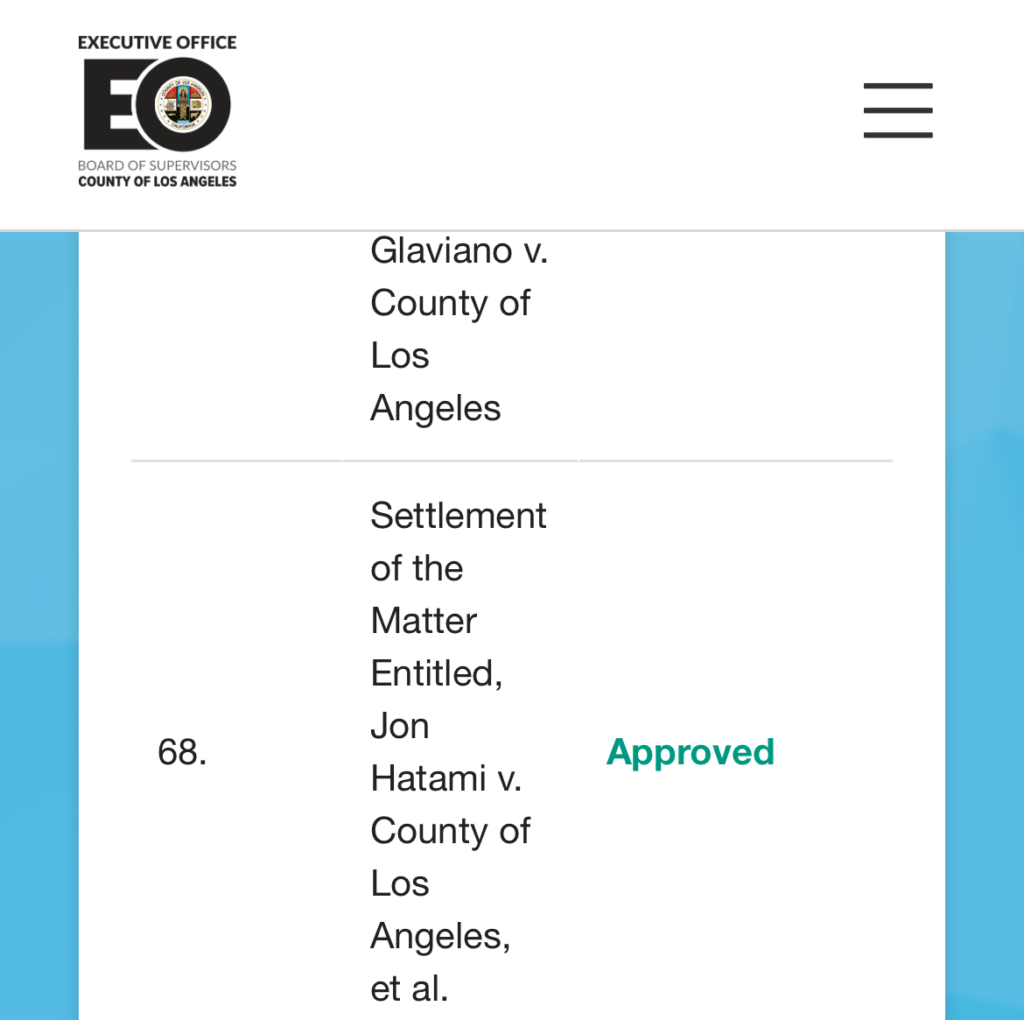
On March 3, 2026, the Los Angeles County Board of Supervisors quietly approved a $1.5 million settlement in the case Jonathan Hatami v. County of Los Angeles, et al. The decision appeared as Agenda Item 68 and authorized payment from the Los Angeles County District Attorney’s Office budget. At first glance, it reads like another routine government settlement moving through the bureaucratic machinery of county government. In reality, the vote represents the closing chapter of one of the most turbulent and controversial eras inside the Los Angeles District Attorney’s Office.
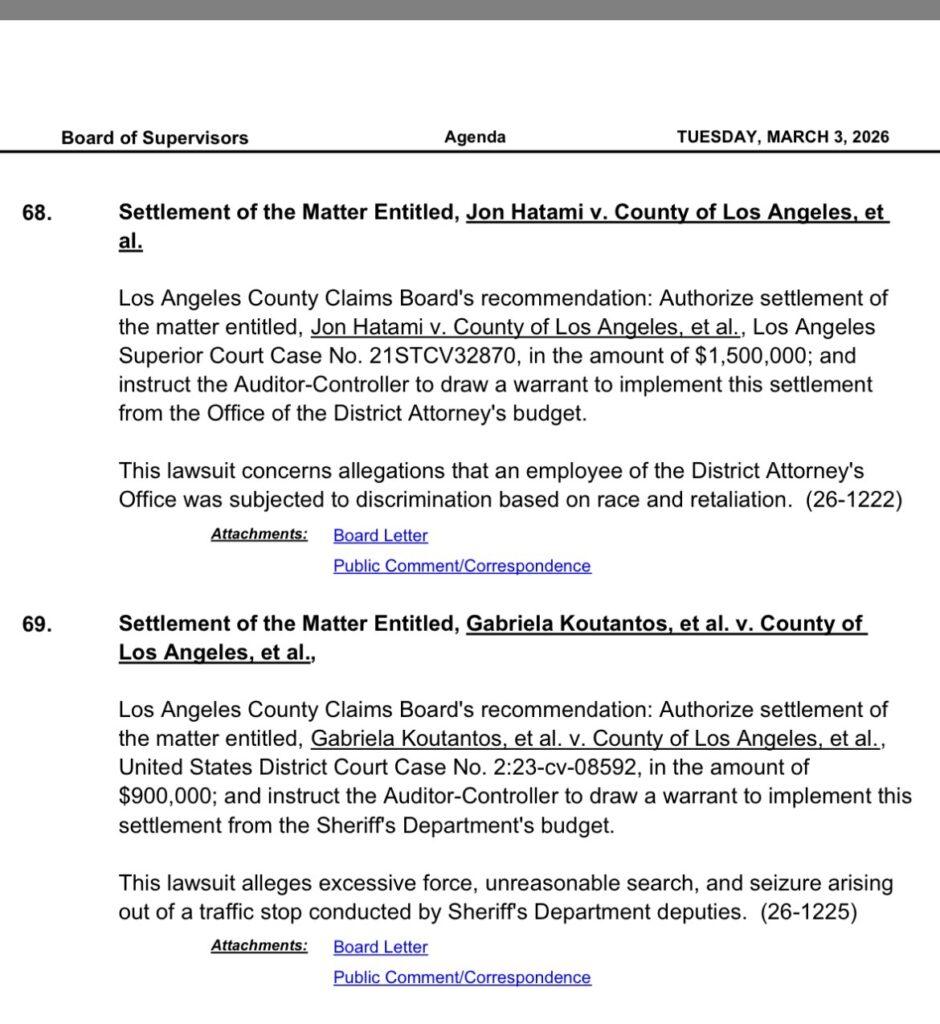
The lawsuit was filed by veteran prosecutor Jonathan Hatami, widely known for his role in prosecuting the torture and murder of Gabriel Fernandez, and alleged discrimination and retaliation during the tenure of former Los Angeles District Attorney George Gascón. The case, filed in Los Angeles Superior Court stemmed from sweeping policy directives issued shortly after Gascón took office in 2020. Those directives fundamentally changed how prosecutors were allowed to charge criminal cases in Los Angeles County and triggered a wave of internal resistance from career prosecutors who believed the policies undermined justice for victims.
Among the most controversial directives was an order requiring prosecutors to dismiss sentencing enhancements, strikes, and special circumstance allegations in many criminal cases. Enhancements in California law often determine whether defendants convicted of violent crimes face significantly longer prison sentences. Critics inside the District Attorney’s Office argued that eliminating them across the board stripped prosecutors of discretion and forced attorneys to abandon legally supported charges regardless of the facts of individual cases.
Hatami became one of the first prosecutors inside the office to refuse compliance. He publicly opposed the directives and described being ordered to read scripted statements dismissing allegations, strikes, enhancements, and special circumstances, even in cases involving murdered children where prosecutors believed the evidence clearly supported those charges. For Hatami and many others, the issue was not politics but the integrity of the justice system and the obligation prosecutors owe to victims and their families.
The response from the District Attorney’s leadership at the time was blunt. During the controversy, Max Szabo, speaking on behalf of Gascón’s office, issued a statement that was broadcast widely across Los Angeles media outlets. In that statement Szabo said, “It seems Mr. Hatami has made a profound discovery rather late in his career. Like any other workplace, if you don’t do what your boss tells you to do you may be disciplined.” The comment framed the conflict as a routine workplace dispute rather than a fundamental disagreement about the ethical responsibilities of prosecutors.
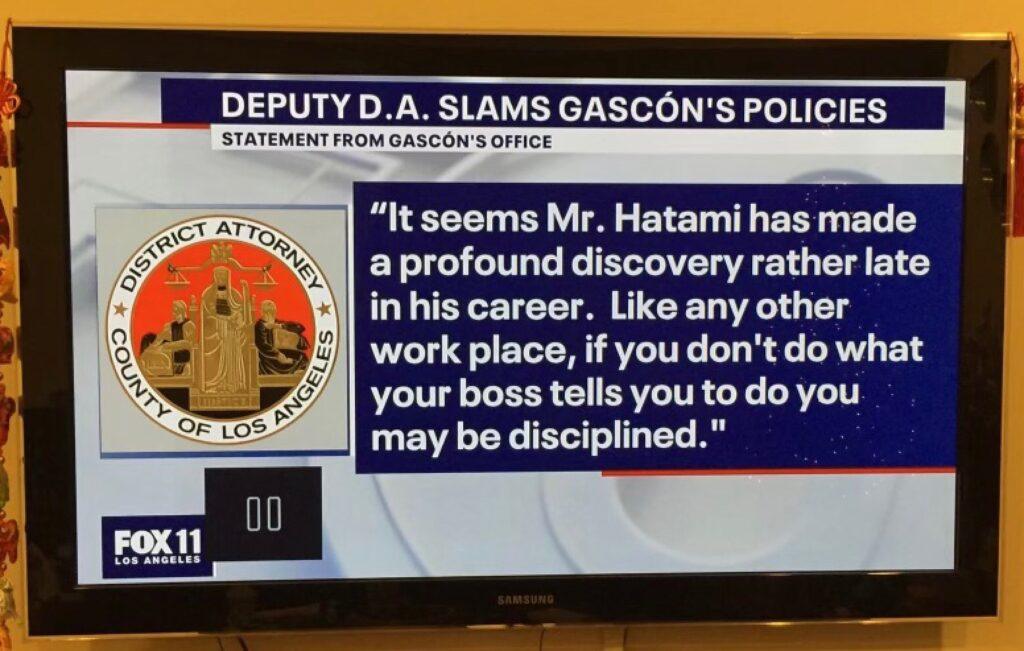
But criminal prosecution is not a typical workplace environment. Prosecutors do not simply carry out instructions from supervisors the way employees might in other government departments. Their duty runs to the Constitution, the law, and the victims they represent. When prosecutors believe they are being ordered to dismiss legally supported allegations in serious criminal cases, the stakes extend far beyond workplace discipline.
The lawsuit that followed alleged that Hatami experienced discrimination and retaliation for opposing those directives. While the settlement approved this week does not constitute an admission of wrongdoing, a standard provision in government settlements, the $1.5 million payment reflects a decision by county attorneys that continuing the litigation posed substantial legal risk. The cost of resolving the case will ultimately be paid by taxpayers through the District Attorney’s Office budget.
What happened inside the District Attorney’s Office during the early years of the Gascón administration did not unfold quietly. The conflict quickly expanded beyond a single lawsuit. More than thirty lawsuits were ultimately filed by prosecutors and employees within the office, many alleging retaliation, hostile workplace conditions, or unlawful directives tied to the sweeping policy changes implemented by Gascón’s administration. The volume of litigation underscored just how deeply divided the office had become during that period.
The controversy also triggered public backlash from prosecutors, law enforcement officials, and victims’ rights advocates across California. Multiple recall efforts were launched against Gascón. Career prosecutors began speaking publicly about their concerns, an extraordinary development in a profession that traditionally avoids political disputes. Families of victims questioned whether the justice system was abandoning them at the moment they needed it most.
Yet the conflict revealed something else that government reports and legal filings rarely capture: the overwhelming public support that emerged for Hatami. As the controversy unfolded, Hatami began receiving hundreds of handwritten letters from members of the public expressing support for his refusal to follow the directives. The letters arrived from across Los Angeles County and beyond, many addressed simply to “Jon Hatami, Deputy District Attorney, 211 West Temple Street.”

Inside the envelopes were messages from crime victims, parents, community members, and ordinary citizens who believed prosecutors should continue pursuing the full measure of justice allowed under California law. The stack of envelopes grew into a visible symbol of the public attention the conflict had drawn. For many supporters, Hatami represented prosecutors who were willing to stand up for victims even when doing so put their own careers at risk.
The broader political context surrounding Gascón’s policies cannot be ignored. His approach to prosecution was part of a nationwide criminal justice reform movement supported by prominent political leaders and advocacy organizations. Among those who publicly backed reform prosecutors and their agendas were Gavin Newsom and former Vice President Kamala Harris, along with national networks promoting similar policy changes in major cities.
Even as controversy mounted inside Los Angeles and recall efforts gained traction, many of those political supporters remained silent about the growing conflict inside the District Attorney’s Office and the concerns raised by victims’ families and career prosecutors.
Years later, the political landscape has shifted. Gascón is no longer district attorney. Many of the policies that defined his tenure have been reconsidered or reversed. But the consequences of that era continue to surface through lawsuits, settlements, and the lingering erosion of public trust in the criminal justice system.
The settlement approved by the Board of Supervisors this week closes one of those legal battles. It represents a financial acknowledgment of the conflict that erupted when a prosecutor refused to follow directives he believed violated his duty to victims and the law.
Hatami remains a prosecutor.
Gascón was replaced as district attorney.
And the statement once delivered to dismiss his concerns now reads very differently in light of the outcome.
The prosecutor who refused to read the script forced Los Angeles County to write a $1.5 million check.
Sometimes justice arrives through a courtroom verdict. Sometimes it appears quietly on a county agenda. But when the dust finally settles, the conclusion becomes difficult to deny.
And karma, as it often does, eventually showed up.