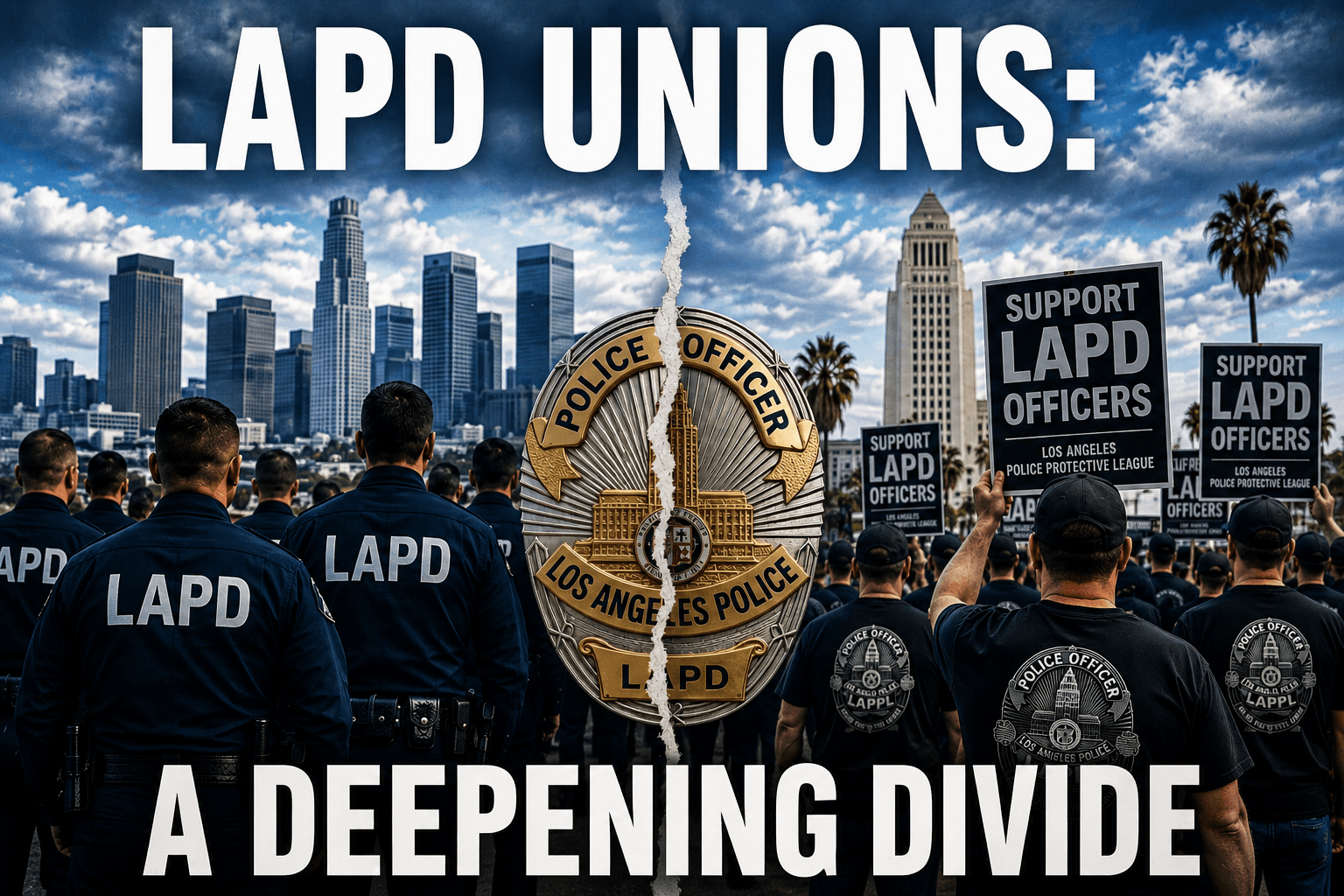
The internal rift within the Los Angeles Police Department has reached a fever pitch, signaling a fundamental failure of leadership that transcends simple policy disputes. On one side, the Los Angeles Police Protective League (LAPPL) operates with directors who are full-time and vocal, acting as a fierce shield for the rank-and-file. On the other, the Command Officers Association (COA)—representing Captains and above—has become an organization focused more on management optics and executive comfort than traditional labor advocacy. This “wedge” is driven by a COA leadership that seems fundamentally incapable of standing up to City Hall or even supporting its own membership, choosing instead to “ride out” terms for executive status rather than providing the bold advocacy required to protect its members.
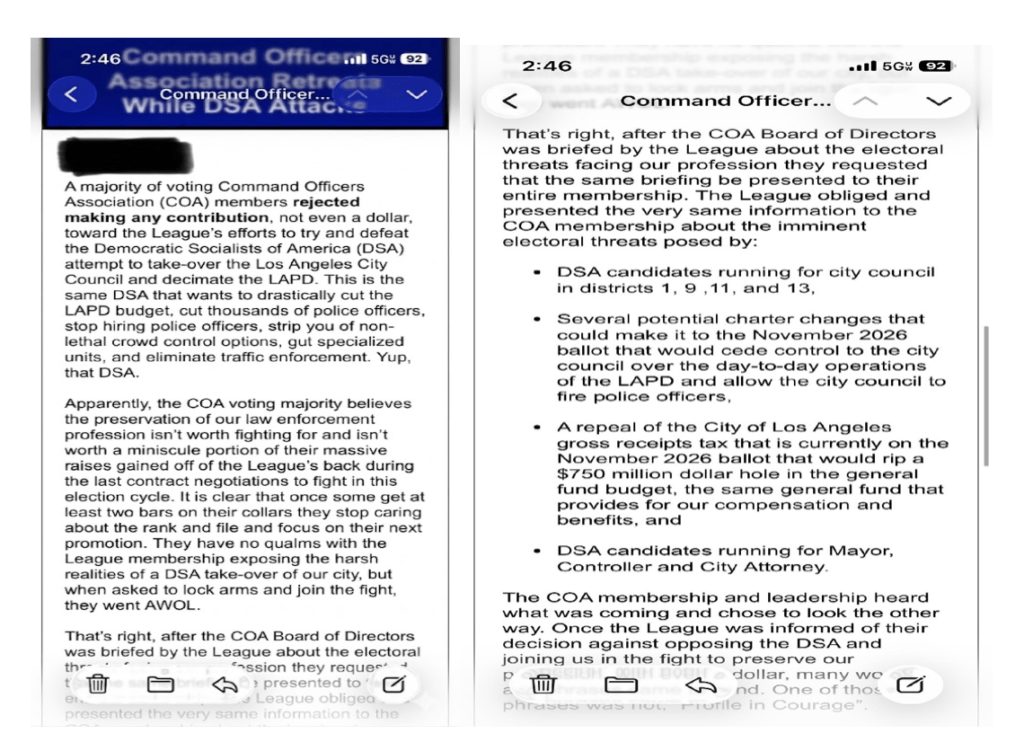
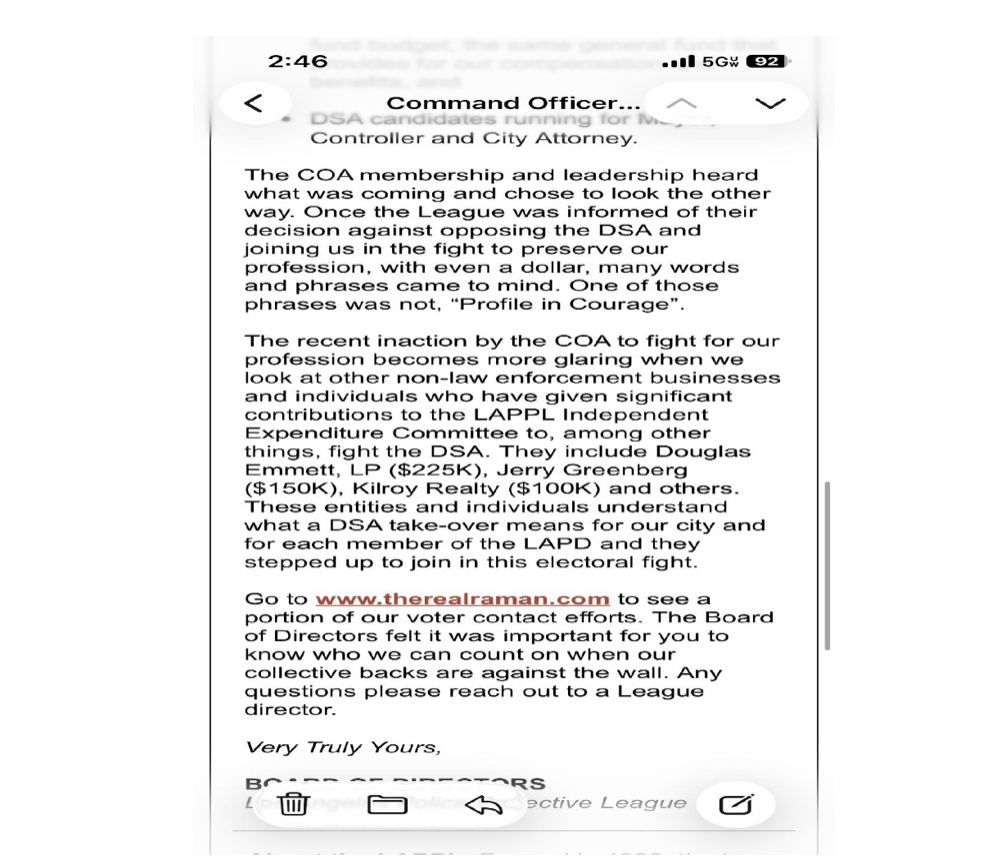
The friction surrounding the LAPPL’s recent political funding proposal perfectly encapsulates this dysfunctional relationship. The LAPPL, which holds millions in its coffers compared to the COA’s modest reserves of less than $1M, demanded a massive financial contribution from the COA for its Political Action Committee (PAC) while offering nothing in return.
Under this lopsided proposal, the COA would receive zero public recognition, zero say in candidate selection, and was allegedly explicitly barred from participating in the PAC itself. These dynamics highlight a parasitic trend where the COA routinely rides the coattails of the LAPPL, securing raises and benefits only after the rank-and-file union does the “heavy lifting.”
The irony is that the LAPPL’s PAC strategy has often been a sinking ship. Historically, the League has spent millions of member dues on “losing” candidates, including high-profile failed efforts in mayoral and District Attorney races. Despite these losses, the League pivoted to support Mayor Karen Bass in a marriage of convenience. While this resulted in a lucrative financial package for the LAPD, the “win” has come at a staggering cost. The city is currently grappling with a $1 billion structural deficit, and the CAO has warned that overspending on salaries is outpacing revenue.
Despite the high pay, the department remains in a recruitment crisis; although the City Council recently approved $2.7 million to fund additional recruits. The department is still projected to drop to roughly 8,555 officers by June 30, 2026, the lowest deployment in roughly 30 years.
The LAPPL has established itself as a strong, uncompromising voice for its members, often becoming a vocal presence at Police Headquarters. Their directors are known for challenging disciplinary decisions and openly addressing leadership failures of patrol and area captains whose actions have destroyed divisional morale. This aggressive oversight is a hallmark of the League’s commitment, yet it is a quality glaringly absent from the COA.
A critical component of this divide is the disparity in legal representation and defense resources. The LAPPL maintains an extensive, high-powered network of specialized law firms, panel attorneys, and veteran advocates who are available 24/7. These strong firms are notorious for their “gloves-off” approach, often clashing with Internal Affairs to ensure the Public Safety Officers Procedural Bill of Rights (POBR) is strictly enforced. Their directors are known for challenging disciplinary decisions and openly addressing leadership failures of patrol and area captains whose actions have destroyed divisional morale.
In stark contrast, the COA relies on a single general counsel law firm for member defense; a firm that critics argue is more concerned with social media engagement, “likes,” and curated photo opportunities with the Chief of Police than with the aggressive, technical defense of its clients. While the rank-and-file benefit from attorneys who relish putting “smug investigators in their place,” COA members often find themselves represented by counsel that prioritizes “wellness” optics—such as the high-profile promotion of comfort dogs and departmental “resilience” programs, over the grit required to fight the department’s “big blue bus.” This lack of legal “spine” leaves command officers vulnerable, forced to rely on a firm that appears to value its relationship with City Hall and the Chief’s office over its duty to its dues-paying members. Ultimately, COA members targeted for political assassination are looked upon by most COA members as an opening for promotion waiting to happen. Most COA members will sell their first born for an opportunity to safely maneuver the hard life. Avoiding critical decision assignments, making friends instead of making decisions and ensuring self-perseverance.
However, this strong-willed LAPPL defense carries significant downfalls when the League becomes a megaphone for members who abuse the profession as a big pay day. While the LAPPL is vocal about challenging leadership, critics point out instances where the union serves as a shield for those who are “desk riding,” abusing sick leave, or playing the victim. This support for underperforming employees, who often do the bare minimum while their peers carry the workload—undermines the very credibility the League seeks to build.
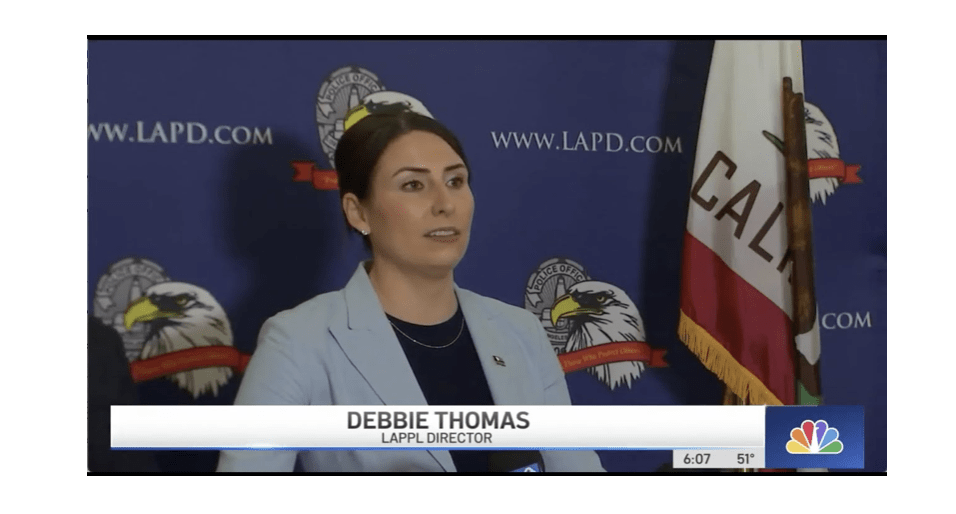
The case of LAPPL Director Debbie Thomas serves as a focal point for critics who argue that the League’s aggressive advocacy often crosses the line into personal entitlement and cronyism. Her very public comments regarding the Newton Gang Unit selection process have been cited as a primary example of how union power can be weaponized to undermine departmental standards and the chain of command.
The controversy stemmed from a selection process for the Newton Area gang unit, a coveted and critical operations assignment. According to reports from departmental insiders and accounts of comments during a unity tour visit, Thomas became highly combative when a close friend was not selected for a position in the unit.
Thomas reportedly confronted command staff directly, bypassed the standard grievance procedures, and allegedly attempted to “strong-arm” the decision-makers into reversing their selection. When her efforts to install her associate failed, Thomas was reported to be irate, openly disparaging the command staff involved. She allegedly made derogatory comments, stating that the leadership only “picks losers” for the gang units.
By framing the selection of qualified officers as a “failure” simply because her preferred candidate was excluded, critics argue she signaled that personal loyalty to a League Director should carry more weight than operational merit.
This incident highlights a deeper systemic issue: the Accountability Gap. When a union director feels empowered to berate a Captain or Commander over an administrative selection, it effectively neuters the authority of that command officer.
For the officers who were selected for the Newton unit, Thomas’s comments served as a public insult, suggesting they were only chosen because they were “losers.” This creates immediate friction within the unit before they even hit the street.
On the other side of the “wedge,” the COA’s silence during this incident was deafening. While a League Director was openly attacking the professional integrity of a Captain, the COA failed to issue a rebuttal or support the command staff member who made the merit-based decision. Recently the LAPPL has taken very unusual steps to post redacted complaints, naming captains they willfully publicly degrade and others they often demean within the articles of the LAPPL member newspaper, The Blue Line.
Critics suggest that this level of boldness from directors like Thomas was facilitated by the leadership style of former Chief Michel Moore. By allowing the League to exert significant influence over personnel moves in exchange for political support during his own periods of instability, Moore essentially gave directors a “green light” to bypass traditional protocols.
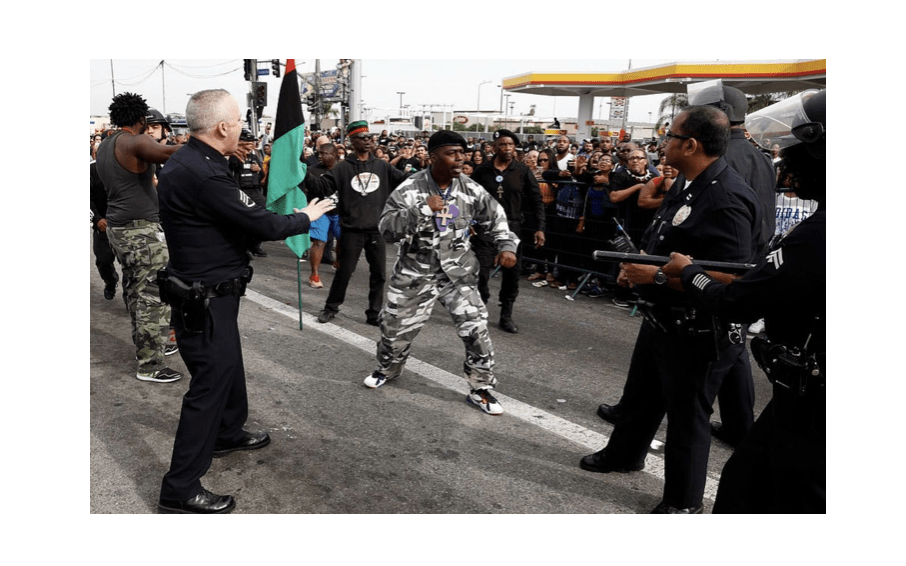
One example of the LAPPL intervening to address leadership incompetence involves the tenure of former Southwest Patrol Captain John Shah. Reports surfaced with Shah openly criticizing patrol officers and supervisors during roll calls, creating a toxic environment. During one roll call, officers pointedly asked, “So you are saying officers are lazy and supervisors suck?” The session devolved into Shah attempting to back-pedal, while supervisors responded by wearing shirts that read “Southwest Sergeants Suck.” The LAPPL was aggressive in challenging this incompetent leadership, whereas the COA mostly remains silent, failing to address the degradation of command standards.
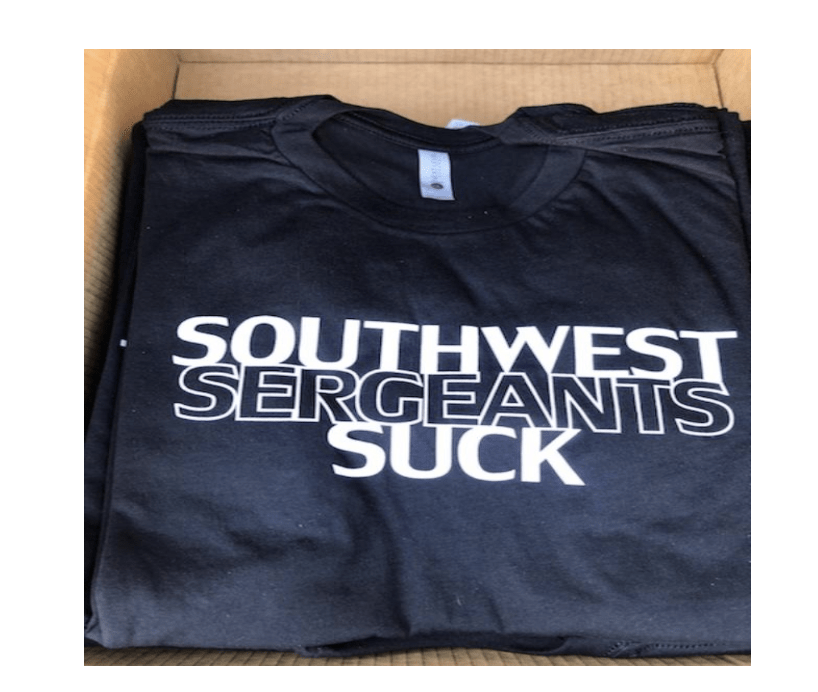
Shirts created by a Southwest Sergerant to openly mock the incompetence of Captain Shah is the same individual who failed in 77th and Southwest area as a Patrol Captain. On both occasions removed due to incompetency. Including the failed response to the Nipsey Hustle surge at the vigil as well as crossing skirmish lines past officers and getting attacked by protestors. Yet Moore moved him into Internal Affairs where he thrived not only in mumbling his way through IA briefings but lying on various internal affairs investigations to appease Moore. As Moore was chased out of LAPD headquarters he rewarded Shah with a Commander promotion. Shah is the same individual who continues to fail in his role as a Bureau Commander in Valley Bureau.
Similarly, we have seen the League become voice for members with countless documented indiscretions. The League’s credibility is often strained when it supports those playing the “victim” to serve larger political agendas. We saw this with the support of Dawn Silva, who appeared to orchestrate a script supported by the LAPPL during a 2023 conference.
In a likely scenario, the League supported Silva, an LAPPL member with a history of significant extramarital affairs with many supervisors as well as close ties to command leadership to save support for a “rainy day” by the then-embattled Chief Michel Moore. Moore, facing a forced removal and lacking support from the Police Commission and the Mayor, utilized a “lifeline”. By throwing anyone who challenged him or added to his insecurity under the “big blue LAPD bus.” Moore would do anything to remove those who he saw as a threat with LAPPL supporting this to later have leverage for other needs. Yet the COA minus one COA board member lay silent when Moore terrorized command staff that he saw as a threat.
After being served with a termination of a domestic partnership and seeing her early retirement plans wither away, Silva orchestrated a politically supported narrative claiming to be scared yet not mentioning her sketchy past. Before calling the Ontario PD or her own department, Silva contacted a retired sergeant, who reached out to LAPPL Attorney Jody Gonda, who then alerted the LAPPL Directors during their annual conference.
This private network ensured the narrative was synchronized before police were ever notified. Despite claiming a fear of being tracked, Silva waited from September 3rd to September 7th to report the alleged incident, changing her story multiple times.
Even the District Attorney’s memo questioned why a trained officer would wait six days to turn over evidence if she truly feared for her safety—critical points that Internal Affairs notably failed to investigate. Later false allegations were further dismissed to conceal the false statements by Silva, Bell, and Shah. The Current Report, “From cover up to target, The 2018 secrets behind Moore’s playbook”
A similar unveiling occurred with Sergeant Jessica Bell. Backed by an LAPPL-paid attorney with a history of mental and emotional failures, Bell cast herself as a victim of departmental “downfall”. Yet conveniently omitted that her decline was tied to an extramarital affair with her partner, Nicholas Giordano. Her husband discovered explicit sexual messages on her city-issued phone, a detail her defense ignored in favor of manufactured victimization. When the League funds defenses for such clear-cut personal misconduct, it alienates hard-working officers who expect their dues to protect integrity, not cover up scandals. The Current Report, “Inside the LA Times, Air tag story, Omitted facts compromised sources and manufactured victims”.
The Los Angeles Police Protective League (LAPPL) has long been the most formidable political force in the city, operating as a high-octane engine for both advocacy and intimidation. By contrast, the Command Officers Association (COA) acts as a silent passenger—benefiting from the turbulence the League creates while rarely contributing to the “heavy lifting” required to secure the department’s financial future.
The LAPPL’s Political Action Committee (PAC) is a war chest built on millions in member dues, designed to project power in City Hall and the State Capitol. However, its history is a study in high-risk gambling with a mixed record of returns.
In the 2022 mayoral primary, the LAPPL was a primary financier of the effort to elect Rick Caruso, a candidate whose campaign shattered records with over $100 million in total spending. The League’s bet on Caruso was a clear preference for a “law and order” moderate. When Karen Bass won, the League executed a pragmatic, expensive pivot, securing a “marriage of convenience” to ensure they weren’t locked out of City Hall.
The League has frequently poured millions into losing battles. They spent over $1.5 million in a failed bid to defeat Eric Garcetti in 2013 and invested more than $1 million in the unsuccessful effort to prevent George Gascón from becoming District Attorney in 2020.
Between direct candidate contributions and Independent Expenditures (IEs), the League’s political spending often exceeds $5 million per cycle. While these expenditures often fail to seat their preferred candidates, they serve as a warning to those in office: opposing the League comes with a multi-million-dollar price tag in the next election.
The true power of the LAPPL is seen at the bargaining table. Because they represent the nearly 9,000 rank-and-file officers who are essential to the city’s daily survival, they possess a leverage the COA simply does not have. The 2023 contract hailed by some as a recruitment tool and decried by others as a fiscal disaster secured a $1 billion package over four years. This included an immediate 11% raise for recruits and massive retention bonuses.
Historically, the COA waits for the LAPPL to finalize these “lucrative contracts.” Once the rank-and-file secure a 4% or 5% annual raise, the COA leadership approaches the city and argues for “salary parity.”
By letting the LAPPL take the public heat for “bankrupting the city” or “bullying the mayor,” the COA secures nearly identical percentage raises for its Captains and Commanders without ever having to issue a press release or face a hostile City Council.
While the LAPPL is often criticized for its aggressive tactics, its willingness to openly challenge leadership failures is what earns the loyalty of the rank-and-file. The incident involving Captain John Shah in the Southwest Area is just one of many case studies. I was often contacted by Directors to try and address personnel issues, leadership challenges and discipline issues. I always praised the Directors for bringing issues to the table and being open about challenges sometimes we lose sight of as leaders. Yet most COA board members rarely address leadership failures, address disparities in treatment and most certainly rarely speak up against elected ideocracies.
As of May 2026, the city is staring at a massive budget deficit, partly fueled by the very contracts the LAPPL secured and the COA “rode.” With recruitment still failing to meet targets despite the high pay, the department finds itself in a precarious position. The LAPPL continues to fight for its members in the trenches of City Hall, while the COA remains a silent partner in a department that is increasingly divided by a leadership more concerned with its own optics than the survival of the force.
Beyond politics, a toxic culture of intimidation has poisoned the professional environment, exemplified by the legal challenges the LAPPL mounted against command staff like Deputy Chief Marc Reina and Commander Lillian Carranza. The League’s lawsuit which was dismissed in March 2025, was built on the foundation of alleged “unlawful computer data access” or “hacking.” The court sided with Reina and Carranza, finding the League failed to prove any fraud or data breach and had no ownership of the survey data in question. The process was defined by petty, “childish” videos and targeted social media attacks designed to mock their authority. A costly $170,000 attack not voted in by the members as an expense but instead appeared to be a personal attack on individuals who spoke out or had a reputation for holding lazy employes accountable. Either way it appeared very personal and not anything that could not have been handled by a phone call.
The hypocrisy of these allegations is glaring while the LAPPL aggressively sued command staff for logging into a system using their own names, the League continues to spam mass emails and surveys to retired and promoted former members. These antiquated communications persist even after individuals have transitioned to the COA. Furthermore, recent LAPPL “Captain surveys” have been met with derision; they suffer from low participation and carry little clout, as they fail to distinguish between the unique challenges of critical operations versus administrative roles. This highlights a union more interested in public shaming, optics and harassment than professional integrity. Unfortunately, current Chief McDonnel gave some clout to the recent survey when he acknowledged the top-rated captain in a photo op. Tragically, many of the higher-level command staff remain so cozy with LAPPL directors such as Assistant Chief Choi who has been known to dismiss personnel complaints against LAPPL Directors, by “With drawing allegations by the Chief of Police”. Political credit to save face later for a rainy day?
The influence of LAPD unions has evolved beyond labor advocacy into a mechanism of leverage and quiet deal-making that bypasses the department’s formal hierarchy. This culture of “survive and thrive” has created a secondary power structure where loyalty to union-aligned leadership often supersedes the department’s manual. For those within the “inner circle,” friendships and strategic alliances have reportedly been used to secure favorable assignments and protect family members, effectively creating a tiered system of justice that rewards personal loyalty over professional merit.
Under the tenure of former Moore, the Professional Standards Bureau (PSB)—specifically Internal Affairs—became a focal point of these allegations. As a key figure overseeing these investigations, Assistant Chief Michael Rimkunas has faced scrutiny for what critics describe as the strategic “weaponization” of the disciplinary process. Insiders allege that investigations were frequently tailored to target individuals who did not align with the Chief’s or the union’s broader objectives. This “Moore Playbook” allegedly involved expediting cases against dissenters, often while overlooking the Public Safety Officers Procedural Bill of Rights (POBR), while simultaneously allowing critical investigations into favored captains or allies to be dismissed or buried.
Beyond administrative manipulation, Rimkunas has been accused of actively creating hostile work environments for leaders under his command to “chase them out” of coveted positions. This strategy effectively clears the way for the placement of loyalist friends in key command roles. These appointees are often described as “puppet” leaders—individuals who may lack tactical soundness or leadership acumen but offer absolute reliability. Remember Rimkunas loyalty was created when Moore helped bury a drunken domestic violence that occurred in Santa Clarita. Moore’s actions in nothing to see here created a loyalty to do as I say, not do the right thing.
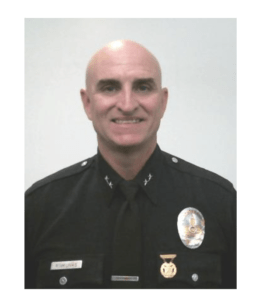
The placement of Shah under Rimkunas’s command is frequently cited as a prime example of this patronage. Critics argue that Shah functioned as an “enforcer” and a “lying voice” to handle the department’s “dirty work,” providing Rimkunas with a layer of plausible deniability.
The subsequent promotion of Shah to Commander is seen not as a reward for merit, but as a “thank you” for serving as a reliable shield, further insulating top-tier leadership from the consequences of their actions.
The result of this selective enforcement and patronage is a mounting toll of litigation that continues to drain Los Angeles city coffers. Daily reports of retaliation and hostile work environments suggest a systemic failure to address complaints against high ranking “protected” officers. By ignoring internal warnings and prioritizing the protection of a select few, the department’s leadership has left a trail of high-figure payouts and fractured morale. These failures represent a fundamental betrayal of the rank-and-file, who are left to navigate a department where personal allegiance to a “reliable puppet” is the only true path to survival.
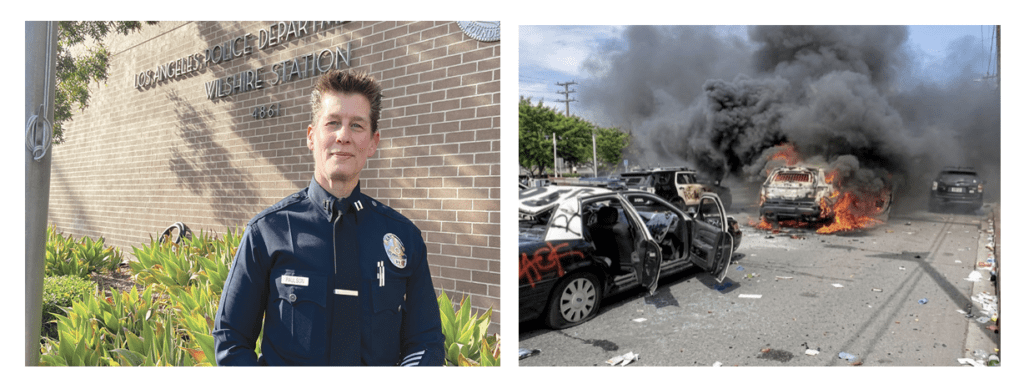
The COA offers no refuge. Instead of acting as a voice for its members, the association is dominated by a “self-preservation” mindset. Critics argue that the COA rarely checks on the well-being of its members and leaves them to fend for themselves against disciplinary actions. This lack of spine was exemplified by past president Shannon Paulson, whose failed response during the 2020 unrest at The Grove led to widespread damage; rather than taking responsibility she praised her response and when criticized threatened to use COA funds to hire outside counsel to silence public criticism about her handling of the failed response.
Those within the COA board who are outspoken are often unsupported and shunned aside for fear of being associated with controversy. The COA’s silence during such crises including the 2020 tactical failures at The Grove under Shannon Paulson proves that their priority is the preservation of the “command class” and optics rather than the health of the department. The COA past president willing to support COA supporting funding to defend reputation while unwilling to fund anti police elected shows a clear pattern of “self-preservation”.
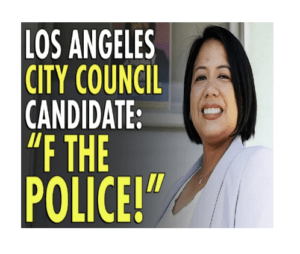
This divide is particularly dangerous given the rise of anti-police, “socialist” faction within City Hall. A growing bloc of City Council members and the Controller’s office, led by figures like Kenneth Mejia, have moved beyond standard oversight into the realm of dangerous propaganda. These elected officials frequently utilize their platforms to propagate narratives that prioritize decriminalization and the stripping of police resources. The Controller’s office has weaponized city data to push a narrative that characterizes law enforcement as an inherent threat, creating a recruitment vacuum where potential candidates see a leadership more interested in “likes” than in supporting the men and women who hold the line.
Now more than ever, the rank-and-file and command staff must find a way to work together. The department is being picked apart by a City Hall looking for “cost efficiencies” and state legislature that lacks support for the badge. Until the COA stops acting as a self-serving shield for status-seekers and the LAPPL returns to professional representation over personal vendettas, the LAPD will remain a house divided. The membership deserves leaders who will stand up to the dangerous propaganda at City Hall and prioritize the collective safety and integrity of the department.