

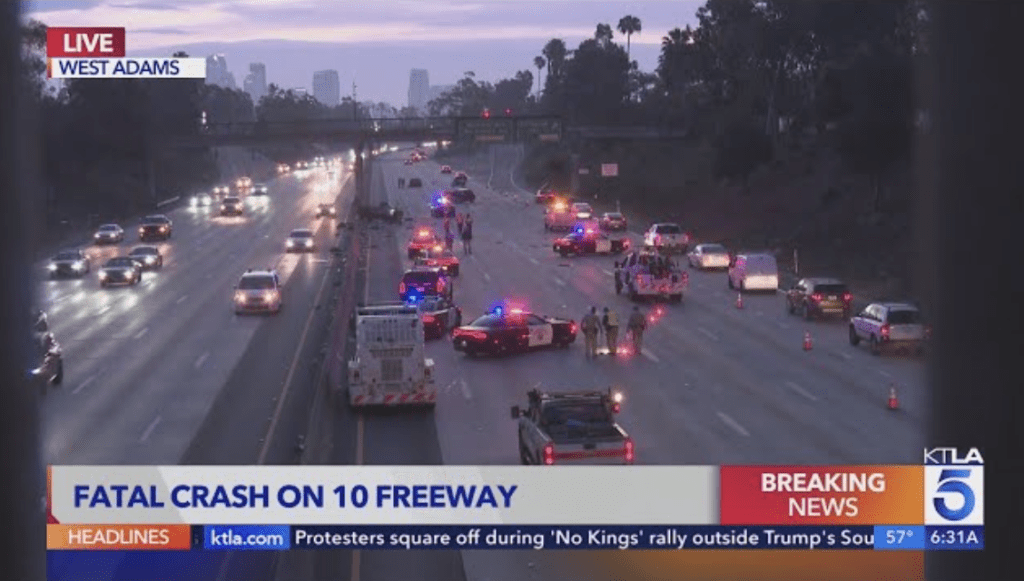
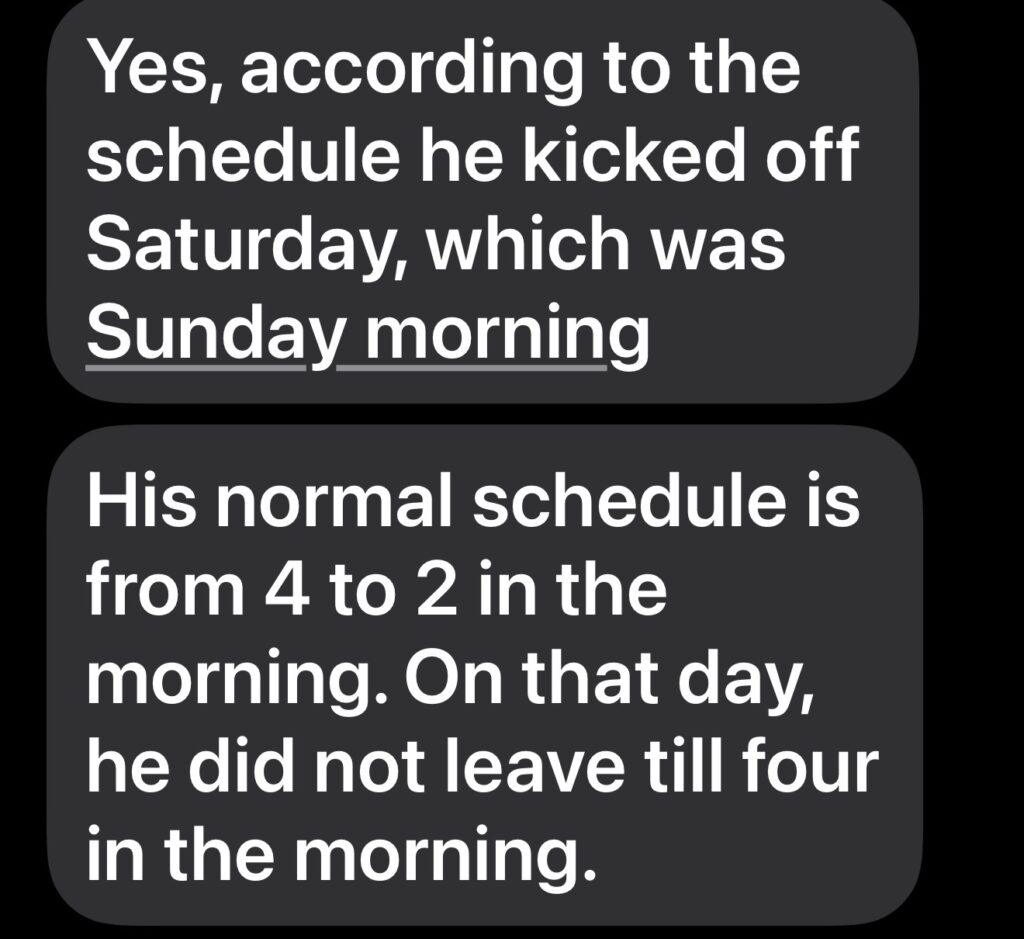
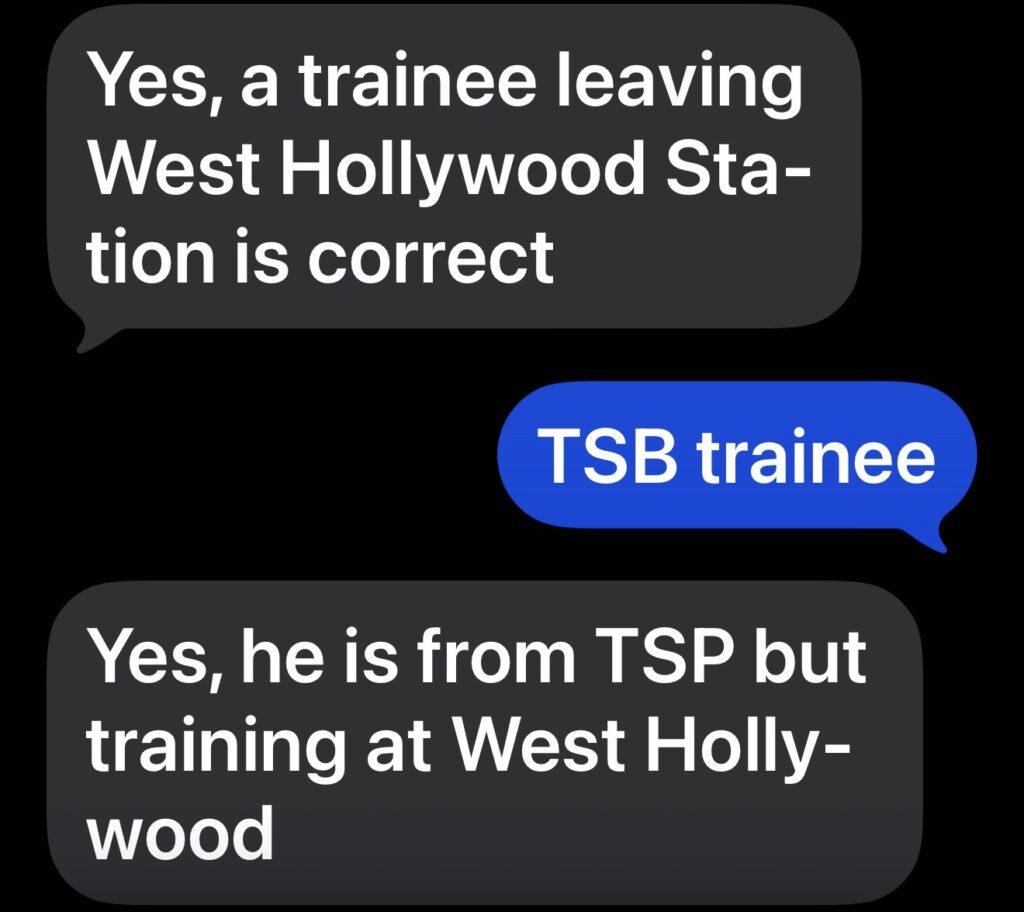
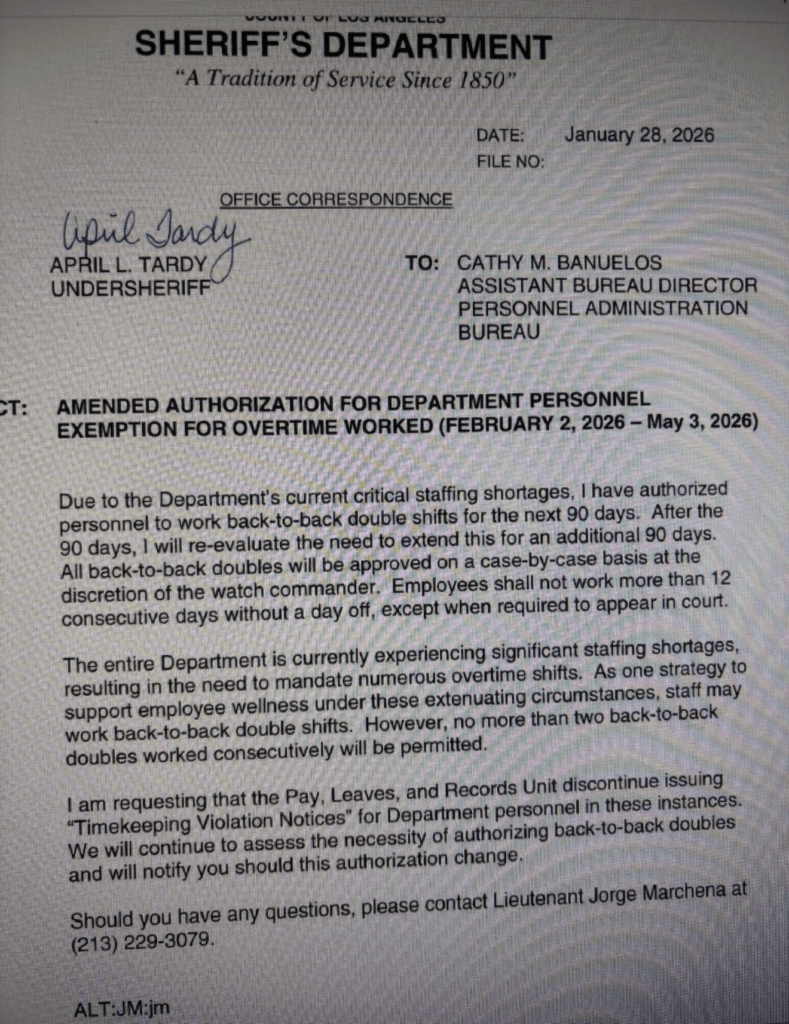
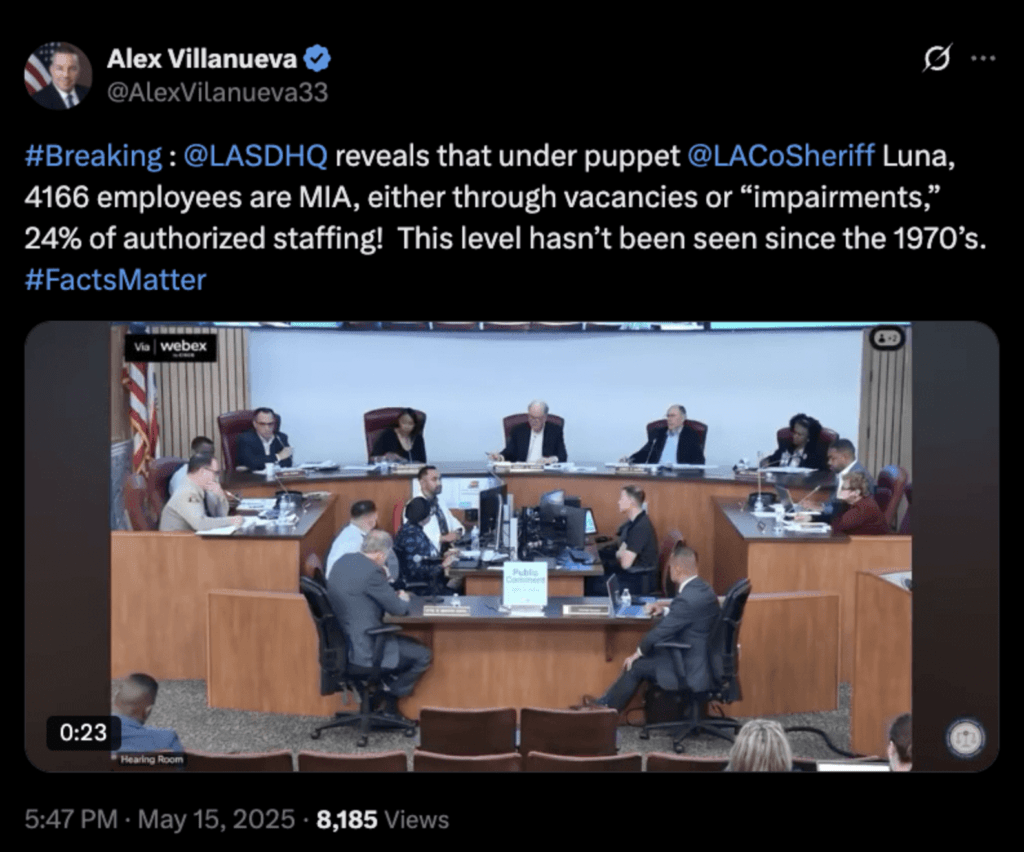
The public statement following the March 29 crash attempts to isolate the incident, framing it as a single event unrelated to broader conditions. The internal memo does the opposite. It situates that crash within a system already under strain, one that leadership had formally acknowledged weeks earlier.
This is where the issue shifts from operational to institutional.
Because the question is no longer whether overtime exists. It is whether the department is accurately representing the extent of it, and whether the safeguards meant to protect deputies and the public are being quietly set aside to maintain the appearance of control.
Every hour added beyond sustainable limits carries consequences. Fatigue does not announce itself. It accumulates. It slows reaction times. It impairs judgment. And in a profession where decisions are often made in seconds, the margin for error narrows quickly.
The department’s own documentation shows that leadership is aware of the strain. The public messaging suggests otherwise.
That gap, between what is known internally and what is presented externally, is where accountability begins to erode.
Los Angeles County is heading into a period that will demand more from its law enforcement agencies than at any point in recent memory, with global events on the horizon and public safety concerns already mounting. A fully staffed, well-rested, and supported department is not a luxury in that environment. It is a requirement.
What the February 26 memo reveals is that the department is operating far from that standard.
It is running on overtime.
It is managing shortages with exhaustion.
And it is doing so while telling the public a different story.
That is not a communications issue, it is a credibility problem.
And it is one that will not resolve itself with another carefully worded statement.
What this overtime crisis reveals is something far more dangerous than internal dysfunction, it exposes a system that is fundamentally unsustainable at the exact moment Los Angeles is about to face unprecedented global demand.
The same department now authorizing up to 120-hour overtime months and suspending internal safeguards is expected to scale up for events that will bring millions of people into the region. The 2026 FIFA World Cup is weeks away, and the 2028 Summer Olympics will require what officials describe as a security operation equivalent to “seven Super Bowls a day for a month,” stretching across the entire region and drawing an estimated 15 million people.
At the same time, law enforcement agencies across Los Angeles are already warning they are understaffed, overextended, and struggling to recruit fast enough to meet even baseline needs. The result is not just a strain on resources, it is a collision course. A department already running on exhaustion will be forced to operate at even higher intensity, with fewer rested deputies, longer hours, and diminished margins for error. That is not a temporary stressor; it is a blueprint for systemic failure.
And when that level of fatigue intersects with events of this scale, the consequences are no longer theoretical, they become operational, public, and potentially catastrophic.