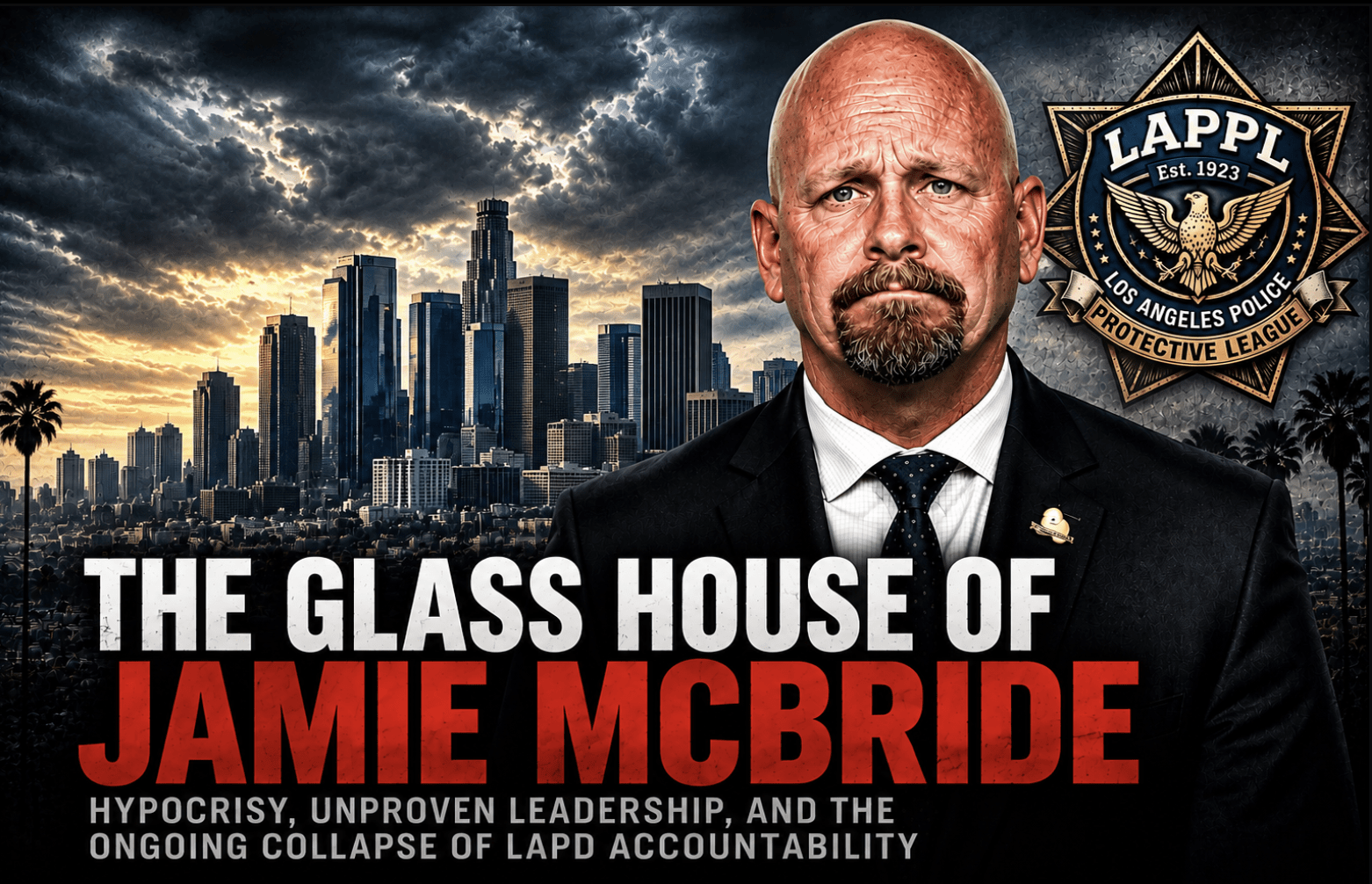
Hypocrisy in public life lasts only as long as the silence of those who witness it. Entrenched figures count on loud, performative theater to intimidate targets and distract their own compromised records. If Jamie McBride had ever truly served as a leader, he would know active sworn members cannot simply air personal grievances through public rants and social media. As a retired independent journalist, I have both the freedom and duty to share firsthand operational facts—navigating critical incidents and high-stakes command decisions McBride has never experienced.
In a recent Blue Line rant, LAPPL Director Jamie McBride attacked those “coming forward now,” portraying victims, filing lawsuits, and contributing to what he dismisses as “online gossip sites.” I reached out to McBride directly, asking for data, photos linking me to his alleged inner circle, or any verifiable evidence beyond derogatory rants. None existed. Rather than providing documentation, his only response was an invitation to debate on a podcast.
Unlike McBride, I chose rigorous investigative reporting backed by verifiable facts over performative opinion pieces. While McBride has helped select allies and family members, his escalating personal attacks have gone unchecked under Chief Jim McDonnell. This leadership vacuum allows an individual to unilaterally dictate misconduct—enforcing rules on others while exempting himself—fostering an unchecked union arrogance that undermines the legitimate role of a League Director.
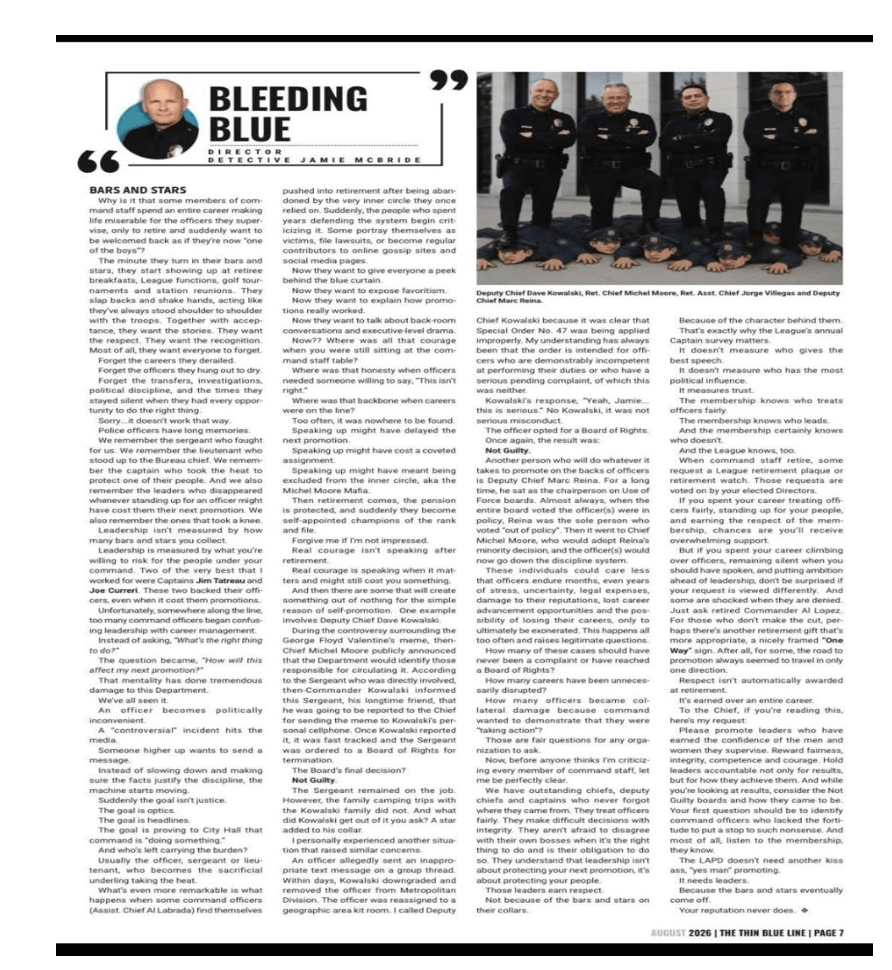
The irony is staggering.
Speaking out is neither victimhood nor hiding behind a blue curtain. Playing the victim was perfected by McBride, who ran to civil court after losing his limited supervisory role and recently lost a frivolous lawsuit against active command officers. I am setting the record straight against an uneducated rant fueled by personal bias and defamatory vendettas, armed with verifiable operational facts and systemic evidence.
I lived through an administrative machine that weaponized internal processes to deny due process to anyone outside the protected circle. My situation involved a private dispute with an ex-partner of six years who retaliated after being legally served with the termination of a domestic partnership. McBride knows this background well; League directors were briefed by Jodi Ganda just as retired Sergeant Manny Redruello—linked to my accuser—began leaking a coordinated PR script to the media. Exposing that denial of basic fairness is not victimhood; it is accountability. Much more on this later!
Lectures on integrity and “circles of friends” ring hollow from McBride, who enjoys cozy political ties, unchecked credit cards for fancy dinners endorsing failed candidates, and time to build private businesses. Meanwhile, Michel Moore and Jorge Villegas preach ethical leadership worldwide despite overseeing an administration marked by inappropriate subordinate relationships, concealed criminal misconduct, and the swift purging of anyone who refused to rubber-stamp their agenda.
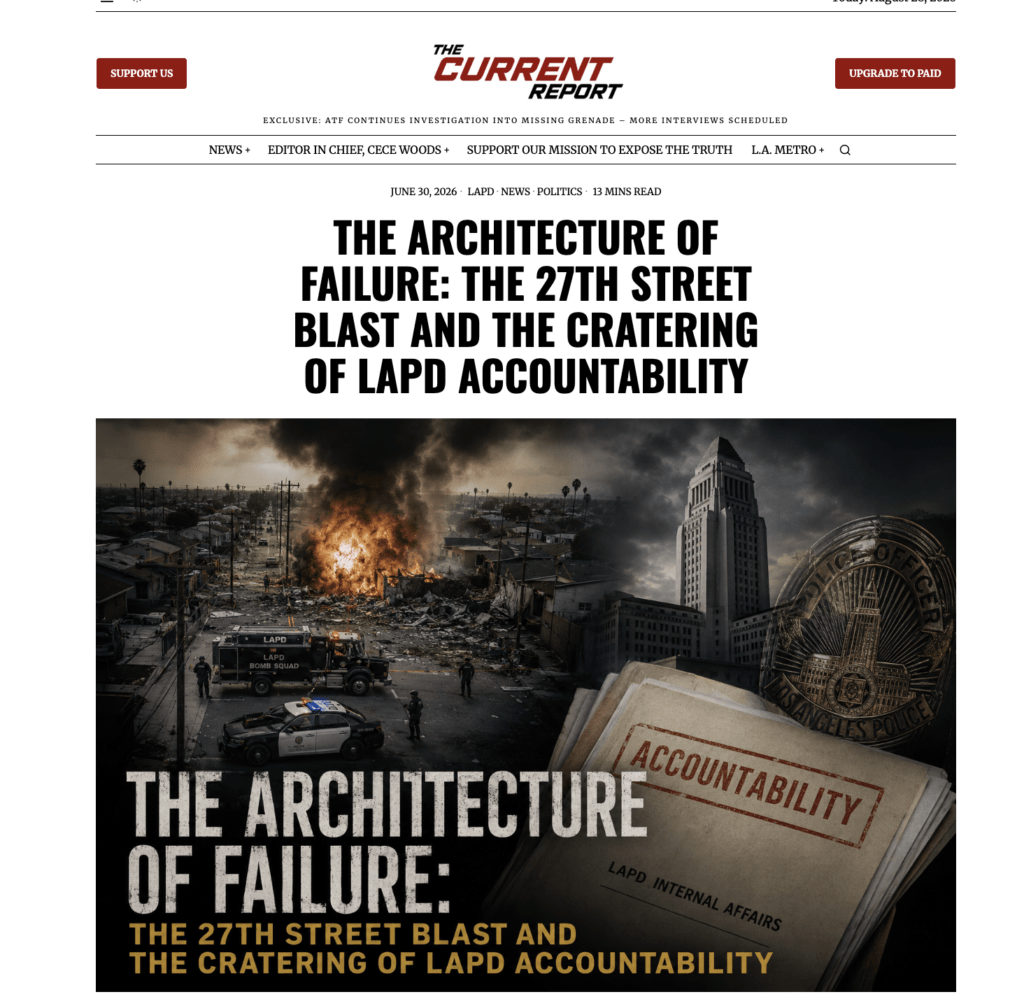
Mr. McBride, I was never in that inner circle, never shared personal ties or a beer with Moore, and earned every rank through decades of legitimate operational work. While I was running skirmish lines in South and Central Bureaus, McBride was profiting off the backs of officers facing disciplinary action. Nor do I defend David Kowalski, whose frantic scramble to shift blame onto area captains for the catastrophic 27th Street Bomb Squad blast was thoroughly exposed in The Current Report.
McBride’s sneering dismissal of independent reporting as an “online gossip site” only further exposes his double standard.
Cece Woods is a respected independent investigative journalist and Editor-in-Chief of The Current Report. Her reporting and assistance were sought by U.S. senators and government watchdog organizations seeking greater scrutiny of Phil Washington, who was under criminal investigation when President Biden nominated him to lead the FAA in 2022.
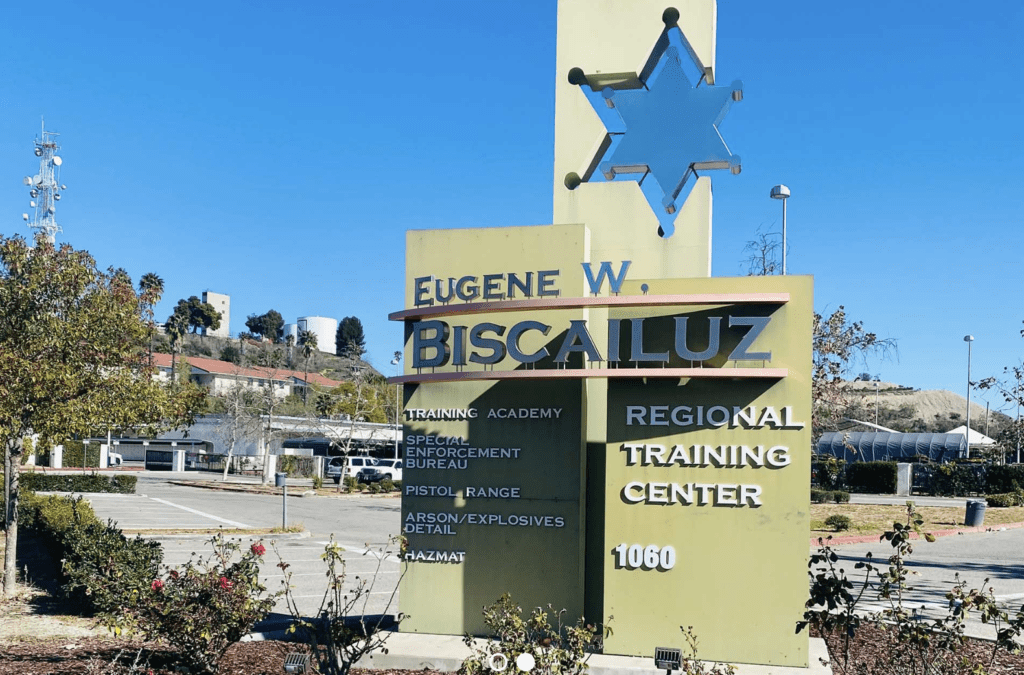
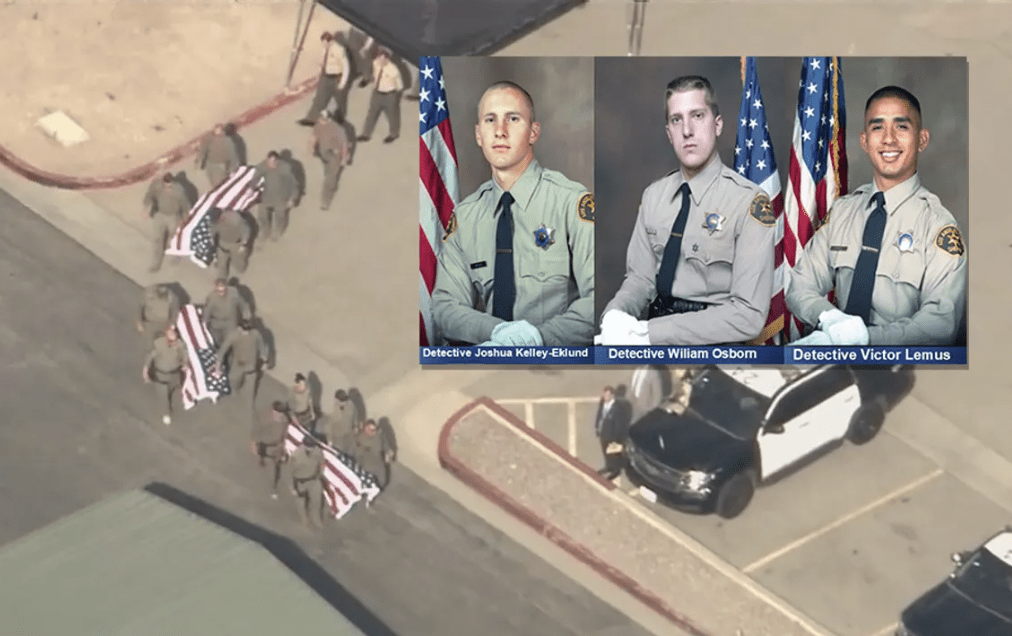
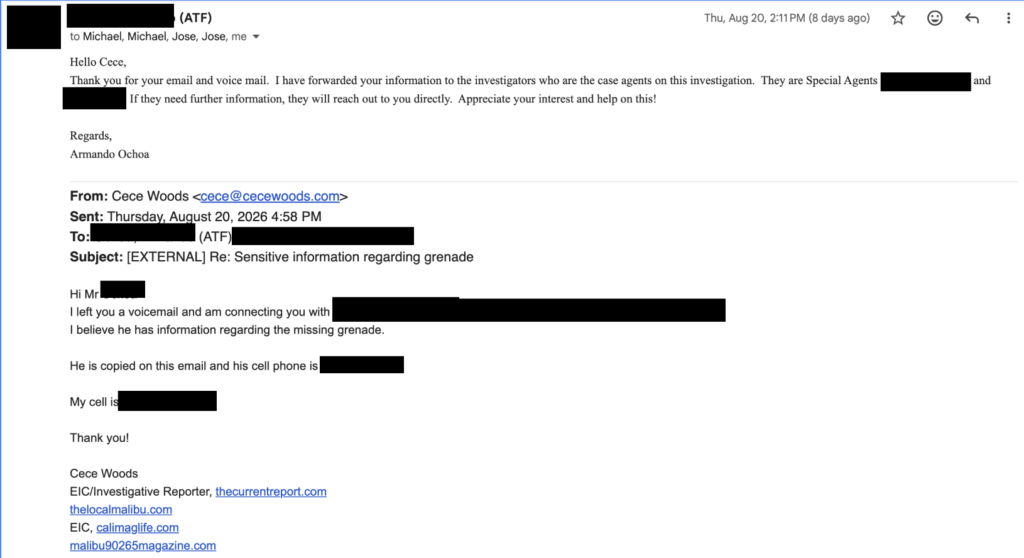
More recently, Woods has been working with the ATF regarding the investigation into the alleged missing grenade tied to the July 2025 explosion that killed three LASD detectives. Her reporting has also prompted renewed scrutiny of LASD’s handling of explosives following two separate incidents since the deadly Biscailuz Center explosion.
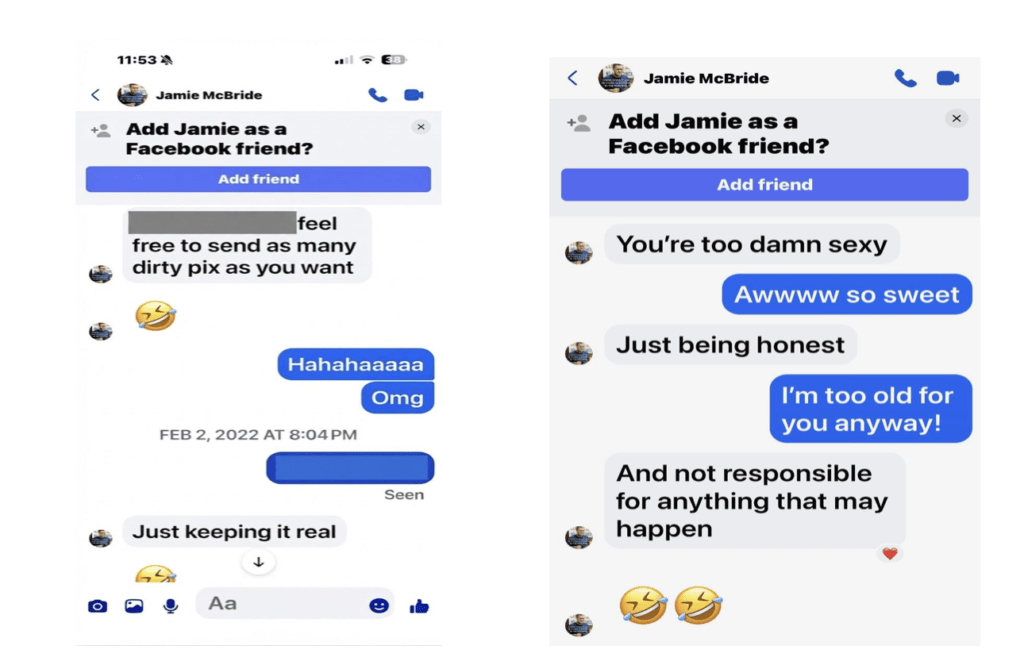
But perhaps the more revealing question is this: Did McBride consider Woods a “gossip columnist” when he was actively sliding into her direct messages while serving as a sworn League Director?
Documented text exchanges reveal a strikingly different tone. McBride tells Woods, “You’re too damn sexy,” follows it with, “Just being honest,” and later writes, “feel free to send as many dirty pix as you want… Just keeping it real.”
The hypocrisy is difficult to miss. An elected union official who felt comfortable sending suggestive and unprofessional messages directly to an investigative journalist now attempts to dismiss her publication as “gossip” when its reporting scrutinizes his own conduct and apparent lack of research. His sudden disdain for Woods’ journalism platform appears considerably less convincing when viewed alongside his own documented communications with her.
Before lecturing anyone on leadership, McBride ought to examine his own career from the comfort of his full-time, non-field union desk. He hasn’t worn a uniform, made a critical decision, or even supervised a skirmish line, having sat in a cush union job since 2015. He has never served as an LAPD field supervisor, never led a critical incident, and never served a single day in the military. In a paramilitary organization, true leadership is forged under field pressure—not behind a microphone or a union keyboard. In the Marine Corps, if you disagree with your platoon commander, you voice your input behind closed doors, suck it up, and accomplish the mission. Over a 31-year career—advancing from Sergeant to Assistant Chief—I made tough, high-stakes decisions every single day.
McBride’s publicity stunts expose a profound lack of operational seriousness. While attacking hard-working officers over grooming standards, he sports a goatee and sleeve tattoos—a textbook case of rules for thee, but not for me. Being the loudest in the room or ranting behind a podium does not make a leader; it makes a talking head. When BLM protesters surrounded the LAPPL building, McBride did not organize a tactical response; he quickly called my office at Central Bureau demanding a uniform presence to secure his facility.
His grievances reduce to a simple formula: you didn’t protect my circle, so I’m coming after you. He conveniently ignores my long record of protecting street cops from bureaucratic overreach:
- As patrol captain, I moved a proactive officer with multiple OIS incidents out of REMAC paralysis into Homicide; that officer served honorably and is now a respected LAPPL Director. Maybe you can walk out of your office and over to his and ask him?
- As Deputy Chief, I pushed Force Investigation Division to clear a dedicated patrol sergeant benched for six months over an alleged reporting delay. I was able to reinstate her soon after I met with her to discuss the circumstances.
- In 2020, following a League Director’s call regarding morale-crushing discipline by Captain John Shah, I had Shah reassigned. Shah later executed Moore’s administrative attack against me, earning a promotion to Commander right as Moore exited.
- In 2021, when the complaint regarding McBride’s daughter crossed my desk after the Newton shooting of Hernandez, amidst the whispers by Newton cops that the last 2 rounds were unnecessary. I opted for no-penalty training rather than punitive discipline for the out-of-policy final rounds regardless of the politics and rumors.
- As Assistant Chief over Detective Bureau, I stopped the retaliatory transfer of two veteran RHD detectives to the Valley after a League Director alerted me and I met with the employees.
Throughout 31 years, I intervened repeatedly—I never tolerated arrogance, laziness, or entitlement.
Mr. McBride references a single incident in which we disagree. When a specialized unit officer texted including to a black officer an inappropriate joke (“I have not seen the Democrats this upset since they lost their slaves”), the command in my opinion harshly sought demotion.
After discussing the incident with a former respected female LAPPL director, I offered an informal resolution meeting with the two officers and the league director to secure an apology and save his career. When the officer showed zero remorse and dismissed it as “no big deal,” I allowed a minor suspension recommendation to proceed.
He chose a Board of Rights (BOR) and prevailed but beating a board on technicalities does not erase misconduct. Outcomes often hinge on member fatigue, back-channel calls, or lucrative $1,000-a-day stipends. Department Manual Sections 1.205, 3.792, 3.1.10, and 3.220 exist for a reason; convicted individuals have beaten civilian boards. A win before three civilian panel members does not mean no misconduct occurred. I wonder if Mr. McBride ever reached out to the black officer who came forward to see if he was doing ok?
The broader crisis is an employee organization shifting from labor representation to expensive vendettas, hit-piece cartoons, and frivolous lawsuits. Rank-and-file officers on grueling 12-hour shifts deserve to know how much dues money has been incinerated on personal grudges and disastrous Political Action Committee (PAC) bets. Over the last decade, the LAPPL has funneled tens of millions into independent expenditure blitzes with staggering losses—dumping nearly $4 million backing Rick Caruso in 2022, over $1 million opposing George Gascón in 2020, and losing key City Council seats to socialist challengers.
Yet, after torching millions villainizing opponents, League bosses execute shameless political gymnastics—quietly cozying up to the very winners they attacked. This revolving door of expensive miscalculations and submissive backpedaling leaves understaffed street cops asking why their money is being burned on losing bets.
This pattern is evident in the coordinated assaults on Captain Silvia Sanchez, Deputy Chief Marc Reina, and Commander Lillian Carranza. When Captain Sanchez reported an unauthorized, unreported use of force and bias, the League launched vicious smears—even publishing a semi-unredacted complaint narrative after internal investigations substantiated the force.
When it comes to Deputy Chief Marc Reina, McBride’s public smear campaigns reach peak dishonesty, relying on a fundamental distortion of how the Department evaluates critical incidents. A Categorical Use of Force undergoes a multi-tiered review: Force Investigation Division (FID) investigates, the Use of Force Review Board (UOFRB) evaluates tactics, drawing/exhibiting, and force application, and findings are ultimately forwarded to the Chief of Police and the civilian Board of Commissioners for final adjudication.
The UOFRB is a multi-member panel composed of a Deputy Chief chair, bureau commanders, tactical training experts, peer commanders, and a peer rank-and-file representative. Marc Reina was never the sole decision-maker. When findings return as Administrative Disapproval (Out of Policy), the Penalty Assessment / Administrative Review (PEAR) process determines corrective action, and officers retain the full charter right to challenge any proposed penalty before an independent Board of Rights (BOR), through administrative appeals, or via a Writ of Mandate. McBride also failed to learn or disclose that not all out-of-policy use of force incidents result in discipline. Many end up with a Notice to Correct or training.
I sat on many boards with Reina. He is widely known as a leader who fights hard for officers, speaking from a grounded, common-sense perspective backed by decades of authentic field experience, including a distinguished stint as a SWAT Lieutenant—an operational reality Mr. McBride can only read about in leadership books. For example, had McBride done his research, he would have learned that Reina and the peer officer were the only two who fought for the officers in the Burlington shooting. Furthermore, Reina, recently successfully testified at an Administrative Appeal on behalf of a supervisor. We did not always agree with Reina’s evaluations, but they were always fair, reasoned, and supported by rigorous analysis—not the lazy rubber stamps of previous chairs who talked well but lacked true operational depth.
McBride villainized Reina over the de-selection of his daughter to a coveted firearms instructor position, but he conveniently ignores the process: the decision not to select her for the Training Division firearms cadre was brought forward by Dominic Choi because she was actively being monitored under REMAC risk assessment protocols. Instead of acknowledging policy, panel structure, and due process avenues, McBride launched an ugly personal vendetta against Reina, whom McBride believed didn’t kneel to his demands.
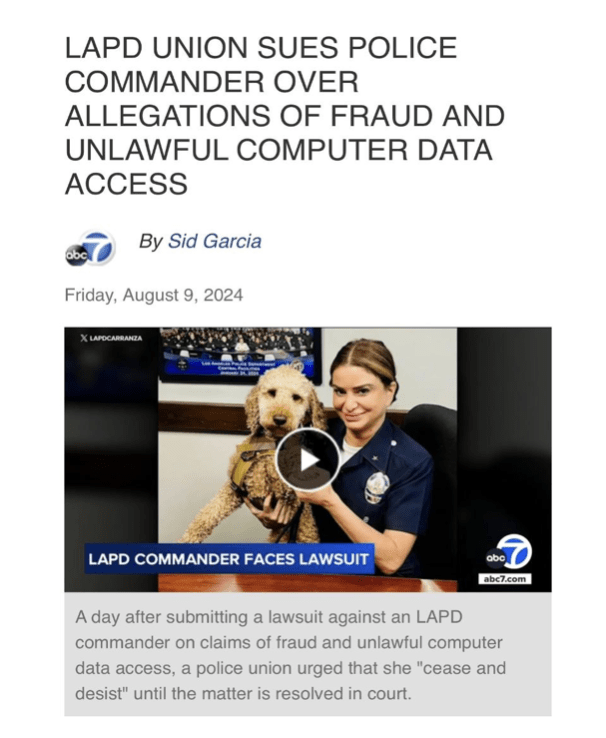
Then came the litigation. LAPPL directors authorized a costly campaign that publicly amounted to at least an approximately $170,000 attack against Carranza and Marc Reina, accusing them of improperly accessing the LAPPL website and internal surveys. The lawsuit originally targeted Carranza, but LAPPL later added Marc Reina as a defendant and aggressively expanded the complaint to seven causes of action.
The true financial toll on union dues is likely even higher. Beyond outside legal representation by a longstanding LAPPL attorney—which spanned extensive pleadings, an amended complaint, anti-SLAPP litigation, and proceedings all the way through the March 2025 dismissal—the LAPPL incurred substantial additional expenses. They hired Sourced Intelligence to conduct a specialized digital-forensics investigation into the alleged email and survey access, all while bankrolling media/PR efforts and juvenile animated smear cartoons. When every dollar of legal counsel, forensic experts, internal investigations, and public relations is tallied, rank-and-file members are left holding the bill for an attack that was ultimately dismissed with prejudice, meaning the League is legally barred from ever refiling it.
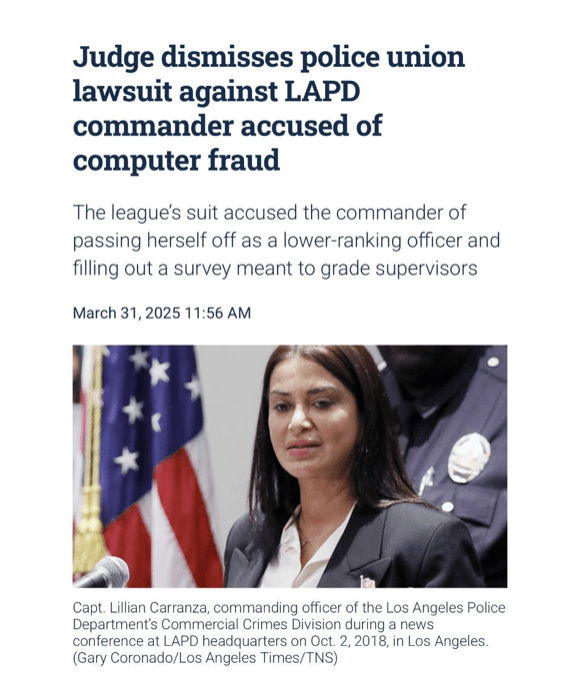
The entire premise of that lawsuit was a farce born out of LAPPL’s own incompetence and poor management. The League complained that command staff were accessing member surveys. The truth is simple: there was never any administrative auditing or list-scrubbing when an officer was promoted from Lieutenant (LAPPL) to Captain and above (the LAPD Command Officers Association). Because union directors were too busy flirting with members of the public on social media or spending countless duty hours building private side businesses—from security companies to now opening a tiki bar in Camarillo—basic IT management was neglected.
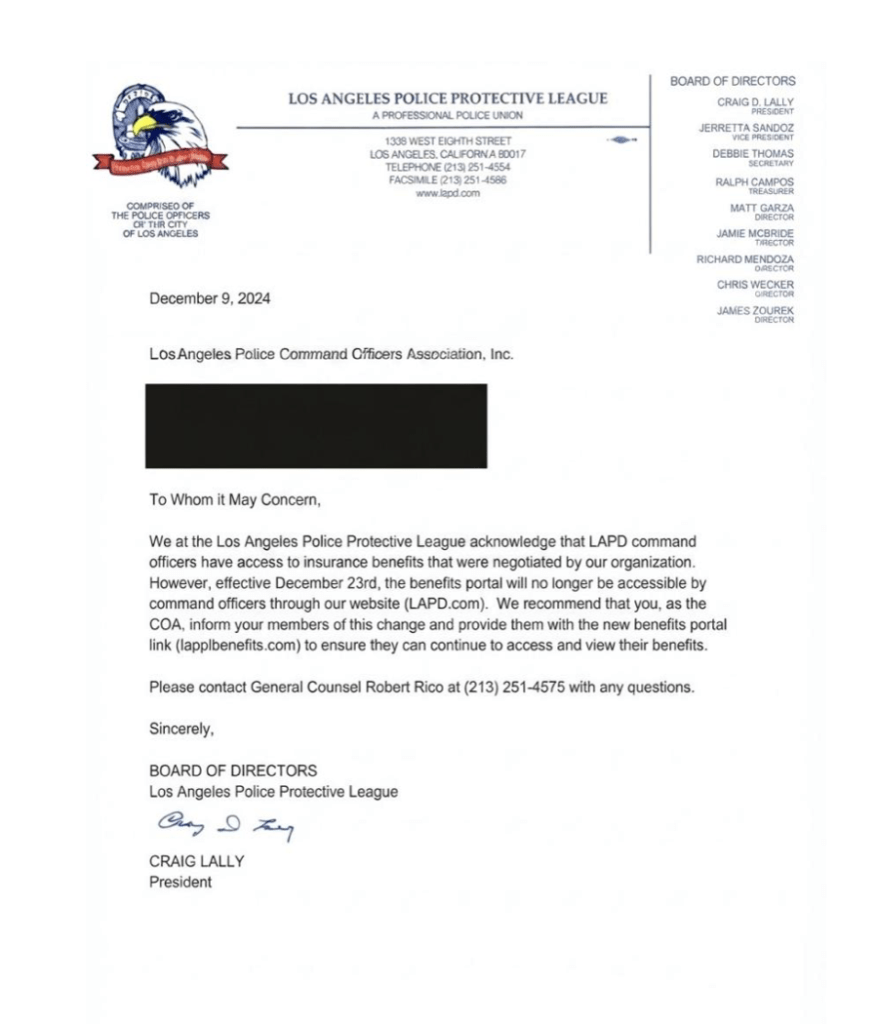
Everyone still received those surveys automatically. I received them in my personal email inbox right up until my retirement, purely because the League failed to maintain its own membership database. Yet rather than fixing their own administrative blunder, directors weaponized member money to file retaliatory lawsuits over their own clerical ineptitude.
What makes this pattern even more dangerous is the unchecked power being granted by Chief Jim McDonnell. Under McDonnell, the LAPD transitioned from a micromanaging tyrant in Michel Moore straight into a surrendering, “business-as-usual” administration. Nothing has changed: the broken, destructive path remains entirely intact, and the department has made zero substantive policy reforms to fix what is rotting from within. McDonnell’s passive acquiescence has effectively surrendered administrative authority, eroding the true, foundational role of the LAPPL. Tragically, we are learning the same occurred at LASD: many promises of a new beginning and change with nothing but talk to show for it.
Instead of demanding sweeping institutional reform, addressing the catastrophic recruiting collapse, or fighting for better working conditions, McBride spends his time and resources prosecuting personal vendettas and building out personal businesses, all while serving as an active LAPPL director. Directors now operate as backroom kingmakers, pushing aggressively for the appointment and transfer of their personal friends and family into coveted, specialized assignments.
When command staff refuse to bow to cronyism, directors immediately pivot to public smears, intimidation, and retaliation. McDonnell’s unwillingness to set hard boundaries has created an environment where union leadership bullies the promotional ladder without consequence while frontline officers bear the burden of a stagnant, internally rotting department.
While McBride uses the Blue Line to air out personal scores, his silence on the true crises plaguing the LAPD is deafening. In over a year and a half of McDonnell occupying the hot seat, where are the rants demanding fixes to the archaic, broken, and biased complaint process that continues to victimize honest officers? Why is McBride completely silent on the plummeting morale and the stubborn refusal to fix failed department policies?
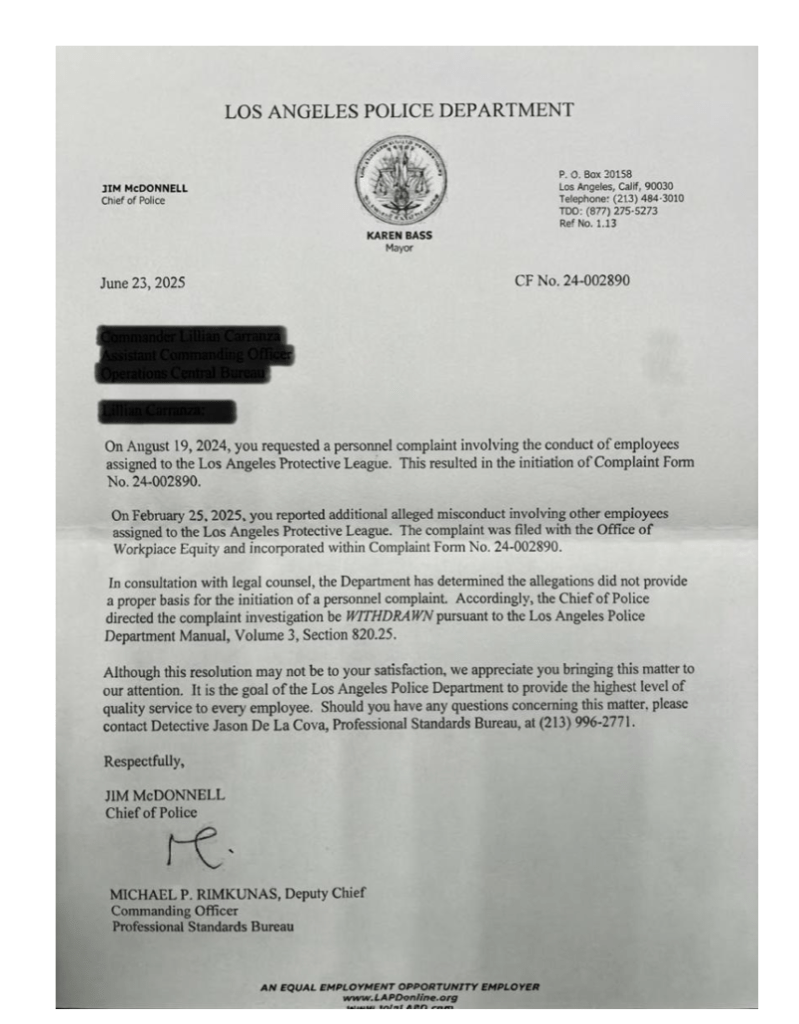
It is total crickets from McBride when it comes to the leadership failures of current command staff like Shah, Rimkunas, and others who actively facilitated deception under Moore regarding Mission Division, deceptive and inconsistent military endorsements, and the selective targeting of anyone who dared to speak out. Nor is there a word about the alarming lack of operational planning and repeated logistical debacles surrounding major events. Not to mention silently closing out complaints by the Chief of Police as “withdrawn” a trick known well by Rimkunas when his own domestic violence incident in Santa Clarita was “withdrawn” by Moore.
Where is the union uproar over the disruptive, failed leadership circles operating inside the department—figures like Johnny Smith and several inexperienced Deputy Chiefs who possess little to no meaningful field command background, let alone the operational experience required to manage a single major critical incident? Why is there zero outrage over command officers elevated far beyond their capabilities simply because they play the political game?
Why the selective outrage? Perhaps because when you are cozy with certain command staff, it is far more convenient to overlook incompetence, inexperience, and administrative failure than to hold top brass accountable for the rank-and-file.
If Mr. McBride wants to lecture the department on ethics, he must answer to the glaring conflicts of interest surrounding his private business enterprises. In 2020, while serving as a full-time LAPPL Director, McBride established Watermark Security Group, Inc., a private security firm that actively employed LAPD officers—specifically capitalizing on officers who were relieved of duty, stripped of police powers, or facing severe internal discipline and pending termination.
Adding to the controversy, public records reveal that Watermark Security Group secured a federal COVID Paycheck Protection Program (PPP) loan in the sum close to $250,000 approved in May 2020 through Wells Fargo Bank—a taxpayer-backed loan later forgiven amidst widespread scrutiny over how private entities exploited pandemic relief programs.
The security company subsequently became the subject of a massive class-action lawsuit (James Bibeau v. Watermark Security Group, Inc., et al., Los Angeles County Superior Court, Case No. 24STCV15253). The lawsuit exposed systemic wage-and-hour violations under California’s Private Attorneys General Act (PAGA), including failure to pay proper overtime rates, forcing officers to work off the clock, denial of mandatory meal and rest breaks, and improper bonus schemes designed to skirt wage obligations.
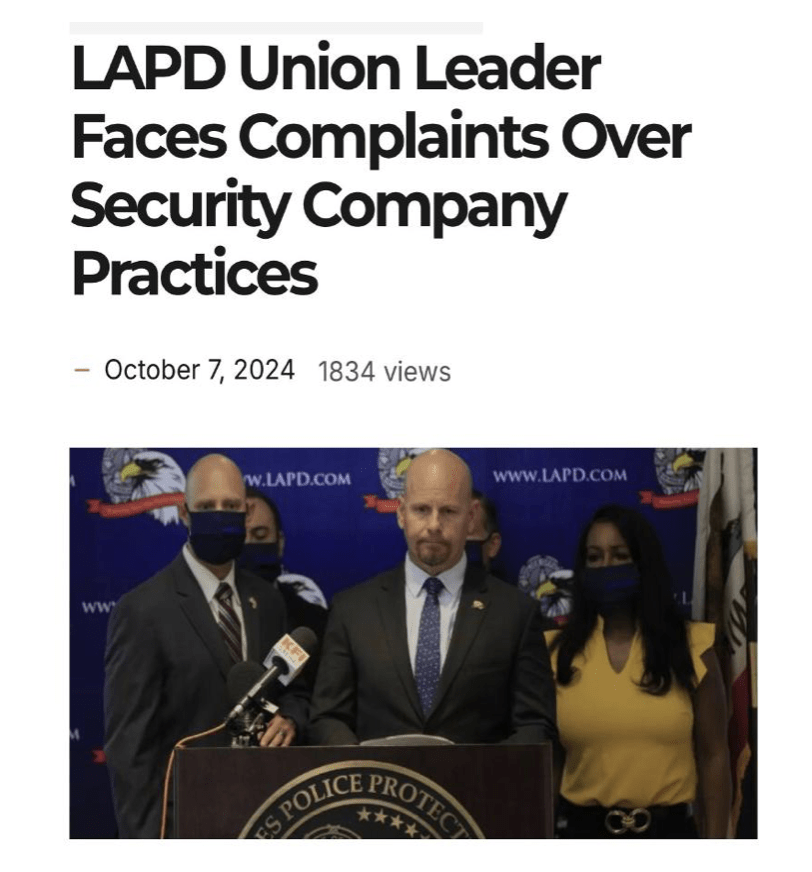
In August 2025, the Watermark lawsuit was quietly settled for $805,000, covering 464 employees across 16,000 workweeks, including substantial attorney fees and PAGA penalties. Despite multiple internal complaints alleging fraud, client deception, and labor violations, Chief McDonnell took no action.
These allegations held an undeniable nexus to the LAPD through the employment of officers allegedly facing serious discipline—including charges of non-consensual sexual imagery (“revenge porn”), sexual assault, falsified Field Interview cards, and other criminal acts. While some were cleared, others remained employed by McBride’s firm, including an alleged registered sex offender. Beyond labor violations against off-duty personnel, the operation raised serious questions regarding fraud against corporate clients billed for officers stripped of police powers.
Yet, in a blatant display of selective enforcement, LAPD leadership took zero disciplinary action against McBride. McDonnell closed the matter as “nothing to see here,” while dismissing substantiated misconduct complaints from Captain Sanchez, Marc Reina, and Lillian Carranza under the guise of “freedom of speech” protecting the very insider circle McBride claims I belonged to, but somehow not him.
The conflict deepens with McBride launching a commercial bar in Camarillo as an active sworn member and full-time union director. Securing a California ABC license—a sector strictly regulated by law enforcement—raises glaring ethical red flags. Building an outside hospitality venture requires daytime hours accessible only to a director on full-time release, a luxury denied to street cops working exhausting 12-hour shifts.
This is especially troubling given allegations from the Watermark litigation that McBride conducted private business on the League clock. Doing so directly violates Department Manual rules on Outside Employment (Vol. 1, Sec. 270.20), Misuse of City Resources and Position for Personal Gain (Vol. 1, Sec. 210.10 & 210.25), False Payroll Certification (Vol. 3, Sec. 705), and Conduct Unbecoming an Officer (Vol. 1, Sec. 210.05)—warranting an immediate Internal Affairs investigation for time theft. Yet inside McBride’s protected circle, no action was taken. Another backdoor deal?
Rank-and-file officers deserve a union fighting for wages, working conditions, equipment, and legal defense—not an apparatus wasting dues on personal vendettas, building private businesses off the backs of disciplined officers, and launching unresearched hit pieces. Leadership independence, Use-of-Force integrity, and genuine advocacy for the line must not be surrendered to performative bullies.
If there are legitimate concerns regarding command performance, step into the arena and do the work. Following the 2020 unrest, executive leadership repeatedly invited LAPPL directors to participate in operational planning for major critical events, including the Summit of the Americas and the 2022 Super Bowl. Union leadership was a complete no-show.
During the next major unrest or protest, McBride can shave the goatee, cover the tattoos, put on a uniform, stand on a skirmish line, or step in as Operations Section Chief. That way, he might finally gain the operational experience needed to understand dynamic field command. If you have grievances, take the assignments and do the job. It is time for LAPPL leadership to answer: do you walk the walk, or just talk the talk?