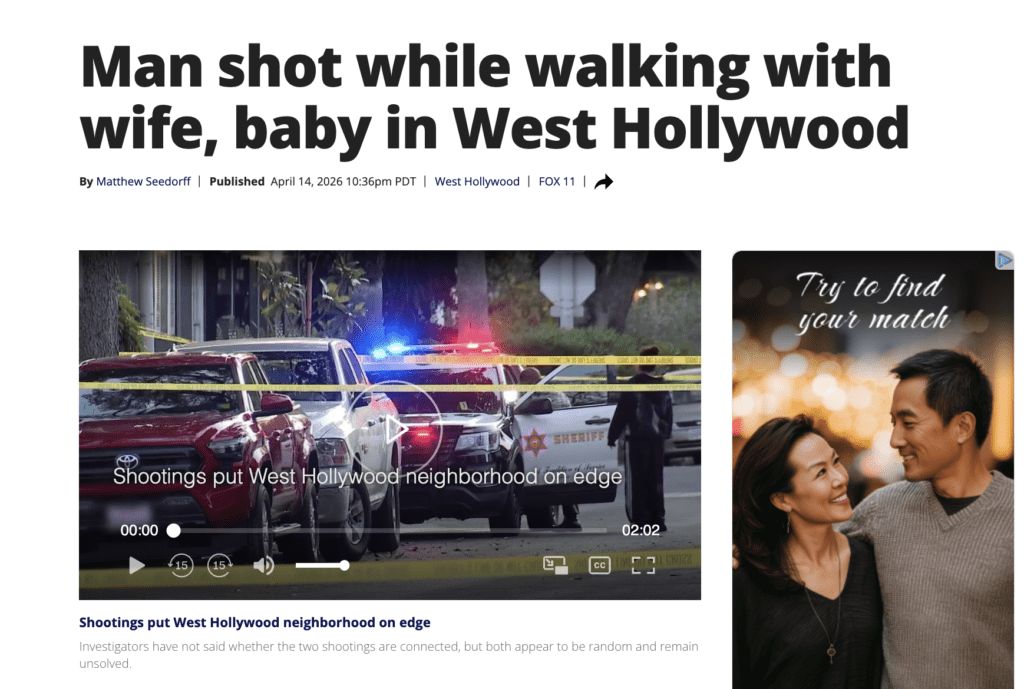
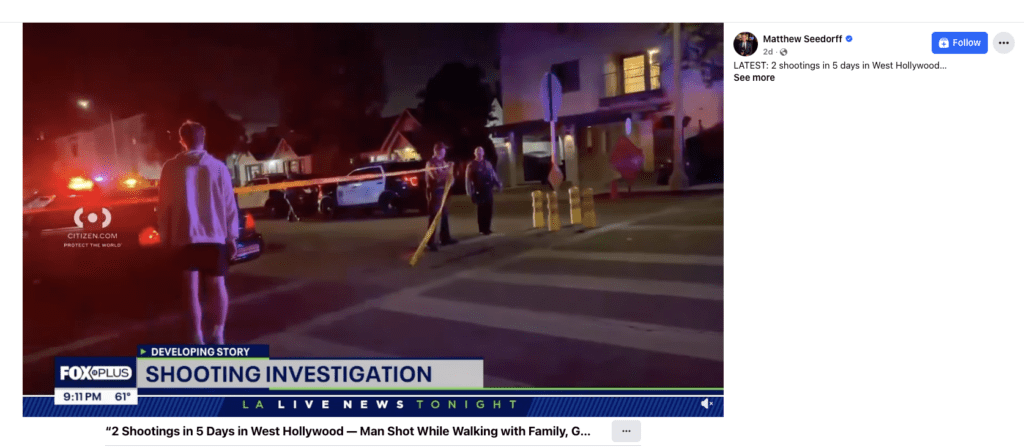
West Hollywood, once known for its vibrant nightlife and progressive ideals, is reeling from two shootings in just five days.
On Tuesday, Los Angeles County Supervisor Lindsey P. Horvath issued a statement vowing that “solving these crimes is a top priority” and that “every resource available” from the Los Angeles County Sheriff’s Department would be deployed. She personally reached out to Sheriff Robert Luna and Captain Fanny Lapkin to demand action.
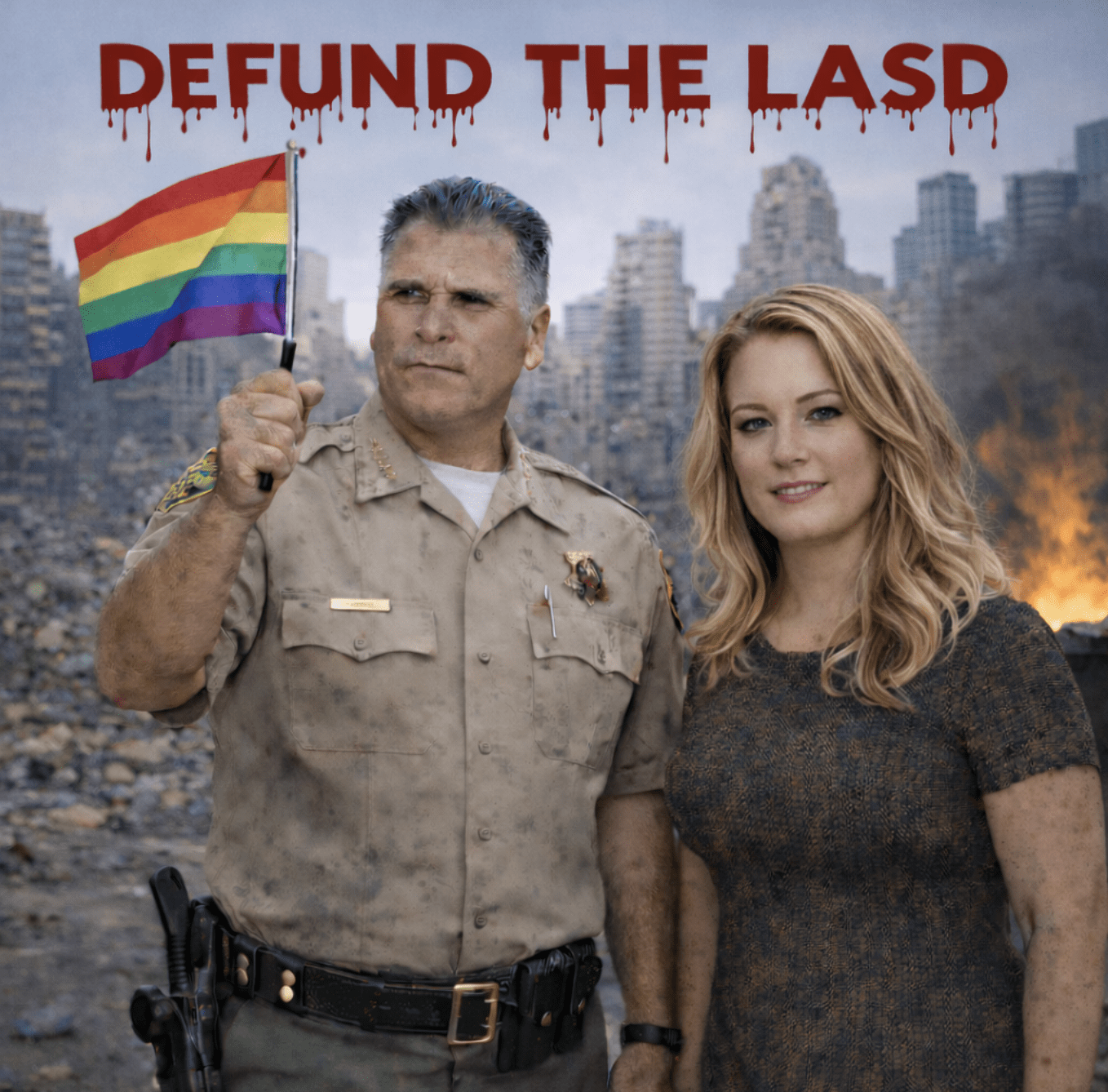
It’s a far cry from Horvath’s stance in 2022, when, as a West Hollywood City Council member, she voted to slash funding for up to five sheriff’s deputies and redirect the money to unarmed “security ambassadors.”
The 2022 Defund Move: Deputies Out, Ambassadors In
On June 27, 2022, the West Hollywood City Council passed a controversial 3-2 budget measure. Council members Lindsey Horvath, John D’Amico, and Mayor Pro Tem Sepi Shyne voted yes on a plan to eliminate four sheriff’s deputy positions over nine months, two within 90 days and three more six months later. The savings? Funneled straight into expanding the city’s Block by Block program, which deploys 30 additional unarmed “ambassadors” in blue shirts to patrol on foot and bikes.
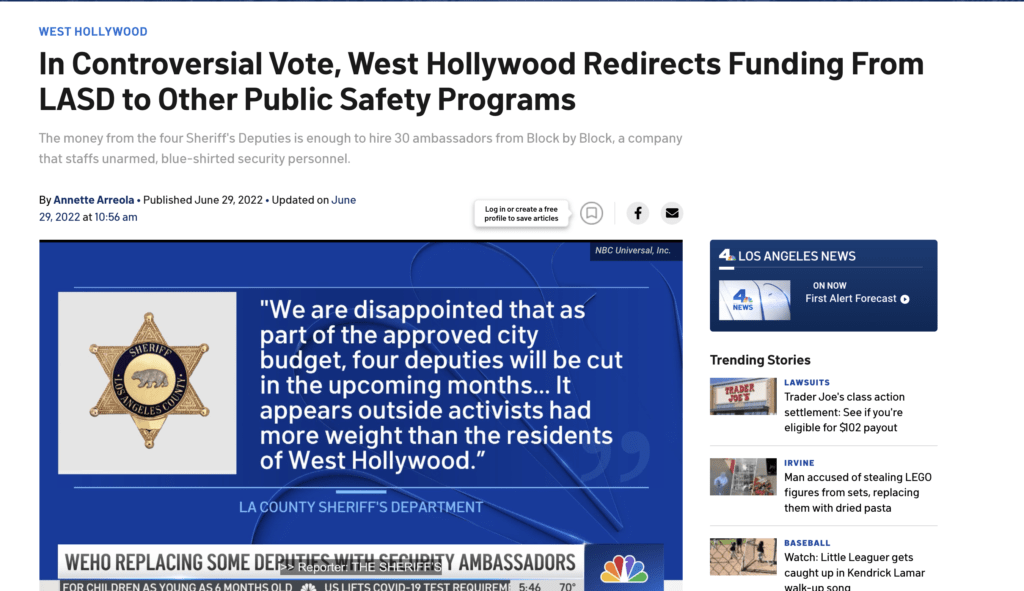
Horvath was blunt about her philosophy at the time: “Prioritizing people’s safety doesn’t just mean people with guns and badges on the streets.” The council framed it as “reimagining public safety”, a post-2020 progressive mantra that treated traditional law enforcement as outdated and overly aggressive. One deputy cost the city roughly $330,000 annually; the ambassadors were a cheaper alternative, supposedly more community-oriented.
Critics warned it was reckless. Then-Mayor Lauren Meister and Councilmember John Erickson voted no, arguing that unarmed ambassadors could supplement sworn officers, but never replace them. Los Angeles County Sheriff Alex Villanueva slammed the decision, saying it caught him off guard and would only fuel rising crime. Even at the time, West Hollywood was seeing a 137% spike in certain crimes compared to the prior year.
The move wasn’t isolated. It aligned with national “defund the police” experiments, but in upscale, entertainment-heavy West Hollywood, home to the Sunset Strip and a large LGBTQ+ community, it carried extra weight. Residents and business owners already dealing with theft, vandalism, and homelessness were told ambassadors would handle the load.
Fast Forward to 2026: The Consequences Are Clear
Three years later, the experiment’s results are playing out on the streets. Recent shootings have residents on edge. Horvath’s own statement this week acknowledges the urgency, calling for full sheriff resources. Yet the very policy she championed reduced patrol capacity when violence was already climbing.
Public comments on local news sites and social media have been merciless. “Hypocrite!” one resident wrote. “She voted to defund our sheriff’s department and re-allocate funds for safety ambassadors.” Another: “How about Horvath engage in a bit of introspection on how her anti-cop policies have put West Hollywood and the entire region in danger?”
Block by Block ambassadors have faced their own scrutiny, videos of incidents involving guards and individuals have circulated, with the company sometimes removing personnel pending review. No one disputes that ambassadors provide a visible presence and handle low-level calls, but they lack arrest powers, weapons, or the training to confront armed suspects. As one former council critic put it in 2022: “Unarmed security ambassadors can only supplement, not replace, sworn police officers.”
Horvath’s Calculus: A Sudden Change of Heart – or Political Whiplash?
Horvath, now representing the sprawling 3rd Supervisorial District, including West Hollywood and more than two million residents, is simultaneously campaigning for reelection while signaling ambitions far beyond it. After months of positioning herself as a serious contender for Los Angeles mayor, she abruptly reversed course in February 2026, opting not to enter the race and instead doubling down on her bid for a second term on the Board of Supervisors.
The pivot was striking. On one hand, she was building a narrative of “bold, transformational change” at the county level. On the other, she was making calculated moves that suggested a parallel path toward City Hall. The result reads less like strategic clarity and more like political whiplash—an oscillation between offices that raises a fundamental question: was this a disciplined decision, or a reactive retreat once the realities of a mayoral run set in?
Her office has not issued any formal reversal of the 2022 ambassador expansion. But the optics are glaring: when it was politically expedient to align with progressive activists and “reimagine” policing amid national fervor, Horvath cut deputies. Now, with violent incidents making headlines and voters paying attention to street-level safety, she’s personally pressuring the sheriff for maximum resources.
Residents of West Hollywood and surrounding areas have paid the price in reduced deterrence and slower response times. Crime data from the period following the cuts showed no miraculous drop; if anything, the ambassador-heavy model left gaps that armed criminals exploited.
Sheriff’s officials and line deputies have long argued that contract cities like West Hollywood benefit from LASD’s scale, but only when adequately funded. Cutting sworn positions to fund feel-good alternatives was always a gamble. The recent shootings suggest the house lost.
Supervisor Horvath’s defenders may claim the 2022 vote was “pragmatic” and “fiscally responsible.” But when the bullets fly, residents don’t call for ambassadors, they call 911 expecting deputies with badges and guns. Horvath’s current demands prove she knows it. The question West Hollywood voters should ask ahead of her reelection: If she truly believed in the ambassador experiment, why is she scrambling to flood the zone with sheriff resources now?
Public safety isn’t a political fashion statement. It’s a baseline expectation, one that Horvath’s 2022 vote to defund the LASD directly undermined, and one that current realities are now forcing her to answer for. As ALADS, the largest union representing Los Angeles County deputy sheriffs, conducts candidate interviews ahead of the election, the consequences of those past decisions are no longer abstract. If the union were to endorse a candidate who voted to cut funding, deliberately reduced deputy positions in her own district, and contributed to deteriorating public safety conditions, it would mark a genuine breaking point for rank-and-file deputies. An endorsement of Robert Luna under the current climate could carry similar weight.
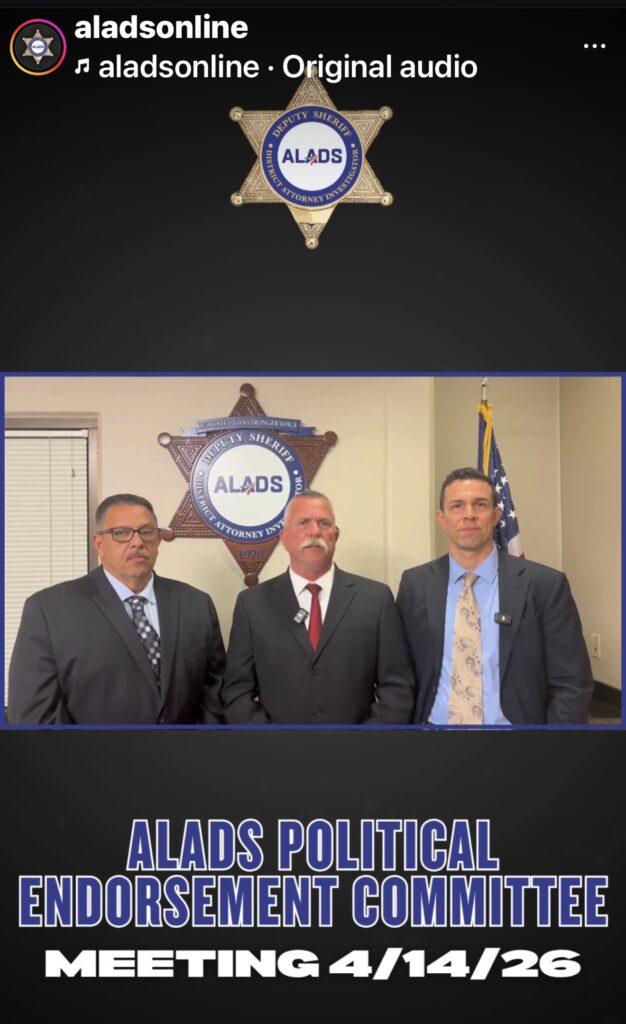
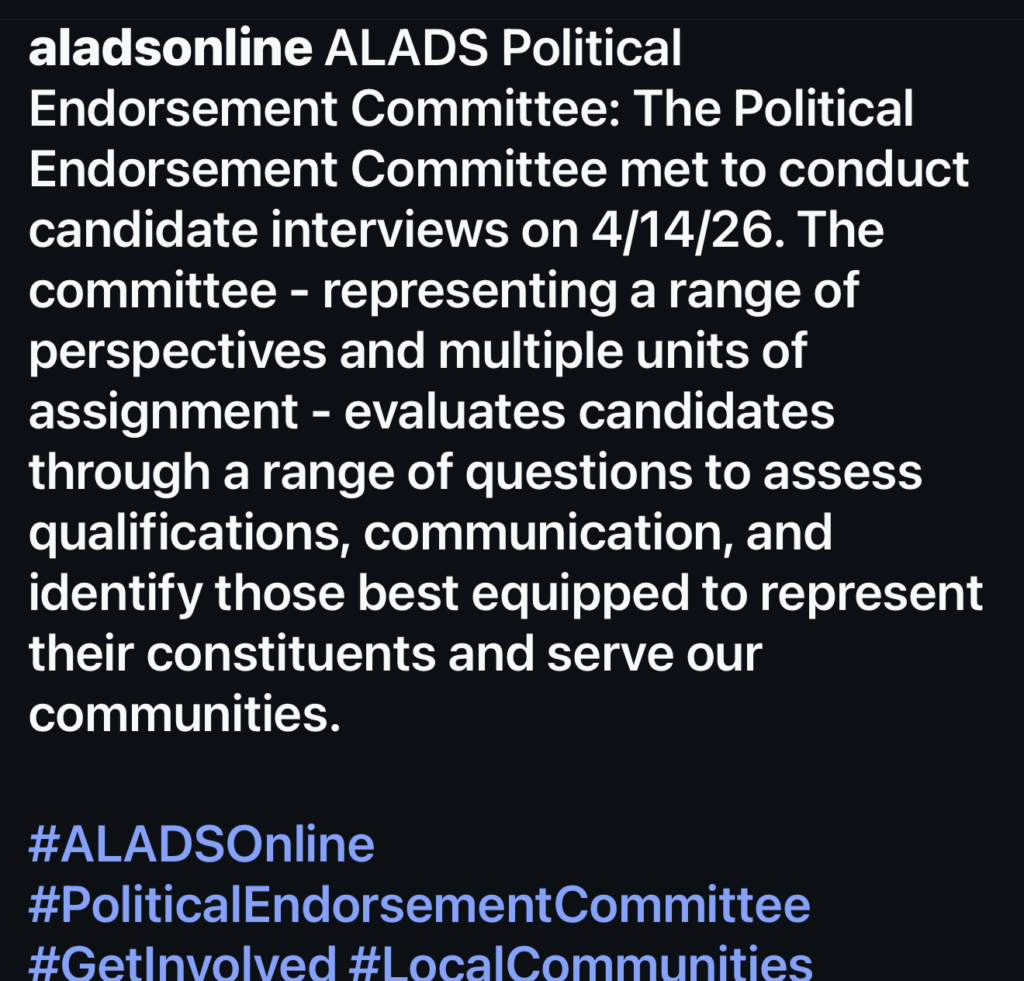
This is no longer about messaging, it’s about credibility. Whether Horvath’s repositioning reflects genuine evolution or convenient election-year recalibration, residents living with the fallout deserve more than retroactive tough talk. They deserve consistency, accountability, and leadership that doesn’t shift with the political winds.