PART I: THE 16-TON BLINDSPOT AND THE LEVELING OF 27TH STREET
People frequently ask why I choose now to step forward and systematically peel back the corporate, tightly managed layers of police headquarters. The answer is rooted in an unyielding, foundational principle of public service that you carry for life once it is forged. For anyone who has ever served in the United States military, as I did proudly within the Marine Corps, the concept of a chain of command is structural, sacred, and absolute. Within a disciplined, mission-focused elite unit, you are trained and expected to voice your professional objections, lay out alternative tactical options, and challenge unsafe operational trajectories to protect the team. Ultimately, if your executive guidance is overruled by a higher administrative authority, you are forced to shut down your personal grievances and follow those orders to the letter—provided those commands are not explicitly unethical, immoral, or illegal.
Yet, nothing in my decades of military service or high-level municipal command prepared me for the naked, first-hand betrayal, total leadership insecurity, and weaponized double standards deployed by a Chief of Police who realized his tenancy at the top was actively running out. It was not until I personally experienced the toxic, biased response of an administration backed into a corner that I saw the true face of a failed leadership structure.
The political transparency of this corporate maneuvering became undeniably clear in late April 2023. As I prepared to announce my final retirement from active law enforcement, I conducted my standard professional exit rounds with former police commissioners. Those high-level oversight leaders explicitly and uniformly assured me of a hidden municipal reality: Chief Michel Moore was being systematically shown the door by city leadership, facing an administrative termination timeline that was moving far sooner than he ever wanted or expected. This imminent ouster triggered an intense wave of executive panic and profound insecurity on the 10th floor. When the Mayor’s office began bypassing the Chief to reach out directly to my office for ground-level operational briefings, Moore viewed my presence as an immediate, existential threat to his carefully managed legacy. Internal executive circles began actively whispering that I was being positioned as a primary, independent candidate for the incoming Chief of Police vacancy.
In April 2023, I officially announced my retirement from the department, to be effective in August 2023. That decision was deeply rooted in a profound, systemic inability within the organization to make timely executive decisions, a stubborn refusal to overhaul broken, archaic policies, and the sheer, daily frustration of working under a fundamentally insecure manager. Across my 31 years of service, I discovered an ironic organizational truth: I possessed far more practical ability to affect real, tangible change on the street as a sergeant, a captain, and a commander than I ever did at the highest echelon. In the modern LAPD, the executive ranks are almost entirely paralyzed by the suffocating grip implemented by whoever sits in the Chief’s chair.
Throughout my career, I have worked for some truly great leaders, and I have worked for some horrible ones. My appointment to the rank of Assistant Chief—making me the number three leader in the department—was completely marred by an operational environment defined by a total inability to truly affect systemic reform and a culture of severe, toxic micromanagement. Faced with these constraints, I opted to leave to protect my own health and restore my quality of life. The moment my retirement papers were filed, the 10th-floor vultures immediately exited the woodwork, and the administrative backstabbing began in earnest.
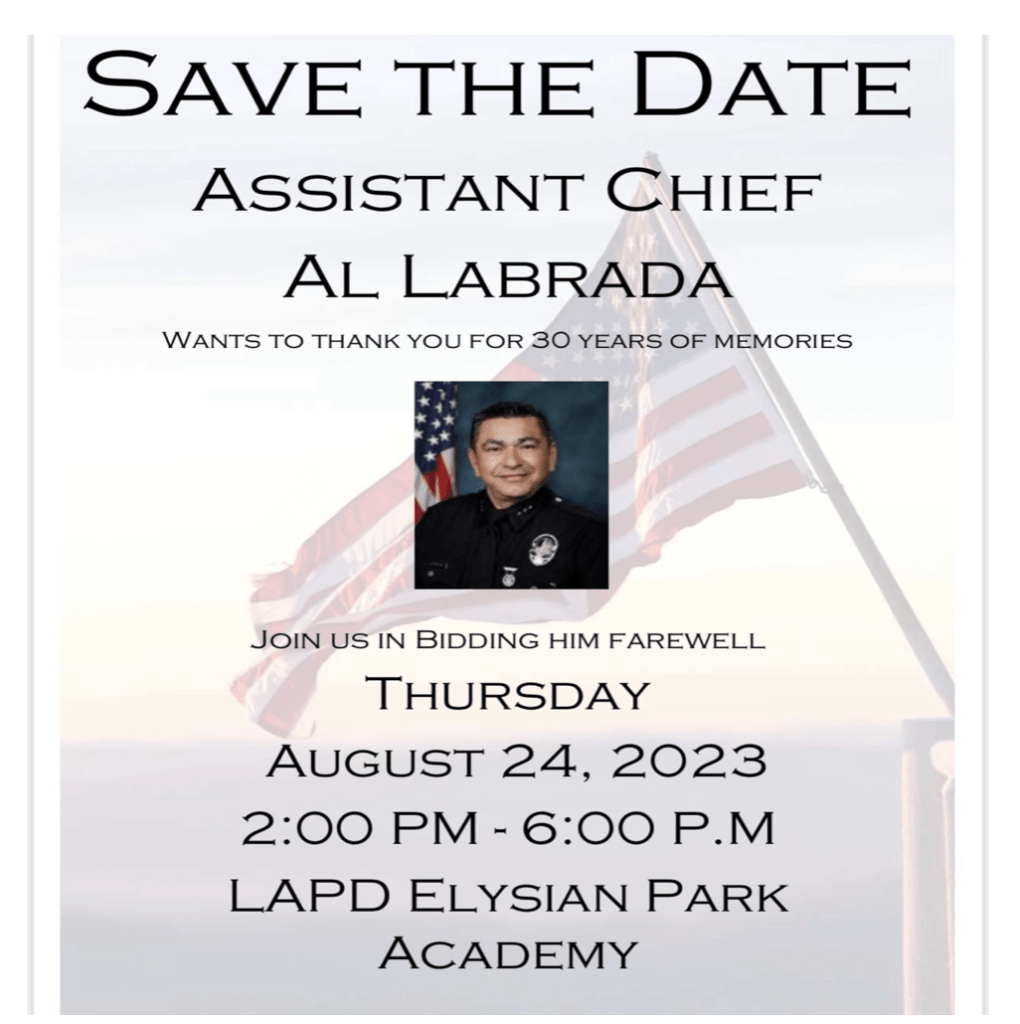
However, once my health improved and knowing what the former police commissioners had privately told me about the former chief’s time actively running out, I made the choice to rescind my papers and try a little longer to finish the mission. Ultimately, it was a mistake. Moore hit me hard the moment severely questionable allegations from a woman of exceptionally low moral character surfaced.
It wasn’t until late 2023 that the final, devastating piece of the puzzle fell into place: I confirmed that I had been fundamentally betrayed years prior, back in 2018, by my boss at the time, Assistant Chief Jorge Villegas, alongside my ex-partner, Dawn Silva. What followed was a multi-year effort by Mr. Moore to completely conceal and bury the entirety of that corporate shit show to protect his chosen insiders while ruthlessly targeting anyone who threatened his executive bubble.
Although Moore had promoted me, I strongly feel he was clearly threatened by my deep connection with the community and my proven confidence in commanding highly critical field incidents. When a leader knows his days are numbered by the police commission and the mayor, that deep-seated insecurity alters his decision-making entirely. During an intimate, one-on-one meeting inside his office, Moore sat across from me and very openly, confidently, declared that he was staying entrenched in his position until a brand-new chief was selected to ensure a “smooth transition.” Yet, the administrative reality shattered his bravado. When his final departure was abruptly announced to the public by the mayor’s staff, Moore was unceremoniously summoned to an impromptu press conference at City Hall.
It is blindingly obvious to anyone who understands paramilitary protocol that it was not his choice to leave. If you are truly the Chief of Police of the third-largest law enforcement agency in the United States and you independently choose to retire on your own terms, you do it standing alongside your family at LAPD headquarters, surrounded by your command staff—you do not get summoned to an impromptu political presser at City Hall to watch your career get cut short.
I will systematically continue to identify and expose these firsthand institutional failures, the double standards, the blatant lying, and the corrupt weaponization of Internal Affairs designed solely to silence those whom the high command feels threatened by. More importantly, this chronicle will continue to highlight the profound fraud and manipulation orchestrated by an individual with a highly questionable ethical background involving inappropriate relationships—someone who is now traveling the country, touting the false narrative of an “ethical administration” he spent years hollowing out.
Looking back from this five-year vantage point, I recognize that God saved me from the catastrophic decay of a thoroughly dysfunctional, hyper-political local government. I was completely spared from having to report to an executive administration and personal relationship historically demonstrated the compromised moral character of a street walker—a socialist-led city apparatus that possesses zero authentic interest in improving working-class neighborhoods, treating municipal safety assets as a blank canvas for personal power, backroom patronage, and multi-million-dollar consulting fraud.
To fully trace the lineage of this operational collapse, one must analyze the immense structural, geographic, and demographic realities of the commands that were forced to absorb the catastrophic detonation. At the time of the 27th Street disaster, I was serving as the Central Bureau Deputy Chief, holding absolute administrative and operational oversight over five of the most densely populated, culturally complex, and historically challenging commands in the City of Los Angeles: the Newton, Rampart, Central, Hollenbeck, and Northeast Areas.
Encompassing 65 square miles of intense urban territory, Central Bureau was tasked with protecting a permanent resident population of roughly 900,000 people—a baseline number that swelled by hundreds of thousands of individuals daily due to the heavy commuter influx into the downtown financial core, the multi-block commercial grids of the Fashion District, and major high-liability regional destinations including Dodger Stadium, MacArthur Park, Chinatown, Little Tokyo, and Griffith Park.
The demographics of the five commands under my direct purview represented a vibrant, working-class, but economically vulnerable cross-section of Los Angeles. Over 65% of the aggregate Central Bureau footprint identified as Latino, anchoring deep multi-generational communities across the Hollenbeck (Boyle Heights, Lincoln Heights), Rampart, and Newton areas, alongside dense Asian American enclaves. This massive geographic area spanned a severe economic divide, running from the high-wealth commercial skyscrapers of downtown to working-class areas where families navigated a median household income well below the citywide average at roughly $42,000, including the historic core of Skid Row and communities where over 25% of families routinely experienced severe economic hardships. This was the exact urban fabric that felt the direct, immediate consequences of downtown’s specialized operational failures.
Physical detonation occurred inside the boundaries of the Newton Area Command, a nine-square-mile territory nestled in the historic center of South Los Angeles. Known historically across decades of street grit as “Shootin’ Newton,” the command serves a population of approximately 150,000 residents, with a demographic identity that is predominantly Latino at over 70%, while the historic African American community makes up roughly 22% of the neighborhood. The area is defined by high-density, multi-family rental units, manufacturing zones, and deep-seated multi-generational familial networks that have survived decades of structural neglect.
When the Bomb Squad deployed to 27th Street on June 30, 2021, they were stepping into a command that was wrestling with a historic, pandemic-era spike in gun violence. Throughout 2021, Newton was enduring an intense escalation in gang-related homicides, drive-by shootings, and weapon offenses that consistently outpaced almost every geographic division in the South and Central Bureaus. Black-market commercial explosives and high-grade contraband fireworks were flooding the streets at unprecedented levels. Frontline patrol officers were running from one high-stress tactical callout to the next daily, managing a volatile street landscape while their own institutional training baselines were actively being hollowed out by the high command at police headquarters. It was precisely this low-income, heavily policed urban neighborhood that downtown’s elite special operations units treated as unmonitored proving ground for reckless visual guesswork.
The physical catalyst of the disaster lay inside the residential backyard of 26-year-old Arturo Ceja III (known in street circles as “Autron”). Ceja was operating a massive, highly illegal black-market commercial fireworks distribution ring out of his family’s home on East 27th Street. Motivated entirely by the steep profit margins of the illicit trade—where contraband pyrotechnics purchased legally or via black-market backdoors in Nevada are routinely flipped on California streets for up to four times their original cost—Ceja made multiple cross-border smuggling trips using commercial rental vans in late June 2021.
When LAPD patrol officers responded to an anonymous telephonic tip on the morning of June 30, they discovered a backyard transformed into an unshielded munitions dump. Ceja had stockpiled a staggering 32,000 pounds (16 tons) of commercial-grade fireworks and highly explosive devices. Federal ATF agents subsequently cataloged over 500 packed cardboard boxes of aerial display mortars alongside more than 140 volatile homemade explosive devices, commonly referred to as “M-devices” (such as oversized M-80s). These homemade explosives were crudely constructed of heavy cardboard paper, active hobby fuses, and tightly packed with volatile explosive flash powder. Compounding the catastrophic risk to the block, Ceja had left this 16-ton arsenal sitting completely unsecured underneath cheap backyard tents and directly adjacent to active outdoor cooking grills, without a single approved storage magazine or fire safety measure in place.
The estimated street value of Ceja’s backyard stockpile exceeded $100,000, representing a lucrative but lethal operation embedded inside a crowded residential neighborhood. Following the botched detonation and subsequent federal investigation, Ceja faced severe legal scrutiny. In August 2021, Ceja pleaded guilty in the United States District Court for the Central District of California to a single-count federal criminal information charging him with the illegal transportation of explosives without a license. On October 26, 2022, federal Judge Fernando M. Olguin sentenced Ceja to five months of federal incarceration, followed by two years of supervised release. Despite the permanent multi-million-dollar destruction of his neighbors’ blocks, the criminal justice system handed Ceja a brief custodial sentence, highlighting a stark disparity between the minimal legal consequences faced by the smuggler and the generational trauma borne by the community.
Operating entirely outside the control of geographic bureau chiefs, the Counterterrorism and Special Operations Bureau (CTSOB) and its subordinate Emergency Services Division (ESD) managed the specialized tactical assets of the department, including the LAPD Bomb Squad. On paper, the Bomb Squad was billed as an ultra-elite, precision technical unit tasked with processing roughly 500 bomb-related calls for service per year citywide, with over 22% of those incidents involving live, unstable military ordnance or volatile, improvised illegal explosive devices.
Yet, beneath this public relations veneer lay a staggering, structural logistical deficit that had been swept under the rug by headquarters for generations: the LAPD Bomb Squad does not possess a dedicated, local hazardous-disposal range within the city limits of Los Angeles.
For a major metropolitan law enforcement agency operating in a city of nearly four million people, this infrastructure gap represents a severe operational liability. When unstable, fragile, or deteriorating commercial explosives are seized on the streets of LA, bomb technicians cannot detonate them locally.
Instead, the unit is routinely forced to transport live, highly volatile explosives more than 70 miles away through heavy southern California traffic to a remote, borrowed military facility in Ventura County. In an environment where every single mile of highway transit increases the risk of thermal friction, physical shock, or sudden degradation to unstable chemical compounds, this massive distance gap created an unsustainable logistical burden.
To survive this systemic infrastructure deficit, Bomb Squad institutionalized a dangerous reliance on makeshift engineering and mutual aid workarounds. The unit frequently had to barter for emergency range space from the Los Angeles County Sheriff’s Department (LASD), utilizing county facilities because the city bureaucracy refused to allocate funding or permits for a local range. In critical, high-liability field scenarios involving fragile explosives that expert handlers determined could not survive a long-distance highway transit to Ventura County, the Bomb Squad was forced to improvise wild tactical adjustments: they would borrow large, civilian-style dump trucks from municipal public works yards, load the open beds with tons of heavy sand to create a makeshift containment bed. Technicians then transport the volatile materials through city streets in improvised vehicles just to reach a baseline of relative safety. This chronic lack of specialized infrastructure exposes the ultimate hypocrisy of the 10th floor’s metric-driven culture. While Chief Moore and Assistant Chief Choi focused on polishing digital dashboards and enforcing compliance checklists, they completely neglected the core physical assets required to execute the mission safely. By sending an elite bomb unit into the field without a safe place to destroy what they recovered, headquarters ensured that a crowded residential street on 27th Street would eventually become the default disposal zone.
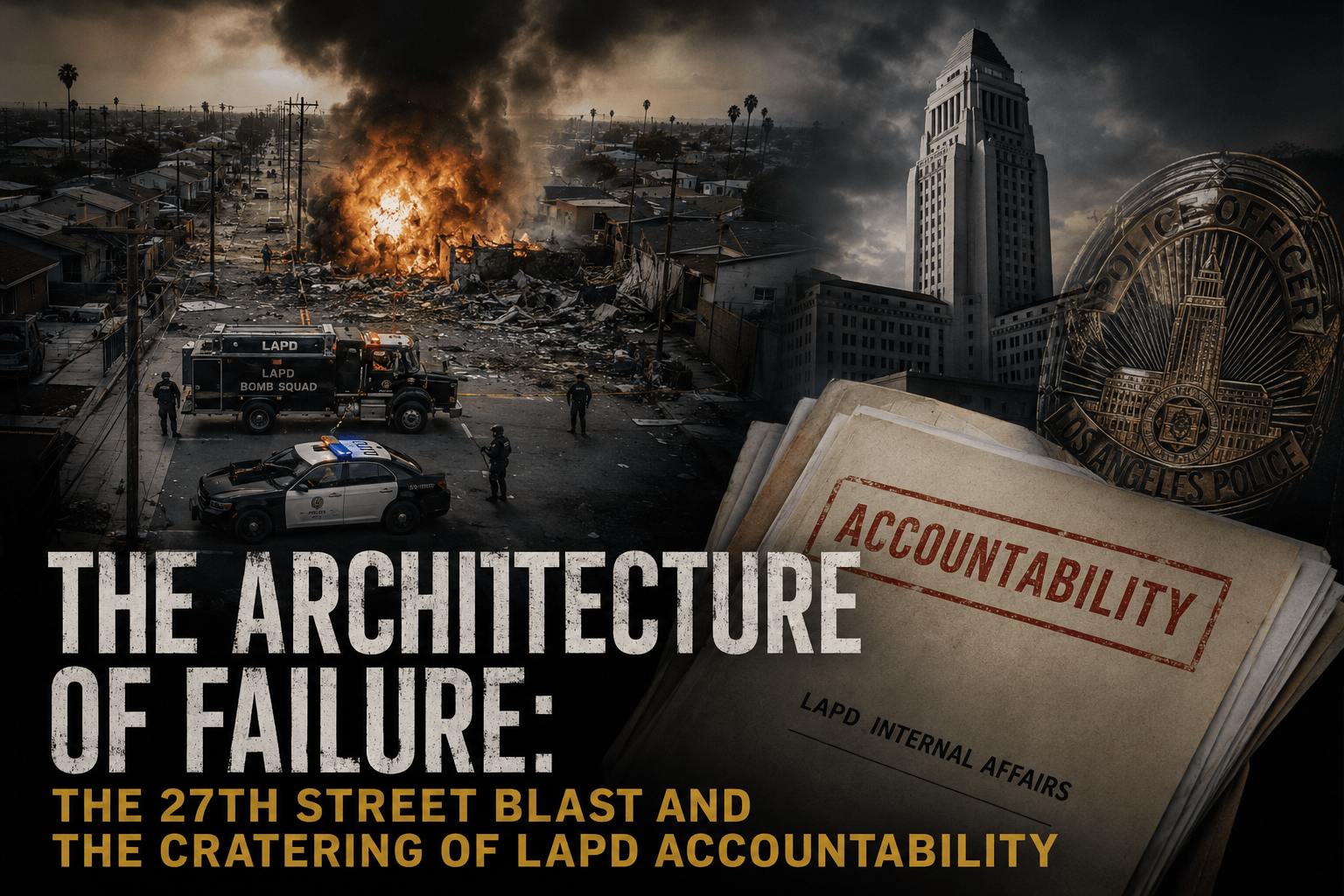
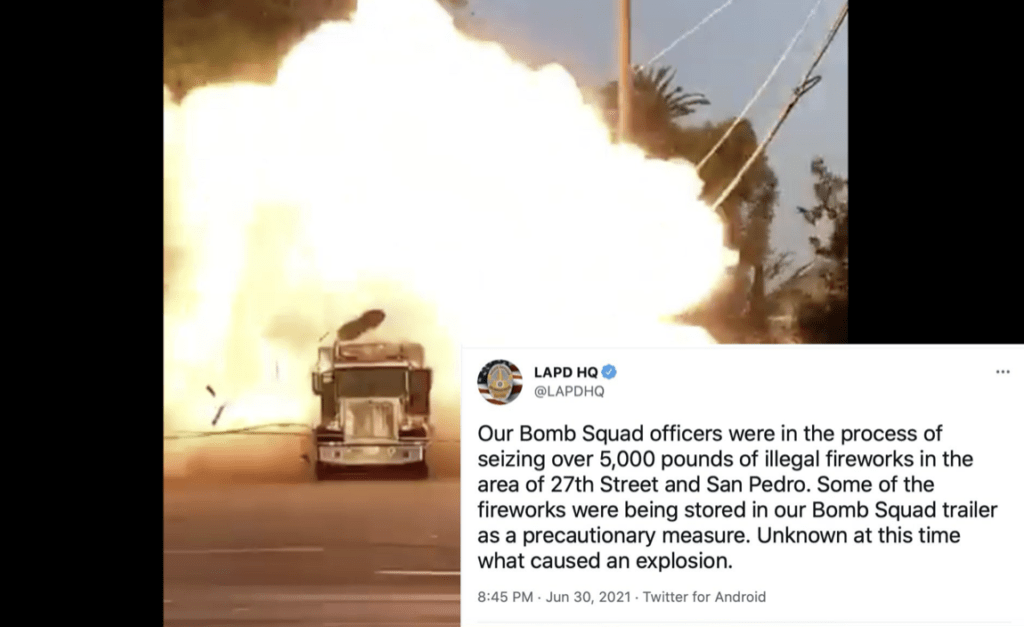
The intersection of these logistical deficits, a reckless operational culture, and total supervisory failure culminated in absolute disaster on June 30, 2021. Responding to the massive cache stored at Ceja’s residence, the Bomb Squad elected to utilize their mobile Total Containment Vessel (TCV)—a heavy-duty iron sphere mounted on a flatbed truck designed to safely seal and contain controlled detonations in the field. What followed was meticulously documented in the independent final failure reports issued by the Bureau of Alcohol, Tobacco, Firearms and Explosives (ATF) on September 14, 2021, and the subsequent comprehensive review by the LAPD Office of the Inspector General (OIG) on March 1, 2022.
The ATF forensic analysis delivered a devastating, undeniable indictment of the squad’s on-scene methodologies. Federal investigators confirmed that the bomb technicians completely abandoned objective physical measurement standards, entirely choosing to visually estimate (“eyeballing”) the mass and net explosive weight of the high-grade commercial fireworks rather than deploying a standard digital scale to the yard. Based entirely on this unscientific visual guesswork, the squad estimated they were placing slightly more than 10 pounds of explosive material into the iron sphere, an amount they believed sat well within safe parameters.
The forensic reality uncovered by the ATF laboratory tests shattered the squad’s claims. Post-blast mass reconstruction calculations revealed that the technicians had miscalculated the actual net explosive weight of the fireworks by a factor of three. Instead of the 10 pounds they assumed, the squad had crammed over 42 pounds of high-power commercial explosives into the TCV chamber. Compounding this lethal mathematical error, the ATF discovered a profound technical blind spot across the team: multiple active bomb squad members explicitly did not know the actual, rated explosive limits of the very containment truck they had been operating since 2008. During formal federal interviews, technicians confidently insisted to ATF agents that the vessel possessed a “drop-dead weight capacity” of 40 pounds for a single detonation. In reality, the manufacturer specifications explicitly stated that the vessel possessed a maximum safe containment rating of just 33 pounds of TNT equivalent. The squad had detonated an explosive mass that exceeded the vessel’s engineering limits by nearly 30%, in the middle of a densely populated urban grid.
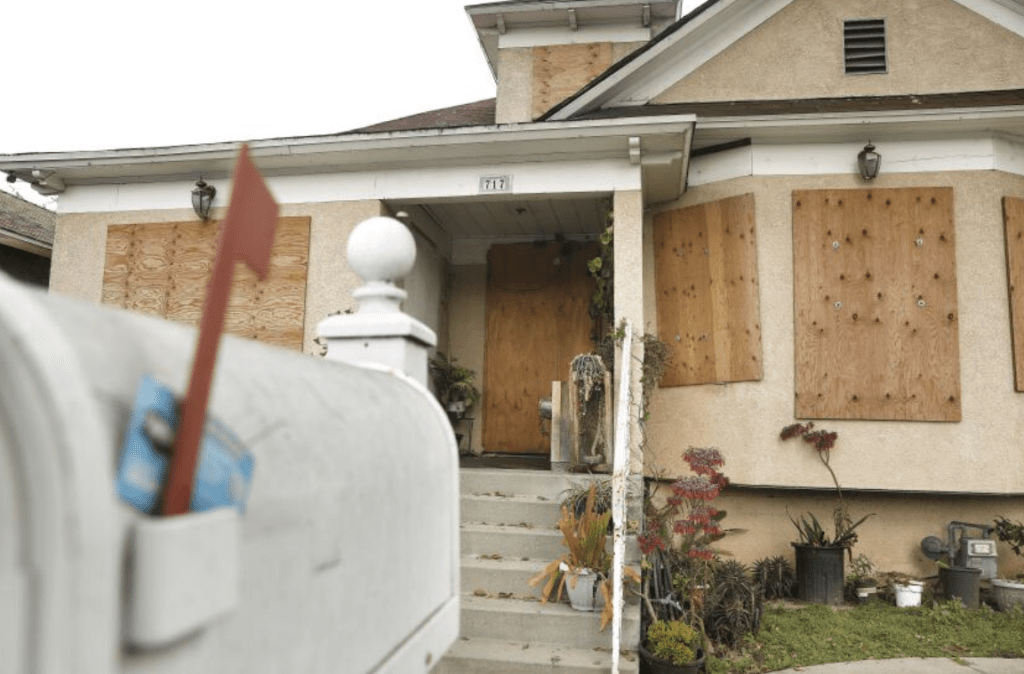
The resulting explosion did not contain the threat; it tore the heavy iron containment vessel completely apart, transforming a multi-ton piece of specialized police machinery into shrapnel. The shockwave ripped through East 27th Street with catastrophic physical force, instantly injuring 17 individuals, including 10 LAPD officers, one ATF agent, and six local civilians who had been left within the immediate radius. The blast wave shattered the surrounding urban landscape, damaging or completely destroying 35 residential structures, blowing out storefront windows, tearing roofs off family homes, and throwing multi-ton vehicles down the street like toys.
Instantly, 88 local neighborhood residents, comprising nearly 30 individual low-income households, were rendered homeless, their lives upended in a fraction of a second by an explosion that was completely preventable. At the exact moment of the detonation, I was on vacation in Mexico, attempting to spend time with my mother and son. My phone erupted with a direct video link showing the mushroom cloud rising over South LA. The image was jarring. I cut my family vacation short, boarded a flight, and returned to Los Angeles that Saturday morning—less than 48 hours after the explosion. Early Sunday morning, I walked directly into the active field command post on 27th Street. What I witnessed was a horrific, apocalyptic, and completely heartbreaking site.
A historic, tight-knit residential block had been transformed into a smoking field of debris, surrounded by shattered glass, boarded-up windows, and displaced families standing on the asphalt in a state of total shock. It was an operational nightmare born entirely of administrative negligence.
The smoke clearing over 27th Street did not just expose the physical ruins of a community; it illuminated a deeply entrenched, multi-tiered hierarchy of leadership failures, administrative hypocrisy, and weaponized corporate deceit that operated out of police headquarters. While the physical devastation of Part I stands as a tragic monument to procedural neglect, the structural breakdown that follows in Part II peels back the veneer of the LAPD’s executive suite. What emerges is a damning chronicle of how former Chief Michel Moore systematically deteriorated the hands-on training, resource readiness, and overall field effectiveness of the Bomb Squad during his continuous decade-long climb to power—all while actively supporting a self-serving, careerist CTSOB leadership that prioritized toxic, retaliatory field placements, personal corporate optics, and defensive lies to protect their own skin over the safety and mission of their teams.
The smoke clearing over the ruins of 27th Street did not just expose the physical wreckage of a working-class neighborhood; it illuminated a deeply entrenched, multi-tiered hierarchy of leadership failures, administrative hypocrisy, and weaponized corporate deceit operating out of the executive suites of police headquarters. While the physical devastation of Part I stands as a tragic monument to procedural neglect and unscientific field guesswork, the structural breakdown that follows in Part II peels back the polished veneer of the LAPD’s high command. What emerges is a damning chronicle of personal political survival, backroom drinking-buddy deals, and a ruthless double standard engineered to wrap favored insiders in institutional anonymity while weaponizing the disciplinary apparatus to systematically push independent operators out to pasture.