THE 10TH FLOOR SHIELD, TAXPAYER MILLIONS, AND THE ILLUSION OF REFORM

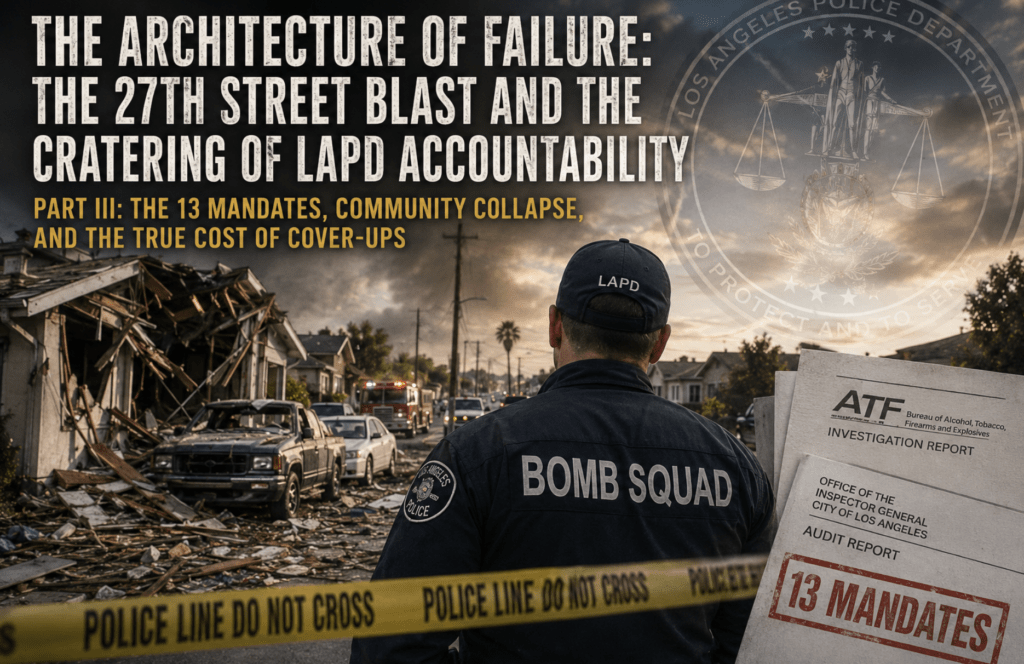
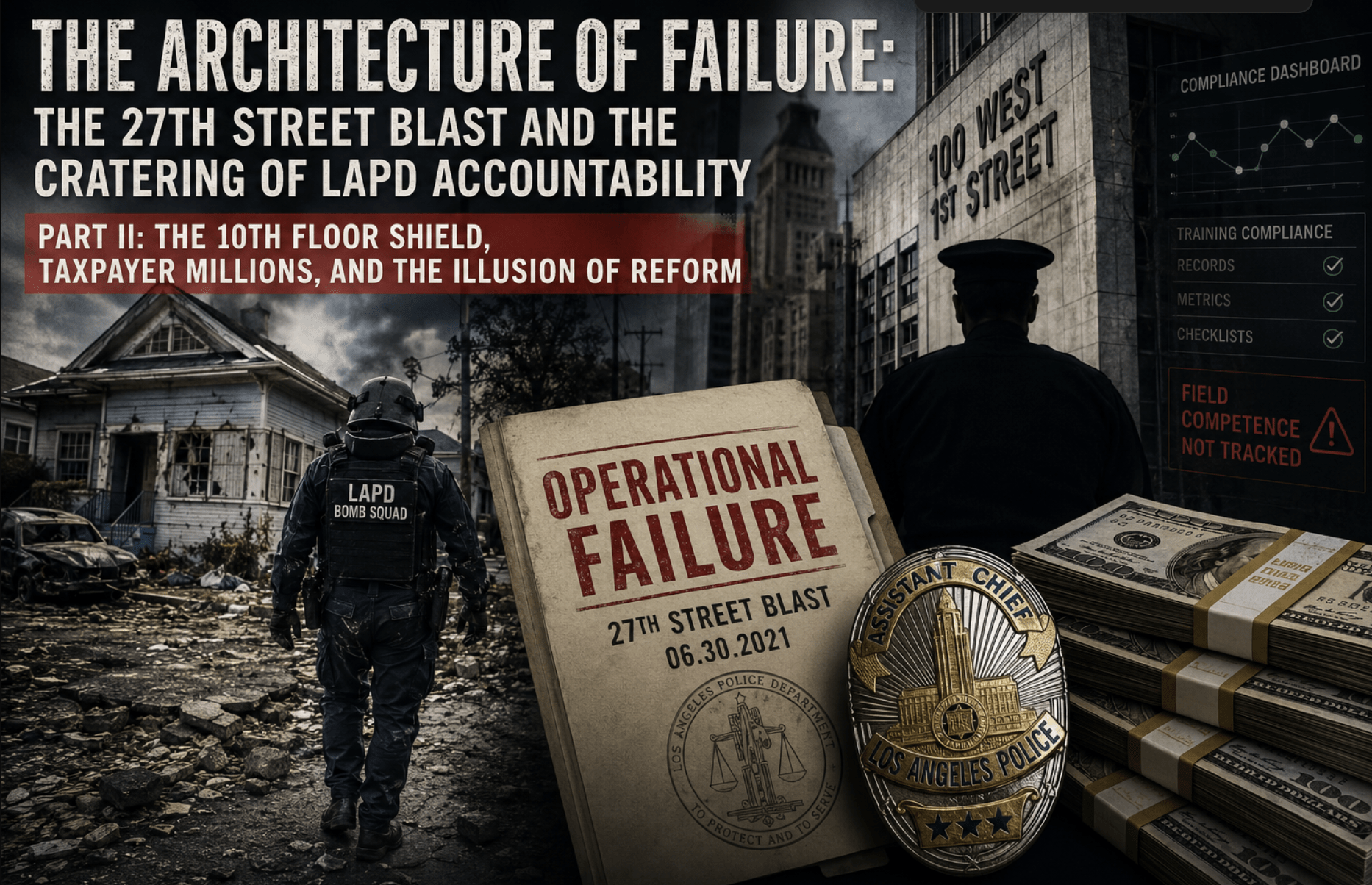
What was supposed to be a routine bomb squad detonation on 27th Street turned into a neighborhood catastrophe. The LAPD assured the public they had everything under control—until a massive, miscalculated explosion tore through a South L.A. block, shattering homes and trust alike. But the blast itself was only the beginning.
While the “protected class” at 100 West 1st Street immediately pivoted to optics, deflection, and personal survival, the rank-and-file at Newton Area and leadership within Central Bureau were left on the ground, absorbing the raw fury of a devastated, displaced community.
More concerning still was the response from the top of the Counterterrorism and Special Operations Bureau (CTSOB). Instead of taking ownership, the CTSOB leader pointed fingers at everyone else—a toxic pattern of blame-shifting that defined his entire climb up the ranks. Yet, in an agency where accountability flows downward, this failure wasn’t penalized; it was rewarded with a promotion after a historic operational disaster exploded under his watch.
In Part 1 we looked inside the institutional aftermath, exposing the structural breakdowns, the bureaucratic shields, and the architecture of failure that defined the cratering of LAPD accountability.
The structural lineage of the 27th Street explosion runs directly through the corporate career track of former Chief Michel Moore. Moore was widely celebrated within municipal circles as the department’s master architect of internal metrics, data dashboards, and post-consent-decree administrative audits. Yet, an analysis of his command timeline reveals that he did not simply inherit a broken tracking system; he spent a decade engineering the exact administrative environment that allowed the Bomb Squad to deteriorate from within.
Upon his promotion to Assistant Chief in January 2010, Moore was assigned as the Director of the Office of Special Operations (OSO), an executive posting he held for five consecutive years until 2015. In this role, Moore held absolute command over the Counterterrorism and Special Operations Bureau (CTSOB), which directly houses the Bomb Squad.
Following this tenure, Moore transferred in 2015 to serve as the Director of the Office of Administrative Services, holding authority over the department’s fiscal operations, training records, and personnel metrics. In 2016, he was promoted to First Assistant Chief and named Director of the Office of Operations, giving him command of all geographic patrol bureaus citywide—a post he held until June 2018, when he was sworn in as the 57th Chief of Police.
Across this 16-year trajectory, Moore built heavily managed digital dashboards that prioritized paper compliance over field competence. Under his watch, the safeguards designed to prevent high-liability failures systematically withered. The OIG investigation later exposed a massive compliance blind spot: the specific bomb technician tasked with mixing and constructing the countercharge used to detonate the fireworks had failed to meet minimum departmental training and qualification standards for all five consecutive years preceding the 2021 blast. Moore’s glossy dashboards failed to flag this deficit because they were designed to track data for corporate public relations rather than auditing real-world field skills.
Today, that same destructive management philosophy unfortunately remains protected by Assistant Chief Dominic Choi. Rather than guiding Chief McDonnell in reversing the operational backslide exposed by 27th Street, Choi has consistently doubled down on Moore’s legacy and failed policies. Under Choi’s executive direction, tactical training budgets have been repeatedly cannibalized, corners cut, and hands-on preparation for field officers reduced to historic lows.
The real-world consequences of this continuous mismanagement were laid bare in April 2026, when a Los Angeles Superior Court jury delivered a blistering $14.6 million retaliation verdict against the City and the LAPD. The civil lawsuit—brought forward by veteran firearms instructors Mark Hogan and Kristine Salazar, alongside expert department armorers Craig Burns and Alex Chan—exposed a top-down culture designed to silence specialists who warned that training cutbacks at the Edward M. Davis Training Facility left raw recruits without adequate firearms instruction and introduced range protocols that explicitly violated California safety standards and state law.
When these decorated instructors refused to validate these cut-rate training practices, the high command deployed internal affairs investigations to subject them to punitive demotions and involuntary transfers. This proved that under the legacy of Moore and Choi, the department would rather fast-track a “paper force” on a digital screen than protect the lives of its officers or the public. Tragically, decisions made under Choi and Moore’s watch have thus far resulted in seven unprecedented lawsuits by Captains for retaliation, with many more in the works. Choi vented to me more than once about his frustration regarding Moore’s policies, mismanagement, and unrealistic expectations. It remains a surprising path that he continues to guide the department into the same black hole he once complained about as First Assistant Chief.
The structural failure that paralyzed the Bomb Squad on June 30, 2021, can be traced directly to a calculated manipulation of the department’s promotional patronage system. The ultimate breakdown of scene supervision rested upon the shoulders of the supervisor on scene. I have opted to give him the dignity of privacy—unlike Moore’s legacy of throwing his objectors under the bus.
The career trajectory of this detective supervisor, whom I will refer to as Supervisor A—encapsulates how executive favoritism degrades field readiness. Years prior, former Chief Charlie Beck plucked Supervisor A from standard investigative and tactical rotations, pulling him out of active field assignments to serve as a trusted personal aide inside the Chief’s Office.
Supervisor A spent years insulated inside that executive bubble, completely detached from tactical realities. This long-term removal from the field severely deteriorated his operational spine, rendering him fundamentally unequipped to manage or command a critical, high-liability hazardous unit when he was later pushed back to the street. While frontline bomb disposal methodologies, hazardous chemicals, and TCV engineering limits were rapidly evolving, Supervisor A was locked away on the 10th floor pushing paper and navigating headquarters politics.
When he returned to the field as “Supervising Detective A” amidst severe controversy surrounding the Bomb Squad, his profound lack of contemporary field experience and technical competence stripped him of the authority needed to manage his handlers. The controversy surrounding his assignment as a technical supervisor erupted when it became clear that his placement was a product of headquarters favoritism rather than earned expertise. His leadership position was created to provide him a comfortable home after his tenure as Beck’s right-hand man for close to three years.
The catastrophic real-world results of this “house mouse” background were documented by the OIG: during the loading process on 27th Street, Supervisor A remained completely passive, repeatedly walking away from technical calculation discussions. When a veteran technician stepped forward with an explicit, urgent warning that the containment truck was being dangerously overloaded, Supervisor A’s lack of operational spine and field confidence caused him to completely buckle under peer pressure. Rather than asserting command, halting the operation, or demanding a physical scale, he joined other team members in telling the dissenting technician to “relax” just moments before the final detonation.
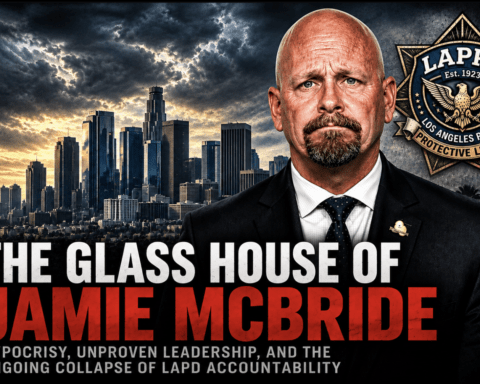
While Chief Moore managed macro-metrics, the immediate operational culture of CTSOB was guided by David Kowalski. Kowalski entered the bureau’s executive command structure in 2019 as a Commander, holding direct oversight over tactical units during the morning of the 27th Street blast.
The OIG inquiry exposed a toxic culture of peer pressure and a total erosion of scene supervision under his command. Kowalski’s internal record highlights a leadership philosophy that consistently prioritized career shielding and political upward mobility over operational safety. His reputation as an unprincipled climber who willingly tears down subordinates to secure promotions was cemented years prior during his tenure as Captain at Newton Division.
In researching further beyond my own observations for this article, I came across countless stories of self-serving behavior and callous performances by Deputy Chief Kowalski. Looking back, I regret some of the paths he led me down during my time as the Director of the Office of Special Operations. Unfortunately, sometimes you trust your people to guide you correctly, and I certainly did not want to be a micromanager within the department.
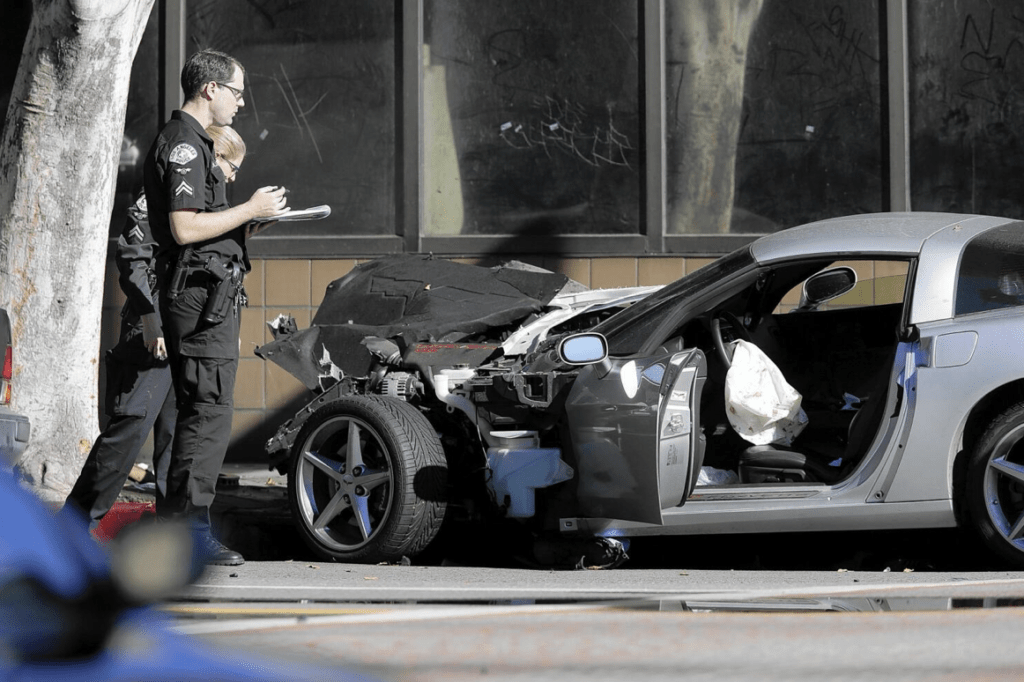
During the high-profile “Newton Corvette shooting” incident, Kowalski pulled a supervisor out of roll call, explicitly praising her as an “excellent leader” and stating that patrol desperately needed strong production numbers in the crime mission area, adding, “If anyone could get them to do it, it would be you.” Yet, a mere four hours later, when the tactical situation went sideways on the street, Kowalski completely flipped. At the active crime scene, he looked this supervisor square in the face, essentially called her a liar, and aggressively barked at her to “get her story straight.” In a blatant act of self-shielding, Kowalski then lied about his own command decisions, claiming after the fact that he had called off the vehicle pursuit to protect his own skin from administrative blowback. Although there were some critical tactical and use-of-deadly-force concerns post-incident, the initial response by then-Captain Kowalski was to protect his own skin and throw his supervisors under the LAPD bus.
The depth of Kowalski’s transactional nature resurfaced during acute personal crises within his chain of command. When I faced severe medical issues in early 2023 and initially announced my intention to retire in August 2023, Kowalski conspicuously failed to show a shred of genuine concern for my health, recovery, or the stability of my family. Instead, his concern was entirely self-serving: he repeatedly used my medical announcement as an opening to ask whether my departure would finally make him eligible to be promoted to Assistant Chief, and aggressively lobbied me to use my final influence to push his promotion with Chief Michel Moore.
The political transparency of this corporate maneuvering became undeniable in April 2022, when I officially assumed my role as the Director of the Office of Special Operations. In one of our very first executive encounters upon my appointment, Kowalski cornered me to aggressively brief me on his past operational choices. Rather than discussing ongoing tactical risks or squad readiness, his consuming priority was to defensively outline and justify his handling of the Sergeant Barillas Valentine meme incident. It was an immediate, transparent attempt to smooth over his transactional corporate past, shield his upcoming promotional viability, and manipulate the incoming command authority before I could independently audit the operational failures fracturing his bureau.
Kowalski’s track record remained centered on optics. When his long-time best friend, roommate, and family friend forwarded a controversial meme, Kowalski—rather than simply asking Barillas to stop—elected to initiate a formal personnel complaint to signal compliance to the 10th floor. Moore immediately used this as a selfish “look at me” opportunity and recommended termination for Sergeant Barillas. He ultimately dragged Sgt. Barillas’s family and reputation through the LAPD mud for over six months until an administrative hearing cleared Barillas of any wrongdoing.
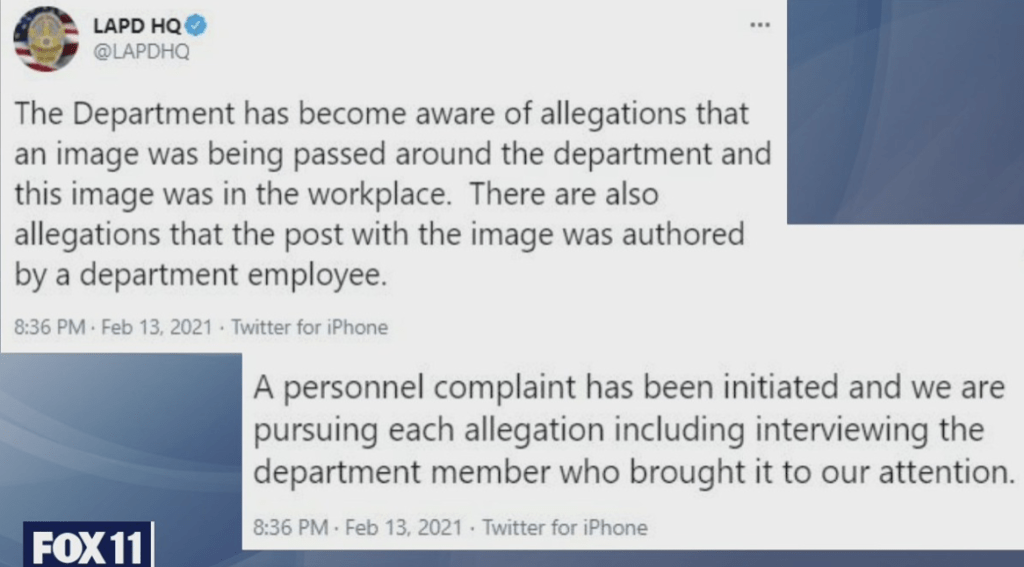
In this case, there was no blanket of privacy; Barillas was thrown out to the media wolves to be systematically chewed away. I faced this same selective privacy when false allegations against me were leaked, publicized, and fed to rabid media vultures. Remember, Moore put Barillas out to public destruction with no privacy over a meme. Yet his close associate, drinking partner, and best friend—who had a very well-known reputation for sleeping and traveling with subordinates—was left untethered for years to feed from the flock of women as he moved up the ranks.
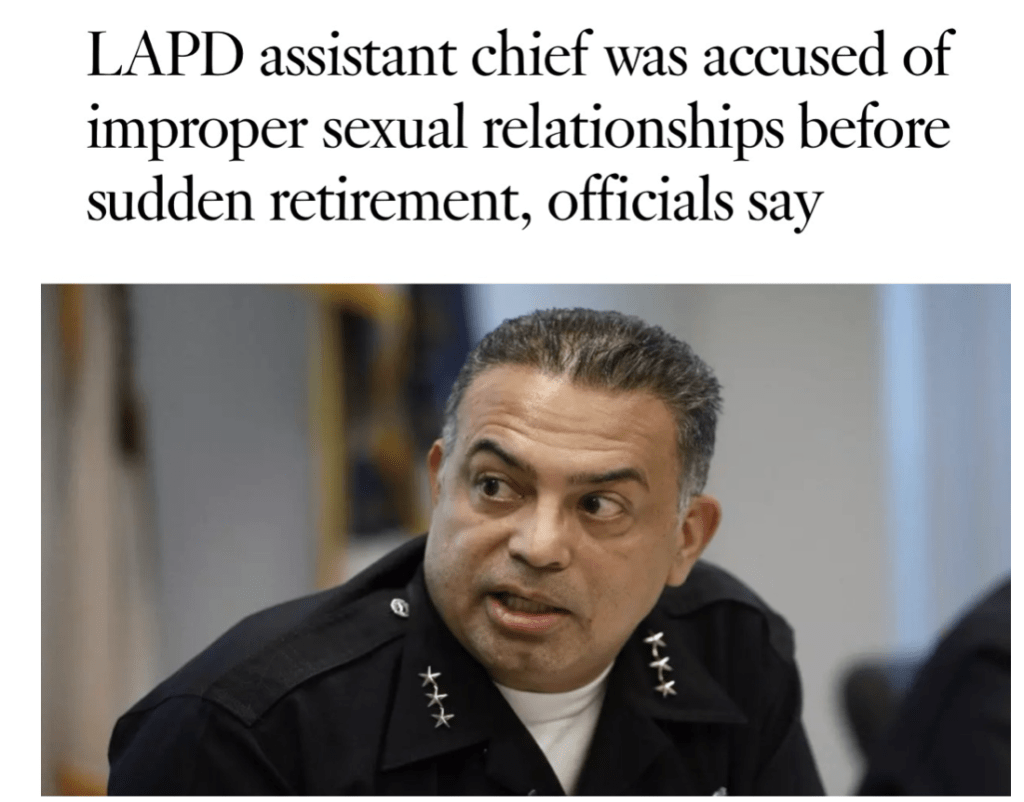
When Villegas and Dawn Silva were caught at the Elysian Park pool and a public parking lot engaged in sexual acts, Mr. Moore once again hid behind a blanket of state privacy restrictions, claiming he was unable to address it. Even after this, and as allegations surfaced of other criminal activity by his Villegas clan, Moore took to the cameras, claimed privacy, and stated no crime occurred—the usual “nothing to see here” mindset, simply because it involved his capering buddies. Yet Sgt. Barillas and others who were not part of the capering circle were thrown under the LAPD bus. Was promoting Kowalski and keeping him over the Counterterrorism Bureau after a botched explosion—as identified in multiple reports—simply a reward for throwing his subordinates under the bus?
Furthermore, Kowalski regularly demonstrated a toxic lack of professional integrity by frequently entering my office to aggressively disparage and criticize his own partner, Commander Paulson, transparently trying to score cheap political points with anyone who would listen. By running an active whisper campaign against peers while failing to audit the hazardous-materials units melting down on his watch, Kowalski signaled to the entire department that backstabbing would be rewarded, while operational safety carried no career value.
Long before he was protected by headquarters for the 27th Street disaster, Kowalski’s pattern of punitive, retaliatory management was well-documented by those forced to work under him. While serving as a Lieutenant and Watch Commander at Olympic Division, he became notorious for running a command characterized by intimidation and petty vindictiveness. Officers who dared to voice concerns about his tactical decisions or question operational inefficiencies were immediately marked for administrative punishment.
Kowalski was known for systematically pulling outspoken officers out of their standard field assignments and banishing them to the front desk—using the assignment not as a functional deployment, but as a weaponized administrative penalty to silence dissent and stifle open communication. This retaliatory behavior was paired with a deeply abrasive, documented bias against female officers. Whenever female personnel spoke up or stood firm against his leadership failures, Kowalski’s response was uniquely aggressive and dismissive. He routinely deployed gender-biased friction and hostile administrative maneuvers to undermine their authority, pass them over for specialized details, and push them into isolation, signaling a pervasive intolerance for strong, independent female voices under his command.
This was not mere administrative negligence; it was a calculated, top-down syndicate of self-preservation. While the 10th floor weaponized the media to destroy independent officers over trivial infractions, they threw an impenetrable cloak of state-sanctioned privacy over their own catastrophic failures and moral bankruptcies. The message to the rank-and-file was unmistakable: operational competence means nothing, but absolute fealty to the Chief’s inner circle means everything. As the dust settled on 27th Street, the department’s leadership wasn’t focused on rebuilding a shattered community—they were exclusively focused on fortifying the shields around themselves.
In Part III we will expose the hollow reality behind the department’s “13 mandates” and its so-called institutional reforms. We will take you inside the volatile community town halls where downtown leadership cowered behind their desks, abandoning Newton Division’s frontline officers to face the neighborhood’s justified fury alone. Furthermore, we will dismantle the egregious double standards of both the LAPD’s secretive disciplinary matrix and the local media—revealing exactly how the 10th floor weaponized public relations to destroy independent cops while permanently shielding their inner circle from the multimillion-dollar fallout.