PART TWO
An audit by the Office of the Inspector General (OIG) covering multi-year international deployments revealed severe administrative vulnerabilities and questionable accountability within the LAPD’s foreign travel cohort. The department could not systematically verify whether all authorized employees completed their scheduled international travel, with at least one officially logged trip confirmed to have never occurred. Incomplete record-retention policies left the department without sufficient documentation to properly evaluate the funding, justification, and relevance of trips taken. Written records for foreign excursions consisted merely of brief “Travel Benefit Statements” used strictly for expense reimbursements, entirely devoid of formal tactical debriefs or genuine operational takeaway analysis.
Furthermore, the department operated without formal protocols to vet foreign contacts, perform localized risk assessments, or maintain proper check-ins for travel personnel. Rather than serving as essential intelligence-gathering opportunities, these international delegations became clear examples of missed opportunities and lost planning potential, functioning on a pattern of executive loyalty rather than organizational necessity under former Chief Michel Moore. High-ranking commanders and favored insiders utilized private donations, Los Angeles Police Foundation grants, and city taxpayer-sponsored accounts to indulge in sightseeing and tourist activity abroad—only to return home and declare themselves “too busy” to bring back any tangible value, operational return on investment, or structural benefits to the rank-and-file officers or the taxpayers of Los Angeles.

The hypocrisy of this patronage-driven travel policy was laid bare in 2021 when I attempted to send a strategically selected captain, lieutenant, and officer to observe planning for the upcoming Super Bowl[cite: 1]. These specific staff members were slated to hold vital, hands-on roles in upcoming major event planning, including the 2026 World Cup and the 2028 Olympics. Exposing them firsthand to live mega-event coordination, command post operations, and game-day operational logistics would have yielded immense, lasting value for the department’s institutional readiness. Yet, Chief Michel Moore summarily shut down the request, permitting only the captain to attend, who has since retired.
When this short-sighted decision was challenged, Moore’s Chief of Staff, Randolph, candidly acknowledged the double standard—admitting that other preferred members of the department traveled at their leisure with absolute impunity. It was mutually understood within the upper command tier that Deputy Chief John J. McMahon—a known Sagebrush Cantina drinking buddy of Chief Moore—enjoyed free rein and an open checkbook on travel, having been placed into a technical position despite possessing no prior background or formal experience in technology. McMahon’s travel did little to benefit the operational needs of the LAPD, serving instead to grease his and Moore’s future private-sector consulting connections upon their retirement. During one such trip to Scotland, McMahon boasted internally about having golfed at the prestigious St Andrews Course yet could not explain to anyone in the department what benefits were brought back from such a lucrative, taxpayer-funded excursion to Scotland.
Internal friction and political maneuvering have consistently defined major events and administrative planning trajectories under the old guard. Commander Hamed Mohammadi was removed from the Olympic planning team not for incompetence, but specifically because he dared to question the self-serving intentions and trajectory of Assistant Chief Rimkunas and the major events planning leadership. Sidelining Mohammadi cleared a path to insert Commander Ryan Whiteman into planning roles, despite Whiteman possessing little to no major events experience and a career background anchored primarily in Community Safety Partnership (CSP) housing project details. Significant command staff uproar erupted when Whiteman was cleared for international travel despite being a finalist for the South Pasadena Police Chief post, and when denied a Deputy Chief promotion for planning, he requested removal from the assignment.
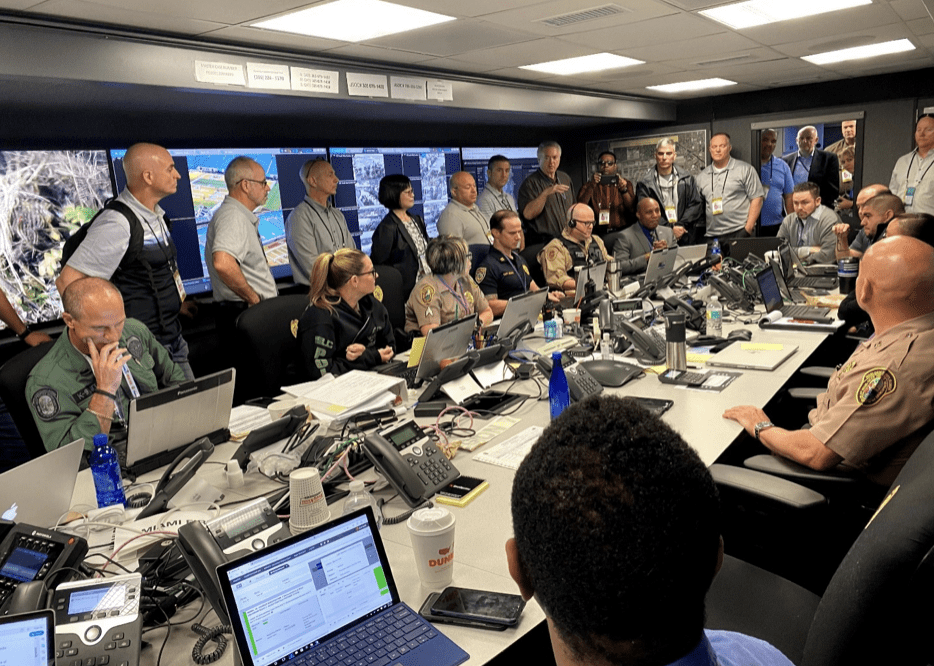
Assistant Chief Rimkunas—the same official who accepted VIP perks, luncheons, and travel during a 2020 Super Bowl planning trip to Miami organized by the Miami-Dade-led Super Bowl host committee—returned home only to claim he was “too busy” running Internal Affairs to help plan the L.A. Super Bowl. All the while, Internal Affairs was heavily weaponized to build cases against perceived critics and dissidents rather than addressing genuine department readiness, contributing to a massive backlog of administrative fatigue and political patronage.
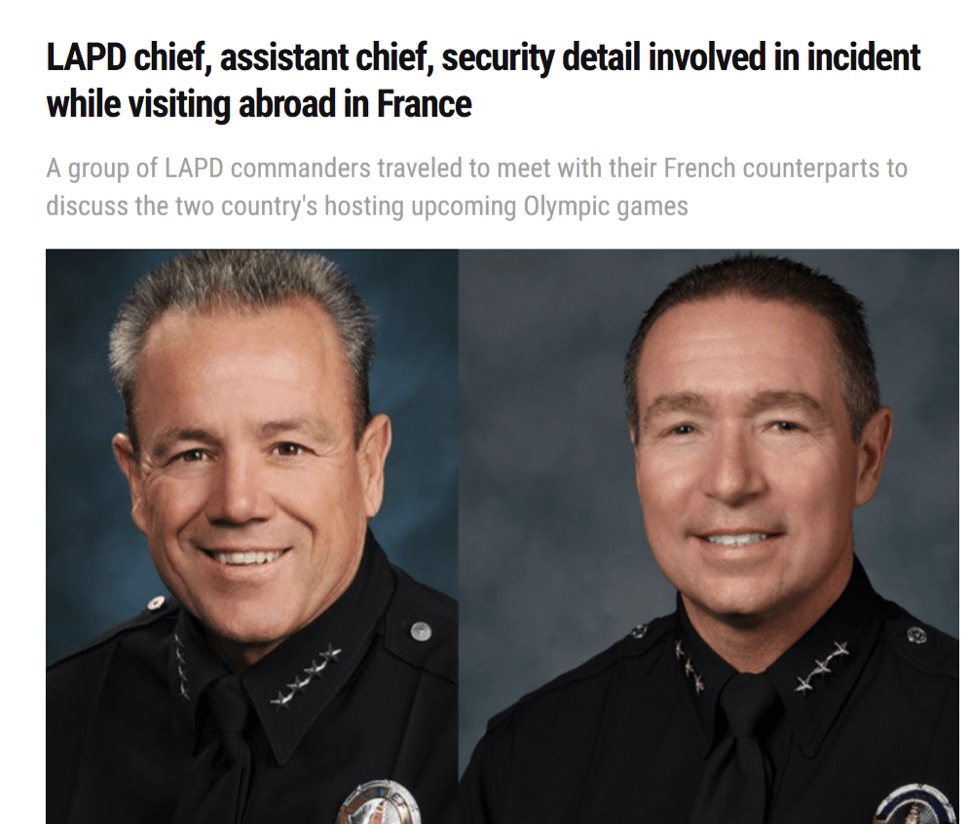
The disconnect between public relations optics and operational reality was starkly demonstrated during a November 2021 preliminary trip to Marseille led by Chief Michel Moore and Assistant Chief Robert Marino, accompanied by their spouses, security detail, and a local attaché. While walking after dinner, a local citizen bumped into Marino’s wife. Convinced her cell phone had been stolen, the executive protective detail aggressively pursued and rough-housed the citizen on foreign soil, only to discover the phone was never missing. Because municipal American police officers hold zero lawful authority or jurisdiction in France, the wrongful detention sparked formal diplomatic complaints and internal professional standards reviews that were smoothed over with standard apologies—a classic case of “nothing to see here, it’s my buddy, all good!” All that political turmoil yielded nothing tangible, informative, or useful for planning the 2028 Games. Stories of physically assaulting French citizens and stack of receipts were all they had to show for the trip.
Building upon the audit findings and administrative patronage exposed in Part I, Part II examines the quantitative realities of the 2028 security deficit, the desperate stopgap of shutting down the recruit academy, and the extensive, foundation- and vendor-backed travel ledger authorized under Information Technology Bureau (ITB) leadership during the McMahon tenure. As examined previously, the veneer of polished Major Events Group briefings obscures an under-engineered response capacity on the asphalt[cite: 1]. The hypocrisy of this selective travel policy was confirmed when operational challenges arose; as acknowledged by then-Chief of Staff Randolph, favored members of the department traveled at their leisure with absolute impunity. While operational planners requesting funds to observe critical outside events like the Super Bowl were flatly denied or scaled back, Deputy Chief John J. McMahon enjoyed an open checkbook and free rein. Rather than benefiting the operational needs of the LAPD or preparing the city for mega-events, these trips served personal career and consulting networks, leaving the department struggling to execute overdue plans for the 2028 Olympics. The true financial footprint of this open-checkbook era is reflected across itemized municipal disclosures and unitarized corporate/foundation sponsorships. A complete accounting of known ITB travel expenditures, retroactive administrative audits (Report Number BPC 20-0135), and foundation- or vendor-sponsored scouting missions under McMahon’s command details an extensive paper trail. The report outlines extensive travel funded by taxpayers, wealthy donors, or donations funneled, through the LA Police Foundation and other law enforcement organizations. Other significant and controversial perks afforded by major sponsors such as Verizon, Motorola, and Axon were among the large-scale funding sources for these trips. Luxury gifts, expansive open bars, and lavishing private parties at major police events—such as the annual Major City Chiefs Association conference or the International Association of Chiefs of Police (IACP)were common practices under Chief Moore’s tenure.
One significant example was the luxurious Scotland trip, funded by the Police Executive Research Forum and the Los Angeles Police Foundation, which yielded nothing to show for it beyond a good tee time. Carrying a staggering $47,211.23 price tag, this high-end travel was nothing more than a field trip for the inner circle. What best practices were brought back from this excursion? A few great travel stories and outstanding golfing weather—they are simply fortunate they did not beat a Scottish citizen during the vacation. The truly critical point of this excursion is that Moore’s close-knit circle was sent not once, but twice, with trips taking place in November 2015 and May 2022 (BPC #26-018).
*(Note: Initial unapproved administrative travel batches regularized under BPC 20-0135 totaled $34,595.83, which were supplemented by subsequent Los Angeles Police Foundation and corporate vendor contributions. Clearly, no long-term benefits or planning incentives for large-scale events were realized during these trips. Chief McDonnell has since stepped back from several key technical pathways established during previous years.
Under the leadership of Chief Jim McDonnell, the appointment of Dean Gialamas as the new Information Technology Bureau (ITB) Chief and Chief Information Officer (CIO) marked an immediate and decisive break from the passive, insular posture that characterized the John J. McMahon era. Where previous leadership routinely deferred to third-party vendors and accepted superficial reassurances that “all is good” in the face of glaring technical vulnerabilities, Gialamas’s arrival instituted active oversight, rigorous technical governance, and enterprise-level accountability.
By replacing administrative complacency with an insistence on data integrity and direct engagement with regional and municipal stakeholders, the department abandoned its old habits of untracked vendor collaborations and opaque, foundation-backed junkets, pivoting instead to a transparent, battle-tested modernization strategy urgently required to secure the agency’s digital infrastructure ahead of the 2027 Super Bowl and the 2028 Summer Olympic and Paralympic Games. Whether this is too little, too late to fix the technical failures of a previous administration—heavy on excursions but devoid of lessons learned—only time will tell.
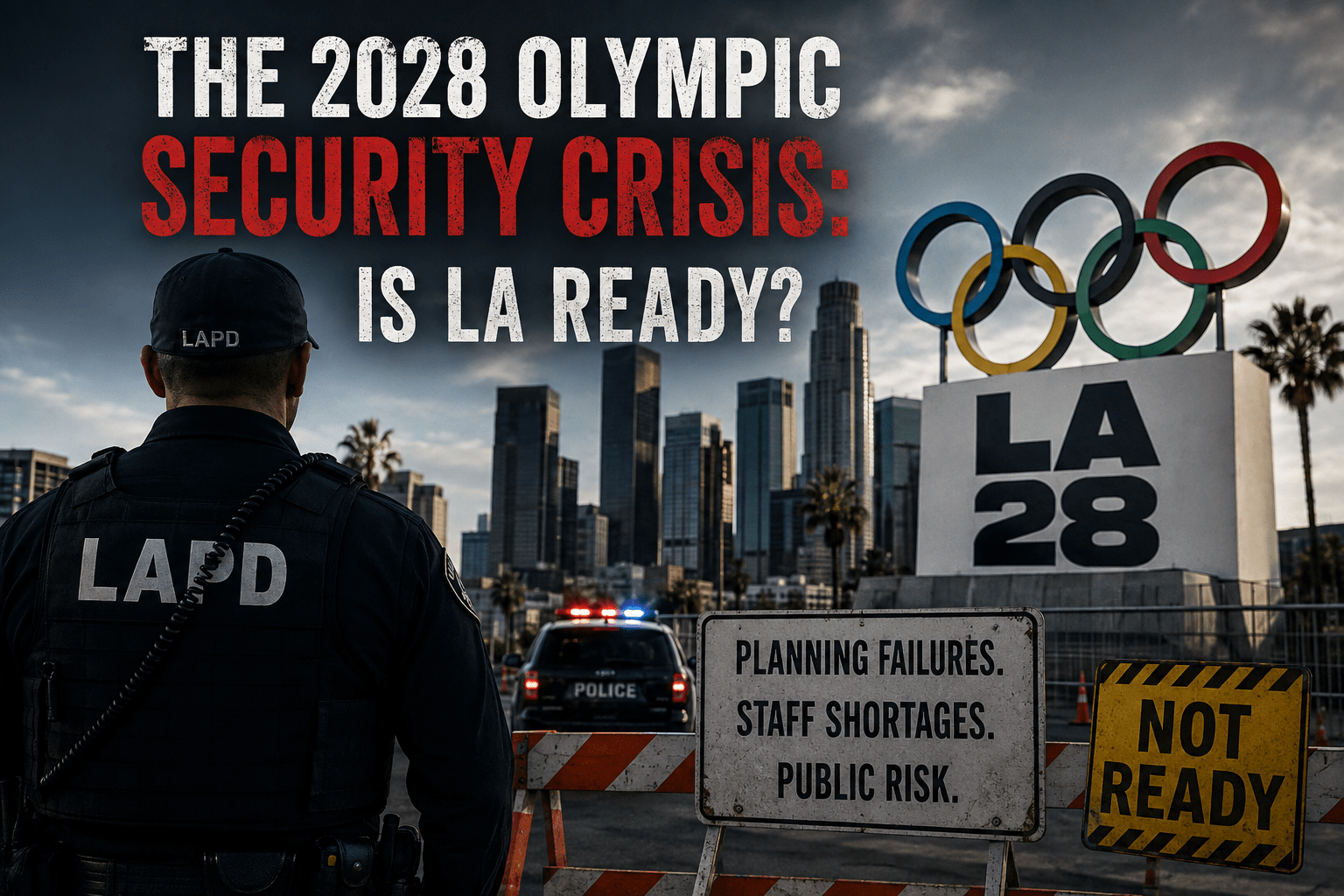
The staffing challenges for the Olympics remain staggering. Plugging an unfulfilled daily post deficit of 4,458 operators for the 2028 Olympic operational window has forced leadership into the desperate measure of suspending all training—including the recruit academy, in-service, firearms, bike, and motor schools—for eight months to harvest roughly 309 instructional personnel for the field. With active sworn strength lingering near quarter-century lows of approximately 8,600 officers, halting academy classes sacrifices the agency’s long-term future to feed an administrative treadmill trying to outrun constant attrition. Pulling instructors out of a controlled training environment into field rotations hurls unpracticed personnel onto the streets who possess zero working knowledge of basic, modern daily patrol operations, We can all bet that countless administrative personnel and academy staff will mysteriously become ill before putting on a uniform to staff a fixed post. Remember, we have several three-star chiefs currently in office who were “too busy” to do the real work in 2022—what can we possibly expect from their subordinates?
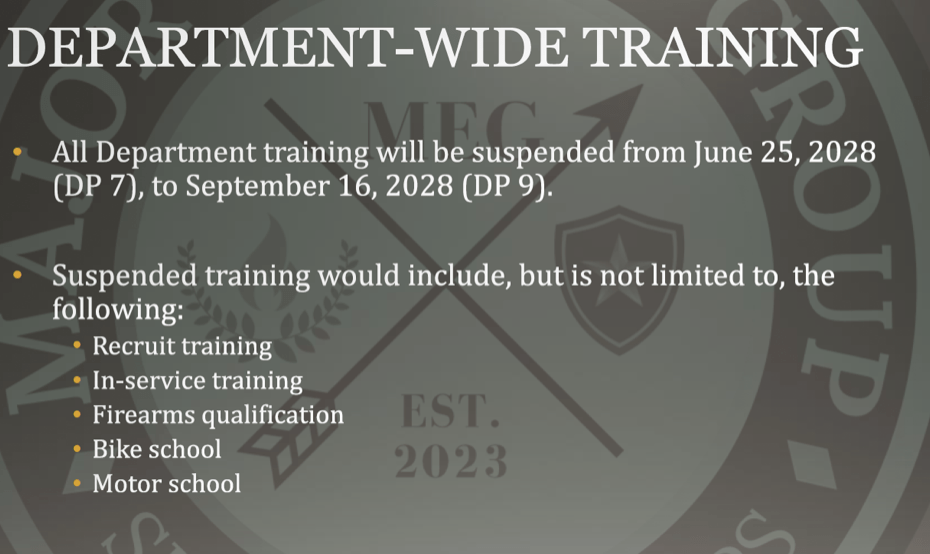
This training suspension creates a devastating structural domino effect across the entire department, completely cutting off the pipeline used to replenish routine personnel losses from retirements and resignations, and causing the department to fall off the hiring treadmill entirely. Attempting to artificially hyper-inflate class sizes either before a planned suspension or immediately afterward creates an impossible administrative bottleneck. Although applications rose between 2022 and 2024, completed background investigations and psychological evaluations dropped sharply, with the average processing timeline stretching to nearly a year (349 days) per applicant. Forcing through inflated candidate numbers without fixing underlying vetting capacity either invites severe institutional liability through rushed background checks or triggers massive applicant drop-off as candidates defect to neighboring agencies. Combining an overburdened hiring mechanism with artificial pre- and post-shutdown surges guarantees that overall deployment numbers will continue to spiral downward, driving up exhausting mandatory overtime and degrading public safety. With the July 24, 2026, graduation of just 16 recruits, 7 of whom were from outside agencies, we can anticipate ongoing failures and a staggering loss of staffing.
Delving deeper into the systemic inertia plaguing the Los Angeles Police Department’s Major Events Group (MEG), the challenges of preparing for the 2028 Olympic and Paralympic Games extend far beyond mere numbers on a spreadsheet. Planning is frequently paralyzed by an insular hierarchy that critics characterize as the “blind leading the blind,” where high-ranking administrative assignments are treated as rewards for political alignment rather than operational trials requiring battle-tested competence.
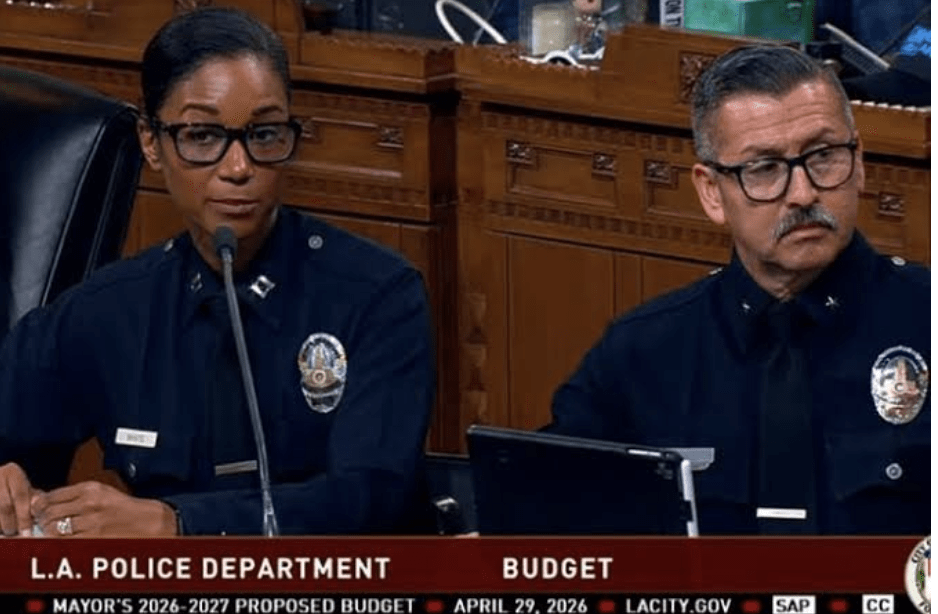
A prime example of this dynamic is Captain Shannon White, who currently helps lead the Olympic planning team under the Major Events Group. Real-world experience, critical thinking under pressure, and proven field command in high-stakes environments are absolute prerequisites for managing a global event. Yet, Captain White has been consistently shielded from these essential operational trials through administrative arrangements, high-minded rhetoric, and the coattails of her family legacy and mentors like the late Captain Paul Ennox. Her career trajectory illustrates a pattern of avoiding front-line operational duties: as a rookie officer, she was granted a desk assignment to complete her degree from Stanford University behind a desk, followed later by brief stints at Pacific and Hollywood. When promoted to sergeant in 2014 and given field leadership in Southeast Area, her lack of field composure was laid bare when she suffered a public breakdown over the radio frequency during a high-stress vehicle pursuit, crying as she unsuccessfully ordered units to discontinue. Following this critical field failure, White was quickly transferred to the safety of South Bureau administration and retreated into inside assignments across Internal Affairs, the Office of the Chief of Police, the Office of the Chief of Staff, Constitutional Policing, and number-crunching for Super Bowl planning—insulating herself from the hardened operational experience vital for field command.
Compounding this lack of operational readiness is a glaring deficit in loyalty. During recent discussions regarding pretextual traffic stop policies, White reportedly threw Chief McDonnell under the political bus during a meeting with city councilmembers, claiming McDonnell “didn’t want the pretext policy and was stalling,” all while orchestrating back-door maneuvers to pitch herself to the Mayor’s office as Deputy Mayor of Public Safety. Placing an administrator with a documented history of field meltdowns, back-office insulation, and self-serving political disloyalty in a central Olympic planning role poses a profound risk to field personnel and incoming mutual-aid resources alike. Unfortunately, LAPD has a history of created divisions, side agreements and sheltering many females to protect from real world experience is not unusual. We will dive into these actual phenomena’s in future articles.
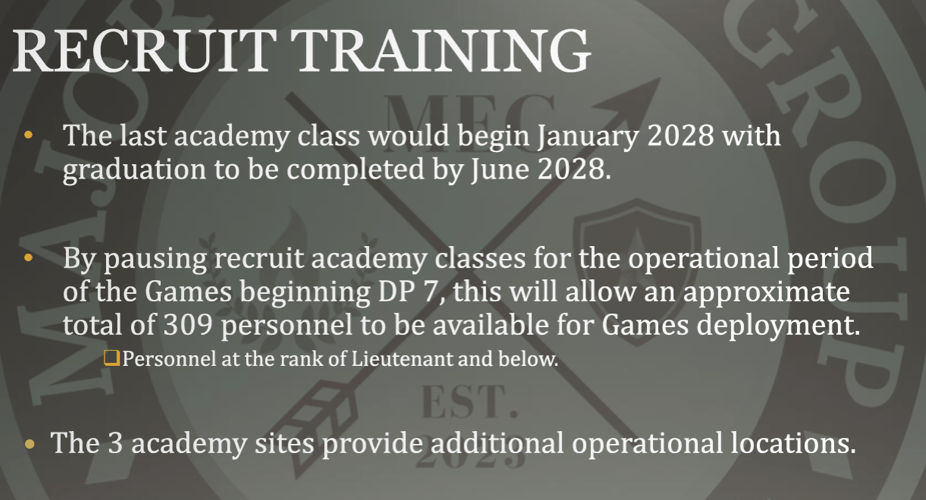
Instead of professionalizing incident management and modernizing tactical response frameworks, leadership has continually resisted the adoption of standardized training frameworks. This includes a long-standing reluctance among upper command tiers to mandate and enforce rigorous Incident Management Team (IMT) curricula—such as standardized ICS-300 and ICS-400 criteria—leaving the department without a stable, full-time response cadre. In a recent presentation by the Major Events Group, a well-orchestrated PowerPoint pointed nowhere toward addressing these training deficiencies or preparing personnel for the incredible responsibility associated with real-world threats and the massive influx of international guests.
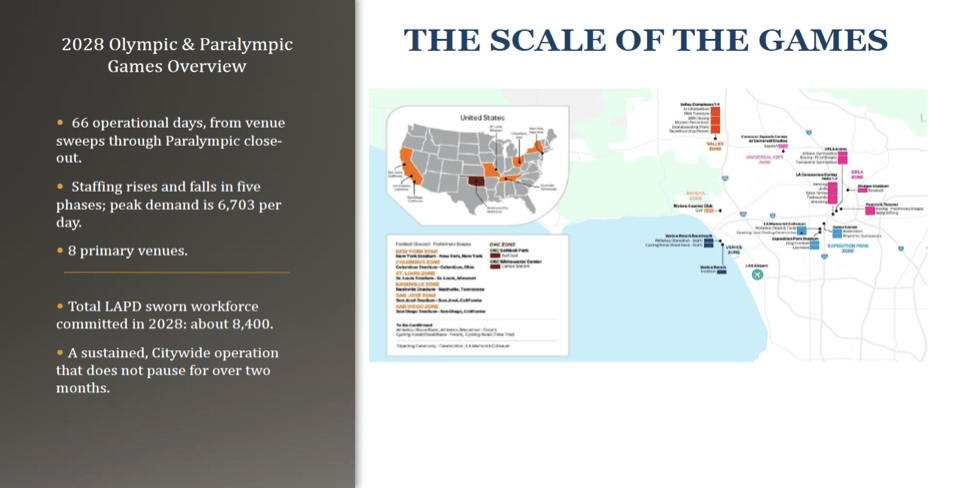
As Los Angeles races toward these mega-events, the security landscape has transitioned from theoretical discourse into a volatile, high-stakes operational emergency. Recent intelligence developments—such as the March 2026 TATP-based explosive incidents at Gracie Mansion in New York, paired with heightened domestic and international threat signals following the death of Iranian leadership in February 2026—demonstrate that lone-wolf operatives and active sleeper assets pose an immediate, tangible danger to major metropolitan hosts.
Yet, the current municipal planning apparatus remains severely unready, defined by an acute deficit of physical infrastructure and seasoned, street-level command experience. Historic lessons from multi-assault scenarios like the 2008 Mumbai attacks—once operationalized across the LAPD through robust Multi-Assault Counter-Terrorism Action Capabilities (MACTAC) doctrines—have been systematically degraded into superficial, check-the-box exercises.

Critical municipal infrastructure intended to serve as a consolidated multi-agency command environment—such as the expansive facility on Alameda Street—was bypassed and repurposed into a parking lot for city sanitation trash trucks. This decision forces tactical planners into compromised, improvised workarounds, mirroring the chaotic conditions of previous civil unrest where operations were directed from temporary trailers in parking lots rather than a fortified, state-of-the-art Command Operations Center. While the brass luxuriated on Parisian sidewalks and traded luggage-carrying details for corporate photo-ops, they signed away the department’s future on the asphalt—trading the blood, sweat, and tactical readiness of the rank-and-file for a terminal administrative collapse that leaves Los Angeles naked to the world theater.