From the Editor:
In public safety and military reporting, line-of-duty deaths from gunfire, ambushes, and tactical crashes rightfully receive solemn honors. We build monuments to these sacrifices, etch names into black granite, drape caskets in pristine flags, and broadcast solemn motorcades across the evening news. Yet a far deadlier, quieter attrition unfolds inside the living rooms, bedrooms, and driveways of our police officers, sheriff’s deputies, correctional peace officers, and military veterans.
The relentless rhythm of mandatory overtime drafts, sleep deprivation, hypervigilance, institutional betrayal and cumulative trauma does not vanish at end of watch or upon transition to civilian life. It spills across the threshold—straining marriages to the breaking point, reshaping the psychological architecture of our children, and, in far too many instances, culminating in silent, preventable tragedies that leave departments and families permanently fractured. While government bureaucracies and department command staffs tout internal wellness portals and glossy brochures, the spouses and children holding down the home front are routinely treated as operational collateral damage.
In this expansive, investigative analysis, contributor Al Labrada draws upon more than three decades of command-level law enforcement leadership, hard empirical data, clinical research, and raw personal reckoning to confront the suicide crisis gripping the LAPD, LASD, the California Department of Corrections and Rehabilitation, and our nation’s veterans. Most critically, he turns the lens inward, offering an unflinching examination of the institutional betrayal, operational exhaustion, collateral damage and his own experiences borne by the families left behind.
By Al Labrada
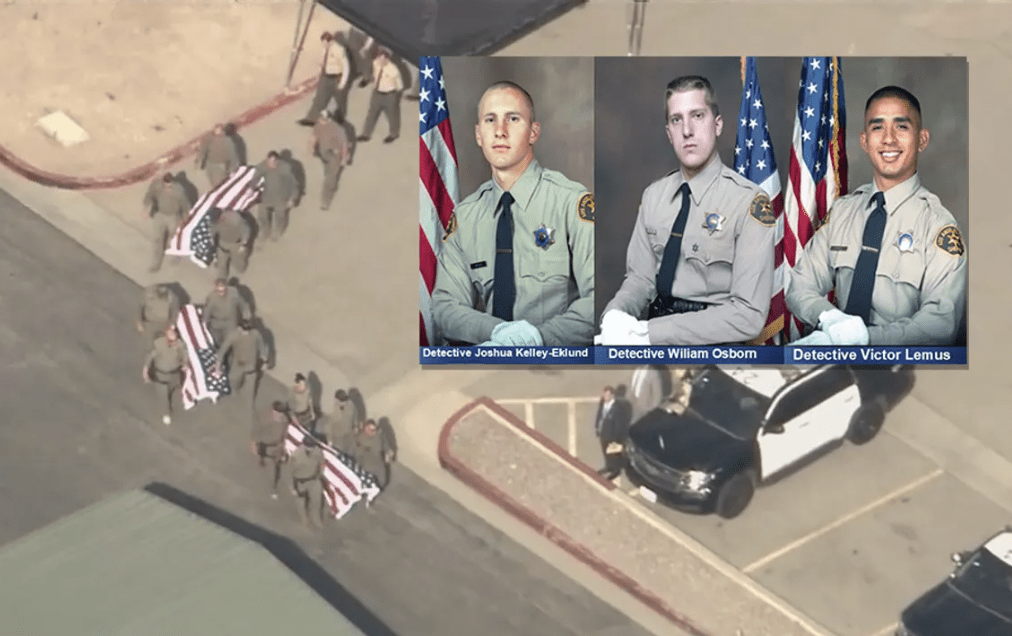
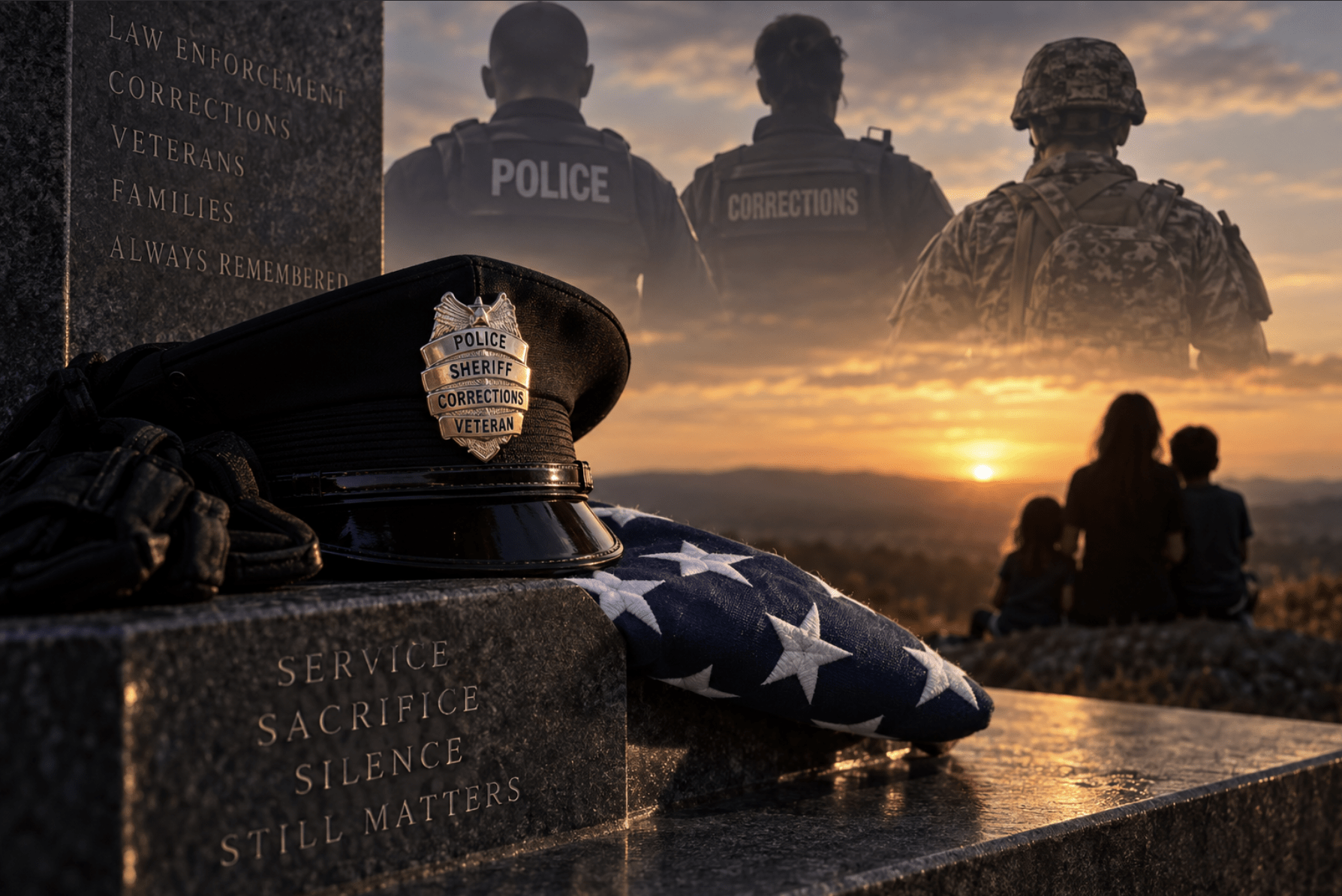
Every year across California and throughout the United States, law enforcement agencies, custodial departments, and veterans’ organizations gather for annual memorial services. We stand at rigid attention in ceremonial dress uniforms. We listen to the mournful skirl of the pipes, endure the rifle volleys of the 21-gun salute, and watch grieving widows and hollow-eyed children accept neatly folded flags with solemn stoicism. We meticulously track and honor those lost in the line of duty, those taken by dynamic ambushes, prison riots, vehicular assaults, or tactical shootouts.
Yet, alongside this public ledger lies another roll call one far longer, darker, and steeped in a suffocating institutional silence.
Across California and the United States, more military veterans, municipal police officers, county sheriff’s deputies, and state correctional peace officers lose their lives each year to suicide than to felonious homicides or line-of-duty incidents combined. Behind the polished seven-point stars, the tactical body armor, and the heavy pneumatic security sliders of California’s maximum-security prisons lies an unrelenting operational grinder. It is an occupation that demands total emotional detachment while on the clock, only to follow personnel through their front doors, exacting an unintended, devastating toll on the spouses and children who wait for them at home.
For decades, tracking suicides across policing, custodial institutions, and veteran cohorts was obstructed by stigma, departmental compartmentalization, and fragmented reporting. While the Department of Veterans Affairs compiles comprehensive annual reports, municipal police departments, county sheriff’s offices, and state correctional systems have historically lacked centralized, open ledger.
Even at the federal level, official reporting remains fundamentally broken. Congress passed the Law Enforcement Suicide Data Collection Act mandating the FBI to track these deaths starting in 2022, but because agency participation remains voluntary, the inaugural federal report captured only 32 deaths nationwide—a statistical fiction caused by agency refusal to participate.
The reality on the ground is documented instead by independent research organizations—principally First H.E.L.P. / Blue H.E.L.P. working alongside the CNA Corporation, the CDC’s National Violent Death Reporting System (NVDRS), and the National Institute of Justice (NIJ). Their multi-year analyses show that between 160 and 200 law enforcement and correctional officers die by suicide in the United States every year—an average of roughly 184 per year.
By comparison, the FBI consistently reports that approximately 50 to 60 officers are killed feloniously in the line of duty each year nationwide. An officer in America is roughly three times more likely to die by suicide than by felonious assault or gunfire.
|
Cohort |
2022 |
2023 |
2024 |
2025 (Est. / Prov.) |
Statistical Baseline / Rate Context |
|
U.S. Military Veterans |
6,442 |
6,398 |
~6,300 |
~6,250 |
~32–34 per 100k (57% above civilian baseline) |
|
U.S. Law Enforcement & Corrections (National) |
~165 |
~184 |
~175 |
~170 |
~184 annual average (First H.E.L.P. / CNA) |
|
California CDCR (Active & Recent) |
9 |
12 |
10 |
8 |
~35–45 per 100k (Based on ~26k custody staff) |
|
LASD (Active & Recent) |
4 |
8 |
4 |
3 |
Spikes exceeding 50–70 per 100k in cluster years |
|
LAPD (Active & Recent) |
3 |
5 |
4 |
3 |
~35–55 per 100k (~2.5–3x civilian baseline) |
Note: For municipal, county, and state agencies—including CDCR, LASD, and LAPD—figures reflect compiled internal administrative notifications, union disclosures (including CCPOA, ALADS, and LAPPL), and non-profit memorials. Numbers rise significantly when accounting for delayed-onset operational trauma leading to suicides within the first 24 to 36 months following retirement or separation from service.
Data compiled from over 1,280 verified suicides examined by the CNA Corporation reveals the reach of this crisis across every branch of public safety:
- Local Police (51%): Account for over half of all verified suicides nationwide, concentrated in municipal agencies with 100 or more sworn personnel.
- Sheriff’s Offices (20%): Represent one in five deaths, driven by the dual strain of patrol and county jail custody operations.
- Corrections (13%): Comprise at least 13% of recorded deaths, though researchers agree this sector is the most heavily underreported due to institutional isolation. State police (9%) and federal or tribal agencies (7%) make up the remainder.
- The Post-Career Danger Zone: 17% of recorded deaths were retired officers and 5% were separated personnel, with risk peaking during the first 24 to 36 months post-service.
- The Failed Safety Net: Nearly 23% of officers reached out for mental health or PTSD support before dying by suicide, proving current intervention systems fail when it matters most.
Behind prison walls, the crisis intensifies. UC Berkeley’s survey of more than 8,300 CDCR peace officers exposed an occupational emergency: 34% screened positive for PTSD (nearly ten times the civilian baseline), 73% witnessed a coworker or inmate severely injured or killed, and 10% of active staff reported suicidal ideation.
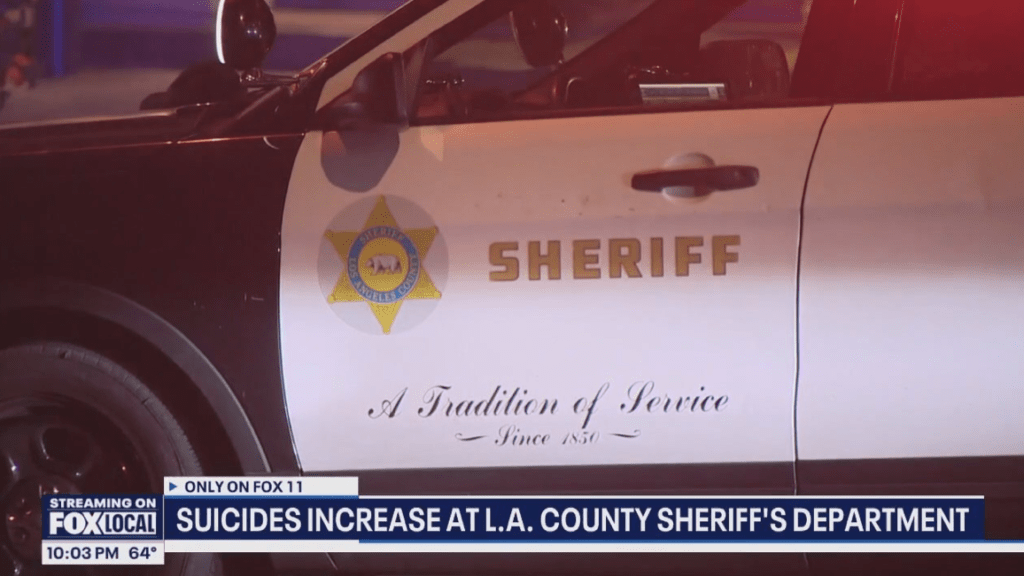
In late 2023, the Los Angeles County Sheriff’s Department lost four current and retired employees to suicide within a single 24-hour window, part of a cluster of more than a dozen deaths between 2023 and 2025. Across California, CDCR facilities face the same quiet attrition, while the nation loses 17 to 18 military veterans each day. For those who wear the uniform, the deadliest battlefield often begins at home.
The operational grind behind these numbers is relentless:
- Mandatory 12 plus hour shifts, rotating graveyards, and daytime court calls cripple the brain’s ability to regulate mood.
- Whether clearing corners, walking an unarmed prison tier, or reintegrating after deployment, the body remains locked in fight-or-flight, soaking in cortisol and adrenaline.
- Personnel regularly witness mangled wrecks, dead children, fatal overdoses, inmate violence, and the sensory aftermath of suicide.
- Political scapegoating, toxic leadership, and internal double standards often inflict far deeper psychological damage than the street.
Personnel do not leave this payload in their lockers—they bring it home.
While departments tout wellness portals, the family is left to absorb the impact with zero training or support. Spouses develop secondary PTSD from living alongside constant nightmares, flash tempers, and emotional numbness. They live on eggshells, muting TVs and quieting children to avoid triggering an exhausted partner. Functionally single parents, spouses run the home alone while fearing that reaching out for help might leak to command and jeopardize their partner’s career.
For the children, the damage is profound:
- Lacking the words for household tension, their bodies absorb the stress, manifesting as chronic stomachaches, migraines, insomnia, and school avoidance.
- Kids learn to decode the front door opening or the tension in a parent’s jaw, retreating to their bedrooms to avoid emotional landmines.
- Older siblings surrender their childhoods to cook, clean, and raise younger siblings during endless overtime drafts.
- When a tactical mindset enters the living room, normal teenage mistakes are treated like defiance, leaving kids feeling audited rather than loved.
I write this not as a detached analyst or former command executive, but as a father who lived every painful chapter of this reality.
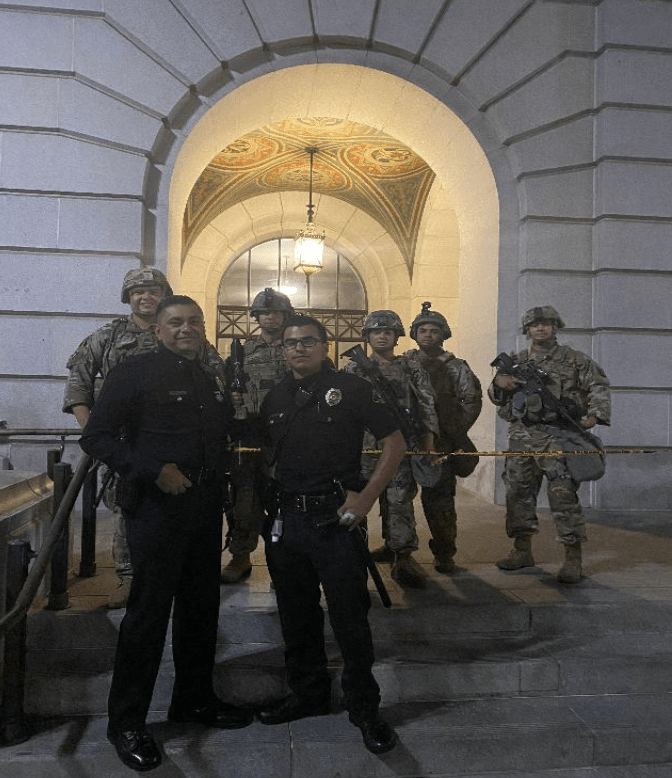
My commitment to the badge and the Marine Corps came at an enormous personal cost to my family. Throughout my career, I was rooted squarely in operations—from working South LA and supervising a gang unit for five grueling years, to commanding patrol operations in South and Central Bureaus, two of the most demanding posts in the LAPD.
The operational grinder was unrelenting. My life was ruled by late-night callouts, idiotic mandates to roll to midnight homicide scenes, and non-stop notifications of shootings across the city. There were countless sleepless nights in emergency rooms standing beside injured officers and their terrified families. Yet while our people bled on the street, we were forced to burn precious hours defending against frivolous, bad-faith complaints lodged by some of the most toxic, destructive elements of society.
When I was home, I was empty. I missed Little League games, school milestones, and irreplaceable years of my sons’ youth. That absence took its heaviest toll on my relationship with my oldest son, Andrew, leaving an emotional distance that shadowed us for years.
After proudly serving for years as an LAPD Security Officer, Andrew chose state service with the California Department of Corrections and Rehabilitation, taking his dedication north to the tiers of Pelican Bay State Prison.
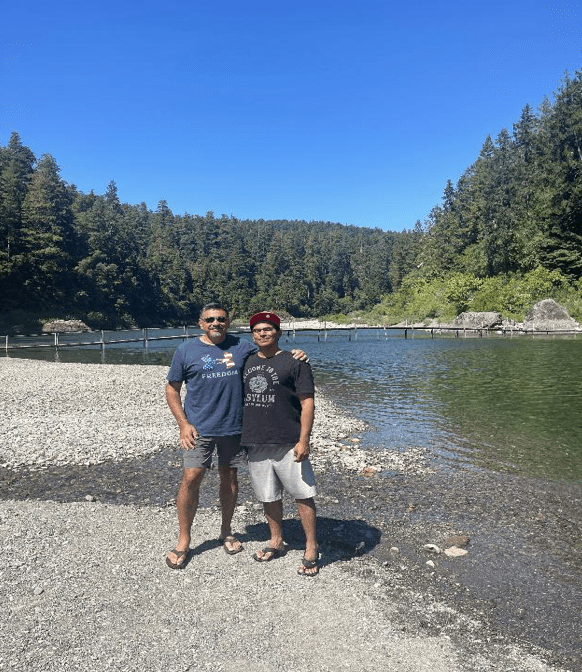
In 2023, life delivered a sudden collision of events. I was forced to navigate personal and institutional betrayal after serving an ex-partner of six years with a termination of our domestic partnership situation fraught with departmental lies, deceit, concealed misconduct, and political pawning. Yet that rupture brought profound blessings: I removed a toxic presence, eventually married an incredible, loving woman, and stepped off the operational treadmill to reclaim precious time with my sons and grandchildren.
I hadn’t seen Andrew in nearly five years prior to 2023, our bond strained by work and distance. In 2023, 2024, 2025, I made numerous trips up to Crescent City to see him and his family.
Andrew had been an affectionate, curious boy, but growing up in the shadow of a badge made his teenage years turbulent. He pushed boundaries constantly, turning my home into the prime venue for unauthorized parties that tested every ounce of my patience. Yet his humor always cut through the tension. Nothing captured his spirit quite like his first car: I gave him my dependable, well-kept Chrysler Sebring convertible, only to discover weeks later that he had traded it for a clapped-out, lowered Honda Accord that scraped over every bump just because he thought it was cool. It was baffling, ridiculous, and purely Andrew—a memory that still brings a laugh through the grief.

Before he passed, Andrew opened up about his childhood, admitting he had often felt unsupported. That confession cut to the bone. While he was growing up, I had buried myself in gang details, midnight homicides, and overtime, foolishly believing that providing for the home was the same as being present in it. He had every right to feel that absence.
Those final visits altered our dynamic, even as Andrew quietly battled darker struggles he kept hidden from everyone. We shared deep laughs and cleared the air. When I apologized for the years of missed games and broken promises, Andrew told me he finally understood. Navigating brutal custody shifts, mandatory drafts, and the weight of raising a young family, he now understood the heavy toll of the uniform.
During that trip, I was given a private tour of Pelican Bay. Walking those concrete tiers, I saw his character reflected in the men he guarded. In a facility housing California’s most hardened offenders, the inmates genuinely respected him—one even looked at me and said something a father never forgets: that I had a truly great man for a son.
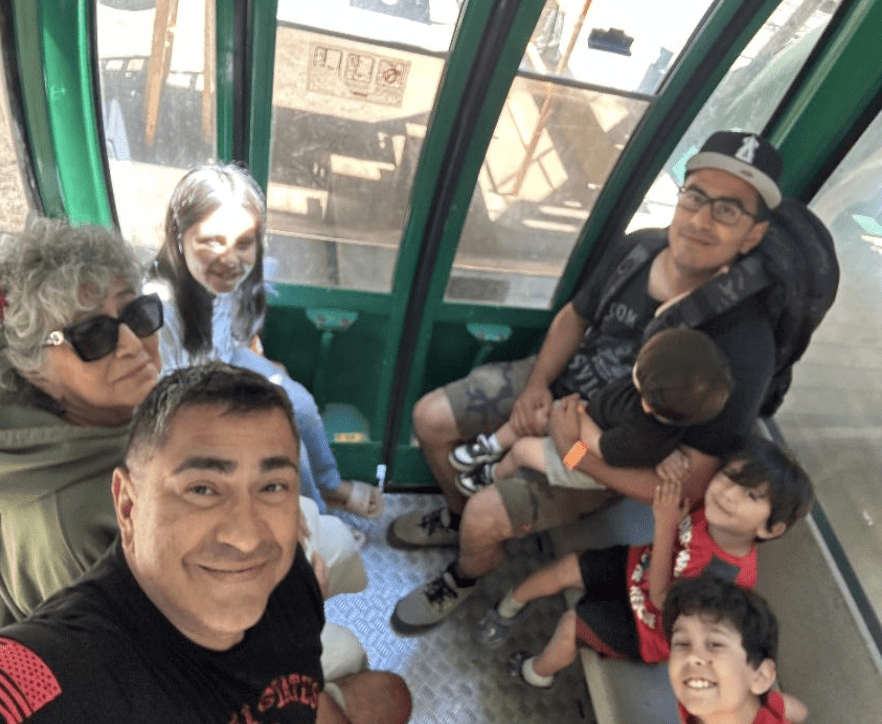
Andrew understood human decency. When an inmate asked for extra toilet paper, Andrew would easily hand it over, joking with a shrug that it wasn’t his toilet paper anyway. But that balanced humanity came against an unforgiving backdrop. Andrew spoke candidly about the exhausting tightrope of the facility: while he believed in treating men with basic dignity, some fellow officers were unnecessarily aggressive, treating inmates like animals. That hostility didn’t build safety; it ratcheted up a volatile, dangerous tension that everyone had to carry.
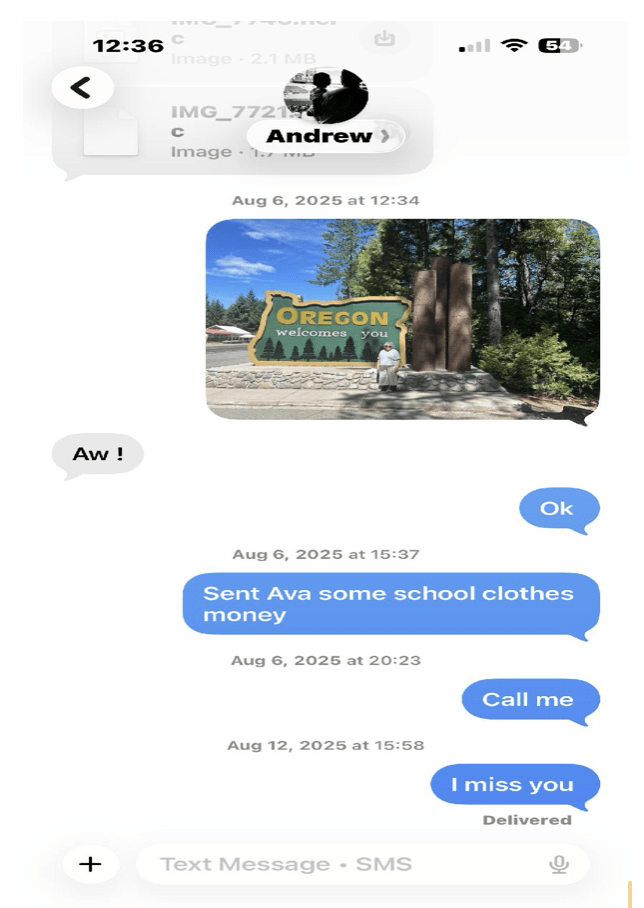
Inside those walls, officers walk among individuals who have nothing to lose—men serving life sentences who will never see freedom again. The threat environment is relentless: attacks on staff don’t come with a warning siren; they are sudden, brutal, and unannounced, striking when least expected. Living with that baseline of imminent violence while navigating the toxic crosscurrents of institutional culture is a psychological pressure cooker.
Yet outside those prison gates, I saw what an exceptional, loving Father Andrew had become. He poured everything into his children, coaching Little League and mentoring young kids with an extraordinary sense of patience, humor, and heart. Seeing him break the cycle and give his children that love was one of the greatest moments of my life.
His reality behind the walls of Pelican Bay, and mine across 31 years in policing and the military, proved a hard truth: no rank, no commendation, and no title on an office door will ever compensate for what our families sacrifice while we hold the line. On August 6, 2025, just 6 hours after leaving his side, Andrew took his own life. I know he suffered and was having challenges with his marriage, but I can 100% say I did not see it coming. I pray other parents and those suffering find the words, strength and momentum to help overcome the darkness. The darkness, grief and tragedy is rekindled on holidays, Andrew’s birthday or just with conversations with his kids and wife. The pain may have subsided for Andrew, but countless lives have to struggle through the reality of that moment he took his own life.
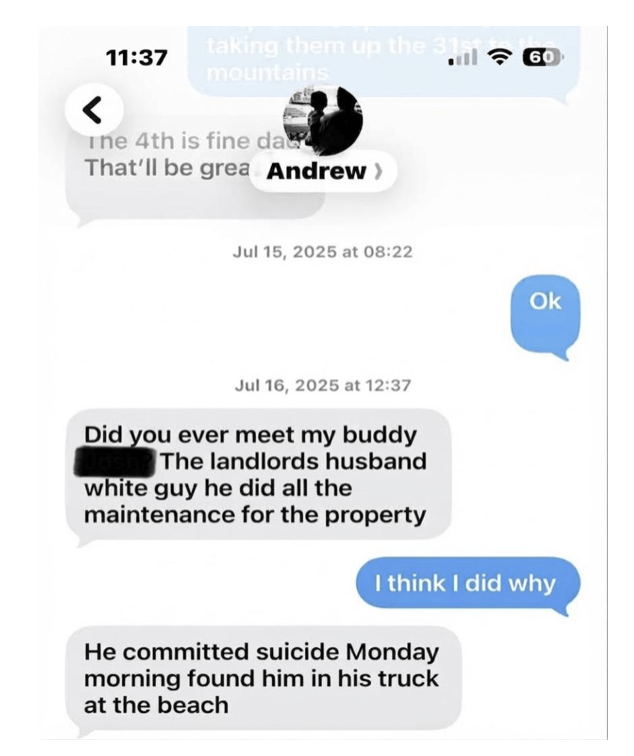
The critical challenge facing our personnel is twofold: overcoming the fear of career retaliation and fighting for resources that actually protect the entire family unit. These don’t exist and there is no direct focus efforts to provide much needed help to first responders and veteran families, post trauma.
In uniform, the primary obstacle to mental healthcare is the fear of administrative retaliation: being disarmed, having a badge pulled, losing custody posts, being assigned to a monitored “rubber-gun” administrative desk, or being quietly passed over for promotional rankings or specialized assignments.
This hesitation is reinforced by widespread misunderstanding of clinical confidentiality. Personnel fear that admitting to exhaustion, severe depression, recurring nightmares, or intrusive traumatic memories will prompt a clinician to notify command staff or wardens and initiate an immediate fit-for-duty suspension.
Confidentiality: Myth vs. Clinical Reality
Under California law (Evidence Code § 1010 et seq.) and federal HIPAA guidelines, mental health treatment enjoys strong legal protection.
- Protected Admissions: Disclosing that you are depressed, struggling with secondary trauma, drinking excessively to sleep, experiencing panic reactions, or dealing with passive despair (“I don’t know how much longer I can deal with this job”) cannot be reported to your agency or chain of command.
- The Strict Legal Threshold for Intervention: Clinicians are legally required to break confidentiality under only two strict circumstances:
- Imminent Danger: Explicit, active intent to commit suicide or homicide, accompanied by an actionable plan and accessible means.
- Mandated Reporting: Disclosures of ongoing abuse involving children, vulnerable elders, or dependent adults.
Departments, custody administrations, and veterans’ networks must stop treating wellness as an individual check-the-box exercise and start treating the family unit as an integral component of operational survival:
- LAPD: Behavioral Science Services (BSS) provides dedicated, department-specific psychologists and a large network of Peer Support Officers (PSOs). The Los Angeles Police Protective League (LAPPL) connects members and families to independent, vetted clinical providers outside the department infrastructure.
- LASD: The Psychological Services Bureau (PSB) offers 24/7 internal clinical support, Peer Support teams, and mobile wellness applications. The Association for Los Angeles Deputy Sheriffs (ALADS) provides external legal, clinical, and medical wellness networks that spouses can access directly.
- CDCR (California Department of Corrections and Rehabilitation):
- Peer Support Program (PSP) & Employee Assistance Program (EAP): CDCR maintains institutional peer support teams across all adult institutions, trained to respond to critical incidents, inmate riots, staff assaults, and crisis intervention. EAP provides short-term clinical counseling for both staff and dependent family members.
- CCPOA Benefit Trust: The California Correctional Peace Officers Association maintains an independent behavioral health panel that operates externally from institutional management and CDCR wardens, providing confidential clinical care for officers and families.
- Independent, Completely Off-The-Record Lifelines:
- CopLine (1-800-267-5463): A free, 100% confidential, 24/7 helpline answered strictly by vetted, retired law enforcement officers trained in crisis intervention. No calls are traced, recorded, or reported to any administration. Spouses are also encouraged to call when coping with household crises.
- 988 Suicide & Crisis Lifeline (Press 1 for Veterans): Direct access to trained veteran crisis counselors for both military veterans and their family members.
- Vet Centers: Readjustment counseling centers operating outside VA hospital networks, protected by independent federal statutory privacy firewalls. Crucially, Vet Centers provide free family, readjustment, and marital counseling for veterans with zero reporting back to VA administrative files or medical centers.
In tactical operations and custodial facility management, no supervisor would deploy a sidearm, patrol rifle, or institutional duty gear that had undergone thousands of duty cycles without proper armory inspection, preventative maintenance, and spring replacement. Failing to service that equipment would be deemed reckless negligence.
The human brain, the body, and the family ecosystem are no different.
Enduring continuous exposure to violence, human suffering, institutional danger, and circadian disruption without clinical maintenance is not an indicator of toughness—it is an operational vulnerability. For law enforcement leadership, CDCR wardens, and veteran community leaders, the culture must shift from viewing psychological treatment as a vulnerability to acknowledging it as mandatory operational maintenance.
More importantly, our institutions must stop locking family members out of the equation. If an agency expects an officer, deputy, or correctional peace officer to hold the line for twenty or thirty years, that agency owes the spouse and children the resources, education, and clinical backing required to survive the journey.
The shift will end. The uniform, keys, and tactical gear will eventually be turned in. When that retirement date arrives, the ultimate operational benchmark is not merely surviving the street, the prison tier, or military service—it is returning home whole to the family that held the line at home.