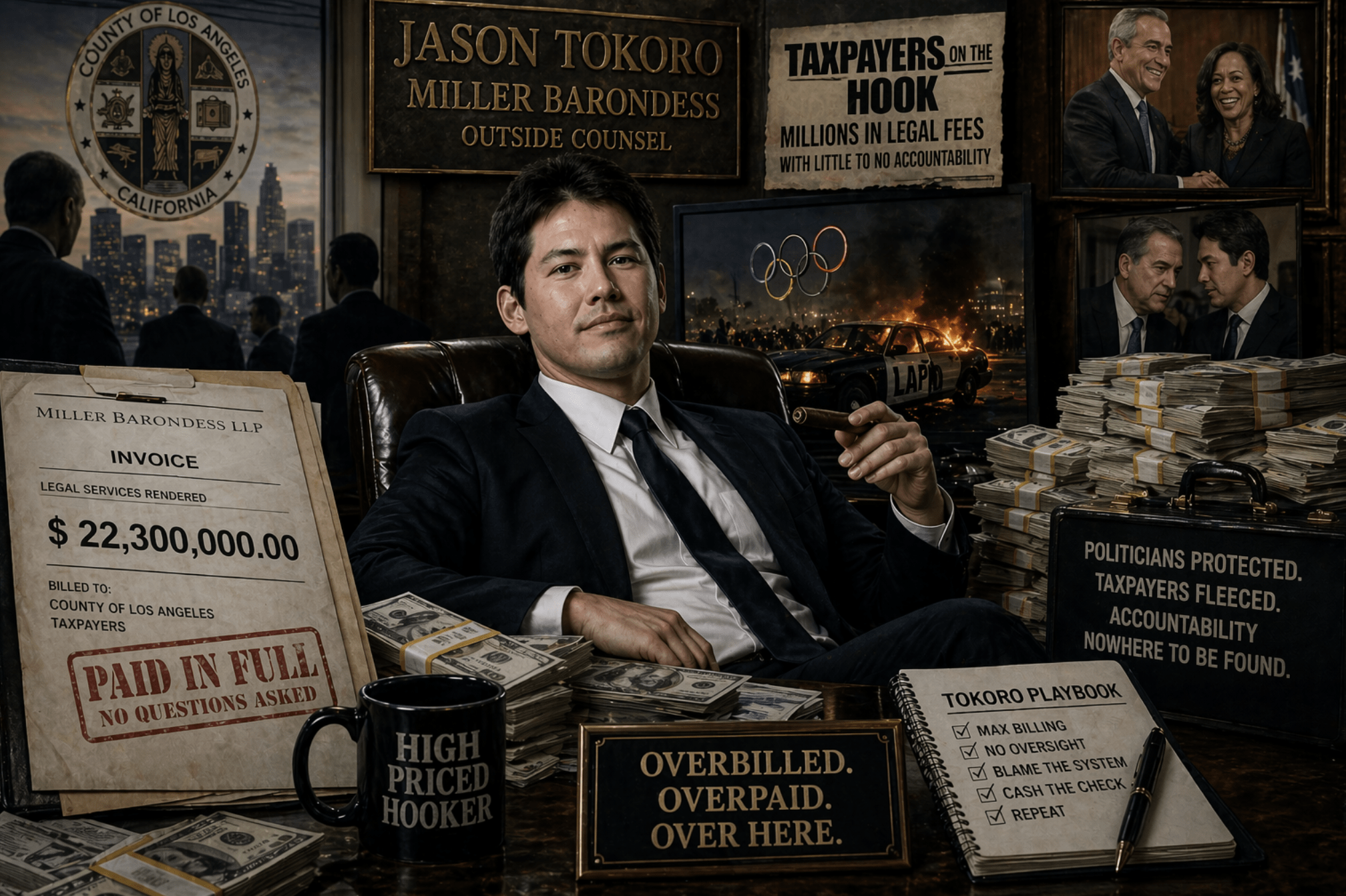
In a stunning display of courtroom gaslighting, Los Angeles County Sheriff Robert Luna and his high-priced outside counsel Jason H. Tokoro of Miller Barondess LLP, have painted a picture of a perfectly fair, merit-based promotion system at the Los Angeles Sheriff’s Department (LASD), one completely untainted by any “station tattoo” policy or deputy clique favoritism. But explosive trial testimony, a bombshell new Office of Inspector General (OIG) report, and Luna’s own public statements tell a completely different – and far more embarrassing – story.
The latest chapter in the long-running Benjamin Torres v. County of Los Angeles saga (Case No. 2:25-cv-04155-RGK) ended in March 2026 when U.S. District Judge R. Gary Klausner granted the County’s Rule 50 motion for judgment as a matter of law after plaintiff Torres, a longtime LASD Captain with a Century Station tattoo, rested his First Amendment retaliation case. Torres alleged the department repeatedly passed him over for promotion to Commander precisely because he refused to remove or alter his station tattoo, a visible symbol the department allegedly viewed as tied to deputy “cliques.”
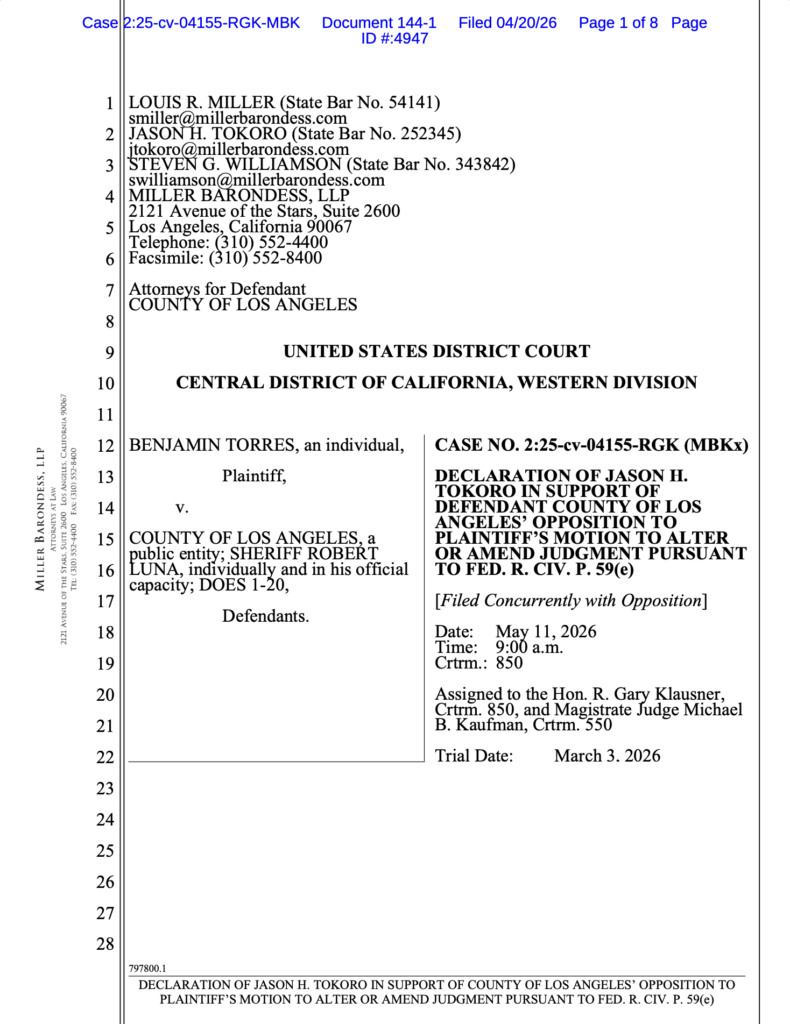
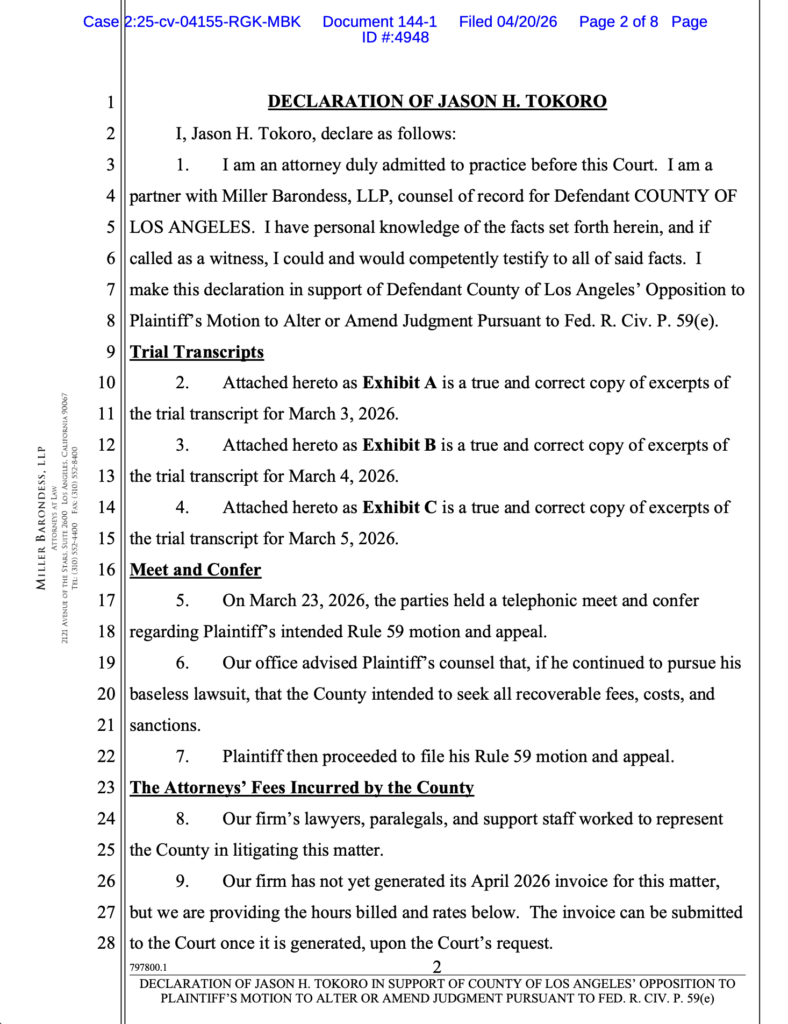
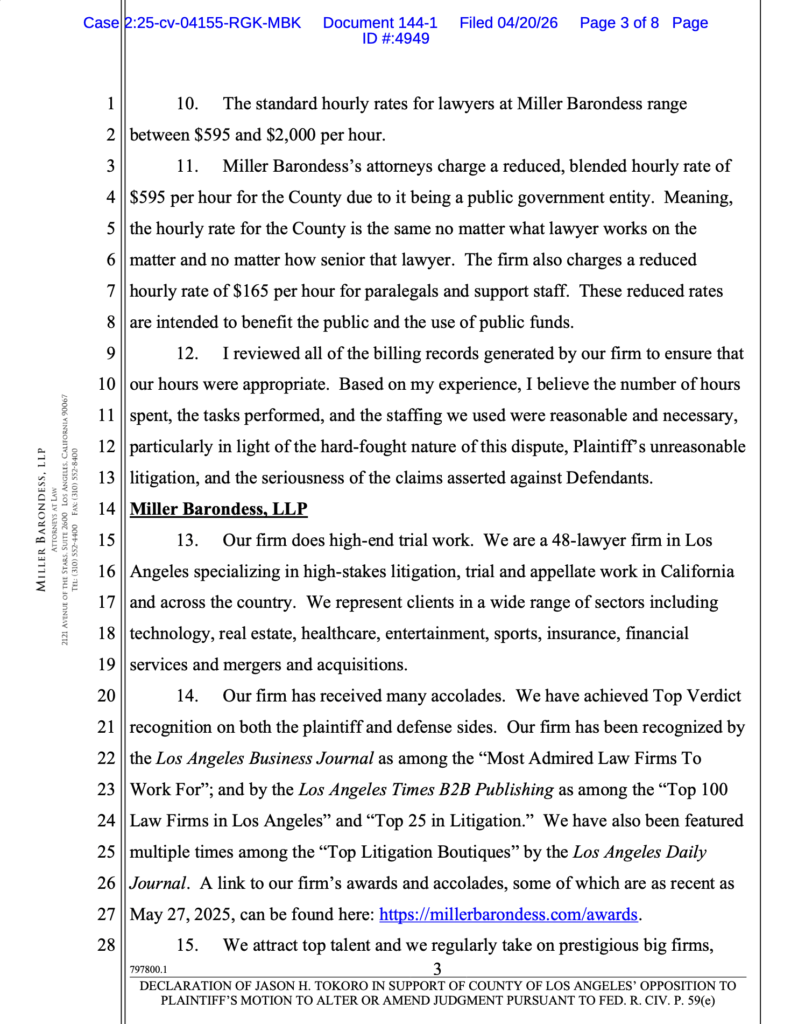
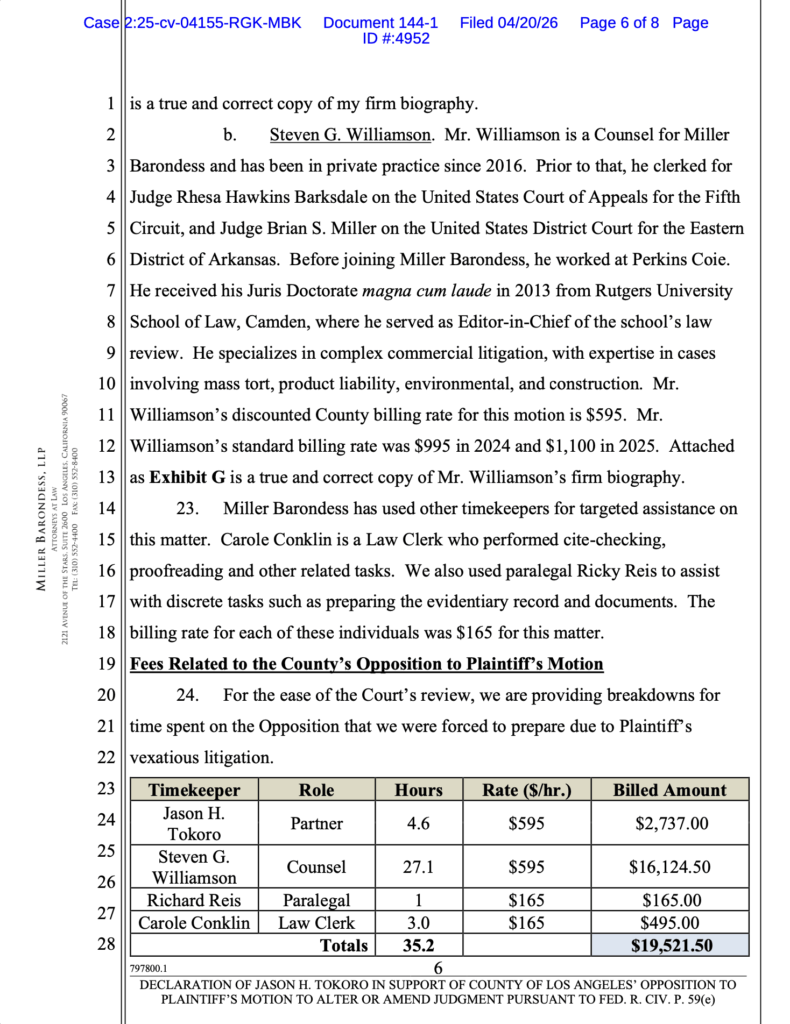
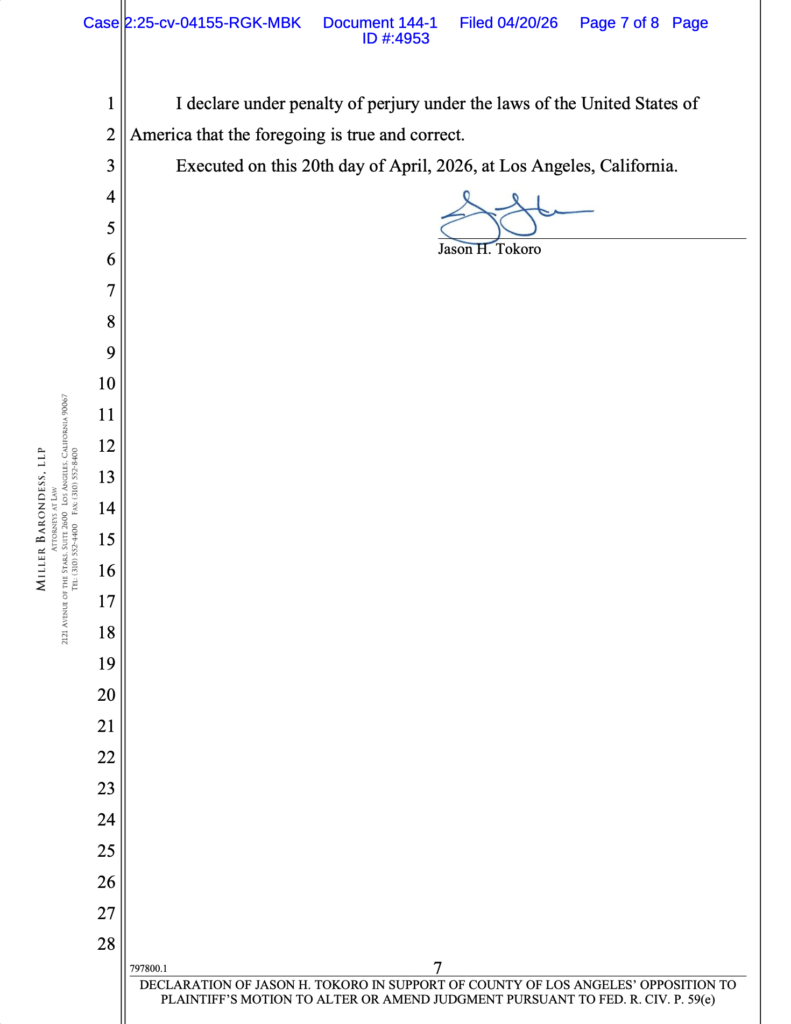
Tokoro’s 24-page opposition to Torres’ Rule 59 motion to alter or amend the judgment (filed April 20, 2026) doubles down on the County’s narrative with almost comical confidence. He insists there is “No Policy” on station tattoos, that tattoos are “not disqualifying,” that the promotional process is purely merit-based, and that every single LASD witness, including Chief of Professional Standards Laura Lecrivain, testified under oath that no such barrier exists. Tokoro dismisses Sheriff Luna’s own post-trial statements at a County Oversight Commission (COC) hearing as “out-of-context,” “irrelevant,” and incapable of proving any custom or practice. He even asks the court to sanction Torres $19,439.50 for daring to file the motion.
But according to LASD executives who actually testified under oath, and multiple devastating recent exposés by The Current Report, the County’s story is dissolving faster than a cheap tattoo in the sun.
Chief Lecrivain’s Bombshell Testimony: “Deputy Gangs Don’t Exist”
In her trial testimony, Chief Laura Lecrivain, the very official Tokoro repeatedly cites as proof there is “no policy, custom, or practice” about station tattoos, dropped a nuclear truth bomb: deputy cliques and law enforcement gangs do not exist in the LASD.
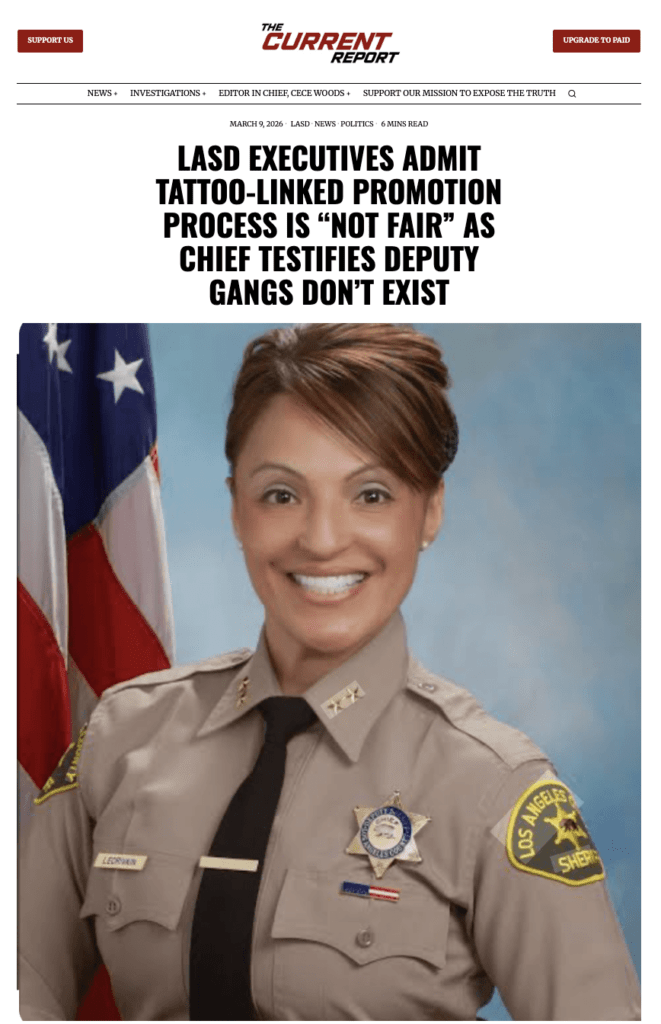
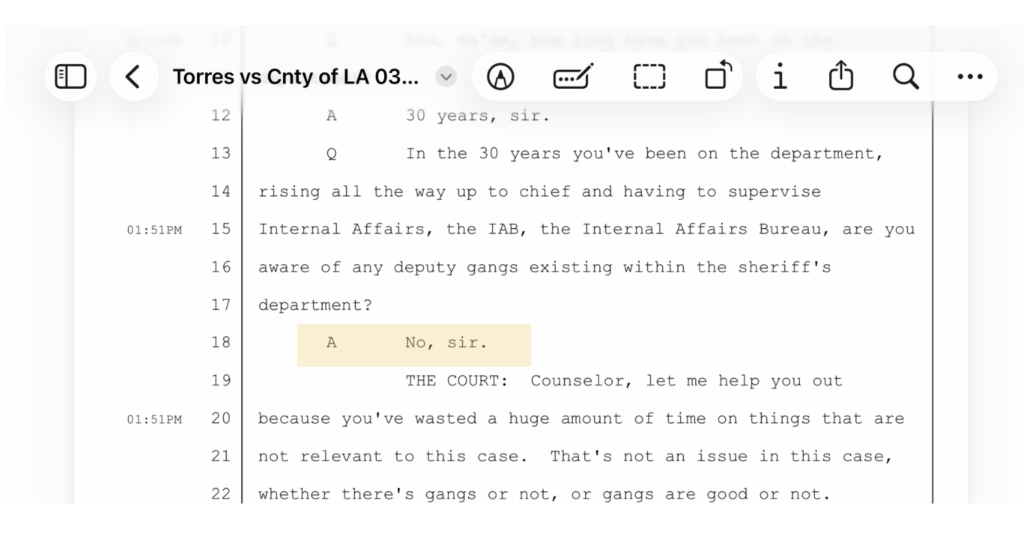
This is the same Chief of Professional Standards Bureau who oversees internal affairs and department policy. Yet Tokoro’s brief leans heavily on her supposed blanket denial of any tattoo-related barrier to promotion while conveniently ignoring the larger elephant in the room: if there are no gangs, why has Sheriff Luna spent years crusading against them?
Flash back to 2022. When Luna first took office, he repeatedly vowed to “eradicate” deputy gangs from the department. He made it a centerpiece of his campaign and early tenure. Now his own hand-picked Chief of Professional Standards is testifying under oath that the entire boogeyman narrative Luna and the LA County political powers that be built his image on is… nonexistent.
Think ghosts. Smoke and mirrors. Poof – nothing there.
A new OIG report released recently confirms it: investigators have not identified any groups that qualify as “deputy gangs” inside the LASD. The report lands like a slap in the face to Luna’s entire anti-gang narrative and raises uncomfortable questions about whether the crusade against former Sheriff Alex Villanueva was ever based on evidence, or just raw politics.
The Tattoo-Linked Promotion Process Is NOT FAIR
Even more damning for Tokoro’s filing: multiple LASD executives, including Assistant Sheriff Myron Johnson, admitted under oath during the Torres trial that the department’s “tattoo-linked promotion process” is “not fair.” Johnson reportedly described it dismissively as “just a process.”
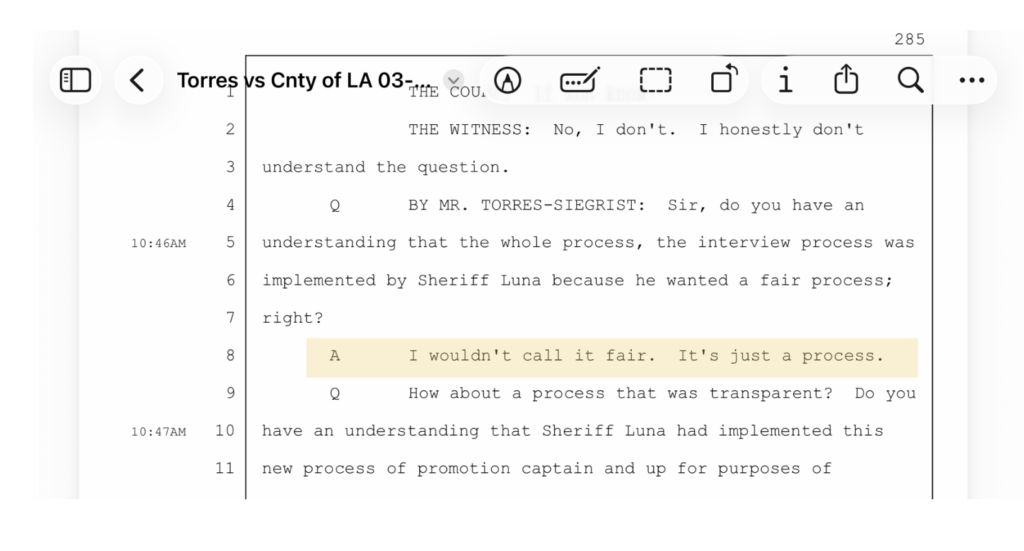
This directly guts the heart of Tokoro’s brief, which insists the standardized interview questions about station tattoos are asked solely to “avoid conflicts of interest and favoritism” and that “station tattoos are not disqualifying.” Tokoro repeatedly hammers that “every witness” testified there is no policy or custom blocking promotions. Yet the very executives running the process conceded on the stand that the tattoo inquiry taints the entire system with unfairness.
Torres’ attorneys had argued the tattoo question, asked of every candidate but never documented in writing, was a thinly veiled loyalty test tied to Luna’s anti-gang rhetoric. The trial testimony appears to validate that claim, even as Tokoro’s post-trial filing pretends the opposite.
Luna’s Own Words Come Back to Haunt Him
Tokoro spends an entire section of his brief trying to wave away Sheriff Luna’s March 19, 2026, statements at a County Oversight Commission hearing. Plaintiff had tried to introduce the transcript as new evidence of a department custom. Tokoro called it “mischaracterized,” “out-of-context,” and irrelevant because Luna supposedly deferred to “facts heard at trial.”
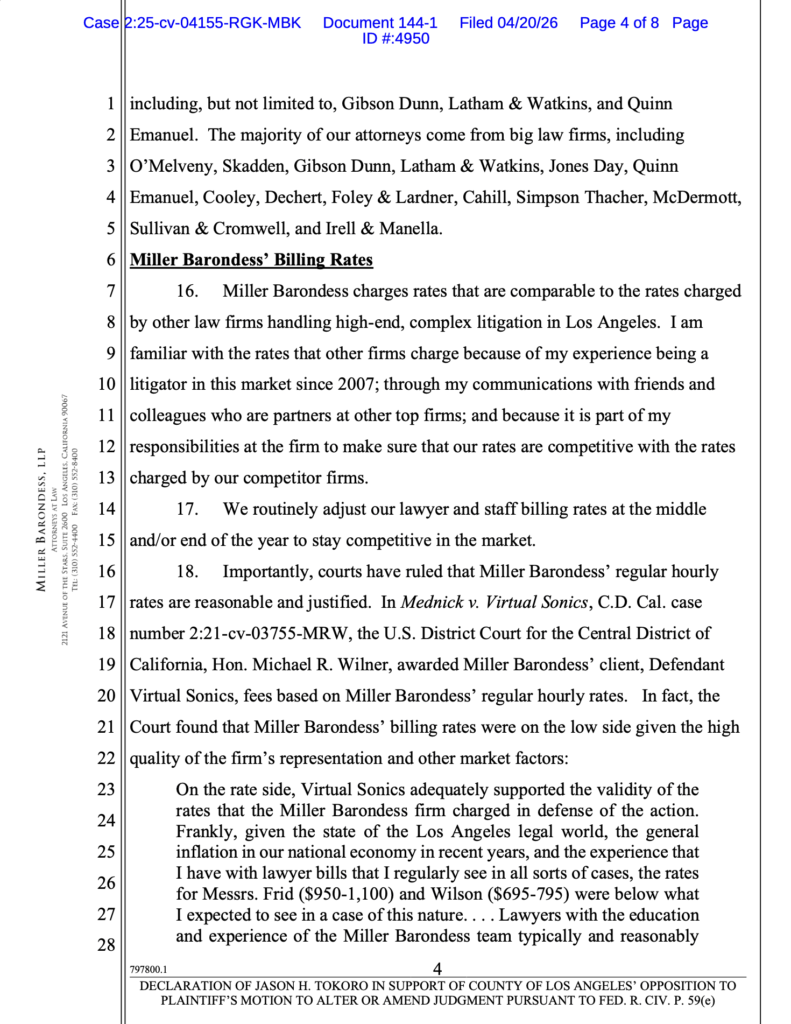
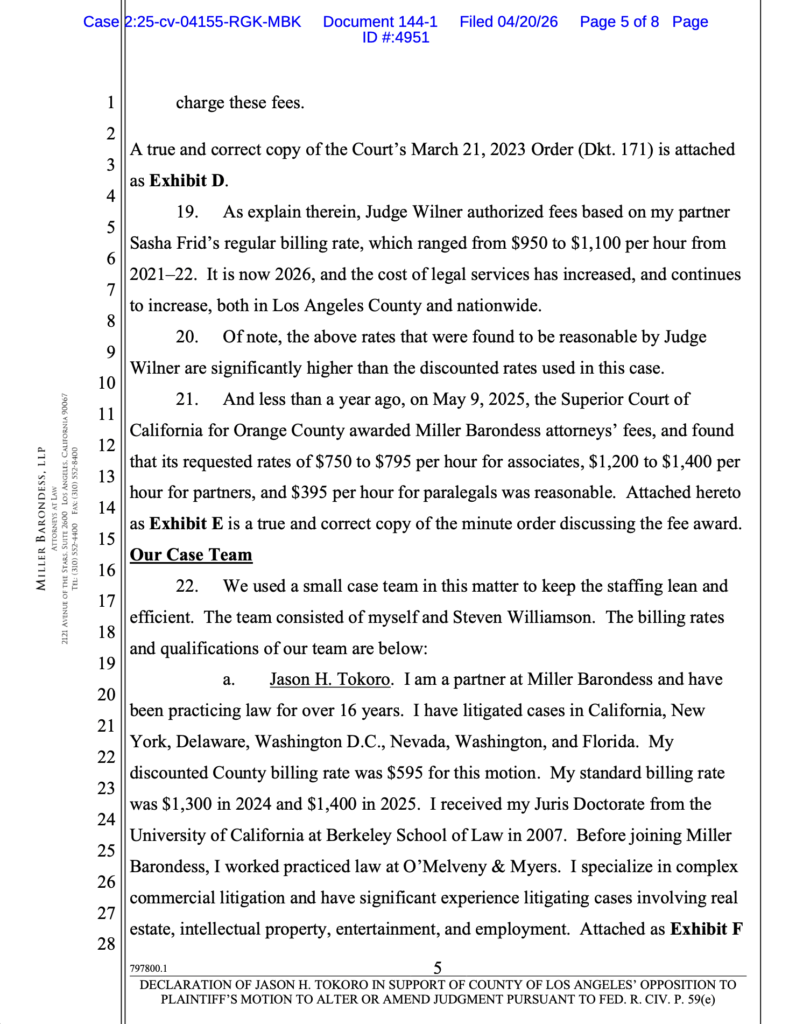
But Luna’s public comments, combined with his 2022 eradication pledge and the current trial testimony, paint a picture of a Sheriff whose own department can’t keep its story straight. One day Luna is vowing to wipe out deputy gangs. The next, his Chief testifies they don’t exist. The day after that, his executives admit the tattoo screening process they use to root out alleged clique members is unfair. And Tokoro’s response? “Move along, nothing to see here, please pay my firm another $19,439.50.”
Tokoro’s Deep Political Ties and History of Representing the Department
Jason Tokoro’s role runs deeper than the Torres case. He also represented the Sheriff’s Department in the high-profile federal Kobe Bryant crash scene photos lawsuit during the Alex Villanueva era, while he and his firm Miller Barondess were donating to Robert Luna’s campaign to unseat Villanueva. Insiders allege Tokoro effectively lost that case on purpose to embarrass Sheriff Villanueva, all while his firm funneled money to Luna – a glaring conflict of interest that county counsel seemingly overlooked.
The same Jason Tokoro and Miller Barondess recently settled the East LA Banditos lawsuit for $8 million in taxpayer funds on the eve of trial. This move, critics say, was designed to hide the fact that – despite years of rhetoric – Robert Luna has not identified a single deputy gang member in his department.
Sources close to the case (and related LASD cases) didn’t mince words when asked about Tokoro and Miller Barondess.
“Jason Tokoro is basically an overpriced hooker for the County,” one veteran trial attorney said. “He’ll rake the taxpayers over the coals for every motion, every filing, every hour, because his firm donates heavily to political allies like Robert Luna and the people who control the purse strings at the County. It’s a cozy little ecosystem. Deputies gets screwed, the public pays Tokoro’s inflated rates, and Luna gets to pretend he’s cleaning up the department while his own executives admit the system isn’t fair.”
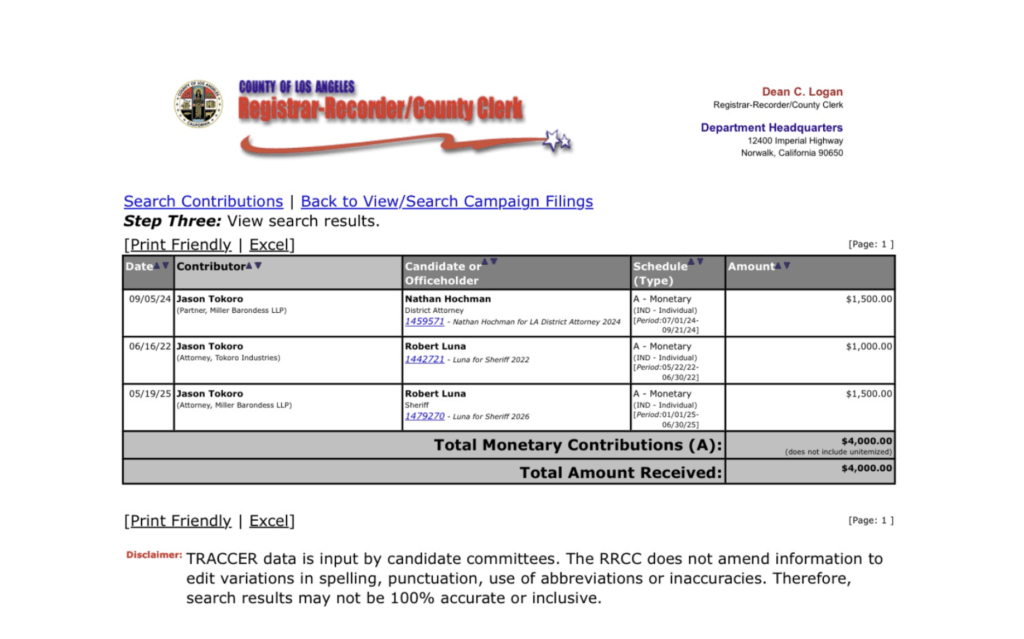
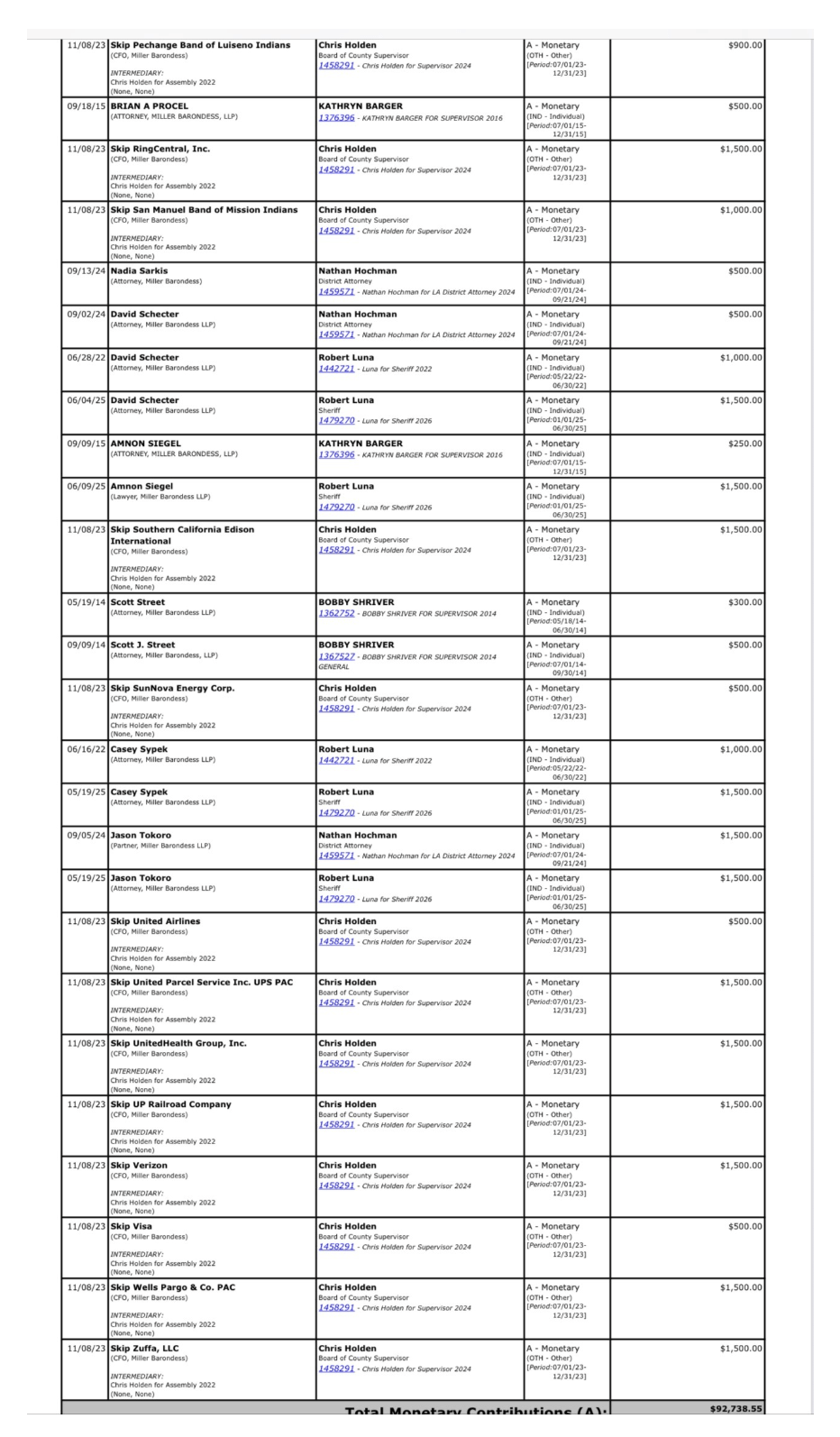
Miller Barondess has a well-documented history of representing the County in high-profile personnel and civil rights cases, including the Bryant matter. Public records show Tokoro personally donated to Luna’s 2022 campaign, with multiple partners at the firm also contributing to Luna’s war chest.
Sources say the County was fully prepared to take the Banditos case to trial, meter running, billable hours stacking, until the LASD pulled the plug, opting to settle rather than risk exposing Sheriff Robert Luna to more public embarrassment in open court.
Luna, however, continues to insist deputy gangs exist, even as his own Chief, Laura Lecrivain, testified under oath that she has not seen evidence of them in her thirty-year career. The contradiction is stark. And according to insiders, Tokoro isn’t resolving it, he’s managing it, orchestrating a legal narrative designed to shield Luna’s reelection campaign from the inconvenient truth that the so-called deputy gang narrative appears political fiction.
A Case Built on Shifting Sand
The Torres case was never just about one Captain’s tattoo. It was about whether the LASD under Luna weaponized promotion decisions against anyone perceived as tied to the very “deputy cliques” Luna claimed to be eradicating, only for his own Chief to testify those cliques don’t exist and his executives to admit the process is unfair.
Tokoro’s April 20, 2026, opposition reads like a victory lap. In reality, it’s a masterclass in denial. He calls Torres’ motion a “rehash” of decided issues while ignoring the mountain of contradictory testimony that emerged at trial. He demands sanctions against a plaintiff who simply asked the court to reconcile the County’s words with its witnesses’ actual statements. Meanwhile, the OIG report has quietly vindicated the very narrative Luna spent years attacking.
Deputy gangs? Never found. Tattoo policy? Not fair, according to your own people. Luna’s eradication campaign? Apparently targeting ghosts. And the $8 million East LA settlement? A political firewall to keep the illusion alive.
One thing is crystal clear: the official story filed by Jason Tokoro in federal court does not match the sworn testimony of LASD’s own leadership, or the public statements of the Sheriff himself.
The case is now on appeal before the Ninth Circuit (Case No. 26-2340), where the court has already halted the appeal in its tracks, staying all proceedings except mediation until the trial court rules, leaving the entire case in legal limbo before appellate review can even begin. Whether that rises to the level of sanctionable conduct or simply political theater is now for higher courts to decide.
The taxpayers of Los Angeles County deserve better than a promotion process its own executives call unfair, a legal defense riddled with conflicts of interest, and a carefully engineered narrative to protect one man’s reelection bid at the expense of transparency and accountability.