While City Hall projects grand illusions of a fortified police force ahead of the World Cup and the 2028 Olympic Games, the structural reality of the LAPD tells a far darker story. The department is not just bleeding personnel; it is actively choking on its own bureaucratic machinery, shielded by an executive revolving door where multi-million-dollar vendor contracts and selective disciplinary warfare take precedence over public safety.
The collapse of internal operations is mirrored by a severe human capital crisis. Political leaders have repeatedly set ambitious benchmarks to expand the LAPD force, particularly in anticipation of upcoming international events. However, active sworn staffing has steadily declined since 2018. Sworn ranks fell below 9,000 officers, dropping to 8,795 in late 2024, and bottoming out at 8,677 in late 2025—marking the lowest active staffing level in nearly a quarter-century. Importantly, this decline in force strength is entirely administrative. Recruitment data indicates that public interest in joining the department was previously at a historic high, yet the administrative machinery is fundamentally unable to process applicants. While applications rose by 53% from 2022 to 2024, completed background investigations actually decreased by 10%, and psychological evaluations dropped by 9%. According to the RAND Corporation’s organizational assessment, the average timeline to process a single sworn applicant is 349 days. This bottleneck resides within the City Personnel Department’s Public Safety Bureau, which manages background investigations and psychological evaluations. Due to chronic staffing shortages and archaic screening protocols, the onboarding process has stalled, causing highly qualified candidates to abandon the LAPD pipeline to accept immediate offers from surrounding municipal agencies.

This hiring bottleneck is compounded by systemic budgetary imbalances. The 2023–2024 fiscal budget represented a net increase of $118,834,040 (a 6.33% increase over the previous fiscal year); however, this allocation was almost entirely absorbed by legacy personnel obligations and capital assets, leaving recruitment pipelines starved. Obligatory salary adjustments and new hire attrition offsets required $105,500,000—focusing on baseline salary adjustments and minimum staffing requirements—which absorbed 88.7% of the total budget increase. Meanwhile, tactical vehicle fleet requests commanded $67,000,000, splitting $38 million from the General Fund and $29 million from municipal insurance bonds, which prioritized physical assets over administrative screening personnel. Aviation support systems consumed $15,600,000 for the procurement and maintenance of department helicopters, representing a high-visibility capital expenditure with zero impact on hiring timelines. The After-Action Report Implementation Plan required another $11,500,000 to address operational deficiencies identified in prior reviews, acting as a necessary compliance cost that further limited discretionary recruitment funds. Finally, technology support and usage adjustments took $5,900,000 to maintain disparate databases, funding only the basic operations of a fragmented IT network.
This aggressive focus on capital assets, paired with recent internal controversies over the recruitment division, has left the Background Investigation Section critically understaffed. With the City of Los Angeles facing a broader budget shortfall and a general hiring freeze, the LAPD’s ability to rebuild its ranks depends entirely on securing a public safety exception, without which the department cannot fund the administrative personnel needed to clear the applicant backlog. The structural degradation of the department’s operational capacity is further compounded by a critical collapse in training velocity, evidenced by historically small recruit classes entering the LAPD Police Academy. While previous departmental benchmarks aimed for full classes of 60 recruits per cycle, severe processing bottlenecks and candidate defection have hollowed out the training pipeline.
To counteract this downward spiral, the Los Angeles City Council approved a $15 billion municipal budget for the 2026–2027 fiscal year, allocating $3.53 billion to the LAPD. It specifically authorizes funding to hire 510 new police recruits. However, rather than expanding the footprint of the force, this aggressive funding injection is fundamentally an exercise in administrative triage. The entire allocation is explicitly designed just to offset the massive waves of attrition, resignations, and retirements that continue to drain the department’s ranks. This “hold-the-line” fiscal strategy has forced a slow, defensive ramp-up at the academy, adjusting expectations down to a mere 25 recruits per class during the first half of the fiscal year, with the hope of reaching 50 recruits per class in the second half. Ultimately, this budget represents a major policy shift by municipal leadership: the immediate goal is no longer to achieve the long-sought benchmark of 9,500 officers, but rather to stall an unprecedented 25-year staffing low and prevent the current 8,600-member department from shrinking any further into operational obsolescence.
The consequences of this staffing collapse are visible through daily operations, as detectives are being promoted three to five years earlier than historical averages, pulling experienced officers off patrol and placing them in specialized roles with limited field experience. Understaffed divisions are struggling under heavy caseloads, leaving thousands of investigations backlogged, while approximately 8% of the remaining active workforce is completely unavailable for duty due to long-term sick leave or work restrictions, compounding the burnout of active patrol officers. Simultaneously, overtime expenses have skyrocketed, while response times to lower-level crimes continue to lengthen across every geographic area.
The operational strain on supervisors is worsened by a fragmented and over-engineered internal accountability framework. Under the 2001 federal consent decree following the Rampart corruption scandal, the city was mandated to establish the Training Evaluation and Management System (TEAMS II). Residing on AIX servers in the City’s Data Center, TEAMS II is a web-based suite of applications built on a Java, Oracle, and Cognos architecture including four key subsystems: the Risk Management Information System, the Use of Force System, the Complaint Management System, and the Claims and Lawsuits Information System.
The Risk Management Information System was designed to compile performance data from 14 disparate databases to flag potentially problematic officer behavior, but the system relies on a rigid comparative model that groups the department’s officers into only 33 generic peer categories. This statistical framework fails to account for diverse patrol assignments, times, and neighborhood contexts, generating a high volume of false-positive action items. For example, approximately 16% of these risk action items are triggered by a single low-level complaint or use of force incident, flooding field supervisors with mandatory investigations and diverting critical supervisory hours from actual field training and operations.
This early warning system operates alongside an overburdened civilian complaint system. The department receives over 3,700 complaints annually, the vast majority of which involve low-level allegations of discourtesy or conduct unbecoming. Despite the widespread availability of body-worn video to quickly resolve these minor disputes, only one-third of these investigations are completed within 150 days, with the majority dragging on for a full year. This has created a high-stress internal environment that discourages proactive policing, as officers perceive the disciplinary apparatus as slow, unfair, and lacking in transparency. Furthermore, the state-mandated accountability framework under the Racial and Identity Profiling Act of 2015 (RIPA) has added administrative reporting requirements without improving internal trust. The RIPA Board’s evaluations highlight a historical chilling effect on community reporting, recommending that the California Legislature amend Penal Code section 148.6 to eliminate criminal penalties for filing false complaints. Concurrently, within the department, officers view these layered accountability metrics as punitive rather than constructive.
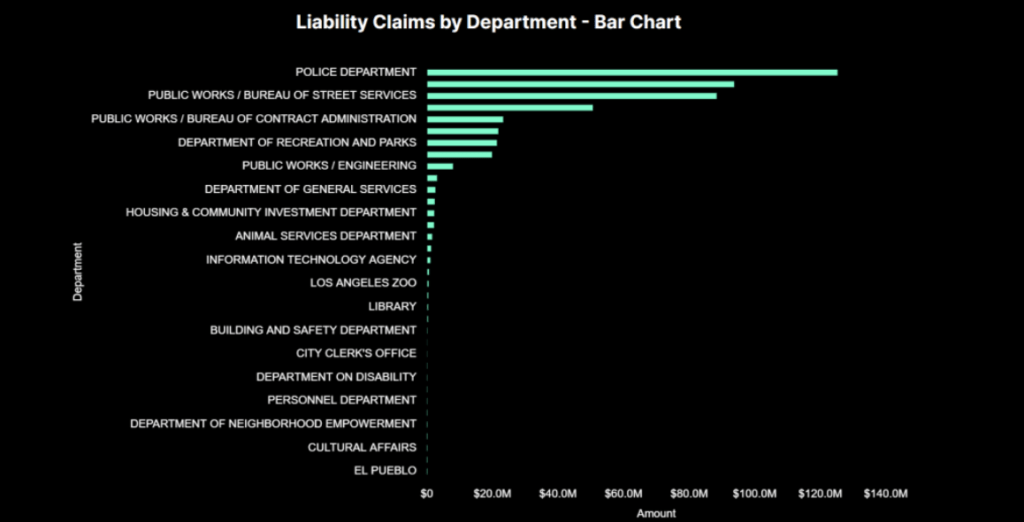
When actual legal liabilities arise, the department’s risk management fails to learn from its mistakes. A major audit by Inspector General Alexander Bustamante revealed that the LAPD’s legal affairs division destroyed litigation files, maintained incomplete lawsuit tracking, and cost the city $110 million over six years—$31 million of which was spent exclusively on sexual harassment, retaliation, and discrimination claims. While Risk Manager Beth Corriea and Police Administrator Gerald Chaleff defended the records management by stating litigation files were kept by the City Attorney, recent failures within the City Attorney’s Office have exposed an inability to safely guard those critical files. Former Police Commissioner Robert Saltzman sharply criticized the department’s lack of substantive risk mitigation, while the Los Angeles Police Protective League resisted proposed employee mediation programs unless they were administered entirely outside the department, citing a deep-seated lack of trust in the internal disciplinary process.
Perhaps the most corrosive issue facing the LAPD involves leadership appointments and the subversion of internal discipline. There is a pervasive “Good Ol’ Boys Club” where promotions and specialized assignments are determined by social ties, blind loyalty, and political connections rather than field experience, success in handling critical incidents or professional merit—a culture of favoritism that actively discourages highly qualified candidates and severely damages agency morale.
This top-down enforcement of personal compliance eventually fractured the department’s executive tier. Significant internal resistance developed as a direct result of former Chief Michel Moore’s severe micromanagement and his routine weaponization of the internal affairs process. Rather than acting as an objective disciplinary mechanism, internal affairs was increasingly utilized as a tactical tool to suppress dissent and control the command staff. In numerous private meetings, key executive leaders—specifically Director Rhodes, Assistant Chief Choi, alongside Deputy Chiefs Tingirides and Rimkunis—frequently shared with me their dissent and deep concerns regarding Moore’s management style. These command staff discussions centered on how his heavy-handed oversight and misuse of administrative investigations undermined the authority of the senior staff and area commanders, creating an environment governed by strict personal fealty and institutional fear rather than strategic, merit-based leadership. Yet nothing has changed. You have Choi a product of Moore and Villegas mentoring who continues to run the department the same way of the old leadership.

The manipulation of the department’s disciplinary machinery extended directly into the Office of the Department Advocate, destroying the appearance of objective due process. A clear example of this interference occurred through Chief Moore’s direct leverage over the then-department advocate, Lieutenant Javier Sanchez. Sanchez operated as a career Internal Affairs fixture, spending nearly 12 years of his professional tenure tucked away within the internal affairs infrastructure. I observed as Moore regularly directed Lieutenant Sanchez to pressure civilian Board of Rights members regarding their independent disciplinary decisions, actively interfering in the adjudication process to achieve specific punitive outcomes. Sanchez took this compliance a step further, regularly socializing, having lunch, and spending time with civilian board members in private, personal venues. This personal proximity created a blatant conflict of interest, completely obliterating the neutrality and objectivity required of the Department Advocate’s role and fracturing internal trust in the equity of the system.
These independent board members are already compensated up to $1,000 daily to sit on these hearings, yet records suggest a compelling loyalty to a highly generous payday—doing as they are told rather than doing what they are sworn to do. Theres a fear of losing the good pay day by going against the process.
Conversely, when officers attempted to step forward and address institutional safety violations, criminal behavior, or fraudulent practices outside the favored executive circle, the department’s response was swift and retaliatory, as documented across several high-profile case studies. In the Davis Training Facility Whistleblower Suit, officers reported unsafe firearms training protocols, staffing shortages, and training protocols violating state safety guidelines in 2018. The department responded with retaliatory internal affairs investigations, demotions, involuntary transfers, and false accusations of participating in an illegal strike, which ultimately resulted in a massive $14,600,000 jury verdict in favor of the plaintiffs in April 2026. Similarly, the Overtime Retaliation Suit involved an officer who reported a systemic administrative failure of Subpoena Control Officers to notify personnel of trial conclusions.
The LAPD initiated an internal affairs investigation, executed a criminal arrest for embezzlement while the officer was pregnant, pushed the case to a Board of Rights hearing, and issued a 25-day suspension. This prompted a Los Angeles Superior Court lawsuit filed on January 15, 2026, which followed a full criminal jury acquittal in March 2025. Yet, in other high-profile incidents, such as the catastrophic 27th Street firework detonation explosion, officers within the executive inner circle were handed a soft landing. Minimal discipline was met with close associates of Choi and Moore who blatantly violated safety protocols, causing a devastating explosion that decimated a neighborhood. In future articles I will dive into the 27th street explosion and how that fractured a community while being quietly handled on the 10th floor.
The ethical dimensions of the LAPD’s leadership crisis extend beyond active service, revealing a profound double standard regarding department oversight and municipal ethics. When Moore was shown the door by Bass and announced his early retirement in January 2024, Mayor Karen Bass and the Board of Police Commissioners approved a sole-source Professional Services Agreement for Moore to stay on as a transition consultant to assist the interim chief. Under this contract, Moore is compensated at a rate of up to $125,000 per year for a term of up to three years. According to City Hall insiders, this agreement was engineered purely to remove Moore quietly and avoid civil litigation from an allegedly failing second term, funded directly by the City of Los Angeles General Fund. Moore’s tenure became a lightning rod for criticism regarding fiscal opportunism and structural manipulation. His $1.27 million Deferred Retirement Option Plan (DROP) payout, combined with an annual retirement pension of roughly $240,000, is widely cited by critics as a prime example of an executive prioritizing personal enrichment over public accountability. By utilizing a controversial loophole to “retire” for a mere few weeks, cash out his massive lump sum, and immediately get rehired back into the command staff, Moore effectively double-dipped into city funds.
This maneuver caused intense political backlash, forcing the Los Angeles City Council to restrict the loophole entirely and motivating other California municipalities to evaluate similar cost-saving reforms.
This post-retirement “revolving door” that immediately transitioned Moore from a top municipal executive into a lucrative consulting role represents a clear violation of city ethics regulations, which explicitly restrict immediate post-employment consulting and targeted lobbying to prevent undue influence. Despite these clear infractions being formally reported, no investigative or enforcement action was taken by the City of LA Ethics Commission—perpetuating the “nothing to see here” mindset typical of this administration. This selective enforcement exposes a profound hypocrisy within a city administration that publicly champions transparency while actively shielding its highest-ranking officials from the very rules applied to rank-and-file dissenters.
While city records show that Moore’s direct consulting compensation of up to $125,000 annually is funded by City of LA accounts, his post-retirement activities have drawn intense scrutiny by critics regarding the broader ties between retired LAPD brass and major surveillance vendors like Axon Enterprise and Motorola Solutions. Following his retirement, Moore began serving as a consultant on the Government Relations Committee of the Security Industry Association, a prominent advocacy group where he serves alongside corporate representatives from Motorola Solutions. This close alignment with industry giants reflects a well-established pattern within LAPD’s executive culture: former Chief William “Bill” Bratton joined the board of directors of Motorola Solutions in 2011, and former Chief Charlie Beck joined Axon’s AI Ethics Board immediately following his departure. During Moore’s own tenure as Chief, the LAPD substantially expanded its financial commitments to these identical vendors, executing a $13.7 million records management system contract with Motorola Solutions in 2022 and a $6.9 million contract with Axon to equip 1,500 patrol units with Fleet 3 in-car camera systems.
Overall, the LAPD has awarded approximately $47 million to Motorola and $35 million to Axon, a figure that excludes a separate regional contract of $280 million awarded to Motorola to connect the LAPD to the regional County system. Watchdog organizations, such as the Stop LAPD Spying Coalition, argue that these overlapping professional networks create inherent conflicts of interest. They contend that the seamless movement of police chiefs from public oversight roles to paid advisory positions with multi-million-dollar city vendors undermines public confidence, giving the appearance that policy decisions and vendor selection are heavily influenced by future private-sector opportunities.
The operational, technological, and leadership challenges facing the LAPD are not isolated issues, but rather symptoms of systemic administrative decline. The city cannot resolve its staffing crisis by setting empty recruitment goals if candidate processing takes nearly a year, nor can the department build public trust when its technological transitions are used as justification to black out public crime data and escape independent oversight. Beyond fiscal controversies, critics and internal whistleblowers point to a dual track of justice within the department’s disciplinary system. Allegations have surfaced that Moore directed individuals within Internal Affairs to cut corners, show leniency, dismiss criminal behavior, or intentionally stall investigations until the statutory statute of limitations expired. This protection occurred repeatedly when high-ranking allies, command staff, or close associates faced scrutiny for misconduct—including serious incidents involving alcohol abuse, public sexual acts, narcotics, domestic violence, or severe firearm mismanagement. This unwritten double standard protected favored insiders while severely degrading trust among rank-and-file officers. This perception of favoritism led to widespread internal dissatisfaction, culminating in union surveys showing that an overwhelming majority of officers felt alienated by leadership’s inconsistent application of rules. More drastically, Moore frequently violated the Public Safety Officers Procedural Bill of Rights Act (POBR) and basic due process for those who opposed his failing practices.
Compounding this internal degradation is an external crisis of institutional enablement, where both City Hall and department leadership must aggressively distance themselves from self-proclaimed “First Amendment auditors” who have effectively transitioned into street terrorists. For too many years, municipal leaders and the LAPD have handed these disruptive actors a microphone, allowing public comment periods and police commission meetings to be hijacked by structured yelling, vulgarity, and targeted personal attacks against anyone who refuses to submit to a strict socialist playbook. Rather than introducing viable, data-driven solutions to genuine policing problems, these individuals utilize public forums to engage in aggressive intimidation tactics designed to disrupt civic governance. By continuously tolerating this criminal behavior under the guise of open discourse, the city has validated a culture of hostility that actively compromises public safety and institutional morale. To salvage what remains of public trust, the administration must shut out these ideological thugs, deny them an official platform for performative harassment, and show them the door unless they bring realistic, beneficial solutions to the problem-solving table.
Crucially, the fiscal drain of multi-million-dollar retaliation verdicts and the societal cost of unchecked public disruptions will continue as long as promotions, discipline, and public forums are governed by favoritism and administrative paralysis rather than objective merit. To address these compounding crises, eliminate costly specialized units that drain patrol resources, and modernize its systems, a series of structural reforms must be implemented immediately.
First, the city must execute an administrative separation of hiring operations, transferring police background checks and psychological screenings away from the backlogged City Personnel Department directly to an internal, civilian-run LAPD hiring bureau bound to a mandatory 90-day processing standard to prevent candidate poaching by neighboring municipal agencies. Second, a sweeping civilianization of administrative roles must occur, displacing sworn officers from administrative desk jobs, records offices, jail operations, and non-tactical community relations units to fill these roles with qualified, lower-cost civilians, which would immediately return hundreds of experienced officers to core patrol and investigative duties.
Third, the department must institute complaint system fast-tracking, implementing a rapid triage process using body-worn video for low-level complaints like discourtesy or conduct unbecoming to close minor cases at the Area level within 30 days. This would shield productive officers from stressful, year-long disciplinary drags and ensure complaints are not weaponized by outside activists to target productive personnel with continuous false allegations. Fourth, the city must re-engineer its early warning risk architecture, redesigning the TEAMS II peer-group algorithms to incorporate more nuanced, context-specific officer assignments through machine learning, thereby reducing false positives and allowing field supervisors to focus critical hours on genuine operational outliers. Finally, a complete promotion process transparency and audit system must be established, implementing standardized, objective promotion metrics that mandate written, public explanations for all executive-level selections. This must include independent civilian oversight over the Office of the Department Advocate to enforce absolute neutrality, audit disciplinary histories, eliminate the “Good Ol’ Boys Club” culture, and completely insulate the adjudication process from executive interference. Lastly, the department needs to take a deep, analytical dive into costly specialized units that remain significantly expensive long term while actively draining vital resources from frontline patrol operations.
The convergence of a broken technology infrastructure, data suppression tactics, and a failing emergency dispatch pipeline underscores a stark reality: the LAPD is managing its decline rather than solving its crises. By treating critical data transparency as an existential threat and deploying legally dubious exemptions to mask structural failures, leadership under both Chiefs Moore and McDonnell has successfully severed official metrics from public reality. This systemic decay cannot be separated from the political environment of City Hall, where transactional loyalty consistently trumps measurable public accountability. For the citizens of Los Angeles, the cost of this administrative rot is measured in abandoned 911 calls, delayed emergency responses, and unrecorded victimizations. As the department continues on this unchanged trajectory, it is actively accelerating the ongoing sinking of its own ship. To fully understand the depth of this institutional erosion, this analysis must look beyond operational bottlenecks.